

Lifestyle
We stand with Kanu, Igbo don’t abandon each other in adverse circumstances— Okolo Olisa

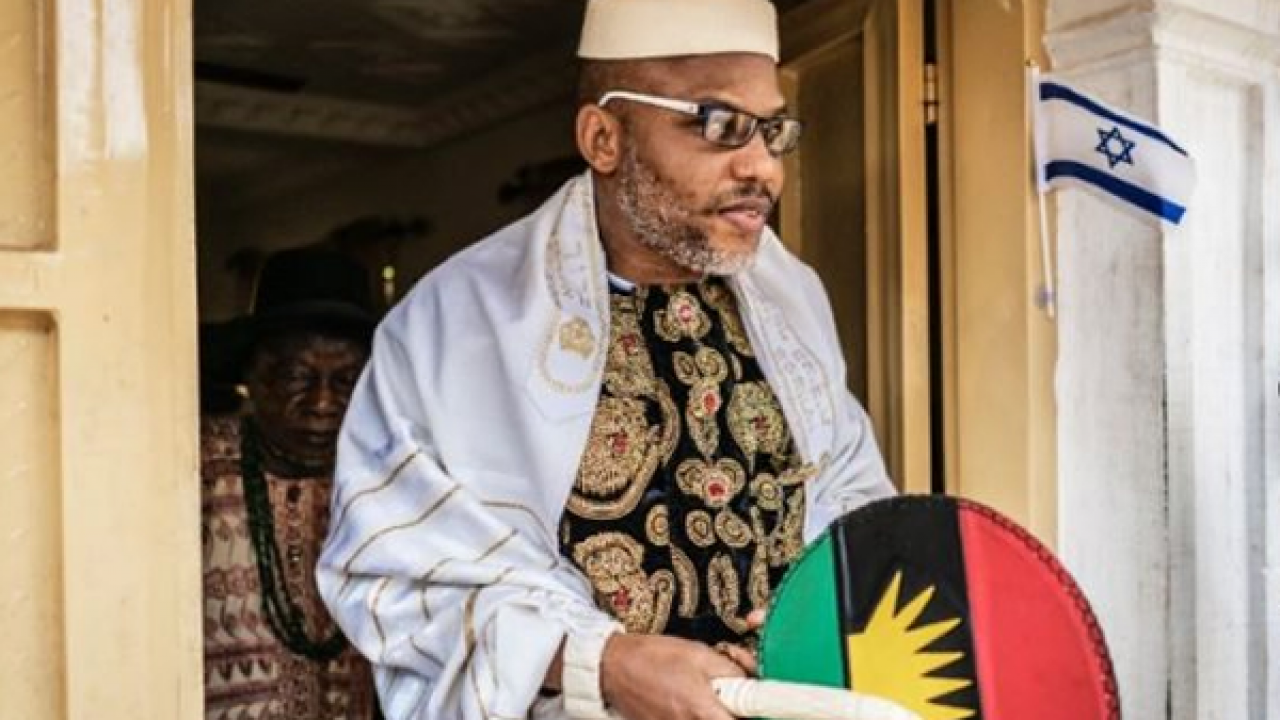
Can you introduce yourself?
A bu m onye Igbo (laughing)
That is to say, I am an Igbo man. Born to Jerome Herbert Okolo (S.A.N) and Obiageli Juliet Okolo, I am from the Osodi-Emeagwali clan of Ogbeozala in Onitsha. That is how Ndigbo and if we think about it, all Nigerian citizens describe ourselves.
We first take our identities from our family group and clan before we talk of our hometown. Rarely do we take our identities from the soulless states that Military dictators created to divide us and make us lose our identities. But we shall come back to that in the course of our discussion.
As for what I do, I am a lawyer and an entrepreneur. When I’m not working, I like to spend time exploring with my dogs, spending time with my family and researching modern history.
My particular interest is in the period between the 1800s to the late twentieth century where much of the background for the problems of Africa can be found. That and many other research I have conducted, has given me an appreciation of humanity and our capacity to do good, but also our capacity to succumb to evil.
That is why I always enjoy talking with the people I meet from diverse cultures. I feel that communication is one of the most important aspects of my professional life as well.
When talking with people, being able to guide the conversation in a particular direction to break down unconscious bias, and to get to the root of issues, is one of the ways I’ve been successful in different situations in my professional life.
It’s all about learning to see things through someone else’s eyes and then putting across a viewpoint that does not embarrass their worldview, but expands it.

Barr. Anthony Okolo Olisa is the President of Igbo National Movement
That’s quite interesting to hear. Is this the ideology behind INM, which has been very vocal recently in defense of issues, as it concerns the Igbo people?
Simply put, the Igbo National Movement is a movement created to re-establish our Igbo nation. It is established for the progress of the Igbo national or as we call ourselves, “Ndigbo” wherever we may be found on the earth, and also for the development of Igbo homelands or “Ala-Igbo”, through the enhancement of our Igbo Republican institutions.
The movement envisions the development of a nation of Ndigbo, arising into the world polity with a society that encourages Justice, Merit, Equality and treats people with respect. Reinforcing this vision are three core values: Justice, Equality, and Merit.
Ndigbo meet all the criteria for nationhood. We have a common tongue, a common territory which is known to us and our neighbours, a common culture and now, a common purpose to regain that which the British took from us forcibly.
We have been indigenous to the lands that home Ndigbo for over 3,000 years and lived in peace with our neighbours in all that time. Why then should we look to the very recent past of the last 100 or so years, as if that is the foundation of our identity?
No, Ndigbo are a far more ancient peoples than that, and as such, we are ripe for a re-awakening of who we are, and to seek to control our destiny in non-violent and constitutional agitation.
In this, I believe we are closely related to our brothers and sisters of other indigenous nations in Nigeria, who are also in the process of their cultural awakening.
We commend the Ijaw, the Yoruba, the peoples of the Middle Belt and the plurality of Nigerian Indigenous Peoples to take control of their individual destinies, and to call for a real debate on the path for a new future, for the administrative entity that is the Nigerian Federation.
This we believe will be achieved through a sovereign national conference of the Indigenous Peoples of Nigeria. It is one of our objectives to make this call and to support all Nigerian Indigenous Peoples to join this call.
It may be the only way to save this Federation, by re-creating it into a system that the people can recognize and respect.
What’s your opinion on IPOB and the recent arrest of Nnamdi Kanu?
Mazi Nnamdi Kanu is first and foremost an Igbo man and he is one of our own. In any family group, there are a variety of characters. Some are prudent and diplomatic, while others may be brash and confrontational.
A wise family will always align itself with the former and will at the same time, seek to curb the excesses of the latter. But a wise family never abandons their child to an outsider’s discipline, lest they be viewed as uncaring and unwise.
So, while the family will always stand “with” its own, it will not necessarily stand “for” them where their ideology does not follow the wisdom of the family group.
We stand with Mazi Kanu because Ndigbo do not abandon each other in adverse circumstances. We protect our own from the outsider. We believe that discipline is best meted out within the family group, and Igbo justice is harsh indeed.
But we do not stand for the ideology that suggests that all non-Igbos are our enemies. However, we believe that his recent abduction was unlawful and we have said so plainly.
It is unfortunate that the Attorney-General of the Federation pretends he does not know the Law. He seems to believe that a warrant of arrest in Nigeria can be executed at will internationally without the process of extradition – he is wrong.
He thinks there is nothing unlawful in the Nigerian government kidnapping a British citizen who has renounced his Nigerian nationality, in a foreign country, which he has entered legally with a British passport – He is wrong.
We believe he knows he is wrong, but we understand he must try to justify these illegal acts, because it is what the government wishes him to do. But justifying illegality is not the job of the Chief Law Officer of a democratic country.
He must stand for Justice and Truth, even where it is against the instructions of the government he is part of. Not even Kenya will be so naïve as to agree with him and certainly, Britain will not allow their citizen to be made a fool of as it is a poor reflection on them.
I believe that with this kidnapping, the Nigerian government has made a monumental error in judgement, which will sour our relationship with Britain and our neighbours. It will however, make no change in the calls for a restructuring of the Federation or for self-determination. In fact, it will make these calls even louder.
Of recent INM has been very vocal on the social and print media, a lot of people have started wondering if there’s a hidden agenda. Who is funding the group?
The movement is being funded by Love.
Of what use is a hidden agenda? What is the use of hiding a lamp beneath an opaque bucket? No, our agenda is open to one and all, we are proud to share it. For in sharing it, we do not dimmish ourselves or others.
We wish to reassert our rights as an indigenous nation and for the Federation to recognize these rights as well as the rights of all indigenous nationals who are desirous, to chart their own course, whether within a re-negotiated Nigerian Confederation, or in a clearly defined Commonwealth of Independent Nigerian States.
No Nigerian, who is Nigerian by birth, can be a Nigerian, if they were not first born to the nations indigenous to the land, upon the amalgamation by the British in 1914.
To be Nigerian, is to be first Igbo, Yoruba, Hausa, Kanuri, Ijaw, Jukun, Tiv or any of the various nationalities that make up the Nigerian Federation. The promise of Nigeria lies not in replacing these identities, but in harnessing our diversity, allowing each to become the best version of ourselves.
The government and Nigerians know that at present, Nigeria does not have the soul of a federation made up of the administrative units we have come to know as states, but is at heart a federation of proud nations.
That is why most of the states created by the Military have continued to fail to bring the people the development that they require. They have failed to energize the loyalty of the people and the people question the legitimacy of these units consistently.
That is why we continue to have National Orientation Agencies and agitations for state creations as the people strive to connect emotionally with their local government.
That is why we continue to unsuccessfully mimic the British colonial administrative system of “divide and rule” and to export our national wealth to other nations, to the detriment of our own people.
How else can you justify the fact that we would rather sell our crude oil and other raw materials to foreign countries than satisfy our own local demand for energy or means of production? It is just a hopeless situation which is based on faulty thinking.
The British knew this and fought hard to destroy our individual national identities because that was a way to keep us weak and easy to administer.
Now we are governed by our own, we should not have the same fears the British did. We know ourselves and have traded and lived with each other peacefully for centuries as individual nations, so why do we think we cannot do that again?
To fear our diversity is to fear ourselves for who we are, and that is why the Nigerian project as designed by the British and continued by the corrupt military establishment is failing. It is structurally defective and so is the constitution it has birthed. Our ideology seeks to end this system.
How do you see the present political leadership in Igbo land?
With very few exceptions, the present political leadership in Ala-Igbo has failed to unite our people behind a common “post-war” ideology that meets the dynamism of Ndigbo. We are builders, democratic in nature and believe in merit.
Ndigbo would rather perish in the field of work than go cap in hand to beg for our supper. This monthly pilgrimage to Abuja to beg and scrape for our livelihood is un-Igbo. It has to stop.
We have never really needed the support or interference of outsiders to develop our land. After the war, we pulled ourselves out of the mire, with very little help from the victorious Federal Government who impoverished us.
We rebuilt all we see in Ala-Igbo today from a pauper’s dowry of £20 per person. The Imo Airport, the state universities, Anambra Broadcasting Service, vegetable oil production companies, palm-oil production camps, Innoson, Air Peace, Peace Mass Transit, Ibeto Industries, and many more than I can name, were all built in spite of policies designed to subjugate and de-franchise Ndigbo, and without a penny of government support and certainly without government patronage.
Even today, all attempts by policy or interference to kill these industries have failed to dampen the entrepreneurial spirit of Ndigbo. So please tell me, how can these so-called leaders not realise that all we need from them is to support our internal economy and support cooperation among our people?
By failing to establish and implement a joint strategic plan for inter-state cooperation, that will build inter-state roads, railways, healthcare and financial systems, these leaders have lost legitimacy in the eyes of the people.
By allowing themselves to become pawns in a greater play of misdirection of effort from outside Ala-Igbo, they have sacrificed the future of millions of Igbo youth, who now have to sojourn far and wide to make an honest living. Abandoning our homelands which no longer can sustain their dreams and desires.
The people are awake and it is impossible to lull us back to sleep. Ndigbo will take back Ala-Igbo from these faithless overlords and will use the ballot box to put in people who have the interest of Ndigbo at heart, and who will serve our people the way we deserve to be served; – with courage, humility and a steadfast zeal to the progress of all peoples who live in our lands.
Are you in support of Nigerian president of Igbo extraction, or, like IPOB, you are against the present electoral system?
It is unlikely we will see an Igbo President in our lifetime. The people who know the Igbo for what we are and despise us because of it, will never let that happen.
If they do allow it, they will hope to force upon us an Igboman or woman of such flawed character, that we will all be ashamed to call ourselves their kinsmen. We have some of them who have been rigged in as Governors today to provide proof of such perfidy.
What we need is for Ndigbo to use the power of the vote and social activism to regain control of Ala-Igbo. We should employ the best of us to the work towards regaining our national pride and to focus our energies on building an economy that will be a force to reckon with globally.
Ndigbo are never content with anything less than excellence, so why should we continue to settle for mediocrity to please those who choose to be indolent?
Unlike IPOB, we are not hung up on what we are against, rather we are very clear on what ideology we are for, and the means by which to achieve that ideology. When we are ready to do so, our people will direct an appropriate vehicle to achieve these aims.
But to answer your question, I believe there should be an Igbo leader for the Igbos, a Hausa leader for the Hausa and a Yoruba leader for the Yorubas, and so for all others. If each individual nation is able to select their own to direct their fate, then the issue of who and what sits on the lame duck national seat will be irrelevant.
That position will be purely ceremonial and a representative government can be fashioned out to deal with common issues that will remain between all indigenous nations that make up the Nigerian Federation, such as the repayment of our joint debt and treaties for free movement of goods and persons between us.
When you say, Igbo National Movement where does your Igbo map start and where does it stop?
Being Igbo is not about drawing maps and forcing people into an identity which they do not believe in. Ndigbo know ourselves and we know where our homelands are to be found. Our neighbours know our lands and we have no disputes with them over it.
As I have mentioned before, we are an ancient people and wherever we have settled, we have been there for hundreds if not thousands of years, practising our customs and farming our lands. The nomads who come to feed their flocks know our lands, and they know they cannot take them forcibly.
In some families, there are those who are born to them, but for some reason or the other, they seek a different identity and then they go to the newspapers and issue a notice of change of name.
Does it mean that they are still not the sons or daughters of their father? But they cannot be forced by anyone to continue to answer their former name. Their decision is theirs to make. However, if they return to the family and decide to take up that name again, no one can stop them, for it is their heritage and their right.
Ndigbo everywhere know ourselves and we know where all our brothers and sisters live. We will always consider them our brothers and sisters. Ndigbo will continue to stand “with” them when they are in distress, and if they call on us and live by our values, we will stand “for” them too.
Looking at Nigeria today, what do you think 2023 will look like?
2023 will bring Nigerian indigenous people closer and closer to their freedom. For the first time the corrupt military establishment is running out of alter-egos to set upon the throne that they have created for themselves within the Nigerian government – For it is them we call the “cabal”.
Their generation is old, dying and they grow weak. Their stronghold on the younger and vibrant generation is dissipating and their achievements will eventually evaporate in smoke.
2023 will bring us closer to the realisation that “We the People” mentioned in the constitution of Nigeria, must have our voices heard. The choice for Nigerians will be whether to heed these voices or to continue to allow the oligarchy to supress them in the hope that once silenced, they will go away.
Our voices will not go away. We will grow stronger and stronger until the tipping point is reached.
Does INM intend to play any political role in the future?
Politics is a way of life and we are in the land of the living.
Restructuring or outright struggle for a different Igbo nation, which one is INM in support of?
Restructuring without recognizing the independence of the indigenous nations which make up the Nigerian Federation, and basing the restructuring process on that recognition, would be akin to putting make-up on a pig and taking it to wife in the name of a beautiful woman.
It will not change anything other than words and soon the realization will hit home that one has made an awful mistake.
An Igbo nation will stand on its own, or it may choose to subject its sovereignty to a different administrative entity. But that can only be decided through the expressed will of the people, and by making each indigenous nation understand what benefits such a system will bring to each national.
That is the nature of the union in Great Britain, where the Irish national, the Scottish national, The Welsh national and the English national have, by negotiation made the decision to live together and administer themselves under the United Kingdom of Great Britain and Northern Ireland.
They have devolved governments with far-reaching powers and retain their own national identities, national anthems, national parliaments and national institutions. The same applies to Switzerland, Italy and even the United States of America, on whose system our democracy is modelled. All their states have their own police, judiciary, legislature and executive.
What are tribes if not nations? And what are nations if not tribes? Yet one connotes the negative, and another has a positive interpretation. That is an unfortunate paradigm encouraged by a colonial mentality with an ulterior motive to subdue.
Very similar to how some people are called “migrants”, while some others are called “expatriates”. It is all a play on words which at the heart of it contain racist ideology.
As Africans, we cannot afford to retain that vision of ourselves. We must move forward and find a way to bring our own flavour into the democratic ideals that have always been part of our individual makeup. Each in our own way, and at our own pace.
Culled from the Vanguard News Nigeria


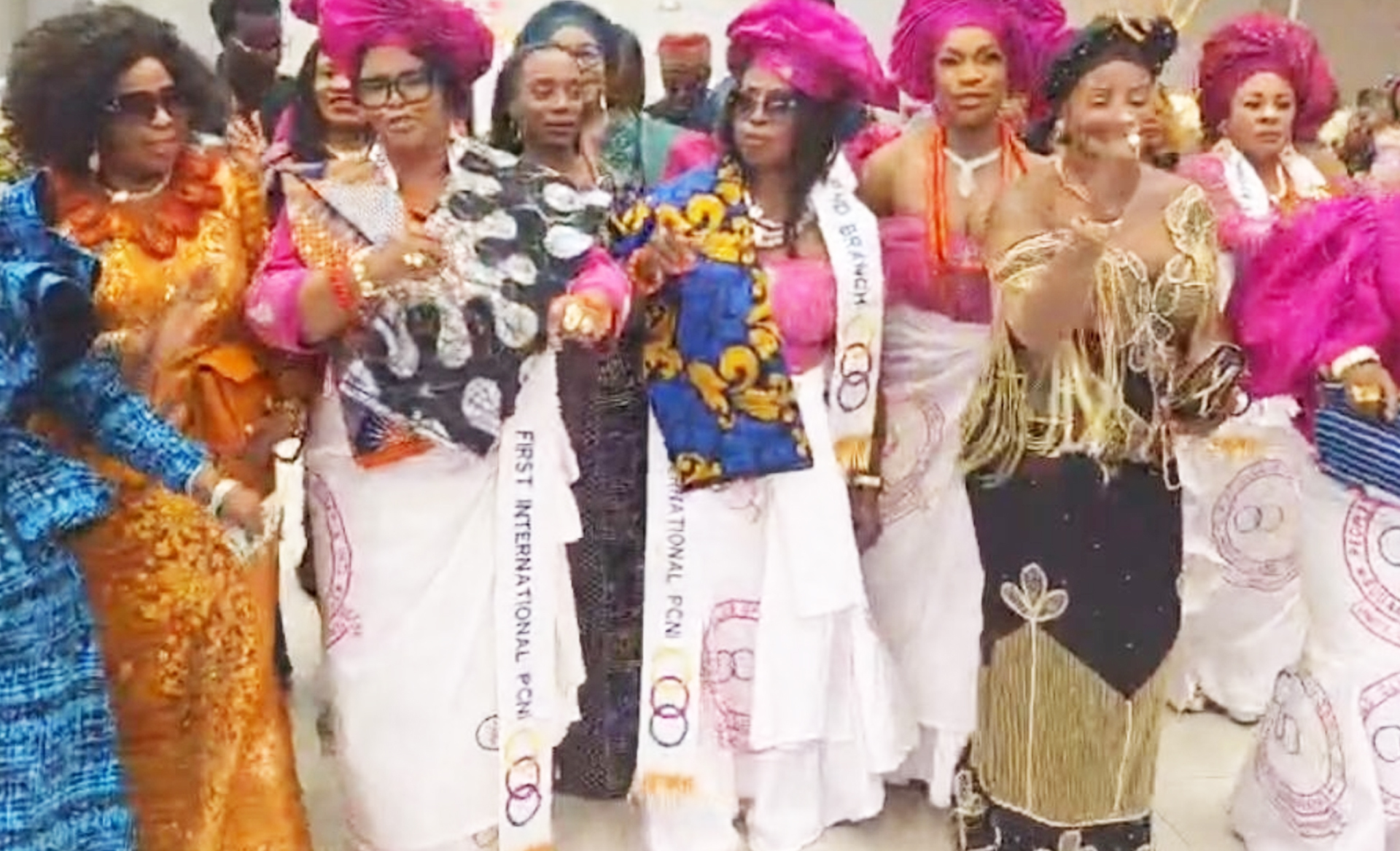
Branch considers annual induction as August celebration of prestige, culture and comradeship inspires growing community interest
HOUSTON, TEXAS — Membership requests to the Sugar Land Branch of People’s Club of Nigeria International (PCNI) have risen significantly following its successful August induction ceremony, prompting the organization to consider making the event an annual affair.
Group Chairman, Hon. Prof. Chris Ulasi, confirmed the surge in interest, saying the branch has received numerous inquiries from prospective members since the ceremony that formally admitted 16 new members to the organization.
“The response since the induction has been remarkable. We have seen a significant increase in people asking about membership and how they can become part of the People’s Club family,” Ulasi said. “Many of them attended the event or heard about it afterward and were impressed by the fellowship, dignity, cultural pride, and genuine comradeship they witnessed.”
Ulasi said the development, including a possible change from the current bi-annual induction arrangement to an annual ceremony, would be discussed at the branch’s September general meeting.
The renewed interest in membership comes on the heels of an elaborate induction that attracted national officers, patrons, branch chairmen, members, and guests from across the People’s Club family.
National President, Atty. Fidelis Onyebueke, who presided over the swearing-in of the 16 inductees, described the event as a total success and commended the Sugar Land Branch, PCNI’s First International Branch, for what he called an exceptional celebration of fellowship, culture, service, and unity.
During the formal ceremony, each inductee was invited to the podium to take the membership oath and receive a certificate from the national president, who was assisted by PCNI Attorney Chukwuka John Ukadike.
Beyond the admission of new members, however, the event offered guests a public display of the traditions that have historically defined the People’s Club: prestige, love, service, and comradeship. Those characteristics were reflected throughout the ceremony, from the reception of national officers and interaction among members to the formal induction, cultural presentation, and extended social celebration that followed.
Grand Patron, Ide Obinna Nnanyelugo Mbachu, said the growing interest in membership was an indication that the organization’s values resonated with guests who experienced the event.
“What people witnessed was the character of People’s Club—the love among members, respect for one another, willingness to serve, and the comradeship that brings us together,” Mbachu said. “Prestige is not simply about appearance; it is about how we conduct ourselves and how we treat people. When the community sees those values demonstrated, it is understandable that others would want to become part of the organization.”
The cultural presentation was among the most visible features of the evening. Women members and associates appeared in coordinated traditional attire featuring red-pinkish blouses with matching head ties and white wrappers bearing the PCNI logo. The men wore all-white outfits complemented by customized PCNI cap pins and distinctive PCNI sashes worn as neckpieces.

The coordinated appearance created a colorful expression of Nigerian cultural identity while reinforcing the sense of unity that characterized the gathering.
As the formal program concluded, the ceremony transitioned into an extended social celebration. Members, inductees, and guests shared food and drinks before taking to the dance floor, with music and festivities continuing into the early hours of Sunday.
The presence of members and officials from different branches also gave the ceremony broader significance for Sugar Land, whose status as the First International Branch places it prominently in PCNI’s history outside Nigeria.
For Ulasi, however, the strongest indication of the event’s impact came afterward, as inquiries from prospective members continued to reach the branch.
He said that while the organization welcomes the increased interest, prospective members would be expected to understand the responsibilities and traditions associated with belonging to the People’s Club. “Membership is about much more than attending social events,” Ulasi said. “It is about service, friendship, responsibility, and commitment to one another. Those are the values we intend to preserve as the branch continues to grow.”
The September meeting is expected to consider how the branch will respond to increased membership interest and whether the success of the August ceremony provides sufficient grounds to move to an annual induction schedule. For the Sugar Land Branch, the aftermath of the August induction may prove as significant as the ceremony itself: 16 members entered the People’s Club that evening, but the celebration appears to have inspired many more to seek a place within its ranks.
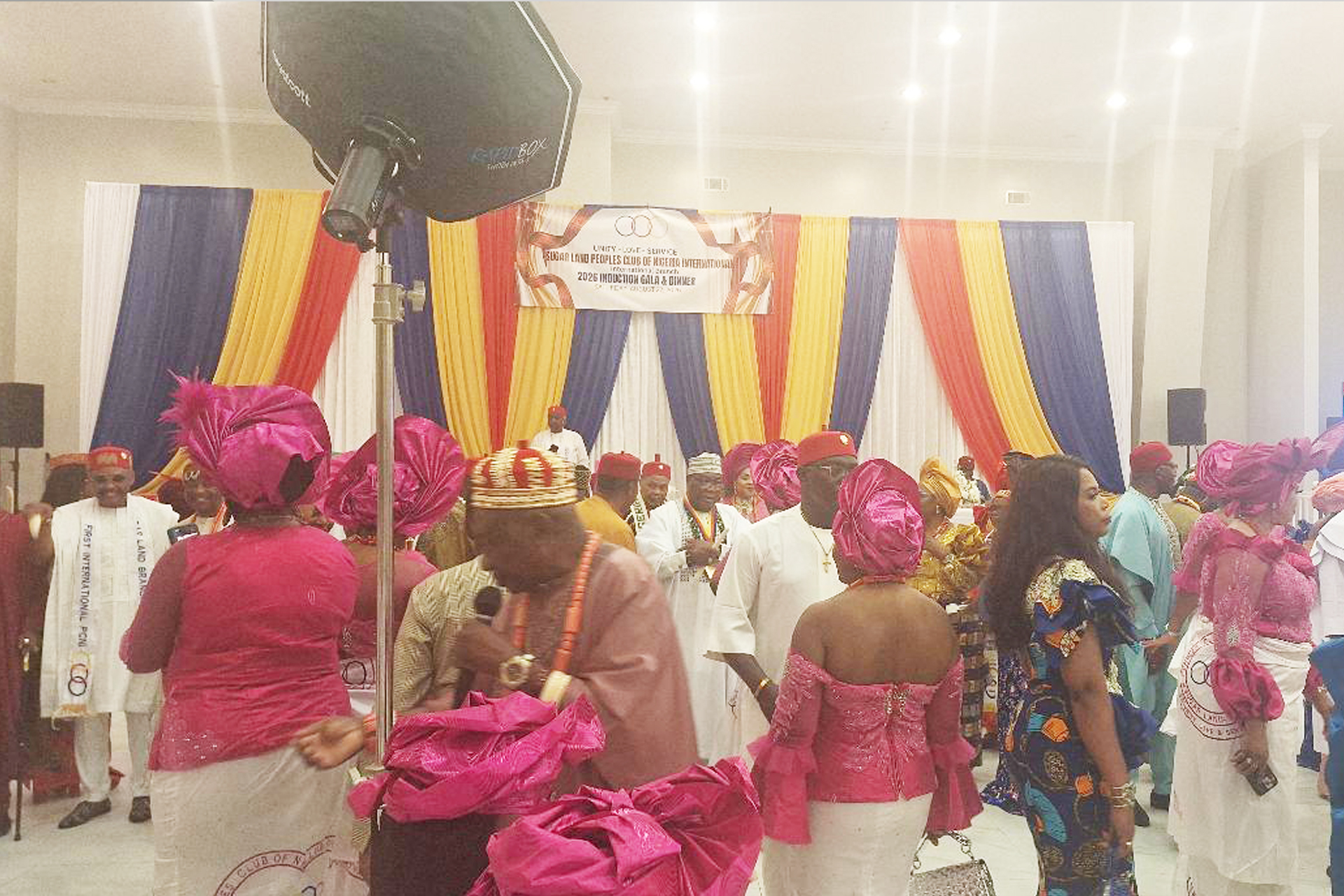
National President Atty. Fidelis Onyebueke hails First International Branch for a spectacular celebration of culture, fellowship and service
HOUSTON, TEXAS — The Sugar Land People’s Club of Nigeria International (PCNI), the organization’s First International Branch, has been declared a total success following a spectacular bi-annual induction ceremony that brought together national leaders, branch chairmen, patrons, members, and guests from across the People’s Club family.
National President Atty. Fidelis Onyebueke, who presided over the swearing-in ceremony, commended the Houston branch for delivering an outstanding event that reflected the organization’s enduring traditions of friendship, fellowship, service, and community.

Hon. Prof. Chris Ulasi, SLPCNI Chairman, leads the grand entrance of the national leadership during the induction ceremony, followed by National President Atty. Fidelis Onyebueke and his wife.
“The Houston branch has once again demonstrated what People’s Club represents at its very best. This was a beautifully organized and highly successful event, rich in culture, fellowship, dignity, and unity. I commend the leadership, members, and entire Houston family for an exceptional celebration worthy of the First International Branch.”
The ceremony witnessed the formal swearing-in of 16 new members, each of whom was individually invited forward to receive a certificate of membership from the national president. Onyebueke was assisted in administering the oath by PCNI Attorney Chukwuka John Ukadike.

Group Photo: Women Members and Associates of SLPCNI
The inductees joined an impressive gathering that reflected the diversity and strength of the People’s Club community. Members and guests traveled from various branches across the United States and beyond, transforming the Houston ceremony into a truly international gathering.
The cultural elegance of the occasion was equally striking. Women appeared in colorful, coordinated traditional attire, featuring red-pinkish blouses and matching head ties paired with white wrappers prominently designed with the PCNI logo. The ensemble created a distinctive and dignified traditional look. Men complemented the occasion with elegant all-white outfits, customized PCNI cap pins, and special PCNI sashes worn as neckpieces.
Among those in attendance were Grand Patron Ide Obinna Nnanyelugo Mbachu; Hon. Prof. Chris Ulasi, Group Chairman; patrons and chairmen from various branches, and People’s Club members representing chapters across the globe.
The formal proceedings eventually gave way to an extended celebration of friendship and camaraderie. Food, drinks, music, and dancing carried the festivities well beyond the scheduled program, continuing for hours into the early morning of Sunday.
For the Houston branch, the celebration represented more than the admission of new members. It reaffirmed the historic importance of the First International Branch and demonstrated the continuing strength of People’s Club as a transnational fellowship rooted in Nigerian identity, friendship, service, and mutual support.
The successful ceremony also underscored the organization’s ability to bring generations and branches together while preserving the cultural traditions that have sustained its membership across continents.
By the end of the celebration, Houston had delivered more than an induction. It had delivered a memorable demonstration of unity, culture, friendship, and organizational excellence—an event that fully embodied the People’s Club spirit.
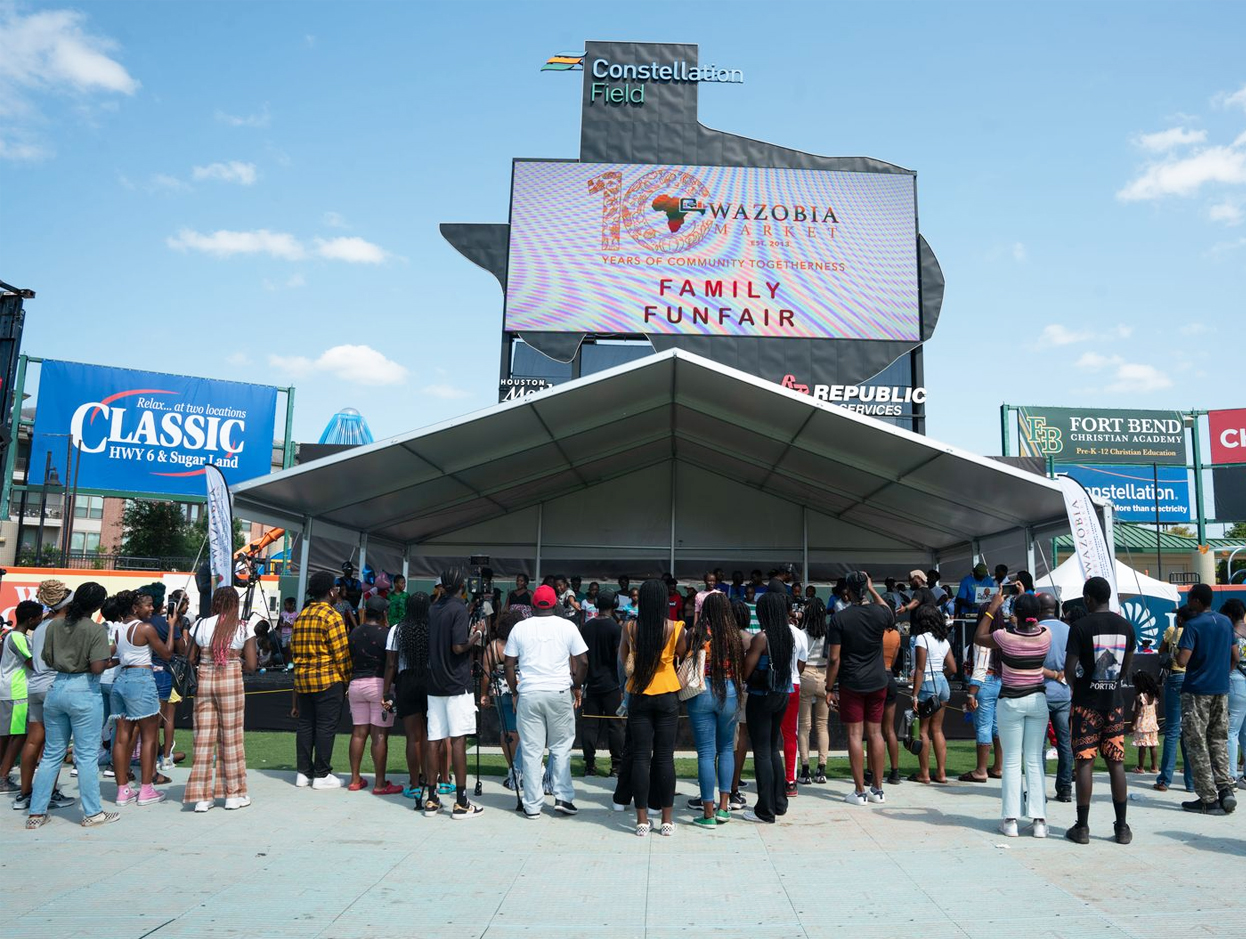
On July 25, 2026, families from across Houston will gather at the West Oaks Mall on 1000 West Oaks, Houston, to celebrate a milestone that extends far beyond food, music, and entertainment. The 10th Anniversary of the Wazobia Family Funfair represents a decade-long journey of community building, cultural preservation, entrepreneurship, and family-centered engagement.
What began as a customer appreciation initiative has evolved into one of the most recognizable African community events in Texas. For ten years, the Funfair has provided a space where families reconnect with culture, children experience heritage, entrepreneurs build relationships, and communities strengthen the bonds that define them.
The story of the anniversary begins with the story of Wazobia itself. Founded in 2013 by entrepreneur Tunde Fashina, Wazobia was created with a vision that stretched beyond commerce. According to Fashina, the goal was never simply to sell products.

FASHINA, OHAZURIKE: For Fashina, leadership carries responsibility. “The feeling is fantastic because you’ve achieved something,” he explained. “But it is also frightening because every decision affects many people.” He added: “The higher you are in an organization, the more people are affected by your decisions.” Those values influence the company’s culture and community engagement efforts.
“The emphasis was not more on getting the products,” he explained. “The emphasis was on creating a feeling of belonging to the customer, so that they feel at home any time they come to our place.”
That philosophy became the foundation of the business. Fashina spent nearly two years developing the business plan. The challenge was enormous. He had limited financial resources and relied heavily on relationships, determination, and faith.
“The business plan had to involve getting this business up with absolutely no money, because I didn’t have any,” he recalled.
The early years tested every aspect of his resolve. He performed multiple roles simultaneously.
“I was a cleaner. I was a restocker. I was a cashier. I did all the work,” he said. “I slept in the shop throughout for almost 18 months because I was working around the clock.”
Despite the challenges, growth came quickly.
“God showed up in ways that I could not describe,” Fashina said. “People started coming in little by little, and the growth rate exceeded everything in the business plan.”
Yet even as the company expanded, community remained central to the mission. “We created a sub-plan,” he explained. “How do we give back to those who built us? How do we let our customers know that we appreciate them?”
The answer became what is now known as the Wazobia Family Funfair.


Over the years, the event evolved from a modest appreciation day into a major annual celebration featuring cultural performances, African music, dance, games, food vendors, business showcases, and family activities.
For Paula Ohazurike, Project Manager at Wazobia, the event represents much more than an annual gathering. Her experience since she joined Wazobia reflects a recurring theme in conversations with employees and customers: Wazobia is viewed not merely as a business but as a community institution.
That philosophy is visible in the Family Funfair. The event creates a rare space where generations come together. Children born in America are introduced to African traditions through music, dance, language, fashion, and food. Parents and grandparents reconnect with memories of home while sharing those experiences with younger family members.
In a city as diverse as Houston, such gatherings carry significant cultural value. Houston is home to one of the largest African immigrant populations in the United States. Yet many families often struggle to maintain cultural connections while navigating modern American life. Events like the Wazobia Family Funfair help bridge that gap.
The significance of the Funfair extends beyond cultural preservation. It serves as a platform for economic empowerment. Small businesses, vendors, artists, and service providers use the event to connect with potential customers. Community organizations engage residents. Entrepreneurs build networks. Relationships formed during the event often extend throughout the year.
According to Ohazurike, the event has become one of the most effective community-engagement platforms within Houston’s African diaspora. The atmosphere itself reflects the spirit of family. Children enjoy games, bounce houses, and face painting. Families participate in contests and group activities. Music fills the air. Food vendors showcase culinary traditions from across Africa.
The result is an experience that feels both festive and deeply personal. Fashina believes that sense of belonging remains the event’s greatest achievement. “There is no reason for us not to provide an environment that people can be proud of,” he said. “A place where they can bring their friends and enjoy themselves.”


That vision continues to guide the organization. Today, Wazobia has expanded significantly, operating multiple locations and employing approximately 250 people. “It is something we are immensely proud of,” Fashina noted. “But this is only the beginning.” Growth, however, is measured by more than financial success.
For Fashina, leadership carries responsibility. “The feeling is fantastic because you’ve achieved something,” he explained. “But it is also frightening because every decision affects many people.” He added: “The higher you are in an organization, the more people are affected by your decisions.” Those values influence the company’s culture and community engagement efforts.
The Family Funfair embodies that philosophy by bringing people together in ways that strengthen relationships and encourage collective progress. Perhaps that is why the event has endured for ten years. Many community events emerge with enthusiasm but struggle to survive. Sustaining a large-scale annual celebration requires trust, consistency, and a genuine commitment to service. The Wazobia Family Funfair has achieved that longevity because it has remained focused on people.
Over the past decade, families have returned year after year. Children who attended the first Funfair now return as young adults. New immigrants have found friendships and support systems. Businesses have launched partnerships. Countless memories have been created.

The anniversary therefore represents more than a milestone date on a calendar; it represents ten years of shared experiences; ten years of preserving culture; ten years of supporting businesses; ten years of strengthening families; and ten years of building community.
As Houston prepares for the 2026 celebration, organizers are looking toward the future while honoring the past. For Ohazurike, the mission remains simple. “We want people to feel welcome,” she said. “We want families to come together and create memories.”
For Fashina, the broader vision remains rooted in possibility. “We can do it,” he said. “We just have to have a goal in mind and take it one step at a time.”
Those words capture the spirit of the Wazobia Family Funfair. At its heart, the event is not simply a festival. It is a living expression of community resilience, cultural pride, and family unity. It demonstrates how a business can become a community anchor. It illustrates how relationships can create opportunities. It reminds us that culture thrives when it is shared. Ten years after its inception, the Wazobia Family Funfair continues to embody the meaning of its name—an invitation for everyone to come together.
In a world increasingly defined by division and isolation, that invitation may be more important than ever. And as families gather once again this July, they will celebrate more than an anniversary. They will celebrate a decade of belonging.


People’s Club Sugar Land Is Growing — Grand Patron Mbachu Explains Why

Professor Josephine Onyido Earns Prestigious Nigerian Academy of Education Induction

PCNI Elevates Chief Dr. Emmanuel Opara to Patron in Historic Ihiagwa Investiture

Emotional Conflict: Is She Toying with Me?

Corruption at the Nigerian Consulate Atlanta – A Victim’s Nightmarish Experience

Gowon’s Book and the Dangerous Politics of Selective Memory

Video: Omambala Cultural Association in Houston Celebrates Motherhood with Joyous Igbo-Inspired Mother’s Day Event

VIDEO: Chris Hollins Opens Cartoon Art Showcase at TSU’s CommWeek

Commissioner Dexter L. McCoy speaks about the African-American Memorial Event
-
 Houston2 weeks ago
PCNI Elevates Chief Dr. Emmanuel Opara to Patron in Historic Ihiagwa Investiture
-

 Houston1 month ago
Membership Interest Soars After Sugar Land People’s Club’s Successful Induction
-

 Houston3 weeks ago
Membership Surge Continues as Dr. Nkem Ugwu Joins People’s Club
-
 Community2 weeks ago
People’s Club Sugar Land Is Growing — Grand Patron Mbachu Explains Why
-
 Education2 weeks ago
Professor Josephine Onyido Earns Prestigious Nigerian Academy of Education Induction