

News
How ESPN ranked Best 2023 FIFA Women’s Soccer World Cup players

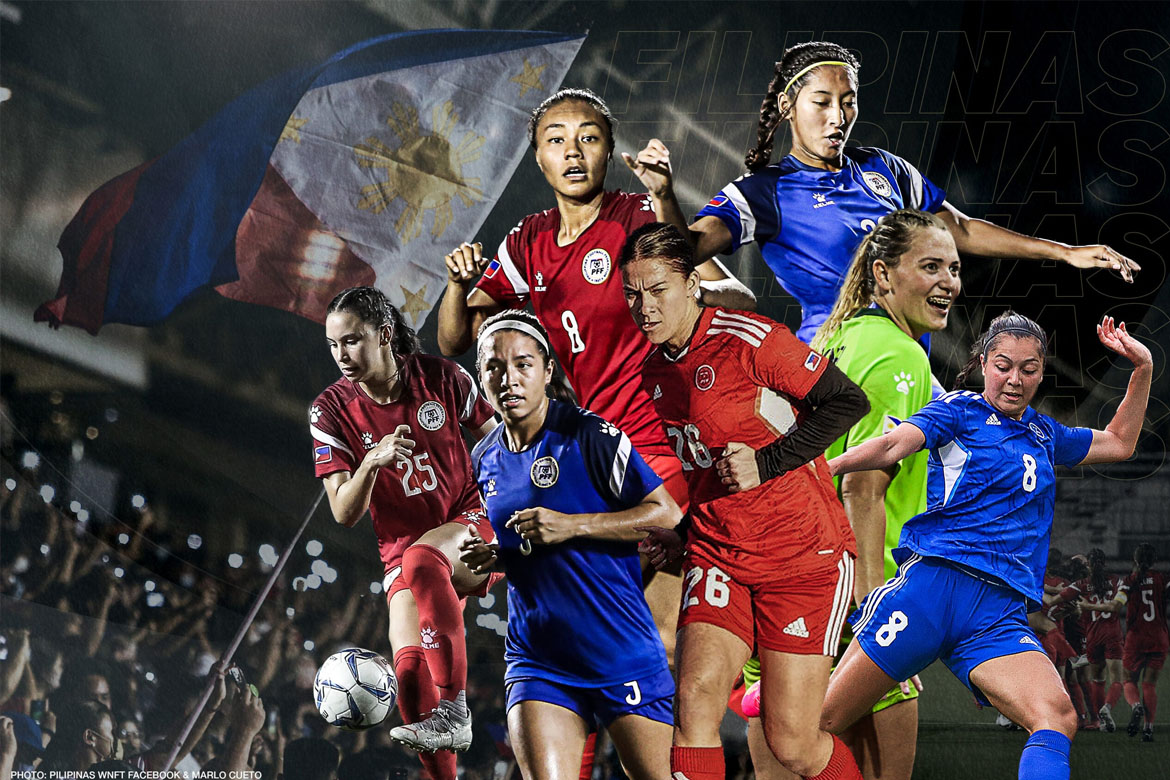
These players come from all over the world, and they represent not just the best players at the World Cup, but the players who make for appointment viewing.
Culled from the ESPN: The Women’s World Cup has been spectacular so far, with shocks galore in the group stages — Italy and Brazil OUT, Jamaica and Nigeria in the Round of 16, the U.S. finishing second in their group are just a few highlights. With this tournament showcasing the best players in the world and the up-and-comers, there’s been a lot to enjoy so far this summer in Australia and New Zealand.
What makes this tournament so special? Mainly it’s the growth we’ve seen in women’s football over the past four years and beyond — instead of all the best players in the world hailing from a few top teams, the sport is more competitive than it’s ever been, and that’s apparent in the 2023 edition of ESPN FC’s World Cup Rank. A panel of ESPN experts — including our writers who will be at the tournament delivering daily coverage (Caitlin Murray, Jeff Carlisle, Sophie Lawson, Tom Hamilton, Sam Marsden, Julien Laurens, Marissa Lordanic and Mark Ogden) — selected the top 25
These players come from all over the world, and they represent not just the best players at the World Cup, but the players who make for appointment viewing. Although someone like U.S. winger Megan Rapinoe is a player the panel considered based on her talent and ability to impact games, she is expected to play a substitute role during this World Cup and thus was left outside of the top 25 for that reason. This list comprises players we felt could make massive contributions if their teams go far this summer. (Editor’s note: All ages are as of the start of the tournament on July 20.)

Sebastian Salazar and Kay Murray analyze the players ranked 11th through 15th on ESPN FC’s list of the 25 best players at the Women’s World Cup.
25. Kosovare Asllani
Country: Sweden
Age: 33
Club: AC Milan
Position: Midfielder/striker
Sweden‘s enigmatic veteran, Kosovare Asllani, is set for her third World Cup. After coming so close to glory at the 2021 Olympics, winning silver after losing to Canada, the attacking midfielder hasn’t been shy about expressing her desire to finally win a tournament with Sweden.
Having grown into a leader on the pitch between the 2015 and 2019 editions of the FIFA tournament, Asllani has flourished in her more mature role under manager Peter Gerhardsson. With the focus more heavily on attackers such as Fridolina Rolfö, Stina Blackstenius and Madelen Janogy, Asllani remains key in advancing the ball into dangerous positions for Sweden and taking on players one-on-one to set up her teammates. –Lawson
24. Racheal Kundananji
Country: Zambia
Age: 23
Club: Madrid CFF
Position: Striker
While captain and attacking talent Barbra Banda stole the headlines when Zambia made their major tournament bow at the 2021 Olympics, it is Banda’s compatriot Racheal Kundananji who comes into the World Cup after a sensational season with Madrid CFF, scoring 25 times in 29 appearances. Having scored in both of Zambia’s warmup games against Ireland and Switzerland, Kundananji is likely to take up the mantle with Banda and consistently offer a hopeful attacking outlet.
Although Zambia are long shots to progress from their group, which features both Spain and Japan, the Copper Queens are likely to find the back of the net multiple times throughout the group stage. It’s Kundananji who’ll probably be the one celebrating. — Lawson
23. Linda Caicedo
Country: Colombia
Age: 18
Club: Real Madrid
Position: Striker
Heading into her fourth World Cup in 16 months after outings at the U17 Women’s World Cup in March 2022 and the U20 tournament five months later, attacking sensation Linda Caicedo has been tipped for big things.
She moved to Real Madrid earlier this year, and the goal scorer has been key in revitalising the Colombia senior team since her senior debut in 2019. With a delicate first touch and eye for a goal, the teenager plays with a freedom that her age allows and has rarely looked overawed against top-tier opposition. Drawn into an intriguing group with Morocco and South Korea as well as favorites Germany, there is plenty of room for Caicedo to dazzle and Colombia to progress. — Lawson
22. Wendie Renard
Country: France
Age: 32
Club: Olympique Lyonnais
Position: Center back
The French captain will turn 33 the day the World Cup begins, and perhaps that will a good omen as she plays in her third and likely final World Cup. The Lyon center back has had a fantastic career at club level (eight Champions League trophies, 16 French titles and nine French Cups) but with Les Bleues, it has been heartbreak after heartbreak. France, for all their talent and promise, have never made it past the quarterfinals of a World Cup and have never medaled in the smaller Olympics tournament either.
Once again this summer, Wendie Renard will be France’s leader in a team where her experience and height — she’s 6-foot-2 — are precious. With her reading of the game and her expert anticipation, she’s one of the best players in the world and one of the most feared center backs. She will relish the challenge of facing the best No. 9s in the world with the hope it’ll carry France all the way. — Laurens
21. Ellie Carpenter
Country: Australia
Age: 23
Club: Olympique Lyonnais
Position: Right fullback
Ellie Carpenter is one of a handful of players entering this World Cup after successfully returning from an ACL tear. Her comeback is Australia‘s gain with the right back proclaiming she feels fitter and stronger than before her knee injury. Coach Tony Gustavsson has backed her up, arguing that she was already fitter and stronger than pre-injury.
With a workhorse engine and a propensity to push higher up the pitch, Carpenter’s influence on this Matildas team in attack and defense will be pivotal. — Lordanic
20. Lauren James
Country: England
Age: 21
Club: Chelsea
Position: Right wing
Last summer, Lauren James watched on as the Lionesses made history in their European Championships triumph. A year on and she’s an integral part of their plans to extend the domination to world football. The 2022-23 campaign was James’ breakout season — the versatile forward lit up the WSL at Chelsea with her mesmerizing dribbling and lethal finishing.
Sebastian Salazar and Kay Murray discuss players ranked Nos. 20-16 of the best players at the Women’s World Cup.
She made her England debut in September but will vie for a star role when they open their World Cup campaign against Haiti. Leah Williamson, England’s injured captain, describes her as a “cheat code” and “incredible” and off the back of a season with Chelsea where James played a key role in their domestic double, she’ll be hoping for more silverware this summer. — Hamilton
19. Khadija ‘Bunny’ Shaw
Country: Jamaica
Age: 26
Club: Manchester City
Position: Striker
It’s easy to forget that Bunny Shaw played every minute of Jamaica‘s maiden World Cup campaign in France in 2019 because her tournament was so unremarkable. She picked up an injury just before it started, which seemed to severely stifle her performance. However, this time around, the Reggae Girlz’s enigmatic striker won’t have the same concern.
She’s developed her game across professional stints with Bordeaux and Manchester City, and the goal-getter has rounded out her game, taking responsibility not just for scoring but also luring defenders away to create space for her teammates to attack. With Jamaica not favored in their group, the Reggae Girlz will be relying on Shaw to occupy defenders as much as getting on the ball in the box. She’s a player to watch as much for her goals as her work off the ball, and if Jamaica are to get out of their group, they’ll need Shaw. — Lawson
18. Marta
Country: Brazil
Age: 37
Club: Orlando Pride
Position: Forward
One of the greatest if not the greatest ever in the women’s game, Marta is back for her sixth World Cup. She has said this will be her last World Cup, and it’s the final chance to seal her legacy on the international stage having never won a major trophy with Brazil.
She’s already secured the record for the most goals in a World Cup, men’s or women’s, with 17, and she’ll be looking to extend that. Of course, Marta isn’t the same player who scored those 17 World Cup goals. At 37 years old, she doesn’t have quite the explosiveness she used to and she’s become increasingly injury prone — but her vision on the field and her skills on the ball remain world class. When Marta the magician has the ball at her foot, it feels like anything is possible. — Murray
17. Ashley Lawrence
Country: Canada
Age: 28
Club: Chelsea
Position: Right full-back/center back
Full-back, center back, occasional midfielder, Ashley Lawrence‘s willingness to be deployed wherever she is needed is part of what’s made her so reliable for Canada over the years — even though she’s much more likely to stay in a full-back role at the World Cup.
Since her breakout at the 2015 World Cup, she has found a level of consistency playing at the highest level that few can boast. Whether it was her six years at PSG or her 100-plus caps for Canada, Lawrence rarely fails to deliver on the pitch. For a Canada team expected to lean more into their defensive strength in Australia, Lawrence will be a building block for the team, as important in helping the Canadians keep clean sheets as in sparking their attacks. — Lawson
16. Danielle van de Donk
Country: Netherlands
Age: 31
Club: Olympique Lyonnais
Position: Central midfielder
A tricky midfielder who delights in beating her opposition one-on-one, Danielle van de Donk shouldn’t be a new name to those who follow the women’s game. But her career has especially been given a shot in the arm since her return from a long-term ankle issue that culminated in a shin tendon rupture.
Although there is an overlap in the skills of Van de Donk and some of her Dutch teammates, like forward Lieke Martens and midfielder Victoria Pelova — all regulars in manager Andries Jonker’s team — it’s Van de Donk who comes into the tournament in better form that her compatriots and with more experience than the younger up-and-comers like Pelova and midfielder Jill Baijings. Expected to be key for the Dutch this summer, Van De Donk is likely to make new fans with her silky footwork. — Lawson
15. Kadidiatou Diani
Country: France
Age: 28
Club: Paris Saint-Germain
Position: Right wing
Kadidiatou Diani is coming off an incredible season. She had her best campaign for PSG, scoring 30 league goals in an unusual center-forward position despite primarily featuring as wide player in the past. Although she was exceptional up front for Paris, she has announced she will leave after six seasons, with reports she’ll join Lyon and start a new chapter.
Kay Murray and Sophie Lawson take a look at ESPN FC’s Best 25 players at the Women’s World Cup from 25 to 21.
Now, she enters this World Cup having added a new dimension to her attacking abilities this year, and she can show Les Bleues how much her game as evolved amid the challenge of playing a new position. She is expected to return to her wide position under new head coach Hervé Renard, but in the absence of still-injured Marie-Antoinette Katoto, Diani will be France‘s main goal-scoring threat up front. –Laurens
14. Yui Hasegawa
Country: Japan
Age: 26
Club: Manchester City
Position: Central attacking midfielder
As the second-most-capped player in the Japan squad behind veteran captain Saki Kumagai, attacker Yui Hasegawa will face the onus to step up and be the key player in the heart of the Japanese midfield. A creative No. 10 with an eye for a defense-unlocking pass, Hasegawa will need to take more leadership responsibilities to help her team navigate the group stage and assist the squad’s younger members to navigate their first tournament.
Potentially one of the most exciting players in a team that could delight if they get everything right, Hasegawa should be on everyone’s radar. — Lawson
13. Fridolina Rolfo
Country: Sweden
Age: 29
Club: Barcelona
Position: Left wing
The sight of Fridolina Rolfo charging down the left wing with power, pace and directness is common in Barcelona, where the Sweden international has been converted from a left winger into a left-back. In practice, given how much time Barca spend in the final third, her role has not actually changed that much, but it means she does have to be more attentive to defensive duties.
For Sweden, she will be one of the main ingredients in their attack this summer. — Marsden
12. Pernille Harder
Country: Denmark
Age: 30
Club: Bayern Munich
Position: Attacking midfield
She was on top of the European game when she made the switch to Chelsea ahead of the 2020-21 season, but Pernille Harder‘s past three years have been far more muted. The Danish captain has struggled for fitness and rhythm, but a new chapter appears to be ahead: A return from a lengthy injury layoff at the start of May revealed a player getting back to her best, and she made a move to Bayern Munich last month.
A natural leader in attack for Denmark, Harder will have her work cut out for her to help her team advance to the knockouts at this World Cup, but as much the architect as the bricklayer, she should still manage to dazzle when she gets on the ball. — Lawson
11. Debinha
Country: Brazil
Age: 31
Club: Kansas City Current
Position: Playmaking central midfielder
Debinha is a versatile attacker — she can be the creative playmaker finding through-balls between the lines to create chances for her teammates, or she can make runs in behind and finish clinically herself. Her versatility stems from her unpredictability — she tries stuff, without fear.
The Brazilian team has its share of creative players who bring a signature flair on the field, but it’s not giving credit where it’s due to simply say Debinha’s style is Brazilian. It is, of course, but it’s also brilliant, and if Brazil is going to finally have success on the world stage, she will be the engine. — Murray
10. Alex Morgan
Country: USA
Age: 34
Club: San Diego Wave FC
Position: Striker
When Alex Morgan first broke in with the U.S. women’s national team, she earned the nickname “Baby Horse” for her energy and running style. As she prepares for her fourth Women’s World Cup, she’s not just alive and kicking — she remains one of the USWNT’s most important players.
Morgan retains plenty of mobility, as well as a nose for goal, as evidenced by the fact that she led the NWSL in scoring last season with 15 goals in 17 games. In fact, she’s been so effective that players such as Sophia Smith, Trinity Rodman and Lynn Williams, who have played in central positions at club level, are shunted to the wing. If the U.S. is to claim its third straight World Cup title, you can bet Morgan will be at the center of the action. — Carlisle
9. Alexandra Popp
Country: Germany
Age: 32
Club: VfL Wolfsburg
Position: Striker
Seven-time Frauen Bundesliga winner, Champions League winner, Euro runner-up and Olympic gold medalist, Alexandra Popp‘s trophy cabinet runneth over. A key player for both club and country, captaining both, Popp is heading into the World Cup off of the back of another impressive season, having scooped the German domestic double as well as leading Wolfsburg to another Champions League final, only to lose to Barcelona.
A force in attack but comfortable further back in midfield, Popp’s experience will be as important as her goals for a young Germany team this summer. A player who’s more than happy to put her body on the line and throw herself into challenges, you can expect to see her score plenty of headers, or endure her share of collisions trying. — Lawson
8. Keira Walsh
Country: England
Age: 26
Club: Barcelona
Position: Defensive midfielder
England have been ravaged by injuries to key players going into the World Cup, with captain Leah Williamson, playmaker Fran Kirby and forward Beth Mead all ruled out of the tournament with serious knee injuries. But while the absence of the two Euro 2022 winners is significant blow for coach Sarina Wiegman, the one player the Lionesses really couldn’t afford to lose was Keira Walsh, and luckily she’ll be at the tournament leading the way.
The Barcelona midfielder is the glue which holds the England side together — a defensive anchor — but she is also capable of moments of creativity, as with the pass from which Ella Toone scored the winning goal in the 2022 Euros final against Germany. Walsh is at the peak of her career, and her form and fitness will be crucial for England. — Ogden
7. Lena Oberdorf
Country: Germany
Age: 21
Club: VfL Wolfsburg
Position: Defensive midfielder
Still just 21, combative and intelligent midfielder Lena Oberdorf has been a mainstay of the national team since locking down her place in 2019. Although playing a slightly more attacking role for club, Wolfsburg, the midfielder who earned plaudits for her displays during the 2022 Euros is much more of a disruptor for Germany, snuffing out opposition attacks before they happen.
Strong both on the ground and in the air, Oberdorf’s reading on the game is far beyond her years and her ability to see attacks unfolding ensures a near-watertight German midfield. — Lawson
6. Ada Hegerberg
Country: Norway
Age: 27
Club: Olympique Lyonnais
Position: Striker
One of the brightest sparks in European women’s football, the past three years for Ada Hegerberg have been punctuated by injury, and before that was a five-year feud with her federation over conditions for the women’s national team, which left her refusing to represent her country. However, since her return to the Norway team ahead of the 2022 Euros, there has been a renewed sense of positivity with what the 2018 Ballon d’Or winner can add.
A determined and physically powerful attacker, Hegerberg doesn’t need anything more than a smart ball into the box to cause all sorts of trouble. In a Norway team that should be able to shine in attack, she could once again end up being the jewel in the crown for the Football Girls. — Lawson
5. Caroline Graham Hansen
Country: Norway
Age: 28
Club: Barcelona
Position: Striker/Right wing
One of the big mysteries at Barcelona is why Caroline Graham Hansen never appears on the shortlists for individual awards. Five Barca players made the Ballon d’Or top 20 this year, yet the Norwegian winger was not there. Ask any Barca player, though, and they will tell you she is among the top 10 players in the world at the very least.
Her speed, change of direction and decision-making have turned some of the game’s best left-backs inside out. Her ability to create for her teammates has also been complemented by the addition of important goals over the past 12 months. Her relationship in attack with Ada Hegerberg will be key to Norway‘s World Cup hopes. — Marsden
4. Alexia Putellas
Country: Spain
Age: 29
Club: Barcelona
Position: Central playmaking midfielder
Alexia Putellas goes into the World Cup as the back-to-back Ballon d’Or winner but with uncertainty over how big her impact will be at the tournament. The midfielder tore her ACL last summer, missing the European Championships with Spain and most of the club season with Barcelona.
She returned for the last six matches of the season, making a late cameo in the Champions League final, and scored in her first start for Spain in a year against Panama recently. However, she has still not completed 90 minutes in a single game, and it is unclear if she is ready to compete at the very top level yet. If she is ready, Spain will benefit from her goals, link-up play and leadership, which are world-class. — Marsden
3. Sophia Smith
Country: USA
Age: 22
Club: Portland Thorns
Position: Left wing/striker
Leading a generational shift within the U.S. women’s national team is Sophia Smith, the young forward who will likely score the bulk of the USWNT’s goals. As a striker in club play and primarily a winger for the U.S., Smith’s strength is in her confidence and audacity to go at goal. She’s not afraid to take on defenders, and she’s emerged as a ruthlessly incisive finisher as she has come into form for this World Cup. As she heads to New Zealand, she puts pause on a club season where she is the NWSL‘s Golden Boot leader with 10 goals in 13 games.
The injuries to U.S. attackers Mallory Swanson and Catarina Macario only put more pressure on Smith to step up and take on the goal-scoring burden, but her recent form suggests she’s more than ready for it. Whenever Smith is on the ball, it figures to be must-see. — Murray
2. Aitana Bonmati
Country: Spain
Age: 25
Club: Barcelona
Position: Central midfield
In the absence of Alexia Putellas, who spent much of the past year sidelined with injury, Aitana Bonmati has taken the plaudits this past season as Barcelona won the Champions League for the second time in their history. Bonmati was named as the tournament’s best player by UEFA and played a key role, setting up the second goal, in the comeback win against Wolfsburg in the final.
A versatile midfielder, she told ESPN she feels more comfortable playing further forward, where she can better influence the game and contribute with goals and assists. In terms of her style, she is perhaps the best representation in the women’s game of the typical midfielder you associate with successful Barca and Spain sides: terrific technique, a wonderful touch and an ability to play in tight spaces. — Marsden
1. Sam Kerr
Country: Australia
Age: 29
Club: Chelsea
Position: Striker
It’s a skill she’s honed over years and during her past three seasons, Chelsea fans have reaped the rewards of her innate love for the grandest stages. Her goals in FA Cup finals and on the final day of the season are stuff of legend. But now on home soil for the 2023 Women’s World Cup, it feels like it’s Australia‘s turn to be treated to a Sam Kerr show unlike any they’ve seen before.
Fans, haters and neutrals alike will be treated to her killer instinct in front of goal, her intelligence in knowing when to lead and when to assist, supported by one the best Matildas’ attacking lines in history, and in front of an adoring home crowd. This is Kerr’s time. Enjoy the show. — Lordanic


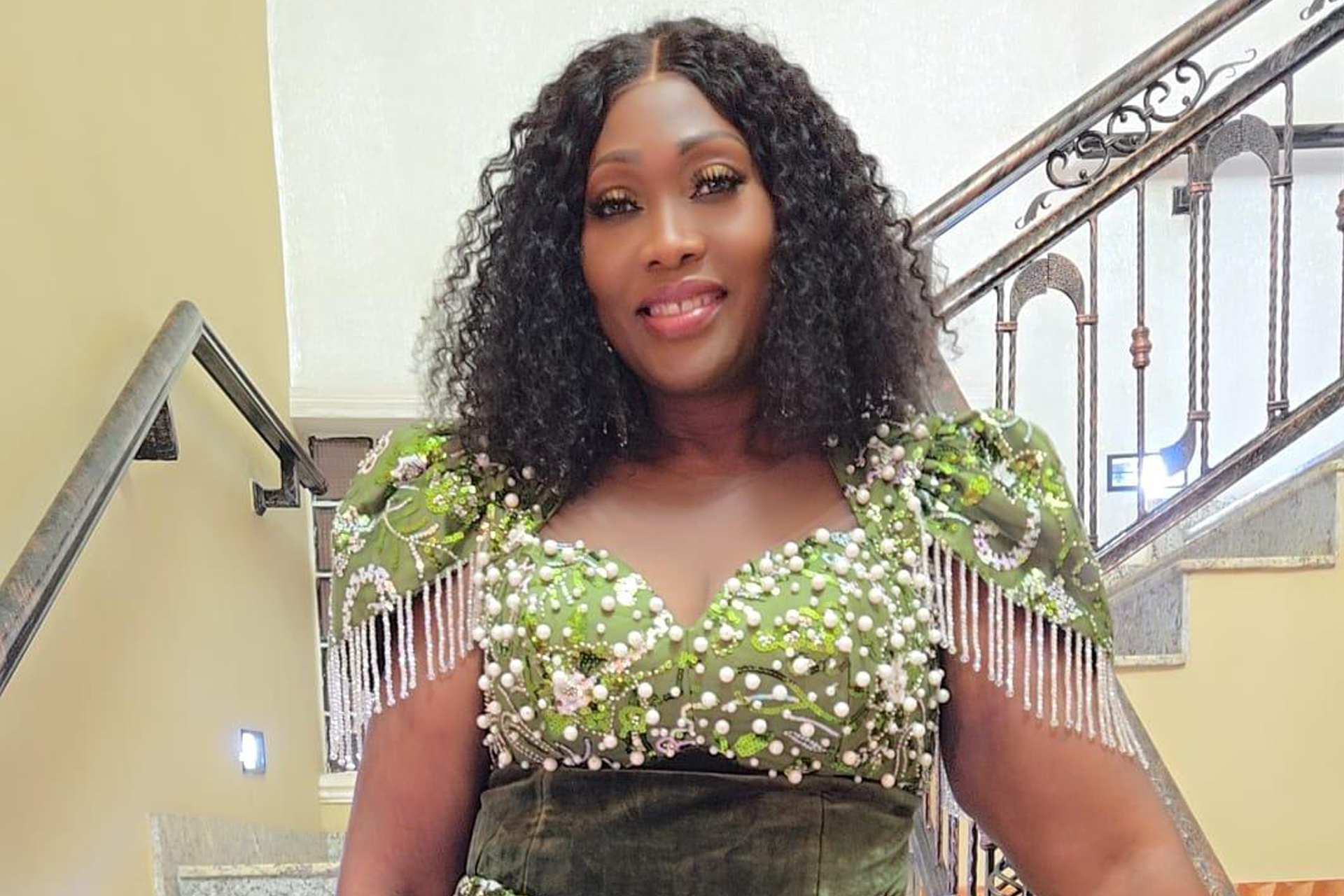
Houston philanthropist and community leader reflects on five decades of faith, family, resilience and service as friends and well-wishers prepare for her grand golden jubilee celebration on October 31, 2026.
HOUSTON, TEXAS — Turning 50 represents far more than reaching a milestone in age. It is a celebration of maturity, accumulated wisdom, personal accomplishments and the extraordinary journey through life’s challenges and triumphs. For many, the golden jubilee offers an opportunity to reflect on meaningful relationships, embrace renewed purpose and look toward the future with gratitude and confidence.
For Houston-based philanthropist and community leader Chief Oby Marcel, that milestone has arrived with excitement, thanksgiving and an unmistakable sense of fulfillment.

Chief Oby Marcel: This milestone has arrived with excitement, thanksgiving and an unmistakable sense of fulfillment.
All roads will lead to the Trinity Event Center, 8402 Howell Sugarland Road, Houston, Texas, on Saturday, October 31, 2026, when Chief Oby Marcel hosts a prestigious golden jubilee celebration beginning at 7 p.m. The anticipated all-formal gathering will bring together family members, friends, community leaders, associates and well-wishers to celebrate a woman whose life reflects a commitment to family, cultural identity, community engagement and service.
Speaking enthusiastically about her approaching birthday, Chief Oby Marcel described the occasion as a deeply personal celebration of divine grace and the experiences that have shaped her journey.
“Wow! I can hardly believe I’m stepping into the radiant glow of 50! My heart is dancing with joy, overflowing with excitement, and wrapped in deep gratitude,” she declared.
“Fifty beautiful years of God’s grace, unfailing love, abundant blessings, renewed strength, and memories that shimmer like precious jewels. Through every storm and sunrise, every challenge and triumph, every tear and laughter-filled moment, God has remained faithful.”
Beyond the birthday festivities, Chief Oby Marcel’s golden jubilee highlights her active participation in several cultural, religious and philanthropic organizations within Houston’s Nigerian community.
She is a prominent member of Gold Club International, where she holds the distinction of Lady Gold and serves as Admission Chairlady. She also serves as Treasurer of Prestige International and Assistant Financial Secretary of CWO Aquinas. Her community involvement extends to First Umuokpu Anambra USA, the Aguleri-Otu cabinet and the Omambala Cultural Association in Houston. Through these affiliations, Petersen maintains connections with organizations dedicated to cultural preservation, fellowship, mutual support and community development.
As a mother, philanthropist and community leader, she represents a generation of Nigerian women in the diaspora who balance family responsibilities with active participation in organizations that strengthen cultural bonds and promote collective progress.

The Young Shall Grow: From the Innocence of Yesterday to the Golden Glory of Today — 50 Years of Grace, Beauty, and Becoming.
The significance of turning 50 reaches beyond organizational achievements or public recognition. It represents an opportunity to embrace life with greater wisdom, confidence and optimism. According to Chief Oby Marcel, “I’m not simply turning 50; I’m crossing the threshold into a dazzling new chapter filled with wisdom, confidence, happiness, purpose, and endless possibilities.”
“I’m proud of the woman I’ve become, grateful for every mile God has carried me, and thrilled by the beautiful horizons unfolding before me.” Her enthusiasm captures the spirit of the forthcoming celebration: an occasion dedicated not merely to marking five decades but to honoring a journey defined by resilience, gratitude and enduring faith.
As preparations continue for the October 31 festivities, Chief Oby Marcel is approaching her golden milestone with a message of renewed hope and determination. “At 50, I’m not getting older; I’m blooming brighter, standing stronger, growing wiser, and becoming even more fabulous!”
And with that declaration, the celebrant offers a fitting conclusion to her golden jubilee reflections: “Cheers to my golden jubilee! My best years are still ahead of me!”
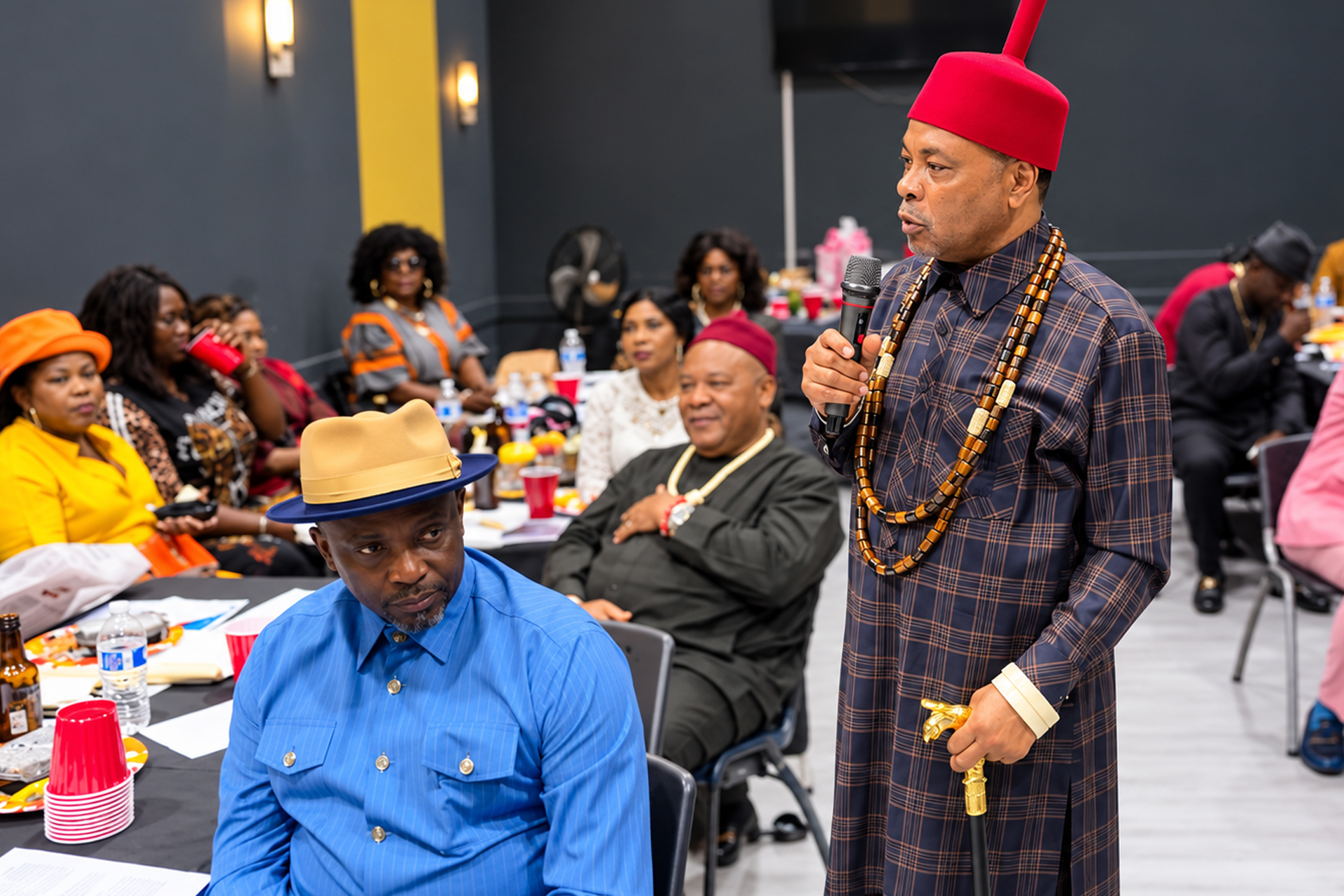
…Credits principled leadership, philanthropy, and a renewed commitment to “Unity, Love and Service” for the historic branch’s growing membership and influence.
SUGAR LAND, TEXAS — The recent growth and renewed visibility of the Sugar Land People’s Club of Nigeria International did not happen by accident. According to the branch’s Grand Patron, Ide Obinna Nnanyelugo Mbachu, its resurgence is rooted in something far more enduring than ceremonies, titles, or social gatherings: a commitment to putting the organization’s guiding principles into practice.
In an interview reflecting on the branch’s recent progress, Mbachu said the philosophy of “Unity, Love, and Service” remains central to the People’s Club’s identity and is increasingly defining the direction of its Sugar Land branch.
“Unity means recognizing that our individual differences must never become greater than the institution that brings us together,” Mbachu said. “Love means genuinely caring about one another—not only when we celebrate, but when members and their families face difficult moments. Service is where those values become action. If we cannot translate fellowship into service to humanity, then we have missed the purpose of the organization.”

Grand Patron, Ide Obinna Nnanyelugo Mbachu.
People’s Club of Nigeria International traces its origins to Nigeria in 1971 and has since expanded through branches in Nigeria and internationally. Sugar Land occupies a distinctive place in that history as the organization’s First International Branch.
Mbachu said that legacy carries responsibility.
“People’s Club is not simply a social club where people gather, celebrate, and go home,” he said. “At its core, it is a philanthropic institution committed to community welfare. Our fellowship must have a human purpose. We must be able to look beyond ourselves, identify needs within our communities, and respond with compassion, resources, and action.”
He pointed to the COVID-19 pandemic as one example of that philosophy at work.
“I will never forget the COVID period, when fear and uncertainty had disrupted virtually every aspect of life,” Mbachu recalled. “Members of our Sugar Land branch stepped forward to distribute food to families struggling through that crisis. People were concerned about their own safety, yet our members understood that service was most meaningful when the community needed us most. That experience demonstrated what the People’s Club should represent.”
The branch has recently experienced renewed momentum in membership. Following its successful 2026 biannual induction, 16 new members were formally admitted, while additional community members have continued to express interest in joining.
Mbachu attributes that growth partly to greater organizational visibility, active programming, and an environment where prospective members can see fellowship and community engagement working together.
He particularly credited Hon. Prof. Chris Ulasi, Group Chairman of SLPCNI, and his executive team with helping reposition the branch.
“Professor Ulasi and his team deserve tremendous credit,” Mbachu said. “Leadership requires consistency, patience, and the ability to bring different personalities together around a common objective. The progress we are witnessing reflects considerable work behind the scenes; organizing members, strengthening participation, and ensuring that the branch continues moving forward.”
Mbachu also acknowledged PCNI National President Atty. Fidelis Onyebueke, whose leadership he said has contributed to stronger relationships across the organization.
“The National President has emphasized peace, reconciliation, and mutual respect among branches,” he said. “An international organization cannot prosper when its branches operate in unnecessary conflict. His efforts to promote understanding, dialogue, and unity across the People’s Club family have contributed significantly to the stability and renewed enthusiasm we are experiencing.”
For Mbachu, however, growth cannot simply be measured by numbers. The quality and commitment of those joining remain equally important.
“Our doors are open to reputable men and women who believe in what People’s Club represents and are prepared to contribute positively,” he said. “We welcome people who value integrity, fellowship, community service, and mutual respect. Membership should never be about what title you receive; it should be about what value you bring.”
That distinction, Mbachu argues, will determine whether the current momentum becomes lasting institutional progress.
For Sugar Land People’s Club, the formula he offers is remarkably straightforward: protect unity, practice love and make service visible. “When those three principles are genuinely lived,” Mbachu said, “the organization does not have to advertise its greatness. The community will see it.”
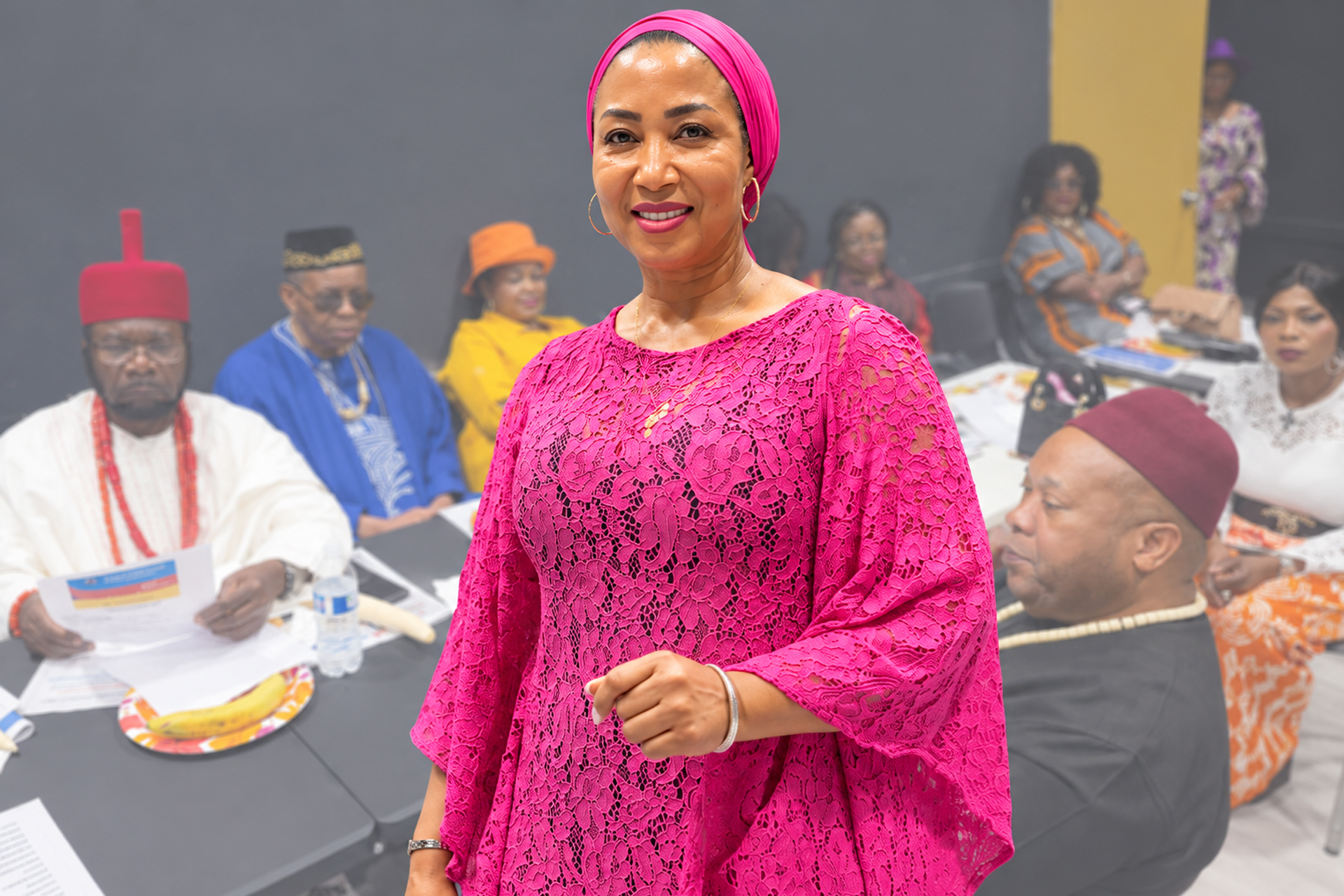
Following a successful induction ceremony, the First International Branch continues to attract new members drawn to its tradition of friendship, service, culture, and community
SUGAR LAND, TEXAS — The Sugar Land People’s Club of Nigeria International (SLPCNI) is continuing its membership expansion following its recently concluded induction ceremony, with Dr. Nkem Ugwu becoming one of the latest community members to join the organization.
Ugwu, a Sugar Land resident originally from Nsukka, Enugu State, Nigeria, is an entrepreneur and mother of three sons, a mother-in-law, and a grandmother. She describes service to others, family, and community engagement as important parts of her personal and professional life.

Grand Patron Ide Obinna Nnanyelugo Mbachu addressing the September Conference of the Sugar Land PCNI
Her membership comes on the heels of the branch’s successful bi-annual induction ceremony, during which 16 new members were formally sworn in by PCNI National President Atty. Fidelis Onyebueke. The celebration attracted national leaders, patrons, and members representing branches from across the People’s Club network.

Photo from left: Hon. Chief Sir Michael Okeke; Hon. Anaeto Okakpu “Oranwezuluaku”; Grand Patron Ide Obinna Nnanyelugo Mbachu; Hon. Dr. Nkem Ugwu ; Hon. Prof. Chris Ulasi, Group Chairman; Hon. Chief, Sir Basil Mbuba; Hon. Chief Sir Dr. Uche Egbuchuam “Akudo World Wide.”
Ugwu said joining the organization provides an opportunity to develop meaningful relationships while contributing to its mission.
“I am truly excited and honored to join the prestigious People’s Club of Nigeria International, Sugar Land Branch. I look forward to getting to know fellow members, building lasting friendships, and becoming actively involved in this vibrant and welcoming community. I am especially drawn to the Club’s tradition of fellowship, service, and mutual support, and I hope to contribute my experience, energy, and passion for serving others to its continued growth.”
Grand Patron Ide Obinna Nnanyelugo Mbachu welcomed Ugwu, describing continued interest in membership as encouraging for the historic First International Branch.

Membership Chairperson Hon. Chief Udoji Achebe and Hon. Ndidi Chidume
“When people of accomplishment and community spirit continue to identify with our organization, it tells us that the values upon which People’s Club was built remain relevant. We welcome Dr. Ugwu and look forward to the experience and fellowship she brings to our family.”
Hon. Prof. Chris Ulasi, Group Chairman, said the branch’s recent induction helped showcase an organization that continues to combine Nigerian cultural heritage with community engagement in Houston.
“Our successful induction created tremendous enthusiasm, but our focus goes beyond ceremonies. We are building a stronger organization rooted in friendship, responsibility and service. Dr. Ugwu’s decision to join reflects that continuing momentum.”

One of the meeting hosts, Hon. Professor Keih George, introduces the co-meeting hosts.
Membership Chairperson Hon. Chief Udoji Achebe said the branch remains interested in individuals prepared to participate actively in its programs and fellowship.
“Membership is about belonging, but it is equally about participation and contribution. We are delighted to welcome Dr. Ugwu and other prospective members who share the principles and aspirations of People’s Club.”
For SLPCNI, the growing interest following its induction represents another chapter in the evolution of a branch with a special place in the organization’s history.
And for Ugwu, it marks the beginning of a new journey—one centered on friendship, community, and service.


Fifty and Fabulous: Chief Oby Marcel Celebrates a Golden Milestone in Houston

People’s Club Sugar Land Is Growing — Grand Patron Mbachu Explains Why

Professor Josephine Onyido Earns Prestigious Nigerian Academy of Education Induction

Emotional Conflict: Is She Toying with Me?

Corruption at the Nigerian Consulate Atlanta – A Victim’s Nightmarish Experience

Gowon’s Book and the Dangerous Politics of Selective Memory

Video: Omambala Cultural Association in Houston Celebrates Motherhood with Joyous Igbo-Inspired Mother’s Day Event

VIDEO: Chris Hollins Opens Cartoon Art Showcase at TSU’s CommWeek

Commissioner Dexter L. McCoy speaks about the African-American Memorial Event
-

 Houston3 weeks ago
PCNI Elevates Chief Dr. Emmanuel Opara to Patron in Historic Ihiagwa Investiture
-

 Houston1 month ago
Membership Interest Soars After Sugar Land People’s Club’s Successful Induction
-

 Houston4 weeks ago
Membership Surge Continues as Dr. Nkem Ugwu Joins People’s Club
-
 Community2 weeks ago
People’s Club Sugar Land Is Growing — Grand Patron Mbachu Explains Why
-
 Education3 weeks ago
Professor Josephine Onyido Earns Prestigious Nigerian Academy of Education Induction
-
 Houston2 days ago
Fifty and Fabulous: Chief Oby Marcel Celebrates a Golden Milestone in Houston