News
Kamala Harris trashes Trump in her rare trip to the US-Mexico border
Published
2 years agoon
Harris, who last visited the border in 2021, accused Donald Trump of being focused on “scapegoating instead of solutions” and “rhetoric instead of results”.
Earlier on Friday, the Republican nominee argued Harris was “getting killed” on the issue and supports “the worst bill ever drawn” on border security.
Polls suggest more Americans trust Trump over Harris on handling the border and illegal immigration.
Cochise County, a conservative stronghold in Arizona that became a hot spot for record-high border crossings last autumn, provided a backdrop for the Democratic nominee to inspect the border wall, speak with local officials and project a message of toughness.
She claimed Trump “did nothing to fix our broken immigration system” as president, adding that Republicans were trying to force a “false choice” between border security and a “safe, orderly and humane” immigration system.
“We can and must do both,” she told supporters at a campaign event in Douglas.
Harris vowed to further toughen asylum laws enacted earlier this year by President Joe Biden and to revive a bipartisan border security measure Trump helped block.
But Jim Chilton, a local rancher, said he has “seen the evidence” of what Harris would do in power.
“I’ve watched her and President Biden,” he told the BBC. “We’ve had an open border policy. We now are understanding what that really means.”
Every year, thousands of undocumented migrants walk through Mr Chilton’s 50,000-acre ranch just south of Arivaca.
He has motion-activated cameras that show the procession of people, all dressed in near-identical camouflage, across his land. He is convinced drug dealers and gang members are among them.
Menacing signs threaten trespassers with death, but Mr Chilton has also installed drinking fountains so nobody dies making the hazardous journey.
Three corpses were found on his land last year.
A Trump supporter, Mr Chilton does not believe Harris will crack down on the flow of migrants.
“She’s changing her mind just to get votes and lie to us. It’s outrageous,” he said.
Concerns over stemming the influx are ever present in tiny border towns like Douglas.
Homeowners here can see through miles of border fencing into Mexico when they step out onto their front porches.
One woman said her neighbours built brick walls around their homes to keep migrants from hiding out in their backyards.
Even some Democrats here who are voting for Harris said they preferred Trump’s border approach and felt safer during his tenure.
Last year, a handful of churches and the town’s visitor centre transformed overnight into makeshift shelters to house newcomers.
Since then, the Biden administration has enacted tougher restrictions on seeking asylum and migrant crossings have plunged to four-year lows.
Gail Kochorek is a dedicated volunteer who drives down to the wall to hand out food and water to people on the Mexican side, usually waiting until after dark to cross back into the US.
To her, the political approach to immigration is increasingly dehumanising to people hoping to making a better life in her country.
She is disappointed to hear Harris promising to crack down on migrants but, given a choice between her and Trump, the Democrat can count on Ms Kochorek’s vote.
Laughing at Trump’s pledges to secure the border, she showed the BBC gaps in Trump’s wall and where people could cut through the steel fencing.
The former president has vowed to seal the border by completing construction of the barrier, increasing enforcement and implementing the largest mass deportation of undocumented migrants in US history.
But earlier this year, he urged Republicans to ditch a hardline, cross-party border bill that was endorsed by Biden and Harris.
“That’s the worst bill ever drawn. It’s a waste of paper,” Trump told supporters earlier on Friday at a rally in Walker, in the swing state of Michigan.
Denying that he lobbied congressional allies to tank the piece of legislation, Trump claimed Harris “want to see if she could salvage it and make up some lies”.
“She went to the border today because she’s getting killed on the border,” he said.
In a statement following Harris’s event, the Trump campaign characterised the visit as a “drop-in” and “photo op”.
The border crisis has been a major vulnerability for Harris.
As vice-president, she has not directly shaped border policy but was put in charge of addressing the root causes of migration from the Northern Triangle countries of Guatemala, El Salvador, and Honduras.
Her efforts targeted systemic issues like poverty, corruption, and violence, which for years have driven large numbers of people from these regions to make the treacherous journey to the United States.
It is too soon to tell if the two-part strategy – bolstering democratic institutions and coaxing business leaders to invest in the region – is working, but Harris has taken a lot of blame for upward trends in migration.
As a candidate, she has highlighted her experience as a prosecutor when she was attorney general of California, particularly in investigating transnational and cartel organisations, to emphasise her approach to tackling immigration-related challenges.
Her recent remarks have aligned closely with Biden’s emphasis on border security and law enforcement, but also reflect how the politics of the issue have shifted notably to the right.
As she seeks to convince voters that she has a plan, her biggest challenge is finding an approach that balances the legal and humanitarian aspects of the immigration system.
You may like
-
Sugar Land People’s Club Welcomes a New Generation Into a Legacy of Unity, Love and Service
-
A Chronicle of Community: Tracing the Roots of Amaiyi Igbere
-
Book Review: The Gospel According to the Grocery Aisle
-
Wazobia Family Funfair AT 10 – Decade of Family, Culture, and Community
-
From Noise to Votes: Nigerian Youth Must Turn Online Fire into Electoral Power
-
Between Silence and Sabotage: Jonathan’s Return to Political Manipulation
Houston
Sugar Land People’s Club Welcomes a New Generation Into a Legacy of Unity, Love and Service
Published
3 days agoon
August 8, 2026
-
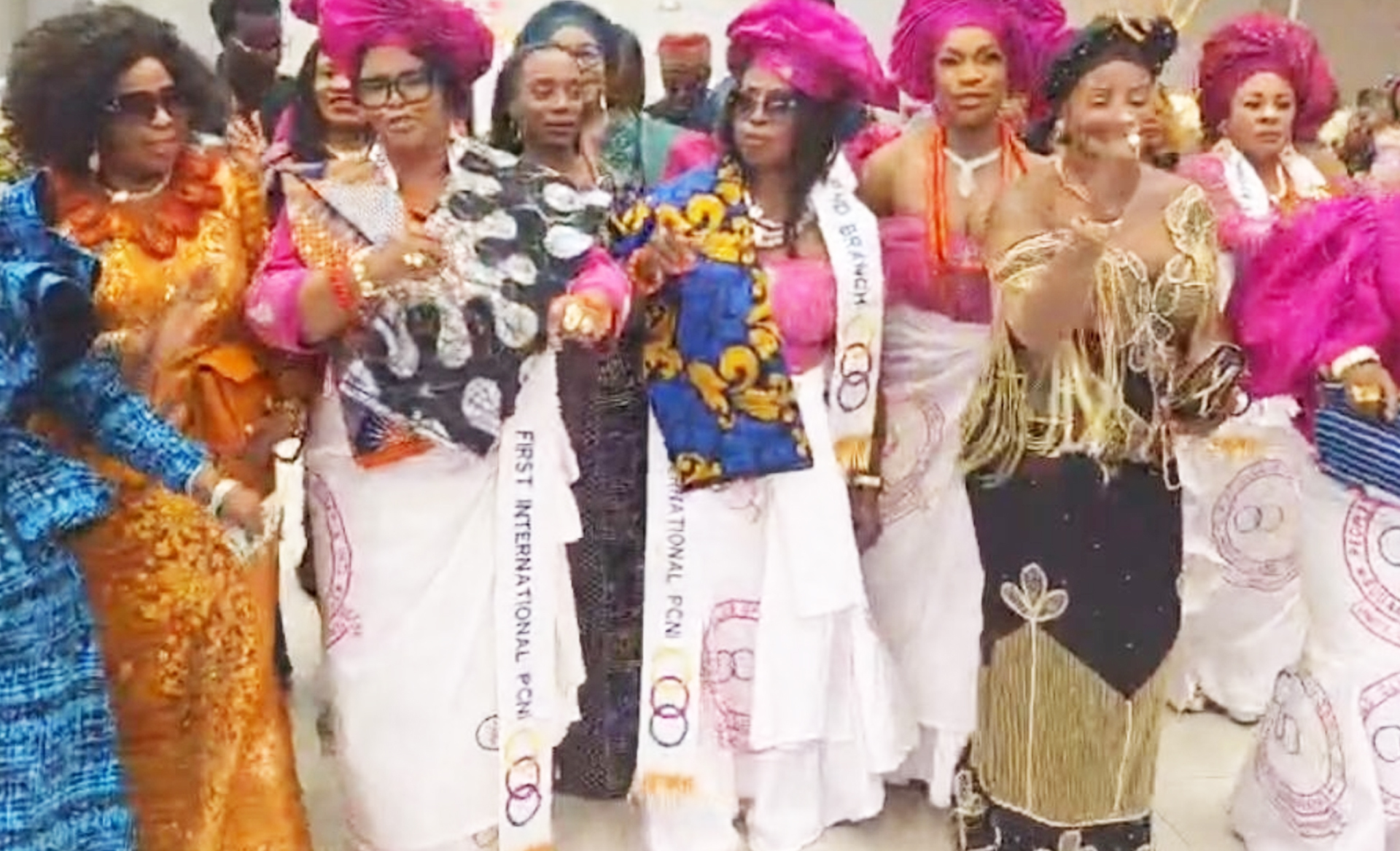
As the First International Branch of People’s Club of Nigeria International prepares to induct 16 distinguished members in Houston, the historic Sugar Land chapter celebrates its enduring legacy of friendship, cultural identity, community service, and the values that have sustained the People’s Club tradition across generations.
All roads will lead to Houston, Texas, on Saturday, August 22, 2026, as the Sugar Land People’s Club of Nigeria International, the First International Branch, welcomes 16 new members into its prestigious social confraternity.
Scheduled to take place 7 pm, at the Igbo Catholic Community Hall, 8250 Creekbend Drive, Houston, the evening will mark the organization’s 2026 Bi-Annual Induction Ceremony, bringing together members, families, community leaders, professionals, friends, and supporters for an occasion that reaches beyond the formal admission of new members.
It will be a celebration of heritage, fellowship, and continuity, a ceremonial sharing of values from one generation of members to another.
For the People’s Club in general, induction represents more than membership. It signifies acceptance into a fraternity built around relationships, responsibility, dignity, and service. Those admitted become custodians of an identity that extends beyond individual accomplishment and asks members to translate friendship into action and success into service. That distinction is particularly important for the Sugar Land organization because of its position as the First International Branch of People’s Club of Nigeria.
There may be other organizations and chapters carrying the People’s Club identity throughout the Greater Houston area and elsewhere, but Sugar Land, as the first international branch, occupies a distinctive place in that history. It represents the genesis of the People’s Club and remains a branch established to preserve and transmit the principles set by its original founders in Nigeria.
Those principles have remained remarkably simple: bring people together, cultivate friendship, encourage achievement, support one another, celebrate culture, assist the community, and recognize that prosperity is more meaningful when it creates opportunities to improve others’ lives.
More Than a Social Club
Social organizations have always played an important role in community life, particularly among immigrant communities, where geographic relocation can disrupt family structures, cultural networks, and traditional systems of belonging. For Nigerians living thousands of miles from their homeland, organizations such as People’s Club can serve as a bridge between two worlds.
They provide a place where heritage can be celebrated without preventing integration into American society; where professional accomplishments can coexist with cultural responsibilities; and where friendships can develop into support systems that endure through celebrations, challenges, and changing circumstances.

This is particularly relevant in Houston, one of America’s most culturally diverse metropolitan areas and home to a vibrant African and Nigerian diaspora. Within such a city, social organizations can perform functions that go far beyond entertainment. They facilitate networking, mentorship, and civic participation. They connect newcomers with established residents. They mobilize resources when families experience hardship. They celebrate milestones, support charitable causes, and create spaces where cultural traditions can be passed down to younger generations.

Perhaps most importantly, they give people a sense of belonging. The Sugar Land People’s Club has built its identity around that understanding. Its reputation for sophistication, charity, civic engagement, and community outreach reflects an organization committed not only to the advancement and well-being of its membership but also to making those benefits meaningful within broader society.
Members bring different professional backgrounds, accomplishments, personalities, and life experiences into the organization, yet fellowship provides common ground. Membership, therefore, carries expectation, and the ability to coexist peacefully with others matters.
Preserving the Spirit of the Founders
People’s Club of Nigeria has grown beyond its Nigerian origins into a wider network of branches and members across Nigeria and the international community. Expansion, however, brings an important challenge: how does an organization grow without losing the principles that gave it life?
For the Sugar Land First International Branch, the answer has been to preserve the institution’s foundational values while allowing its membership to evolve with contemporary society.

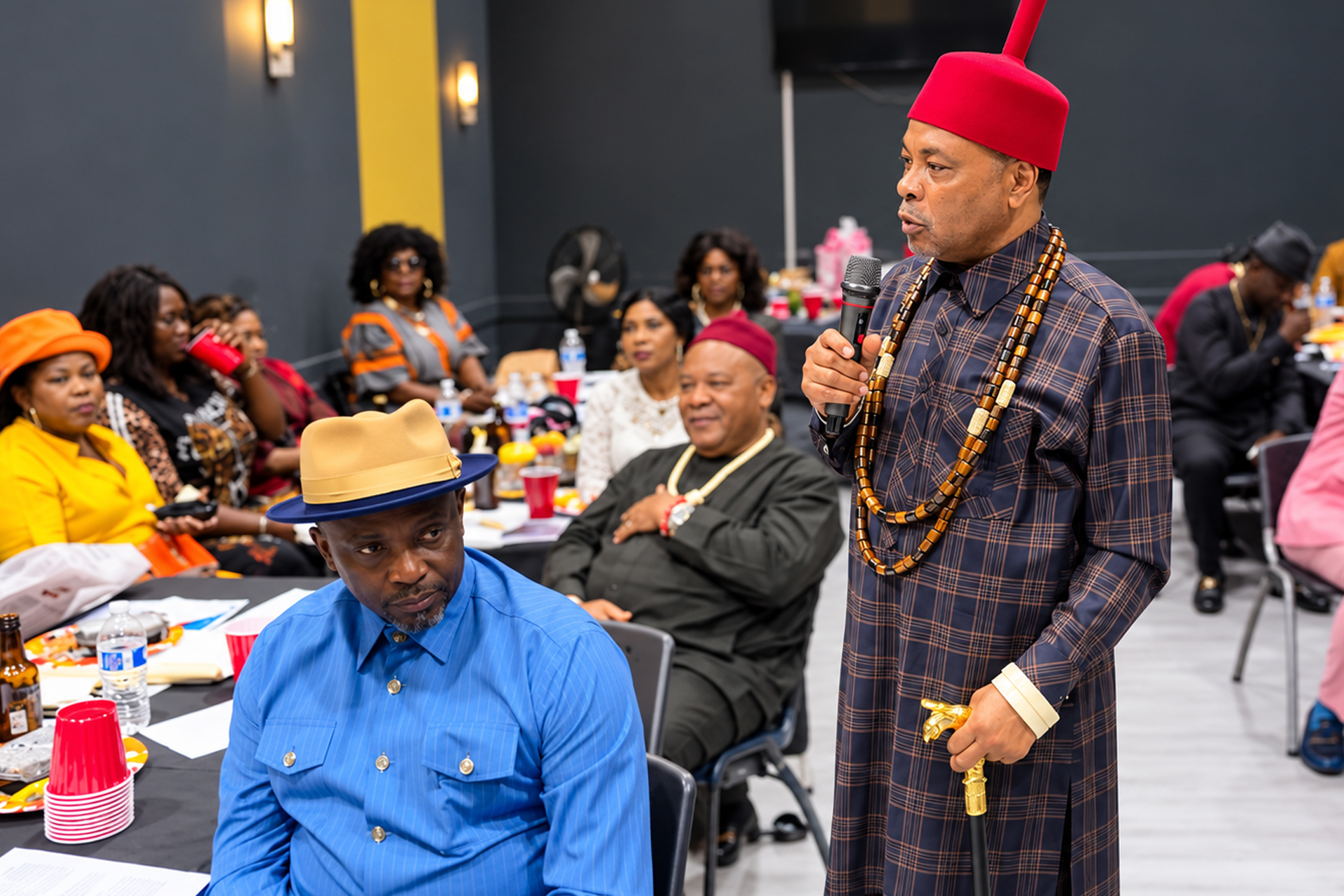
The Group’s Grand Patron, Ide (Sir) Obinna Nnanyelugo Mbachu
The branch’s historical significance is consequently measured not merely by age or chronology, but also by its ability to remain connected to the spirit of the original People’s Club while creating a fraternity relevant to Nigerians and friends of Nigeria living in a modern American metropolis.
The Group’s Grand Patron, Ide (Sir) Obinna Nnanyelugo Mbachu, views the 2026 induction from precisely that perspective.
He said, “Every induction reminds us that we inherited something valuable that must be protected and strengthened. People’s Club represents unity, friendship, dignity, and service. As we welcome these distinguished members, we are not simply increasing our numbers; we are entrusting another generation with the responsibility of preserving our heritage and serving humanity.”
His message captures the significance of the ceremony, justifying that membership comes with both privilege and responsibility.
Sixteen New Members, One Shared Commitment
The 2026 ceremony assumes additional significance because of the professional and community backgrounds represented among the incoming members.
The 16 inductees are Hon. Ndy Okorie, Hon. Peter Nweke, Hon. Dan Nwadei, Hon. Arinze Ezebuilo, Hon. Ebele Eneh, Hon. Philo Umoh, Hon. Amuluonye Ufondu, Hon. Okwy Okpala, Hon. Prince Chime, Hon. Macdonald Okpalaobi, Hon. Tony Akale, Hon. Amechi Onyejegbu, Hon. Emma Igwilo, Hon. Eucharia Iloabachie, Hon. Anthony Ogbo, and Prof. Kieh.
Together, they represent the next chapter of a fraternity whose future depends upon members willing to invest their talents, relationships, and experiences in its continued development. Their induction also demonstrates an important dimension of sustainable social organizations: renewal.
Organizations endure when they can welcome new people without abandoning their identity. New members introduce ideas, professional networks, energy, and perspectives, while established members transmit institutional knowledge, traditions, and expectations. The result is continuity through renewal. Chairman of the Sugar Land People’s Club of Nigeria International, Hon. Prof. Chris Ulasi, describes that process as central to the organization’s future.
According to Hon. Dr. Ulasi, “We welcome our new members into a family strengthened by friendship, integrity and service, confident that their talents and commitment will enrich our fellowship and advance our collective mission.”
Among those scheduled for induction is Dr. Anthony “Tony” Ogbo, Publisher of Texas International Guardian and a professor at Texas Southern University. Ogbo’s professional journey in journalism, publishing, and higher education has centered largely on communication, community engagement, and public service. For him, joining the People’s Club represents something deeper than becoming affiliated with another organization. It represents finding a peaceful fraternity where friendship and social responsibility intersect.
Explaining his decision to accept membership, Ogbo said: “I chose Sugar Land People’s Club because I found a peaceful fraternity where friendship is genuine, and belonging has meaning. Here, the values we often advocate are not merely spoken about; they are practiced. I wanted to belong to a family that lives those principles every day.”
His perspective speaks to one of the fundamental attractions of social organizations: people ultimately seek communities where they can express their values. Indeed, professional accomplishments may create recognition, but belonging creates connection.

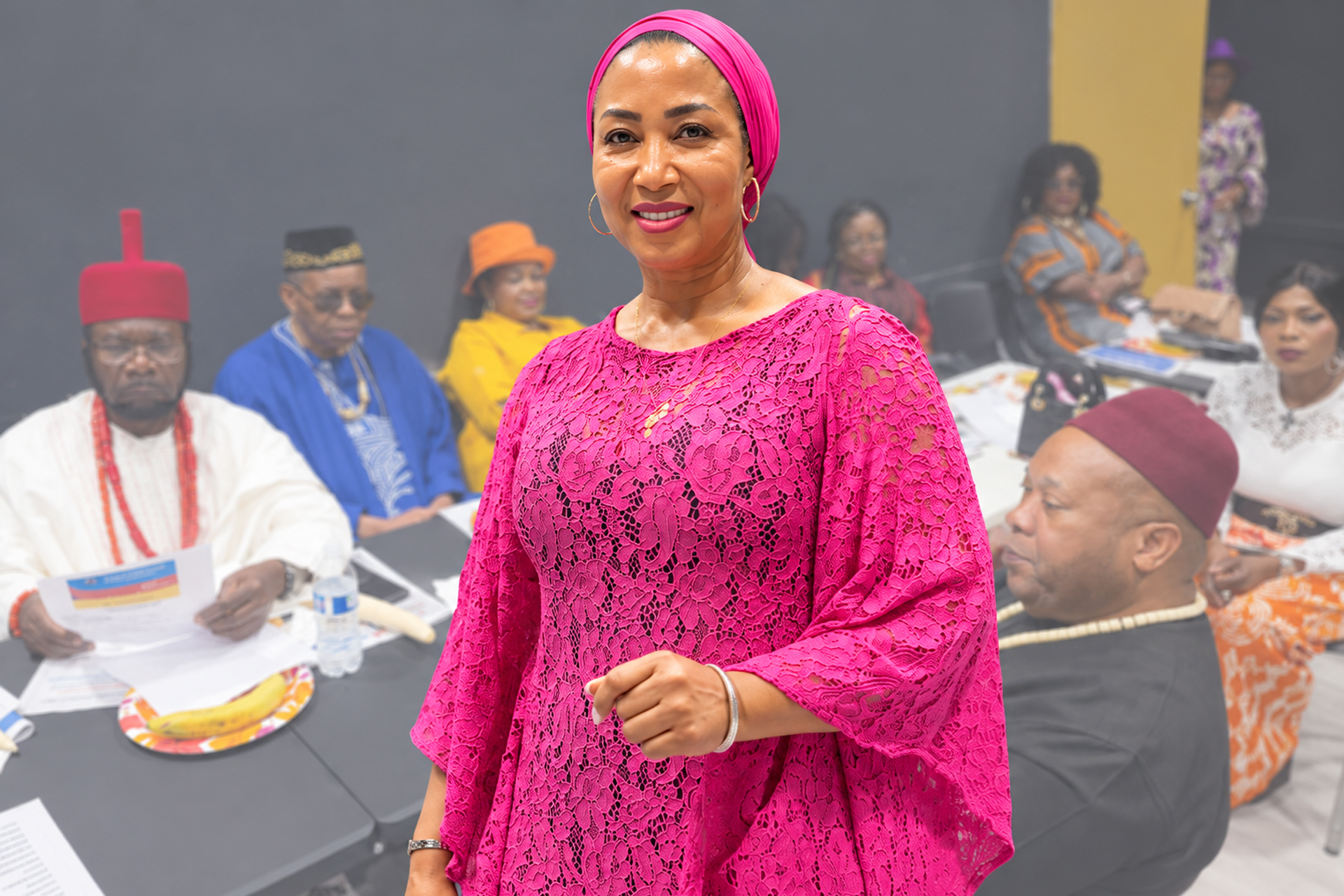
Chairman Hon. Prof. Chris Ulasi (Left); Hon. Achebe Udoji Achebe, Okosisi, (far right)

Hon. Prof. I. D. Onwudiwe, General Secretary (Left); Hon. Sir Jude Chibuzo Achuama (Akaekpuchionwa n’Oko), Public Relations Officer
Unity, Love, and Service
For Hon. Prof. I. D. Onwudiwe, General Secretary of the Sugar Land People’s Club of Nigeria International, the strength of the organization lies in the people who collectively sustain it. He credits the leadership of Chairman Hon. Prof. Chris Ulasi, the commitment of the executive team, the fellowship of members, and the guidance of Patron Hon. Sir Mbachu and Patron Elect Hon. Prof. Emma Opara with contributing to the organization’s continued growth.
Although a prior family commitment in London, England, will prevent Onwudiwe from attending the August 2026 induction ceremony, his message to the incoming members centers on the organization’s enduring motto: Unity, Love, and Service. “As SPCNI welcomes new members into its family, we remain firmly guided by Unity, Love, and Service. These values challenge us to support one another, promote harmony within our communities, and remain our brothers’ and sisters’ keepers. Together, we can accomplish far more than any of us could achieve alone.”
To the inductees, his message is equally warm: “I offer my heartfelt congratulations and warmest welcome to every new inductee. May your membership be rewarding, may the friendships you establish endure, and may this celebration become the beginning of many years of fellowship, service, shared accomplishment, and unforgettable memories within our People’s Club family.”
A Fellowship Without Barriers
That sense of family is echoed by Hon. Achebe Udoji Achebe, Okosisi, who sees social interaction not as a luxury but as an essential dimension of human existence. In his view, people naturally seek companionship, but meaningful fellowship becomes sustainable when individuals discover others who share compatible values and aspirations. “Socializing is in the fundamental nature of man, and it becomes sustainably inviting when you congregate with like minds. Social clubbing should therefore foster a conviviality that benefits everyone who participates. At PCNI Sugar Land First International Branch, members are treated as one family, and the love is evenly distributed.”
Achebe emphasizes another characteristic he believes distinguishes the organization: fellowship should not be used to create artificial divisions among members. He said, “Come to this branch where class distinction is not the bedrock. What binds us is fellowship, respect, and the joy of being together. Every meeting creates another reason to return because genuine friendship leaves you looking forward to the next opportunity to share, laugh, celebrate, and strengthen one another.”
Such an outlook is important because social organizations can easily become associated exclusively with prestige, status, or exclusivity. The deeper measure of their social value, however, lies in whether they create relationships that transcend those distinctions.
Membership With a Purpose
For Hon. Sir Jude Chibuzo Achuama (Akaekpuchionwa n’Oko), Public Relations Officer of the group, membership should ultimately translate into a positive contribution to society. “People’s Club represents what becomes possible when friendship is transformed into service. We celebrate one another, but we also recognize our obligation to the wider community. Every new member strengthens our capacity to promote unity, preserve our heritage, support worthy causes, and demonstrate through our actions what responsible fellowship truly means.”
That philosophy positions the organization as part of the community’s social infrastructure rather than merely a gathering place. Strong civic and social organizations can complement formal institutions by addressing human needs that government agencies, businesses, and professional organizations may not always reach.
A member dealing with bereavement may need companionship more than bureaucracy. A newly arrived immigrant may need advice from someone who understands both Nigerian and American systems. A family experiencing difficulty may require a network that can respond immediately. A younger person seeking professional guidance may benefit from access to experienced mentors. A cultural tradition at risk of disappearing may survive if an organization creates a venue where it can be practiced and explained. These seemingly ordinary functions can have extraordinary consequences for community stability.
Houston and the Power of Organized Community
Houston provides an especially fertile environment for organizations built around cultural heritage and civic participation. Its diversity means communities are constantly interacting across national, ethnic, professional, and generational boundaries. Maintaining cultural identity within such an environment does not require isolation. Rather, successful cultural organizations can use their heritage as a foundation for participating more effectively in broader society.
Nigerian organizations have become part of that social mosaic. Through cultural events, professional networking, charitable initiatives, educational support, health awareness, community celebrations, and civic participation, organized groups create opportunities for Nigerians to contribute visibly to the city while maintaining connections with their heritage. People’s Club operates within this broader tradition. Its relevance lies in its ability to build relationships that link personal success to collective responsibility.
Preparing for a Memorable Induction
The responsibility of transforming those principles into a memorable 2026 ceremony rests partly with the Induction Committee. Its chairman, Dr. John Ngene, views the upcoming celebration as an opportunity to welcome new members while reminding everyone of the ceremony’s significance. “This induction celebrates continuity, fellowship, and responsibility. We are welcoming accomplished individuals into our family while reaffirming the values of unity, friendship, service, and cultural pride that distinguish our historic branch.”
The ceremony will consequently celebrate the people entering the organization. Behind the pageantry, attire, food, music, photographs, and congratulations will be a more enduring message: a social institution survives only when its members believe that belonging carries obligations to one another.
Working alongside the Induction Committee is Hon. Flora Uchea, Co-Chair, whose organizational leadership and commitment to excellence have helped shape preparations for the historic ceremony. She believes the event is more than an induction; it is the beginning of a lifelong commitment to fellowship and service. “Every inductee joins not only an esteemed organization but also a family built on trust, respect, compassion, and shared purpose. We welcome each member with open hearts, confident they will strengthen our legacy of unity, meaningful friendships, community service, and enduring excellence.”

The Heart and Soul of a Continuing Legacy
The Sugar Land People’s Club of Nigeria International enters its 2026 induction with an unusual advantage. It knows where it came from. As the First International Branch, its identity carries a sense of history that cannot be manufactured or replicated simply by adopting a name. It marks the beginning of an international journey that carried the ideals of the People’s Club beyond Nigeria and planted them in a new social environment.
The challenge for every generation is to preserve the values that made the institution meaningful while ensuring those values remain relevant to contemporary life. For the incoming 16 members, August 22 will therefore represent both an ending and a beginning. It ends the process through which they progressed toward membership. But it begins something far more consequential, the responsibility of carrying the People’s Club tradition forward.
They will inherit its friendships; participate in its celebrations; enjoy its fellowship, and benefit from its networks. But they will also be expected to strengthen those networks, protect that fellowship, and extend its benefits beyond themselves.
As the Sugar Land People’s Club adds 16 names to its membership, the larger story remains about something much older and much bigger. It will be about sustaining an idea that friendship, community, heritage, and service still matter. That people become stronger when they choose to stand together. And that Unity, Love, and Service, when transformed from words into everyday practice, can remain powerful enough to bind generations together across continents, cultures, and time.
Community
Wazobia Family Funfair AT 10 – Decade of Family, Culture, and Community
Published
2 months agoon
June 8, 2026By
Anthony Ogbo
On July 25, 2026, families from across Houston will gather at the West Oaks Mall on 1000 West Oaks, Houston, to celebrate a milestone that extends far beyond food, music, and entertainment. The 10th Anniversary of the Wazobia Family Funfair represents a decade-long journey of community building, cultural preservation, entrepreneurship, and family-centered engagement.
What began as a customer appreciation initiative has evolved into one of the most recognizable African community events in Texas. For ten years, the Funfair has provided a space where families reconnect with culture, children experience heritage, entrepreneurs build relationships, and communities strengthen the bonds that define them.
The story of the anniversary begins with the story of Wazobia itself. Founded in 2013 by entrepreneur Tunde Fashina, Wazobia was created with a vision that stretched beyond commerce. According to Fashina, the goal was never simply to sell products.

FASHINA, OHAZURIKE: For Fashina, leadership carries responsibility. “The feeling is fantastic because you’ve achieved something,” he explained. “But it is also frightening because every decision affects many people.” He added: “The higher you are in an organization, the more people are affected by your decisions.” Those values influence the company’s culture and community engagement efforts.
“The emphasis was not more on getting the products,” he explained. “The emphasis was on creating a feeling of belonging to the customer, so that they feel at home any time they come to our place.”
That philosophy became the foundation of the business. Fashina spent nearly two years developing the business plan. The challenge was enormous. He had limited financial resources and relied heavily on relationships, determination, and faith.
“The business plan had to involve getting this business up with absolutely no money, because I didn’t have any,” he recalled.
The early years tested every aspect of his resolve. He performed multiple roles simultaneously.
“I was a cleaner. I was a restocker. I was a cashier. I did all the work,” he said. “I slept in the shop throughout for almost 18 months because I was working around the clock.”
Despite the challenges, growth came quickly.
“God showed up in ways that I could not describe,” Fashina said. “People started coming in little by little, and the growth rate exceeded everything in the business plan.”
Yet even as the company expanded, community remained central to the mission. “We created a sub-plan,” he explained. “How do we give back to those who built us? How do we let our customers know that we appreciate them?”
The answer became what is now known as the Wazobia Family Funfair.


Over the years, the event evolved from a modest appreciation day into a major annual celebration featuring cultural performances, African music, dance, games, food vendors, business showcases, and family activities.
For Paula Ohazurike, Project Manager at Wazobia, the event represents much more than an annual gathering. Her experience since she joined Wazobia reflects a recurring theme in conversations with employees and customers: Wazobia is viewed not merely as a business but as a community institution.
That philosophy is visible in the Family Funfair. The event creates a rare space where generations come together. Children born in America are introduced to African traditions through music, dance, language, fashion, and food. Parents and grandparents reconnect with memories of home while sharing those experiences with younger family members.
In a city as diverse as Houston, such gatherings carry significant cultural value. Houston is home to one of the largest African immigrant populations in the United States. Yet many families often struggle to maintain cultural connections while navigating modern American life. Events like the Wazobia Family Funfair help bridge that gap.
The significance of the Funfair extends beyond cultural preservation. It serves as a platform for economic empowerment. Small businesses, vendors, artists, and service providers use the event to connect with potential customers. Community organizations engage residents. Entrepreneurs build networks. Relationships formed during the event often extend throughout the year.
According to Ohazurike, the event has become one of the most effective community-engagement platforms within Houston’s African diaspora. The atmosphere itself reflects the spirit of family. Children enjoy games, bounce houses, and face painting. Families participate in contests and group activities. Music fills the air. Food vendors showcase culinary traditions from across Africa.
The result is an experience that feels both festive and deeply personal. Fashina believes that sense of belonging remains the event’s greatest achievement. “There is no reason for us not to provide an environment that people can be proud of,” he said. “A place where they can bring their friends and enjoy themselves.”


That vision continues to guide the organization. Today, Wazobia has expanded significantly, operating multiple locations and employing approximately 250 people. “It is something we are immensely proud of,” Fashina noted. “But this is only the beginning.” Growth, however, is measured by more than financial success.
For Fashina, leadership carries responsibility. “The feeling is fantastic because you’ve achieved something,” he explained. “But it is also frightening because every decision affects many people.” He added: “The higher you are in an organization, the more people are affected by your decisions.” Those values influence the company’s culture and community engagement efforts.
The Family Funfair embodies that philosophy by bringing people together in ways that strengthen relationships and encourage collective progress. Perhaps that is why the event has endured for ten years. Many community events emerge with enthusiasm but struggle to survive. Sustaining a large-scale annual celebration requires trust, consistency, and a genuine commitment to service. The Wazobia Family Funfair has achieved that longevity because it has remained focused on people.
Over the past decade, families have returned year after year. Children who attended the first Funfair now return as young adults. New immigrants have found friendships and support systems. Businesses have launched partnerships. Countless memories have been created.

The anniversary therefore represents more than a milestone date on a calendar; it represents ten years of shared experiences; ten years of preserving culture; ten years of supporting businesses; ten years of strengthening families; and ten years of building community.
As Houston prepares for the 2026 celebration, organizers are looking toward the future while honoring the past. For Ohazurike, the mission remains simple. “We want people to feel welcome,” she said. “We want families to come together and create memories.”
For Fashina, the broader vision remains rooted in possibility. “We can do it,” he said. “We just have to have a goal in mind and take it one step at a time.”
Those words capture the spirit of the Wazobia Family Funfair. At its heart, the event is not simply a festival. It is a living expression of community resilience, cultural pride, and family unity. It demonstrates how a business can become a community anchor. It illustrates how relationships can create opportunities. It reminds us that culture thrives when it is shared. Ten years after its inception, the Wazobia Family Funfair continues to embody the meaning of its name—an invitation for everyone to come together.
In a world increasingly defined by division and isolation, that invitation may be more important than ever. And as families gather once again this July, they will celebrate more than an anniversary. They will celebrate a decade of belonging.
Column
From Noise to Votes: Nigerian Youth Must Turn Online Fire into Electoral Power
Published
2 months agoon
June 1, 2026
Young Nigerians have shown a remarkable ability to create waves in the digital space. With a single click, they can expose a politician’s corruption, rally tens of thousands of supporters behind a single hashtag, and keep every political actor on edge from dawn until dusk. However, as the 2027 general elections draw closer, it is time to face an uncomfortable truth: loud online noise isn’t the same as real power in the political sphere. If Nigerian youth wish to get the best possible leadership from their nation’s leaders, they need to take their online activity offline (i.e., to places where actual democracy occurs) and start showing up to cast votes.

There is simply too much evidence to ignore that this needs to occur. Nigeria is a young country demographically. Together, Gen Z and Millennials comprise approximately half of the total population—50.1 percent—according to IntelPoint. Gen Z makes up 25.8 percent and Millennials account for 24.3 percent. When we consider Gen Alpha, the percentage rises to 85.7% of the population under 44. According to ActionAid Nigeria, more than 60% of Nigeria’s population is under 30. According to Afrobarometer, Nigeria has a median age of 18.1 years, and 58% of its population is aged 0-29. Therefore, Nigeria isn’t merely a young country; it is a country dominated by young people.
Based on this information, this dominant demographic should wield considerable political influence. Unfortunately, there often appears to be little correlation between these statistics and political influence. The contrast is striking. While a majority of Nigeria’s population is young, there remains a significant gap between how influential young people are politically and how influential they could be. This lack of influence is not due to a lack of ability among young people; rather, it stems from many young people stopping short of completing what is often called the “civic journey,” which involves moving from awareness to action. They consume politics, engage in political debate on social media, participate in meme politics, and express frustration with politics through social media rants; however, many young people still fail to register to vote (PVCs) or participate in elections in sufficient numbers to affect the outcome.
This disparity is important because youth dissatisfaction is far from abstract. More than 23% of Nigerian youth report being unemployed or seeking employment, according to Afrobarometer. Additionally, more than two-thirds of youth aged 18 to 35 report having some form of postsecondary or secondary-level education. Despite Nigeria ranking among the lowest in providing employment and opportunities for youth, and despite identifying high costs of living, unemployment, crime and security concerns, poverty, poor economic management practices, and insufficient access to electricity as the top five issues requiring immediate attention from government officials, youth dissatisfaction cannot be considered indifferent. Rather, youth dissatisfaction reflects citizens’ grievances and legitimate reasons to be deeply interested in who governs their country.
However, mere interest alone will not suffice. Democracy does not reward passion without participation. A young person can identify every weakness inherent in a political system; however, unless that person participates by casting a vote, they will remain a spectator to their own future. If you are mature enough to understand concepts such as inflation, insecurity, broken campaign promises, unemployment rates, and poorly managed governance systems, you are mature enough to accept responsibility for your role in creating solutions to those problems. That responsibility begins with voting.
In addition to continuing to use social media to raise awareness of voter registration, election knowledge, fact-checking mechanisms used during elections, and peaceful participation methods, social media can also serve as a vehicle for facilitating the transition from social media activism to actual civic engagement. Young Nigerians should leverage their social media presence to encourage voter registration, promote election literacy programs, provide fact-checking services to counter election misinformation, and advocate for nonviolent participation throughout the electoral cycle. They should convert their social media timelines into civic classrooms. Where can I find the information I need about voter registration processes? Where is my assigned polling station located? Where do I receive my Permanent Voter Card? How do I protect myself from spreading misinformation? How do I properly monitor election results? These are not dull topics; they represent essential tools required for surviving democracy.
Youth organizations, creators, and social media entities can also help facilitate offline civic engagement. Use your WhatsApp groups to alert others as registration deadlines approach. Use X Spaces and Instagram Live to focus on discussing relevant issues rather than hurling insults. Use TikTok to simplify the voting process. Use Facebook to motivate family members and first-time voters to participate in elections. Use whatever platforms are available to make civic obligation contagious. Nigeria’s youth have shown they can create viral content. Now they must begin to generate participation on a viral scale.
One of the most damaging myths in Nigerian politics is that “your vote doesn’t matter.” It is a self-fulfilling prophecy that only serves the interests of cynics, crooks, and machines whose success depends solely on low turnout. Yes, Nigeria’s electoral process has flaws. Yes, there have been numerous disappointments. However, the response to a flawed democracy is not abandonment; it is increased participation. By staying home on Election Day, youth essentially give their votes — and therefore control — directly to the very same groups they loathe.
Another mythological excuse for the youth’s failure to vote in Nigeria is the claim that “all politicians are alike.” No — they’re not all the same. While some politicians are inept, others are corrupt, and others exhibit both characteristics, democracy is not about seeking holy men or women; it is about making selections and enforcing accountability. An individual who refuses to make a selection for office because none of the options appear acceptable is ultimately selecting the candidate most likely to emerge victorious by default.
Nigeria’s youth already constitute the country’s largest demographic group. It is time for them to become its strongest democratic force as well. However, that will not be achieved by trending hashtags alone. Instead, it will be achieved when online energy is harnessed and directed toward political organization, civic education, voter registration, increasing voter turnout, and holding elected representatives accountable after elections.
The 2023 election saw remarkable youth participation but lacked follow-up. Therefore, the 2027 election should not produce another generation of disillusioned observers; instead, it should yield a new generation of participatory citizens. Let online flames ignite electoral power. Let debates become ballots. Let criticism evolve into participation. If Nigerian youth can dominate social media, they can also dominate democracy. The future will not be handed to them in a retweet. They must elect it into existence.
_________
♦ Chris Ulasi is on the Editorial Board of The West African Pilot News. He contributes stories about culture and tradition, elite politics, ethnicity and national integration, civil society, and social movement. He is a university professor, community builder, poet, film producer, recording the emergent Nollywood cultural history through film.
Sugar Land People’s Club Welcomes a New Generation Into a Legacy of Unity, Love and Service
A Chronicle of Community: Tracing the Roots of Amaiyi Igbere
Book Review: The Gospel According to the Grocery Aisle
Emotional Conflict: Is She Toying with Me?
Corruption at the Nigerian Consulate Atlanta – A Victim’s Nightmarish Experience
Gowon’s Book and the Dangerous Politics of Selective Memory
Video: Omambala Cultural Association in Houston Celebrates Motherhood with Joyous Igbo-Inspired Mother’s Day Event
VIDEO: Chris Hollins Opens Cartoon Art Showcase at TSU’s CommWeek