

United States
Report Indicates Africa faces growth slowdown due to war on Iran





No nation survives by suppressing uncomfortable truths—Dr. Anthony Obi Ogbo
More than five decades after the Nigerian Civil War ended in 1970, former Head of State Yakubu Gowon has finally offered his own detailed account of the conflict that permanently reshaped Nigeria. Gowon, who became Nigeria’s leader in 1966 after the counter-coup that followed the assassination of General Aguiyi-Ironsi, presided over the most tragic chapter in the nation’s history—the Biafran War that claimed millions of lives, many of them civilians. Ironically, the same military establishment that elevated him during the crisis later removed him from power in 1975 while he attended an OAU summit in Uganda.

His long-awaited memoir has reopened old wounds and revived unresolved questions about the war, the collapse of the Aburi Accord, and the decades-long collective silence that followed the conflict. The biggest question, however, is this: why now?
Why did Gowon wait more than fifty years after the war to tell his side of the story, especially when nearly all the principal actors are gone? Chukwuemeka Odumegwu Ojukwu published multiple accounts and speeches in defense of Biafra and in criticism of the federal government’s handling of the crisis. Former military leaders and participants also documented their perspectives over the years. Yet Gowon remained largely silent, rarely challenging many of the dominant narratives surrounding the war and the Aburi negotiations.
Now, at a time when history itself has become a battleground, his memoir appears less like a contribution to reconciliation and more like an attempt to reclaim control of a contested national memory.
One of the most controversial areas remains the Aburi Accord of January 1967, held in Ghana to prevent the collapse of Nigeria. The accord was meant to restructure Nigeria into a looser federation and restore trust between the regions. Historical accounts have long suggested that disagreements over interpretation and implementation led to its collapse. Critics argue that Gowon’s government later diluted key provisions through Decree No. 8, effectively undermining the spirit of the agreement.
Many historians maintain that Gowon, then a relatively inexperienced military ruler, lacked the constitutional depth and political sophistication required to fully grasp the implications of the accord and the forces surrounding him. Whether that criticism was entirely fair or not, the result was catastrophic: the failure of Aburi paved the way for war.
Yet even more troubling about his memoir are the omissions.
Any honest account of the Nigerian Civil War must begin with the massacres of Igbo civilians in Northern Nigeria in 1966. Those killings created fear, mistrust, and mass displacement that ultimately pushed the Eastern Region toward secession. For many Igbo families, the war did not begin with Biafra’s declaration; it began with bloodshed in the North and the inability, or unwillingness, of the federal government to stop it.
Gowon’s narrative blatantly pays insufficient attention to these foundational events, thereby presenting the war in isolation from the atrocities that triggered it. To discuss the war without fully confronting those killings risks presenting an incomplete and morally imbalanced history.
That is why this memoir is generating discomfort in many quarters, particularly among the Igbo. Nigeria is presently witnessing renewed efforts by younger generations to build broader coalitions across ethnic and regional lines. Many Igbo political actors are attempting to move beyond the bitterness of the civil war era and reposition themselves within a more inclusive national conversation ahead of future elections. Against that backdrop, Gowon’s memoir arrives at a deeply sensitive moment.
Rather than healing old divisions, the book risks reviving distrust and reopening unresolved grievances.
Rather than healing old divisions, the book risks reviving distrust and reopening unresolved grievances. To many observers, it feels less like reflection and more like historical revisionism – an attempt to sanitize controversial decisions, soften accountability, and redefine public memory before history reaches its final verdict.
No nation survives by suppressing uncomfortable truths. Nigeria cannot genuinely move forward until it confronts the civil war with honesty, balance, and courage. Gowon had every right to tell his story. But timing matters, omissions matter, and history demands more than selective remembrance.
The Nigerian Civil War was not merely a military conflict. It was a human tragedy built on political failure, ethnic violence, broken agreements, and mutual distrust. Any account that minimizes those realities will always struggle for moral credibility, no matter how many years pass.
♦ Publisher of the Guardian News, Professor Anthony Obi Ogbo, Ph.D., is on the Editorial Board of the West African Pilot News. He is the author of the Influence of Leadership (2015) and the Maxims of Political Leadership (2019). Contact: anthony@guardiannews.us
Education
TSU’s CommWeek Positions School of Communication at the Forefront of AI, Innovation, and Student Success
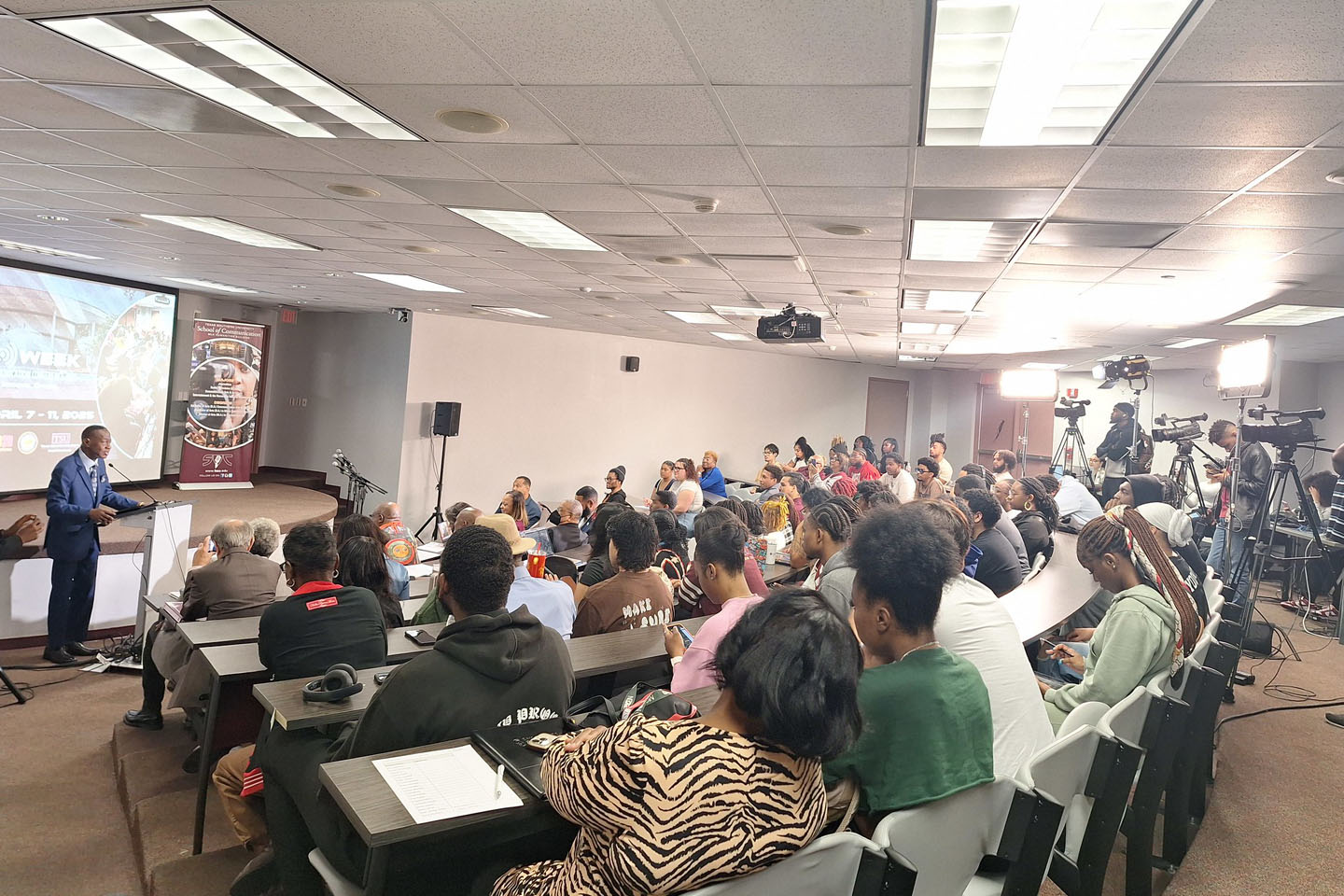
HOUSTON, TX — Texas Southern University’s School of Communication is set to host its 44th Annual Media and Communication Conference (CommWeek 2026) from April 6–10 at the Martin Luther King Jr. Building, bringing together a dynamic mix of scholars, students, industry professionals, and civic leaders to examine the future of media in an increasingly digital and AI-driven world.
Widely regarded as one of the School’s signature academic and professional events, CommWeek has evolved into a powerful platform for intellectual exchange, industry engagement, and student-centered learning. This year’s theme, “Beyond the Algorithm: Reimagining Media, Learning & Innovation with AI,” reflects the growing influence of artificial intelligence across journalism, entertainment, digital storytelling, and communication education.
Throughout the week, participants will engage in a series of panels, workshops, masterclasses, and networking sessions designed to explore how emerging technologies are reshaping media ecosystems. Discussions will address critical topics such as AI-driven content creation, ethical considerations in automated communication, evolving media business models, and the future of audience engagement.
According to Interim Dean Dr. Alan K. Caldwell, CommWeek represents a strategic opportunity to elevate the School’s academic and professional profile.
“Communication Week represents more than a conference; it is a powerful platform to strengthen the School of Communication’s brand, showcase the excellence of our students and faculty, and highlight the innovative work happening across our programs,” Caldwell said. “By bringing together industry leaders, scholars, and alumni, we create collaborative connections that position our school as a hub for forward-thinking communication education.”

Conference Chair Dr. Anthony Obi Ogbo (left) and Interim Dean Dr. Alan K. Caldwell: CommWeek has evolved into a powerful platform for intellectual exchange, industry engagement, and student-centered learning.
In addition to its academic significance, CommWeek plays a vital role in advancing student success. A key highlight of the conference is the Dean’s Banquet and Scholarship Awards, which raises funds to support academically talented and financially underserved students. These scholarships help reduce financial barriers, cover tuition and educational resources, and improve student retention and graduation outcomes.
For Conference Chair Dr. Anthony Obi Ogbo, CommWeek 2026 represents both a continuation of tradition and a bold step toward the future of communication education.
“CommWeek is where scholarship meets practice and where innovation becomes accessible,” Ogbo said. “This conference is not only about examining the future of media—it is about preparing our students to lead it. By integrating academic rigor with industry insight, we are building a platform that empowers our students, strengthens our institutional identity, and fosters meaningful collaborations that extend far beyond the classroom.”
The conference also emphasizes experiential learning, offering students direct access to industry professionals, hands-on workshops, and career development opportunities. These interactions provide invaluable exposure to real-world practices and help bridge the gap between academic training and professional application.
As a historically Black university with a long-standing commitment to cultural responsiveness and community impact, Texas Southern University continues to position its School of Communication as a leader in preparing students for both local and global media landscapes. CommWeek reinforces this mission by creating an inclusive space where diverse voices, perspectives, and ideas can thrive.
Open to students, alumni, and the broader community, CommWeek 2026 is free to attend and serves as a testament to TSU’s commitment to accessibility, innovation, and academic excellence.
For more information and the full conference schedule, visit www.soc-commweek.com.


People’s Club Sugar Land Is Growing — Grand Patron Mbachu Explains Why

Professor Josephine Onyido Earns Prestigious Nigerian Academy of Education Induction

PCNI Elevates Chief Dr. Emmanuel Opara to Patron in Historic Ihiagwa Investiture

Emotional Conflict: Is She Toying with Me?

Corruption at the Nigerian Consulate Atlanta – A Victim’s Nightmarish Experience

Gowon’s Book and the Dangerous Politics of Selective Memory

Video: Omambala Cultural Association in Houston Celebrates Motherhood with Joyous Igbo-Inspired Mother’s Day Event

VIDEO: Chris Hollins Opens Cartoon Art Showcase at TSU’s CommWeek

Commissioner Dexter L. McCoy speaks about the African-American Memorial Event
-
 Houston2 weeks ago
PCNI Elevates Chief Dr. Emmanuel Opara to Patron in Historic Ihiagwa Investiture
-

 Houston1 month ago
Membership Interest Soars After Sugar Land People’s Club’s Successful Induction
-

 Houston3 weeks ago
Membership Surge Continues as Dr. Nkem Ugwu Joins People’s Club
-
 Community2 weeks ago
People’s Club Sugar Land Is Growing — Grand Patron Mbachu Explains Why
-
 Education2 weeks ago
Professor Josephine Onyido Earns Prestigious Nigerian Academy of Education Induction