Connect with us

Nigeria

Both Christian, Muslims Schools Being Attacked; 234 Pupils Still In Captivity – Presidency Counters Bishop Kukah Over ‘Divisive Comment’

Published

on

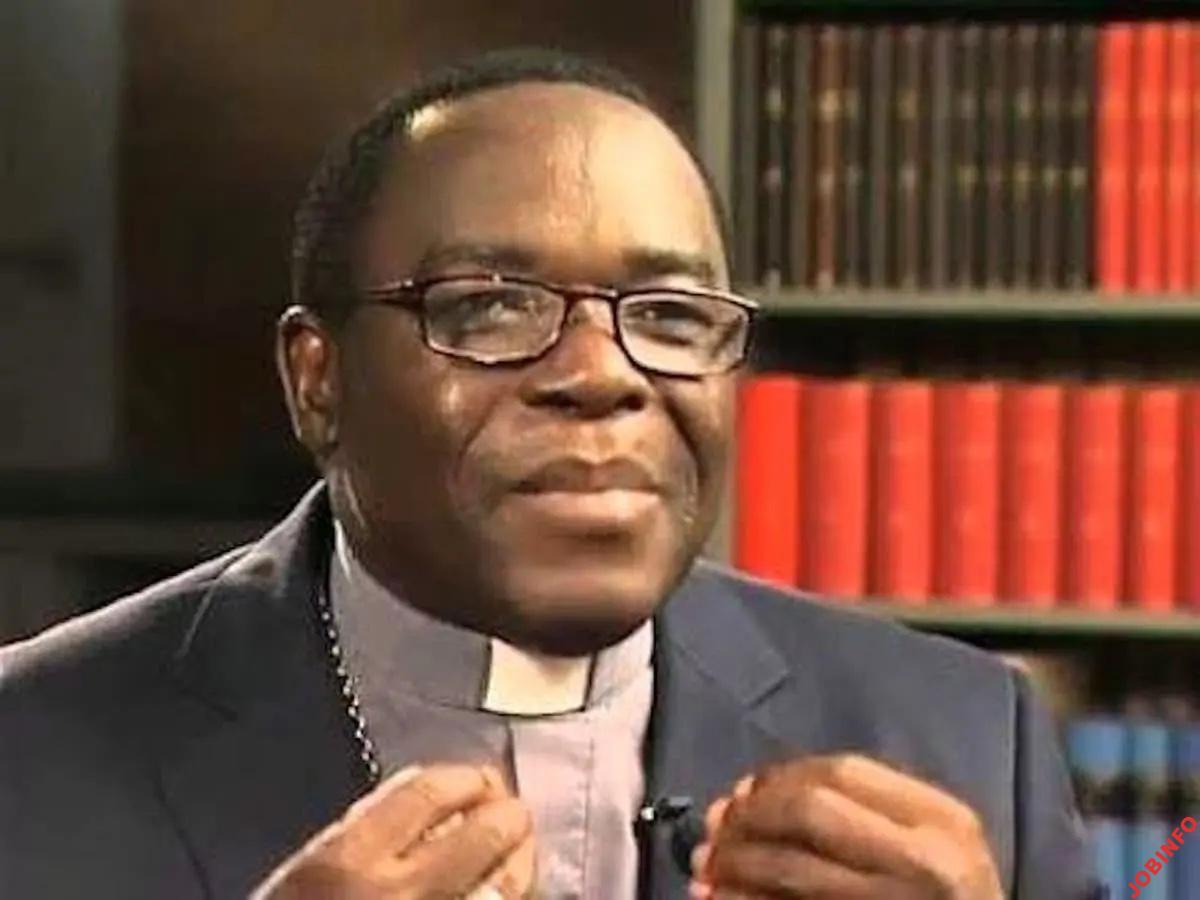
Kukah had in a virtual appearance before the American lawmakers criticised President Muhammadu Buhari’s handling of the security situation in Nigeria.

The presidency has attacked Catholic cleric, Bishop Matthew Kukah, over his recent address before the United States congress as regards insecurity in Nigeria.

The presidency accused the cleric of spreading falsehood with the intent to discredit the administration.

Kukah had in a virtual appearance before the American lawmakers criticised President Muhammadu Buhari’s handling of the security situation in Nigeria.

He also alleged that Buhari was nepotistic in key appointments and favoured Muslims over Christians.

In its reaction, the presidency in a statement by presidential spokesperson Garba Shehu said Kukah was doing his “best to sow discord and strife among Nigerians” as 234 muslim pupils were still in the captivity of the bandits.

Shehu accused the cleric of falsehood, saying attacks by armed men stand condemned but are not targeted at Christians.

The statement reads, “It is unfortunate, and disappointing, for citizens of Nigeria to bear witness to one of their Churchmen castigating their country in front of representatives of a foreign parliament.

“We are all too familiar with these overseas political tours that opposition politicians take – visiting foreign leaders and legislators in the United States, United Kingdom and Europe. So, the argument goes, if they are heard seriously abroad, then Nigerian citizens back home should surely listen to them too.

“There is no bias in this government when the president is northern and Muslim, the vice president southern and Christian, and the cabinet equally balanced between the two religions. But neither is there anything in our Constitution to state that political posts must be apportioned according to ethnicity or faith. It takes a warped frame of mind for a critic to believe ethnicity is of primary importance in public appointments. It is yet more troubling to hear a Churchman isolating one group for criticism purely on ethnic lines.

“With due respect to the esteemed position he holds, the Bishop’s assertion that only Christian schools are being targeted by bandits or terrorists is not supported by the facts on the ground. It is sad to say but also true that victims of crime, kidnapping, banditry and terrorism cut across all strata of the society. Sad but true that Kankara students in Katsina State were stolen by bandits of the same Islamic faith as those they took away.

“The same may be true of those who are still holding the 134 students of the Islamic School at Tegina in Niger State. The nation witnessed the sad incident of the female students abducted by bandits at Jangebe in Zamfara State and the over 100 predominantly Muslim students of the Federal Government Girls College Birnin Yauri in Kebbi State who are currently in captivity- and the nation’s security agencies are hard at work to release them unharmed.

“The attack on Christian students is sad and unacceptable; so also is the abduction of students of other faiths. The claim that only Christian schools are being targeted is totally untrue. As a nation and a people, we must together define evil as evil. We must not allow our religious differences to divide us. No one gains but the evil doers when we divide our ranks according to ethnicity and religion in confronting them. The bandit, kidnapper and terrorist are the enemies of the people who should be confronted in unison.”

Culled from the Sahara Reporters  

Houston

People’s Club Houston Celebrates Landmark Induction of 16 New Members

Published

on

National President Atty. Fidelis Onyebueke hails First International Branch for a spectacular celebration of culture, fellowship and service

HOUSTON, TEXAS — The Sugar Land People’s Club of Nigeria International (PCNI), the organization’s First International Branch, has been declared a total success following a spectacular bi-annual induction ceremony that brought together national leaders, branch chairmen, patrons, members, and guests from across the People’s Club family.

National President Atty. Fidelis Onyebueke, who presided over the swearing-in ceremony, commended the Houston branch for delivering an outstanding event that reflected the organization’s enduring traditions of friendship, fellowship, service, and community.

Hon. Prof. Chris Ulasi, SLPCNI Chairman, leads the grand entrance of the national leadership during the induction ceremony, followed by National President Atty. Fidelis Onyebueke and his wife.

“The Houston branch has once again demonstrated what People’s Club represents at its very best. This was a beautifully organized and highly successful event, rich in culture, fellowship, dignity, and unity. I commend the leadership, members, and entire Houston family for an exceptional celebration worthy of the First International Branch.”

The ceremony witnessed the formal swearing-in of 16 new members, each of whom was individually invited forward to receive a certificate of membership from the national president. Onyebueke was assisted in administering the oath by PCNI Attorney Chukwuka John Ukadike.

Group Photo: Women Members and Associates of SLPCNI

The inductees joined an impressive gathering that reflected the diversity and strength of the People’s Club community. Members and guests traveled from various branches across the United States and beyond, transforming the Houston ceremony into a truly international gathering.

The cultural elegance of the occasion was equally striking. Women appeared in colorful, coordinated traditional attire, featuring red-pinkish blouses and matching head ties paired with white wrappers prominently designed with the PCNI logo. The ensemble created a distinctive and dignified traditional look. Men complemented the occasion with elegant all-white outfits, customized PCNI cap pins, and special PCNI sashes worn as neckpieces.

Among those in attendance were Grand Patron Ide Obinna Nnanyelugo Mbachu; Hon. Prof. Chris Ulasi, Group Chairman; patrons and chairmen from various branches, and People’s Club members representing chapters across the globe.

The formal proceedings eventually gave way to an extended celebration of friendship and camaraderie. Food, drinks, music, and dancing carried the festivities well beyond the scheduled program, continuing for hours into the early morning of Sunday.

For the Houston branch, the celebration represented more than the admission of new members. It reaffirmed the historic importance of the First International Branch and demonstrated the continuing strength of People’s Club as a transnational fellowship rooted in Nigerian identity, friendship, service, and mutual support.

The successful ceremony also underscored the organization’s ability to bring generations and branches together while preserving the cultural traditions that have sustained its membership across continents.

By the end of the celebration, Houston had delivered more than an induction. It had delivered a memorable demonstration of unity, culture, friendship, and organizational excellence—an event that fully embodied the People’s Club spirit.

Continue Reading

Houston

Houston Ready as People’s Club National President Arrives for Historic Sugar Land Branch Induction

Published

on

Atty. Fidelis Onyebueke’s arrival signals final preparations for the August 22 ceremony as the First International Branch prepares to welcome 17 new members into the People’s Club family

HOUSTON, TEXAS — Final preparations are underway in Houston as the Sugar Land People’s Club of Nigeria International (SPCNI), the First International Branch, puts the finishing touches on what promises to be a landmark evening of fellowship, leadership, and community celebration.

The arrival of Atty. Fidelis Onyebueke, National President of the People’s Club of Nigeria International, has added renewed excitement to the event, underscoring the significance of the Sugar Land branch and its place within the wider People’s Club family.

Grand Patron Ide Obinna Nnanyelugo Mbachu addresses Sugar Land PCNI’s August Conference. Insert: Atty. Fidelis Onyebueke, National President of the People’s Club of Nigeria International.

The organization will hold its 2026 Bi-Annual Induction Ceremony on Saturday, August 22, 2026, from 7:00 p.m. at the Igbo Catholic Community Hall, 8250 Creekbend Drive, Houston, Texas.

Seventeen distinguished men and women are expected to be formally inducted into the organization during the ceremony. The event is expected to bring together People’s Club members, community leaders, professionals, families, friends, and guests from Houston and beyond for an evening celebrating friendship, cultural identity, service, and community.

The arrival of Atty. Onyebueke is particularly significant because the Sugar Land organization is recognized as the First International Branch of People’s Club of Nigeria International.

Group photo during PCNI’s August Conference.

While People’s Club has grown into a broad network with branches in Nigeria, North America, and Europe, the Sugar Land branch occupies a unique place in that expansion. It represents the first international extension of the organization and continues to regard itself as a custodian of the principles established by the founders of People’s Club in Nigeria.

For the branch’s leadership, that history carries both pride and responsibility. Grand Patron Ide Obinna Nnanyelugo Mbachu said that the national leadership’s presence in Houston reinforces the importance of the occasion and the values the organization represents.

“This is more than an induction ceremony; it is a celebration of continuity, friendship, love, and service. The arrival of our National President makes this occasion even more meaningful because it connects our First International Branch directly with the larger People’s Club family. We are welcoming new members into a legacy that must be protected, strengthened, and passed forward.”

Mbachu said the organization’s enduring values remain relevant because they are rooted in the fundamental needs of society: friendship, mutual respect, fellowship, responsibility, and service.


From left: Inductee, Hon. Evangelist Philomena Umoh, Chief Executive Officer of BlessedComfort Home; New member, Hon. Shanteria Onyemem, Houston-based entrepreneur.

Among the seventeen inductees is Evangelist Philomena Umoh, Chief Executive Officer of BlessedComfort Home, a philanthropist and titled chief whose work and personal commitment to helping others have touched numerous lives. For Umoh, the forthcoming induction represents both a personal honor and an opportunity to join a community whose values closely align with her commitment to service.

“I am deeply honored and genuinely excited to become part of the People’s Club family. For me, this is not simply about receiving a title or joining a social organization. It is about belonging to a community that values friendship, service, love, compassion, and giving back. I look forward to contributing meaningfully and building lasting relationships.” Her induction adds another dimension to an occasion already defined by diversity of professional experience, community involvement, and public service.

From Left: Hon. Ike Nwokoye; Hon. Prof. Emmanuel Opara; Hon. Basil Mbuba; and Hon. Udoji Achebe.


Left: Hon. Sir Charles Eloka Ikebuaku, wife, and Hon. Dr. Chris Ulasi.

Hon. Prof. Chris Ulasi, the Group’s Chairman, said that the ceremony will represent an important moment for both the inductees and the organization. Ulasi said the branch is prepared to receive its new members and celebrate the enduring relationships that have sustained the organization.

“Everything is coming together for what we expect to be a memorable evening. We are excited to welcome our National President and our distinguished inductees. This ceremony is about strengthening the bonds that make our organization a true family.”

The chairman emphasized that membership is not merely ceremonial. According to him, those joining the organization become part of an established fellowship with expectations to participate, contribute, and help strengthen the community.

The August 22 event is expected to combine the formal traditions of induction with the warmth and conviviality for which the Sugar Land branch is known. For an organization rooted in Nigerian cultural traditions but operating in one of America’s most diverse metropolitan areas, the ceremony also represents the continuing evolution of the Nigerian-American community in Houston.

Continue Reading

Books

A Chronicle of Community: Tracing the Roots of Amaiyi Igbere

Published

on

  • Book Title: Amaiyi Igbere: A Historical Look Back on Life, People, and Places That Shaped the Community
  • Author: By Emmanuel O. Ukandu, P.E.
  • Publishers: Intekspress Publishers
  • Reviewer: Emeaba O. Emeaba
  • Pages: 285

There is a particular kind of historical work that does not begin in an archive but around family compounds, market squares, church yards, streams, and evening conversations. Amaiyi Igbere: A Historical Look Back on Life, People, and Places That Shaped the Community by Emmanuel O. Ukandu belongs to that tradition. It is not merely a local history. It is an act of cultural preservation, an ambitious effort to rescue an entire way of life from the erosion of memory. The book announces that purpose immediately, presenting itself as a historical record of “life, people, and places that shaped the community.”

Ukandu understands something many professional historians sometimes overlook: the disappearance of everyday knowledge is often more permanent than the loss of famous events. Kings, wars, and politicians usually find chroniclers. The names of neighbors, customs surrounding childbirth, wrestling ceremonies, market routines, childhood games, and village footpaths frequently vanish within two generations. His response is encyclopedic. Across eighteen chapters, the author documents everything from family genealogies and village compounds to agricultural practices, religious life, education, folklore, the Nigerian–Biafran War, and changing social values.

Rather than pretending to produce an objective, omniscient history, Ukandu openly defines the book as a “personal history.” He carefully explains the limits of eyewitness testimony while arguing that memory itself deserves preservation. In one of the book’s strongest passages, he writes that:

“What may appear to be a small fragment of history today… may spare them the considerable effort and resources that would otherwise be required to search for traces of what transpired.”

That sentence serves as the philosophical foundation for everything that follows. The author is less interested in constructing grand historical theories than in ensuring that ordinary facts survive.

One of the book’s greatest achievements is its treatment of genealogy. Hundreds of names appear throughout the narrative—not as dry census entries but as participants in a living community. Families are connected across compounds, marriages, occupations, churches, schools, and public service. Future descendants searching for ancestors decades from now may find this volume invaluable. The author’s hope that young readers will build their own family trees transforms the book from history into an invitation for continuing scholarship.

The strongest chapters are those describing daily life before modernization transformed southeastern Nigeria. The discussions of rites of passage, farming seasons, fishing traditions, folklore evenings, marriage customs, health practices, markets, and village maintenance recreate a society whose rhythms depended upon community rather than institutions. The cumulative effect resembles an ethnography written by someone who lived the culture rather than observing it from the outside.

Ukandu also demonstrates how education shaped modern Amaiyi. His accounts of scholarship programs, pioneering teachers, and community leaders reveal how one generation deliberately invested in the next. Particularly memorable is his reflection that:

“Good seeds planted in children at an early age may produce results that last for a very long time.”

That observation quietly becomes one of the book’s central themes. Throughout the narrative, the community advances not through dramatic revolutions but through teachers, mentors, churches, scholarship funds, and families determined to educate their children.

The prose possesses an unusual sincerity. Ukandu rarely writes as though he is attempting a literary flourish. Instead, his voice reflects someone determined not to forget. That straightforwardness gives emotional weight to passages describing migration, the Nigeria–Biafra War, and the gradual disappearance of customs that once organized everyday existence.

Perhaps the book’s most affecting declaration appears near the beginning:

“The material presented in this book constitutes ‘a time window’ on a particular period in the life of the people of Amaiyi Igbere.”

The metaphor is exactly right. Readers are not simply learning dates; they are looking through a window into a vanished social world.

What does the book do less well?

Its greatest strength is also its principal weakness.

The book frequently favors completeness over narrative momentum. Long catalogues of names, family relationships, and community figures provide extraordinary documentary value, but they occasionally interrupt the flow for readers unfamiliar with Amaiyi. A more selective organization—or the addition of supplementary family charts, maps, timelines, and genealogical diagrams—would have made the wealth of information easier to absorb.

Editorially, the work could also benefit from tighter compression. Many anecdotes repeat similar themes, particularly regarding exemplary community leaders and educational pioneers. A more robust synthesis would strengthen the narrative without sacrificing historical content.

There are moments when personal admiration for certain individuals overtakes critical historical distance. Since the author explicitly identifies the volume as a personal history grounded in lived memory, this is understandable. Still, readers seeking extensive engagement with conflicting interpretations, documentary evidence beyond recollection, or broader regional historiography may occasionally wish for more comparative analysis.

Yet these criticisms ultimately reflect the book’s chosen mission rather than its failure. Ukandu is not writing a conventional scholarly monograph. He is preserving communal memory before it disappears.

The result is an important contribution to local African historiography and a reminder that history survives not only in national archives but also in villages whose stories are too often left unwritten. If every community possessed a chronicler as determined as Emmanuel Ukandu, historians of the next century would inherit a far richer record of Africa’s social past.

Amaiyi Igbere demonstrates that preserving memory is itself an act of public service. It stands as both a historical record and a gift to future generations seeking to understand not merely where they came from, but how ordinary people built a community whose legacy deserved to be written before it was forgotten.

This book is available on Amazon (Click on Image).


_________

♦ Dr. Emeaba, the author of “A Dictionary of Literature,” writes dime novels in the style of the Onitsha Market Literature sub-genre.

Continue Reading

Trending