

Houston
Restrictive voting bill killed after Texas Democrats walk out of House chamber to stop debate

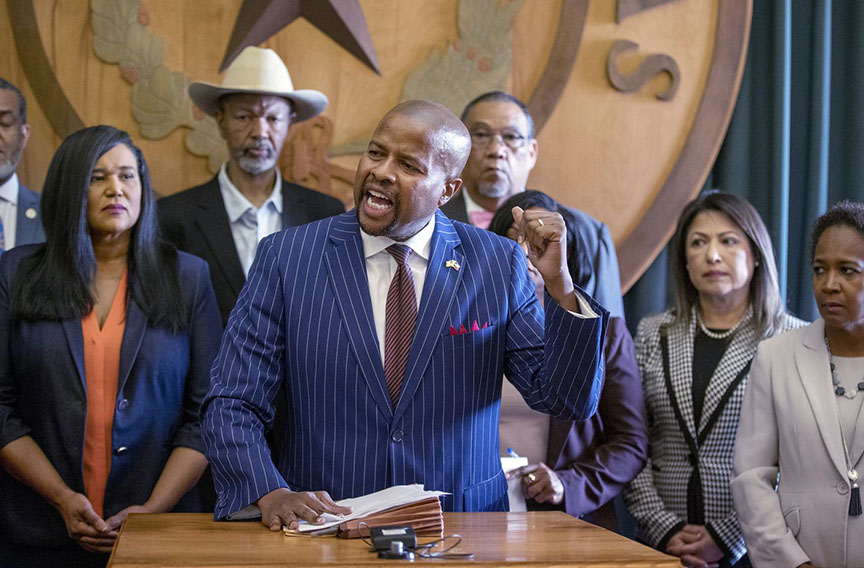
Texas Democrats on Sunday night used every parliamentary tool at their disposal to effectively kill a bill that would add new restrictions to elections in the state, ultimately staging a walkout to prevent a vote from being held before a midnight deadline.
Republican Gov. Greg Abbott said that the bill would be added to a special session agenda.
Senate Bill 7, known as the Election Integrity Protection Act, passed the state Senate along party lines early Sunday morning after an all-night debate. The bill came up in the state House Sunday evening for final approval. But after hours of debate and delaying tactics, the chamber adjourned after Democratic lawmakers left in protest, breaking quorum and ending debate. At least 100 lawmakers must be present to conduct business.
The sweeping bill would ban drive-thru voting, limit voting hours, make it more difficult to cast mail ballots and empower partisan poll watchers. The final version of S.B. 7 was the result of a bicameral group of mostly Republican lawmakers reconciling proposals previously passed by both chambers. Elements were hashed out behind closed doors, and Democrats have argued they were left largely in the dark as last-minute changes and entirely new provisions were pushed through.
Democrats on Sunday night repeatedly pointed to language that could make it easier to overturn an election in Texas that was not included in original legislation. According to the bill text, a court may void an election if the number of fraudulent votes cast could change the result, whether or not fraud was proven to have affected the outcome.
Opponents railed against the new measures during debate Sunday night, calling them “unconscionable” and undemocratic. “The voices of Texans were not heard in this debate,” state Rep. John Bucy III said.
But Republican state Rep. Travis Clardy said lawmakers who back the additions had done their “level best” to be transparent and release information. The legislation will “make it easier for Texans to vote” and “harder to cheat” for “those determined to break the law,” he said.
Breaking quorum to block passage of a bill is rare — Texas lawmakers have done it only three other times, according to The Dallas Morning News. It happened most recently in 2003, when Democratic lawmakers fled to Oklahoma.
The final version of S.B. 7 would preserve the elimination of 24-hour polling stations and drive-thru voting centers, both of which Harris County, the state’s largest Democratic stronghold, introduced last year in an election that saw record turnout.

President Biden condemned the bill in a statement, calling it “part of an assault on democracy that we’ve seen far too often this year—and often disproportionately targeting Black and Brown Americans.” “It’s wrong and un-American. In the 21st century, we should be making it easier, not harder, for every eligible voter to vote,” Mr. Biden said. “I call again on Congress to pass the For the People Act and the John Lewis Voting Rights Advancement Act. And I continue to call on all Americans, of every party and persuasion, to stand up for our democracy and protect the right to vote and the integrity of our elections.”
The bill would also prohibit Sunday voting before 1 p.m., which critics called an attack on what is commonly known as “souls to the polls” — a get-out-the vote campaign used by Black church congregations nationwide. The idea traces back to the civil rights movement. Democratic state Rep. Nicole Collier, chairwoman of the Texas Legislative Black Caucus, said the change is “going to disengage, disenfranchise those who use the souls to the polls opportunity.”
Collier was one of three Democrats picked to negotiate the final version, none of whom signed their name to it. She said she saw a draft of the bill around 11 p.m. Friday — which was different than one she had received earlier that day — and was asked for her signature the next morning.
Texas was also set to newly empower partisan poll watchers, allowing them more access inside polling places and threatening criminal penalties against elections officials who restrict their movement. Republicans originally proposed giving poll watchers the right to take photos, but that language was removed from the final bill that lawmakers voted on this weekend.
President Joe Biden criticized the GOP-backed legislation in a statement Saturday, calling it “part of an assault on democracy that we’ve seen far too often this year—and often disproportionately targeting Black and Brown Americans.”
He again called on Congress to pass federal voting rights legislation.
Republicans have argued that strict penalties and empowered poll watchers would deter fraud, though there is no proof widespread fraud occurs. Texas Attorney General Ken Paxton’s office spent 22,000 hours looking for voter fraud in 2020 and uncovered just 16 cases of false addresses on registration forms, according to The Houston Chronicle. Nearly 17 million voters are registered in Texas.
Texas’ bill is akin to many measures being considered in Republican-led legislatures across the country in the wake of President Donald Trump’s stolen election lie.
Since Trump’s defeat, at least 14 states have enacted more restrictive voting laws, according to the New York-based Brennan Center for Justice. It has also counted nearly 400 bills filed this year nationwide that would restrict voting.
Republican lawmakers in Texas have insisted that the changes are not a response to Trump’s false claims of widespread fraud but are needed to restore confidence in the voting process. But doubts about the election’s outcome have been fanned by some of the state’s top GOP leaders, including Paxton, who led a failed lawsuit at the U.S. Supreme Court to try to overturn the election.
Lt. Gov. Dan Patrick, who chaired Trump’s presidential campaign in Texas, offered a $1 million reward to anyone who could produce evidence of voter fraud. Nonpartisan investigations of previous elections have found that voter fraud is exceedingly rare. State officials from both parties, including in Texas, as well as international observers have also said the 2020 election went well.
Asked earlier Sunday about Texas’ failure to find evidence of fraud, as well as the provision in S.B. 7 that would make it easier for a judge to throw out the results of an election, U.S. Rep. Michael McCaul, R-Texas, said, “This may be more of an optics issue.”
“I think the intent —and I’m not in the state Legislature — is to restore confidence in the elections that fraud isn’t taking place,” McCaul told CNN’s Jake Tapper.
“Now, you’re — you make a good point. I’m a federal prosecutor. In a court of law, that hasn’t really been borne to bear. This may be more of an optics issue, restoring confidence with the American people and in my state who actually do believe there was tremendous fraud,” he said.
Iowa Gov. Kim Reynolds in March signed into law a measure that makes it harder to vote early. Republicans said the new rules were needed to guard against voter fraud, though they noted Iowa has no history of election irregularities.
Earlier this month, Arizona Gov. Doug Ducey, a Republican, signed legislation that will periodically remove infrequent mail voters from the state’s early voting list over protests from Democrats and advocates who said the law is discriminatory and will make voting harder.
Republicans in Georgia and Florida, meanwhile, have enacted broad restrictions. Georgia’s law, which prompted significant pushback from outside groups that ultimately led a handful of prominent corporations to condemn the legislation or pull business from the state, imposes new identification requirements for mail voting, makes it illegal to take food or water to voters in line, limits the use of drop boxes and shortens the window to request absentee ballots.
Florida’s law limits drop boxes, requires voters to request to vote by mail more regularly, prohibits election officials from using private money to help pay for election administration, restricts third-party voter registration organizations and adds new powers for partisan election observers.
The laws in Iowa, Georgia and Florida have already drawn legal challenges. Other states facing lawsuits over new voting limits are Montana and Arkansas, according to Marc Elias, founder of Democracy Docket and Democrats’ top election attorney.
Culled from the NBC. Authors: By Liz Johnstone, Gary Grumbach and The Associated Press

- From Threats to Partnership: How Diplomacy Repositioned Nigeria in Washington - January 13, 2026
- Burbank Marriage Unravels After Woman Allegedly Used Tracking Devices to Monitor Husband - December 27, 2025
- U.S. Signals More Strikes in Nigeria as Abuja Confirms Joint Military Campaign - December 27, 2025



“Her persistence and long-term investment make a clear case: she has earned this opportunity.“ —Anthony Obi Ogbo
In the special election to fill Texas’s 18th Congressional District, no candidate won a majority on November 4, 2025, leading to a January 31, 2026, runoff between Democratic frontrunners Christian Menefee and Amanda Edwards. Menefee, Harris County Attorney, led the field with roughly 29% of the vote, while former Houston City Council member Edwards finished second with about 26%. Both are vying to represent a district left vacant after the death of U.S. Rep. Sylvester Turner.

The 18th Congressional District is far more than a geographic area. Anchored in Houston’s historic Black communities, it is a political and cultural stronghold shaped by civil rights history, faith institutions, and grassroots activism. Sheila Jackson Lee represented this district for nearly three decades (1995–2024), becoming more than a legislator—she was a constant presence at churches, funerals, protests, and community milestones. For residents, her leadership carried spiritual weight, reflecting stewardship, protection, and a deep, almost pastoral guardianship of the district. Her tenure symbolized continuity, cultural pride, and a profound connection with the people she served.
Houstonians watched as Jackson Lee entered the 2023 Houston mayoral race, attempting to transition from Congress to city leadership. Despite high-profile endorsements, including outgoing Mayor Sylvester Turner and national Democratic figures, she lost the December 9, 2023, runoff to State Senator John Whitmire by a wide margin. Following that defeat, Jackson Lee filed to run for re-election to her U.S. House seat, even as Edwards—who had briefly joined the mayoral race before withdrawing—remained in the congressional primary.
At that time, Jackson Lee’s health was visibly declining, yet voters still supported her, honoring decades of service. She defeated Edwards in the 2024 Democratic primary before announcing her battle with pancreatic cancer. Her passing in July 2024 left the seat vacant.
Edwards, already a candidate, sought to fill the seat, but timing and party rules intervened. Because Jackson Lee died too late for a regular primary, Harris County Democratic Party precinct chairs selected a replacement nominee. Former Houston Mayor Sylvester Turner, a retired but widely respected figure, narrowly edged out Edwards for the nomination, effectively blocking her despite her prior campaigning efforts. Turner won the general election but died in March 2025, triggering a special election in 2025, in which Edwards advanced to a runoff.
The January 31, 2026, runoff will hinge on turnout, coalition-building, and key endorsements. Both candidates led a crowded November field but fell short of a majority, with Menefee narrowly ahead. Endorsements such as State Rep. Jolanda Jones’ support for Edwards could consolidate key Democratic blocs, particularly among Black women and progressive voters. In a heavily Democratic district where voter confusion and turnout patterns have been inconsistent, the candidate who best mobilizes supporters and unites constituencies is likely to prevail.
Amanda Edwards’ case is compelling. Although both candidates share similar values and qualifications, her claim rests on dedication, consistency, and timing that have been repeatedly denied. She pursued this seat with focus and purpose, maintaining a steady commitment to the district and its future. Her path was interrupted by the prolonged political ambitions of Jackson Lee and Turner—figures whose stature reshaped the race but delayed generational transition. Edwards did not step aside; she remained visible, engaged, and prepared. In a moment demanding both continuity and renewal, her persistence and long-term investment make a clear case: she has earned this opportunity.
This race comes down to trust, perseverance, and demonstrated commitment. Amanda Edwards has consistently shown up for the district, even when political circumstances repeatedly delayed her chance. Her dedication reflects readiness, respect for the electorate, and an unwavering commitment to service. Voting for Amanda Edwards is not only justified—it is the right choice for Houston’s 18th Congressional District.
♦Publisher of the Guardian News, Professor Anthony Obi Ogbo, Ph.D., is on the Editorial Board of the West African Pilot News. He is the author of the Influence of Leadership (2015) and the Maxims of Political Leadership (2019). Contact: anthony@guardiannews.us
- From Threats to Partnership: How Diplomacy Repositioned Nigeria in Washington - January 13, 2026
- Burbank Marriage Unravels After Woman Allegedly Used Tracking Devices to Monitor Husband - December 27, 2025
- U.S. Signals More Strikes in Nigeria as Abuja Confirms Joint Military Campaign - December 27, 2025
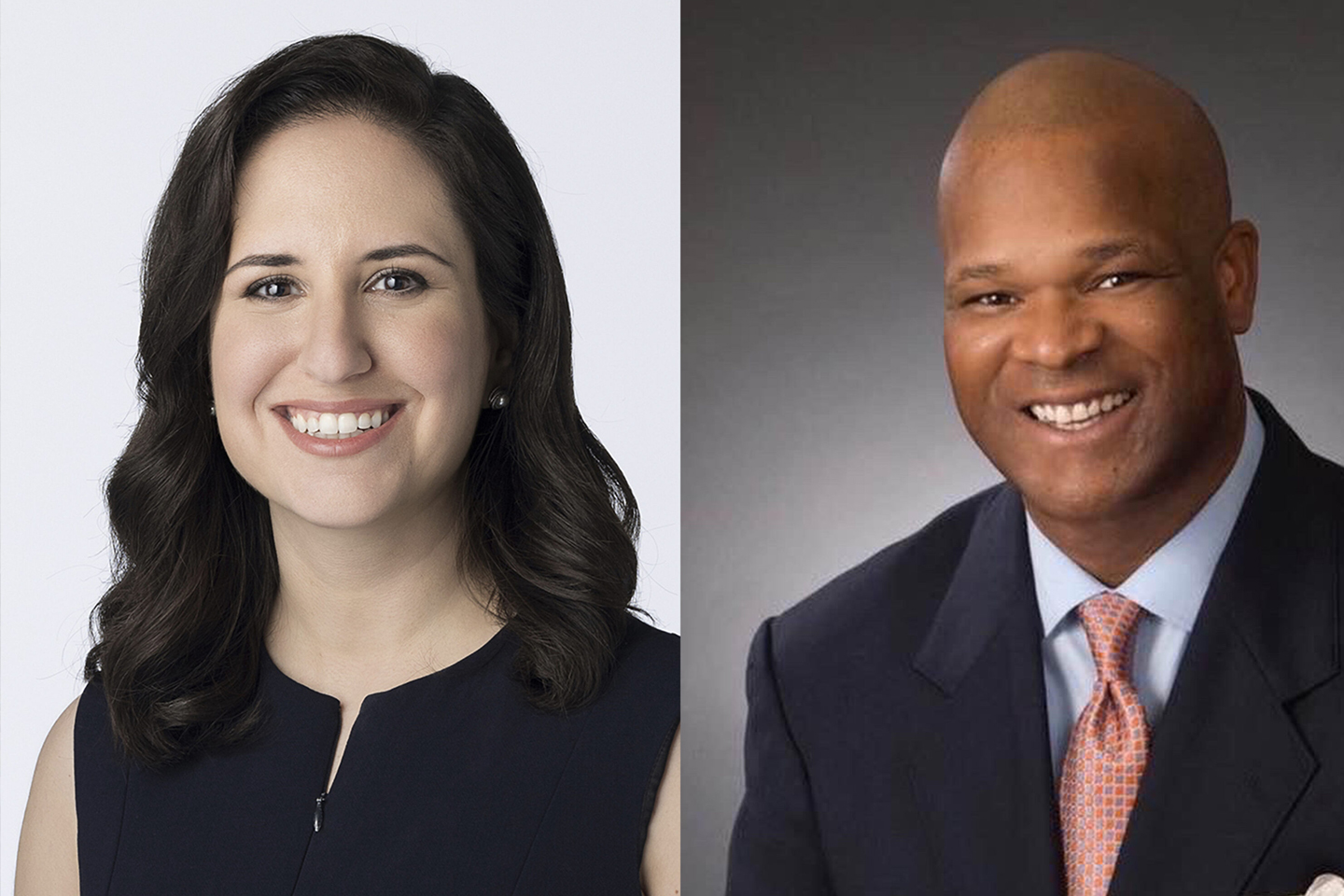
Low-turnout runoff races for Houston City Council and Houston Community College trustee seats revealed how message discipline, local credibility, and voter mobilization determined clear winners—and decisive losers.
The final ballots are counted, and Houston’s runoff elections have delivered clear outcomes in two closely watched local races, underscoring a familiar truth of municipal politics: in low-turnout elections, organization and credibility matter more than name recognition alone.
In the race for Houston City Council At-Large Position 4, Alejandra Salinas secured a decisive victory, winning 25,710 votes (59.27%) over former council member Dwight A. Boykins, who garnered 17,669 votes (40.73%). The margin was not accidental. Salinas ran a campaign tightly aligned with voter anxiety over public safety and infrastructure—two issues that consistently dominate Houston’s civic conversations. Her emphasis on keeping violent criminals off city streets and expanding Houston’s water supply spoke directly to quality-of-life concerns that resonate across districts, especially in an at-large contest where candidates must appeal to the city as a whole.
Salinas’ win reflects the advantage of message clarity. In a runoff, voters are not looking to be introduced to candidates—they are choosing between candidates they are already familiar with. Salinas presented herself as forward-looking and solutions-oriented, while Boykins, despite his experience and political history, struggled to reframe his candidacy beyond familiarity. In runoffs, nostalgia rarely outperforms momentum.
The second race—for Houston Community College District II trustee—followed a similar pattern. Renee Jefferson Patterson won with 2,497 votes (56.63%), defeating Kathleen “Kathy” Lynch Gunter, who received 1,912 votes (43.37%). Though the raw numbers were smaller, the dynamics were just as telling.
Patterson’s victory was powered by deep local ties and a clear institutional vision. As an HCC alumna, she effectively positioned herself as both a product and a steward of the system. Her pledge to expand the North Forest Campus and direct resources to Acres Home connected policy goals to place-based advocacy. In trustee races, voters often respond less to ideology and more to proximity—those who understand the campus, the students, and the neighborhood. Patterson checked all three boxes.
By contrast, Gunter’s loss highlights the challenge of overcoming a candidate with genuine community roots in a runoff scenario. Without a sharply differentiated message or a strong geographic base, turnout dynamics tend to favor candidates with existing neighborhood networks and direct institutional relevance.
What ultimately decided both races was not a surprise, but execution. Runoffs reward campaigns that can re-mobilize supporters, simplify their message, and convert familiarity into trust. Salinas and Patterson did exactly that. Their opponents, though credible, were unable to expand or energize their coalitions in a compressed electoral window.
The lesson from Houston’s runoff elections is straightforward but unforgiving: winners win because they align message, identity, and ground game. Losers lose because, in low-turnout contests, anything less than that alignment is insufficient.
- From Threats to Partnership: How Diplomacy Repositioned Nigeria in Washington - January 13, 2026
- Burbank Marriage Unravels After Woman Allegedly Used Tracking Devices to Monitor Husband - December 27, 2025
- U.S. Signals More Strikes in Nigeria as Abuja Confirms Joint Military Campaign - December 27, 2025
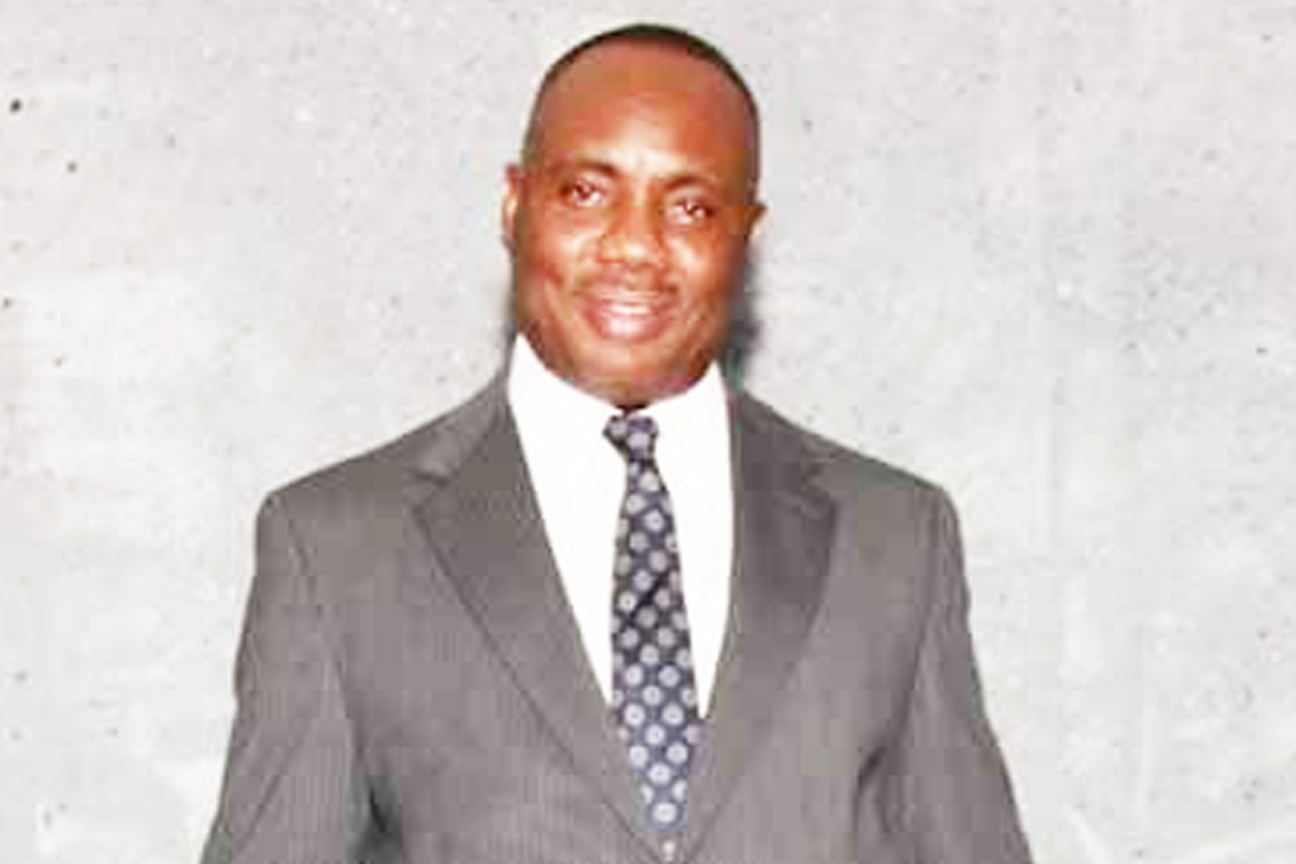
Houston was thrown into mourning on September 19, 2025, following the sudden passing of businessman and community advocate Lawrence Mike Obinna Anozie, who peacefully joined his ancestors. Immediate family member in Houston, Nick Anozie, confirmed his untimely death and expressed gratitude for the outpouring of love and condolences from both the Houston and Owerri communities.
Lawrence was born to Chief Alexander and Lolo Ether Anozie of Owerri in Imo State, Nigeria, and will be dearly remembered by family members, friends, and the entire Houston community.
An accomplished accountant, the late Lawrence incorporated and successfully managed three major companies: Universal Insurance Company, LLC, Universal Mortgage LLC, and Universal Financial Services. Through these enterprises, he not only built a thriving business career but also created opportunities for countless individuals to achieve financial stability. His contributions to entrepreneurship and community development will remain a lasting legacy.
According to the family, arrangements for his final funeral rites are in progress and will be announced in due course.
Lawrence will forever be remembered as a loving and compassionate man who dedicated much of his life to uplifting others. He helped countless young Nigerians and African Americans overcome economic challenges by providing mentorship, financial guidance, and career opportunities. His generosity touched the lives of many who otherwise might not have found their footing. A devout Catholic, he was unwavering in his faith and never missed Mass, drawing strength and inspiration from his church community. To those who knew him, Lawrence was not only a successful businessman but also a pillar of kindness, humility, and faith whose legacy of service and compassion will continue to inspire generations.
For more information, please contact Nick Anozie – 832-891-2213
- From Threats to Partnership: How Diplomacy Repositioned Nigeria in Washington - January 13, 2026
- Burbank Marriage Unravels After Woman Allegedly Used Tracking Devices to Monitor Husband - December 27, 2025
- U.S. Signals More Strikes in Nigeria as Abuja Confirms Joint Military Campaign - December 27, 2025


From Threats to Partnership: How Diplomacy Repositioned Nigeria in Washington

When Air Power Becomes a Christmas Performance: The Illusion of Success in Trump’s Nigerian Strike

Burbank Marriage Unravels After Woman Allegedly Used Tracking Devices to Monitor Husband

Emotional Conflict: Is She Toying with Me?

Corruption at the Nigerian Consulate Atlanta – A Victim’s Nightmarish Experience
From Threats to Partnership: How Diplomacy Repositioned Nigeria in Washington

Video: Omambala Cultural Association in Houston Celebrates Motherhood with Joyous Igbo-Inspired Mother’s Day Event

VIDEO: Chris Hollins Opens Cartoon Art Showcase at TSU’s CommWeek
