

News
Reforming human and labor rights in the Gulf Region —the Qatar example

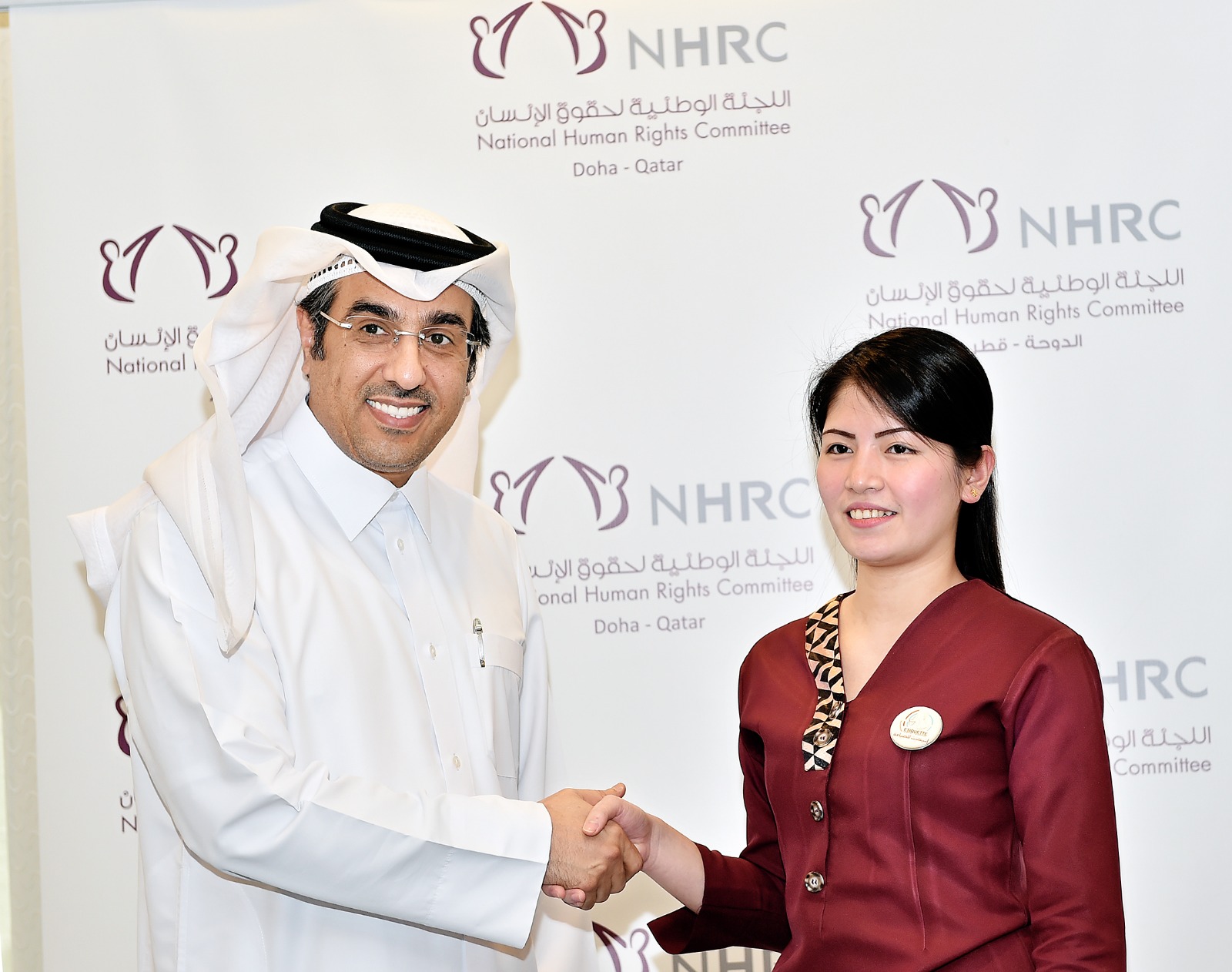
Qatar is one of the seven Arab countries in the Persian Gulf. Others include Bahrain, Kuwait, Iraq, Oman, Saudi Arabia, and the United Arab Emirates (UAE). These nations are also known as the Gulf Cooperation Council(GCC) countries, and a common thread runs through them all: the world’s largest oil and gas reserves are domiciled there.
But beyond their buoyant economy and huge oil and gas reserves, these predominantly Islamic states are seen by many as not been too proactive in terms of their human and labor rights records, most especially as they relate to migrant workers who are mostly of African descent.

Also, these Arab nations have been accused of violating women’s rights and those of the LGBTs that borders on extreme conservatism.
But most vehement, these Gulf States have come under intense global criticisms for operating the very oppressive, exploitative, and dehumanizing Kafala employment system.
The Kafala, or sponsorship system ‘’defines the relationship between foreign workers and their local sponsor or Kafeel, which is usually their employer. The system further ties the migrant workers to a sponsor who has the right to grant the employees exit permits. (right to leave the job or country for new employment or state)
And due to this widely criticized oppressive migrant labor system (Kafala), the Gulf States have been vilified by many bodies and organizations, calling on them to reform their human and labor laws in sync with best global practices.
For instance, International football teams recently protested human rights abuses in Qatar ahead of next year’s World Cup finals in that country, by wearing protest T-shirts ahead of qualifiers matches. However, the protest was criticized by many as hypocritical, given the fact that many of the protesting players and their employers were directly or indirectly linked with Qatar’s major companies, and that Qatar was ahead of other Gulf States in terms of human and labor rights reforms.
But a few others posit that despite Qatar’s leading role in human and migrant labor rights, the players’ protest was timely and welcome since it was aimed at drawing the attention of the world and the Gulf States that it is not yet Uhuru in terms of consolidating friendly- labor laws in the region. To draw home the imperativeness of the protest, David Harding in an article in Independent newspaper, titled: Accusing footballers of hypocrisy for protesting about human right abuses in Qatar rather misses the point’ said ‘’we should be applauding footballers –who have had little in the way of leadership from national politicians and Fifa- for taking a stand, as part of a new age of protest in sport, stretching from Colin Kaepernick through to Black Lives Matter.’’
It is, however, interesting to say here, that it is not all a gloomy picture or sorry tale in terms of human and labor rights abuses in the Gulf States, as Qatar has rolled out far-reaching laws aimed at ending labor-related discriminatory policies in the country.
Still, it is believed that Qatar’s novel reforms which began in 2017will ultimately open a fresh vista for more friendly, humane, and better migrant workers’ rights in the Gulf Region. Such Qatar’s landmark reforms include the abolition of exit permits for migrant workers; establishment of a new national minimum wage; setting up of minimum age commission, among others.
And major international bodies like the International Labour Organisation(ILO) European Union, (EU), the African Regional Organisation of the International Trade Union Confederation (ITUC –Africa), among others have applauded Qatar’s reforms initiative.
For instance, in a commendation letter dated September 6, 2018, and signed by its General Secretary, Kwasi Adu-Amankwah, the ITUC-Africa wrote, “We welcome the recent announcement by the Qatar government to abolish exit permits for migrant workers. We commend the Qatar government for the obvious show of genuine commitment towards meeting her pledge made to the International Labour Organisation (ILO) to effectively reform her labor laws so as to bring them in conformity with ILO Conventions and other international statutes. Indeed, since August 2017, Qatar has commenced a holistic review of her Labour Codes to rid them of vestiges that facilitate and promote human and labor rights abuses. This development is particularly welcome for Africa because many of her labor migrants to the GCC states have been subjected to all manner of exploitation, abuse, and slave practices on account of the exit permit, which is one of the elements of the kafala sponsorship system for labor recruitment in the GCC states.
The statement added: “We call on other GCC states and Gulf countries, notably Saudi Arabia, United Arab Emirates, Bahrain, and Oman to undertake similar reforms to their labor codes with the view to protect and secure the rights of workers, especially migrant workers who constitute the majority of the workforce. In particular, ITUC-Africa is of the view that a genuine labor code review by Saudi Arabia, being the biggest GCC economy, will send a positive and inspirational signal to the other members of the GCC states to also commit to reform like Qatar is doing”
In the same vein, the ITUC-Africa last year commended Qatar for further reforms by removing restrictions to migrant workers’ ability to change employers at their choice and the establishment of a new minimum wage.
The ITUC-Africa on September 7, 2020, wrote, “ We welcome the news of the amendment of the labor laws in Qatar to remove restrictions to migrant workers’ ability to change employers at their choosing following a notice period. We understand that the removal of employers’ permission and consent for employees to change jobs and employers is with immediate effect. The removal of the employer permission regime will make employment relations more humane. It will also significantly eliminate the slavery-like relationship tied to the kafala sponsorship employment system.
It must be restated here that the Gulf State of Qatar also established a new national minimum wage, which is to be enjoyed by all categories of workers. This new minimum wage now stands at QAR 1800 (493USD) for workers who are not provided with food and accommodation by their employers. Those that enjoy employers’ provision of decent accommodation but no food will earn QAR 1500 (410 USD). Migrant workers whose employers provide food and accommodation will earn a minimum wage of 1000 QAR (274 USD). All workers without discrimination will enjoy the national minimum wage.
The ITUC-Africa further noted that the laws carry good application and enforcement timelines and compelling sanctions in the event of default by employers. Specifically, the government of Qatar has given employers up to six months to comply with the new regulations. Failure to comply with the implementation directives will attract sanctions, which include suspending the operations of the company and suspending individual operations for those employing domestic workers.
“We further welcome Qatar’s establishment of a Minimum Wage Commission that will periodically review the national minimum wage rate. Subsequent reviews are to be based on evidence of the cost of living and are to take into account the responsibilities of migrant workers to their families at home. ITUC-Africa commends these developments as an apparent commitment by the government of Qatar towards better protection of the human and labor rights of workers, the majority of whom are migrant workers. ITUC-Africa added”
Most commendable, at a recent workshop held to assess the level of success on Qatar’s ‘migrant reforms’, as contained in the West Minister Report, experts from international organizations and government officials lauded the progress made so far by the country, just as they opined that much needed to be done to achieve the desired goals.
The participants stressed the need for international collaboration among the EU, ILO, trade unions and employers, etc. to further sustain the gains of the reforms.
‘’This is a success model that we need to replicate across the GCC countries. In addition, it is obvious that we should not denigrate the importance of labor inspection and occupational safety and health. It has to be considered as a priority,’’ a participant advised.
At that all-important forum, the need to effectively engage the private sector was also emphasized. The participants further cautioned that without the private sector’s role in the migrant reforms, that not much progress will be achieved since the employers hold to key to better working conditions. They added that coordination and cooperation between the various organizations are central to sustainable labor reforms in the GCC countries.
For the Qatar Ambassador Representative at the parley, Hassan AL-Thawadi, he said ‘’Qatar’s commitment to improving labor-related matters and improving lives is constant. The commitment is intrinsic to our national values enshrined in our constitution and is the key tenet to our Islamic principles.’’
He added: ’’reforms combined with bolstered enforcement mechanisms including electronic-based age protection system demonstrates a commitment to sustainable long-term change. However, we acknowledge that there is a long journey ahead of us and more needs to be done as the case in every nation of the world. In some countries still, it is not possible to change employers without permission, but in Qatar, it is possible’’
On the issue of discriminatory migrant workers law in the GCC countries and Qatar’s leading role to change the sad narrative, a Research Fellow at Micheal Imoudu National Institute for Labour Studies, Ilorin, Dr. Wale Ojo, commended Qatar’s initiative to bring an end to discriminatory migrant workers policies, adding that other GCC countries such take clue from Qatar in that direction. He added that much needed be done to ensure a better and humane work environment in GCC countries as obtainable in Europe and North America.
‘’This issue of oppressive migrant labor conditions in the Gulf Region has been there for ages. Maybe because of their Islamic nature, most of the GCC states are averse to far-reaching reforms and have in place unacceptable migrant labor policies. However, l must laud Qatar for spearheading the migrant labor reforms initiative, and believe the time has come to put necessary international pressure on other GCC states to toe Qatar’s line, and key into more humane and workers’ rights policies,’’ Ojo stressed.
From the foregoing, it is beyond contention that Qatar has taken the lead in ushering in more humane and realistic human and labor rights reforms in the Gulf Region, but the big question is: can Qatar sustain this laudable program and throw up the challenge to its sister GCC states to follow suit? – Our fears and expectations are buried in the womb of time!
♦ Kenneth Smith writes from Hamburg, Germany. To reach him directly, email >>>


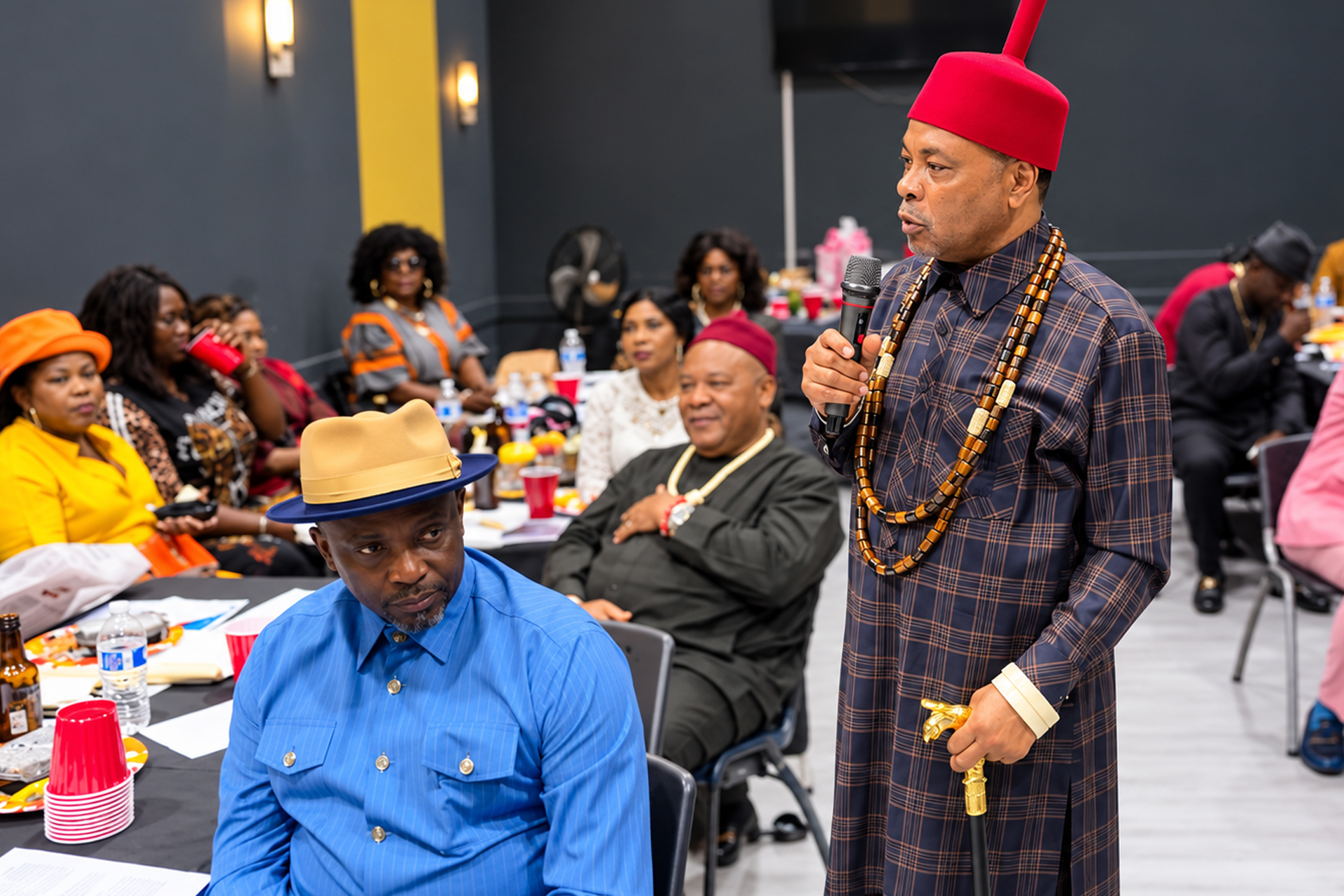
…Credits principled leadership, philanthropy, and a renewed commitment to “Unity, Love and Service” for the historic branch’s growing membership and influence.
SUGAR LAND, TEXAS — The recent growth and renewed visibility of the Sugar Land People’s Club of Nigeria International did not happen by accident. According to the branch’s Grand Patron, Ide Obinna Nnanyelugo Mbachu, its resurgence is rooted in something far more enduring than ceremonies, titles, or social gatherings: a commitment to putting the organization’s guiding principles into practice.
In an interview reflecting on the branch’s recent progress, Mbachu said the philosophy of “Unity, Love, and Service” remains central to the People’s Club’s identity and is increasingly defining the direction of its Sugar Land branch.
“Unity means recognizing that our individual differences must never become greater than the institution that brings us together,” Mbachu said. “Love means genuinely caring about one another—not only when we celebrate, but when members and their families face difficult moments. Service is where those values become action. If we cannot translate fellowship into service to humanity, then we have missed the purpose of the organization.”

Grand Patron, Ide Obinna Nnanyelugo Mbachu.
People’s Club of Nigeria International traces its origins to Nigeria in 1971 and has since expanded through branches in Nigeria and internationally. Sugar Land occupies a distinctive place in that history as the organization’s First International Branch.
Mbachu said that legacy carries responsibility.
“People’s Club is not simply a social club where people gather, celebrate, and go home,” he said. “At its core, it is a philanthropic institution committed to community welfare. Our fellowship must have a human purpose. We must be able to look beyond ourselves, identify needs within our communities, and respond with compassion, resources, and action.”
He pointed to the COVID-19 pandemic as one example of that philosophy at work.
“I will never forget the COVID period, when fear and uncertainty had disrupted virtually every aspect of life,” Mbachu recalled. “Members of our Sugar Land branch stepped forward to distribute food to families struggling through that crisis. People were concerned about their own safety, yet our members understood that service was most meaningful when the community needed us most. That experience demonstrated what the People’s Club should represent.”
The branch has recently experienced renewed momentum in membership. Following its successful 2026 biannual induction, 16 new members were formally admitted, while additional community members have continued to express interest in joining.
Mbachu attributes that growth partly to greater organizational visibility, active programming, and an environment where prospective members can see fellowship and community engagement working together.
He particularly credited Hon. Prof. Chris Ulasi, Group Chairman of SLPCNI, and his executive team with helping reposition the branch.
“Professor Ulasi and his team deserve tremendous credit,” Mbachu said. “Leadership requires consistency, patience, and the ability to bring different personalities together around a common objective. The progress we are witnessing reflects considerable work behind the scenes; organizing members, strengthening participation, and ensuring that the branch continues moving forward.”
Mbachu also acknowledged PCNI National President Atty. Fidelis Onyebueke, whose leadership he said has contributed to stronger relationships across the organization.
“The National President has emphasized peace, reconciliation, and mutual respect among branches,” he said. “An international organization cannot prosper when its branches operate in unnecessary conflict. His efforts to promote understanding, dialogue, and unity across the People’s Club family have contributed significantly to the stability and renewed enthusiasm we are experiencing.”
For Mbachu, however, growth cannot simply be measured by numbers. The quality and commitment of those joining remain equally important.
“Our doors are open to reputable men and women who believe in what People’s Club represents and are prepared to contribute positively,” he said. “We welcome people who value integrity, fellowship, community service, and mutual respect. Membership should never be about what title you receive; it should be about what value you bring.”
That distinction, Mbachu argues, will determine whether the current momentum becomes lasting institutional progress.
For Sugar Land People’s Club, the formula he offers is remarkably straightforward: protect unity, practice love and make service visible. “When those three principles are genuinely lived,” Mbachu said, “the organization does not have to advertise its greatness. The community will see it.”
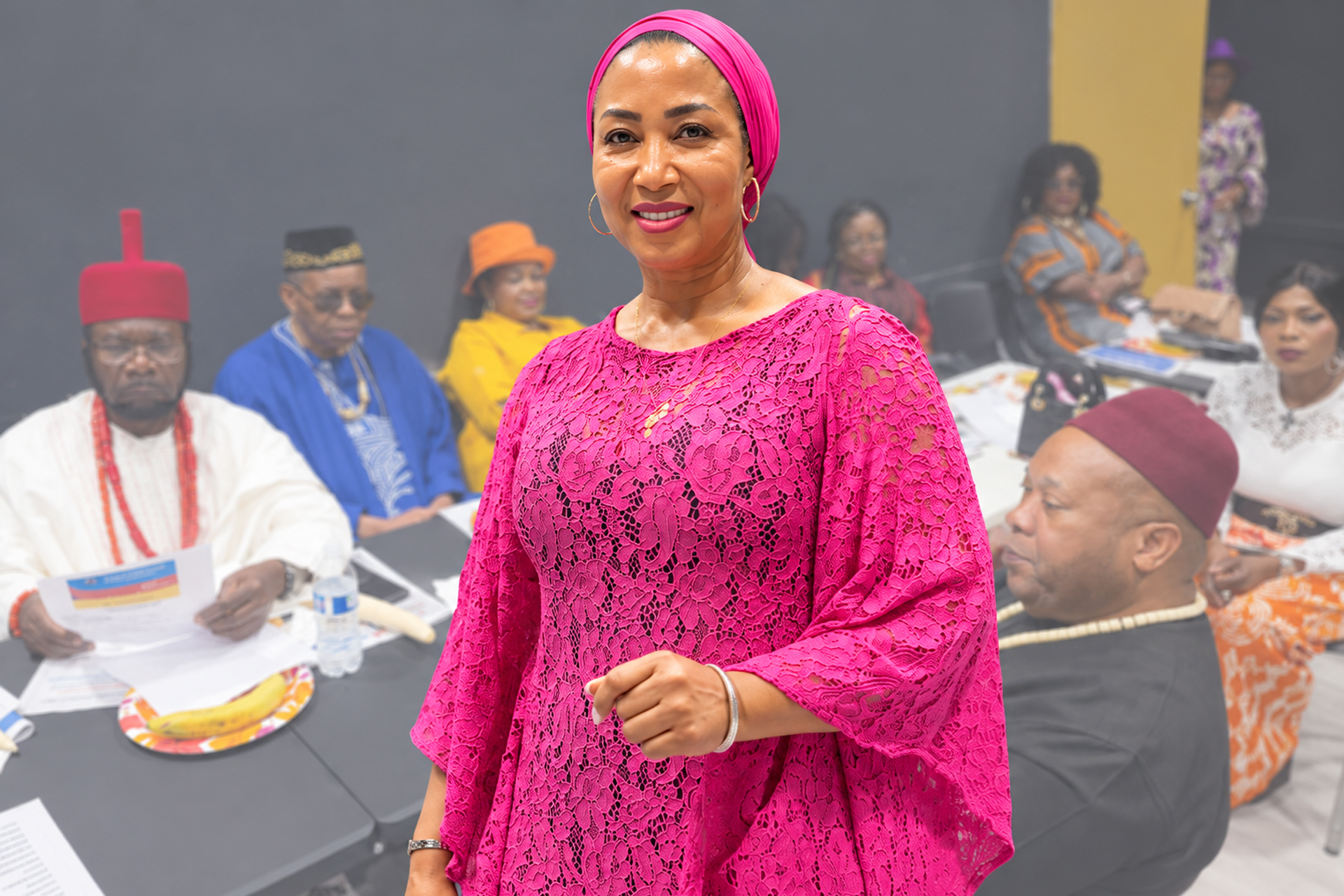
Following a successful induction ceremony, the First International Branch continues to attract new members drawn to its tradition of friendship, service, culture, and community
SUGAR LAND, TEXAS — The Sugar Land People’s Club of Nigeria International (SLPCNI) is continuing its membership expansion following its recently concluded induction ceremony, with Dr. Nkem Ugwu becoming one of the latest community members to join the organization.
Ugwu, a Sugar Land resident originally from Nsukka, Enugu State, Nigeria, is an entrepreneur and mother of three sons, a mother-in-law, and a grandmother. She describes service to others, family, and community engagement as important parts of her personal and professional life.

Grand Patron Ide Obinna Nnanyelugo Mbachu addressing the September Conference of the Sugar Land PCNI
Her membership comes on the heels of the branch’s successful bi-annual induction ceremony, during which 16 new members were formally sworn in by PCNI National President Atty. Fidelis Onyebueke. The celebration attracted national leaders, patrons, and members representing branches from across the People’s Club network.

Photo from left: Hon. Chief Sir Michael Okeke; Hon. Anaeto Okakpu “Oranwezuluaku”; Grand Patron Ide Obinna Nnanyelugo Mbachu; Hon. Dr. Nkem Ugwu ; Hon. Prof. Chris Ulasi, Group Chairman; Hon. Chief, Sir Basil Mbuba; Hon. Chief Sir Dr. Uche Egbuchuam “Akudo World Wide.”
Ugwu said joining the organization provides an opportunity to develop meaningful relationships while contributing to its mission.
“I am truly excited and honored to join the prestigious People’s Club of Nigeria International, Sugar Land Branch. I look forward to getting to know fellow members, building lasting friendships, and becoming actively involved in this vibrant and welcoming community. I am especially drawn to the Club’s tradition of fellowship, service, and mutual support, and I hope to contribute my experience, energy, and passion for serving others to its continued growth.”
Grand Patron Ide Obinna Nnanyelugo Mbachu welcomed Ugwu, describing continued interest in membership as encouraging for the historic First International Branch.

Membership Chairperson Hon. Chief Udoji Achebe and Hon. Ndidi Chidume
“When people of accomplishment and community spirit continue to identify with our organization, it tells us that the values upon which People’s Club was built remain relevant. We welcome Dr. Ugwu and look forward to the experience and fellowship she brings to our family.”
Hon. Prof. Chris Ulasi, Group Chairman, said the branch’s recent induction helped showcase an organization that continues to combine Nigerian cultural heritage with community engagement in Houston.
“Our successful induction created tremendous enthusiasm, but our focus goes beyond ceremonies. We are building a stronger organization rooted in friendship, responsibility and service. Dr. Ugwu’s decision to join reflects that continuing momentum.”

One of the meeting hosts, Hon. Professor Keih George, introduces the co-meeting hosts.
Membership Chairperson Hon. Chief Udoji Achebe said the branch remains interested in individuals prepared to participate actively in its programs and fellowship.
“Membership is about belonging, but it is equally about participation and contribution. We are delighted to welcome Dr. Ugwu and other prospective members who share the principles and aspirations of People’s Club.”
For SLPCNI, the growing interest following its induction represents another chapter in the evolution of a branch with a special place in the organization’s history.
And for Ugwu, it marks the beginning of a new journey—one centered on friendship, community, and service.
Branch considers annual induction as August celebration of prestige, culture and comradeship inspires growing community interest
HOUSTON, TEXAS — Membership requests to the Sugar Land Branch of People’s Club of Nigeria International (PCNI) have risen significantly following its successful August induction ceremony, prompting the organization to consider making the event an annual affair.
Group Chairman, Hon. Prof. Chris Ulasi, confirmed the surge in interest, saying the branch has received numerous inquiries from prospective members since the ceremony that formally admitted 16 new members to the organization.
“The response since the induction has been remarkable. We have seen a significant increase in people asking about membership and how they can become part of the People’s Club family,” Ulasi said. “Many of them attended the event or heard about it afterward and were impressed by the fellowship, dignity, cultural pride, and genuine comradeship they witnessed.”
Ulasi said the development, including a possible change from the current bi-annual induction arrangement to an annual ceremony, would be discussed at the branch’s September general meeting.
The renewed interest in membership comes on the heels of an elaborate induction that attracted national officers, patrons, branch chairmen, members, and guests from across the People’s Club family.
National President, Atty. Fidelis Onyebueke, who presided over the swearing-in of the 16 inductees, described the event as a total success and commended the Sugar Land Branch, PCNI’s First International Branch, for what he called an exceptional celebration of fellowship, culture, service, and unity.
During the formal ceremony, each inductee was invited to the podium to take the membership oath and receive a certificate from the national president, who was assisted by PCNI Attorney Chukwuka John Ukadike.
Beyond the admission of new members, however, the event offered guests a public display of the traditions that have historically defined the People’s Club: prestige, love, service, and comradeship. Those characteristics were reflected throughout the ceremony, from the reception of national officers and interaction among members to the formal induction, cultural presentation, and extended social celebration that followed.
Grand Patron, Ide Obinna Nnanyelugo Mbachu, said the growing interest in membership was an indication that the organization’s values resonated with guests who experienced the event.
“What people witnessed was the character of People’s Club—the love among members, respect for one another, willingness to serve, and the comradeship that brings us together,” Mbachu said. “Prestige is not simply about appearance; it is about how we conduct ourselves and how we treat people. When the community sees those values demonstrated, it is understandable that others would want to become part of the organization.”
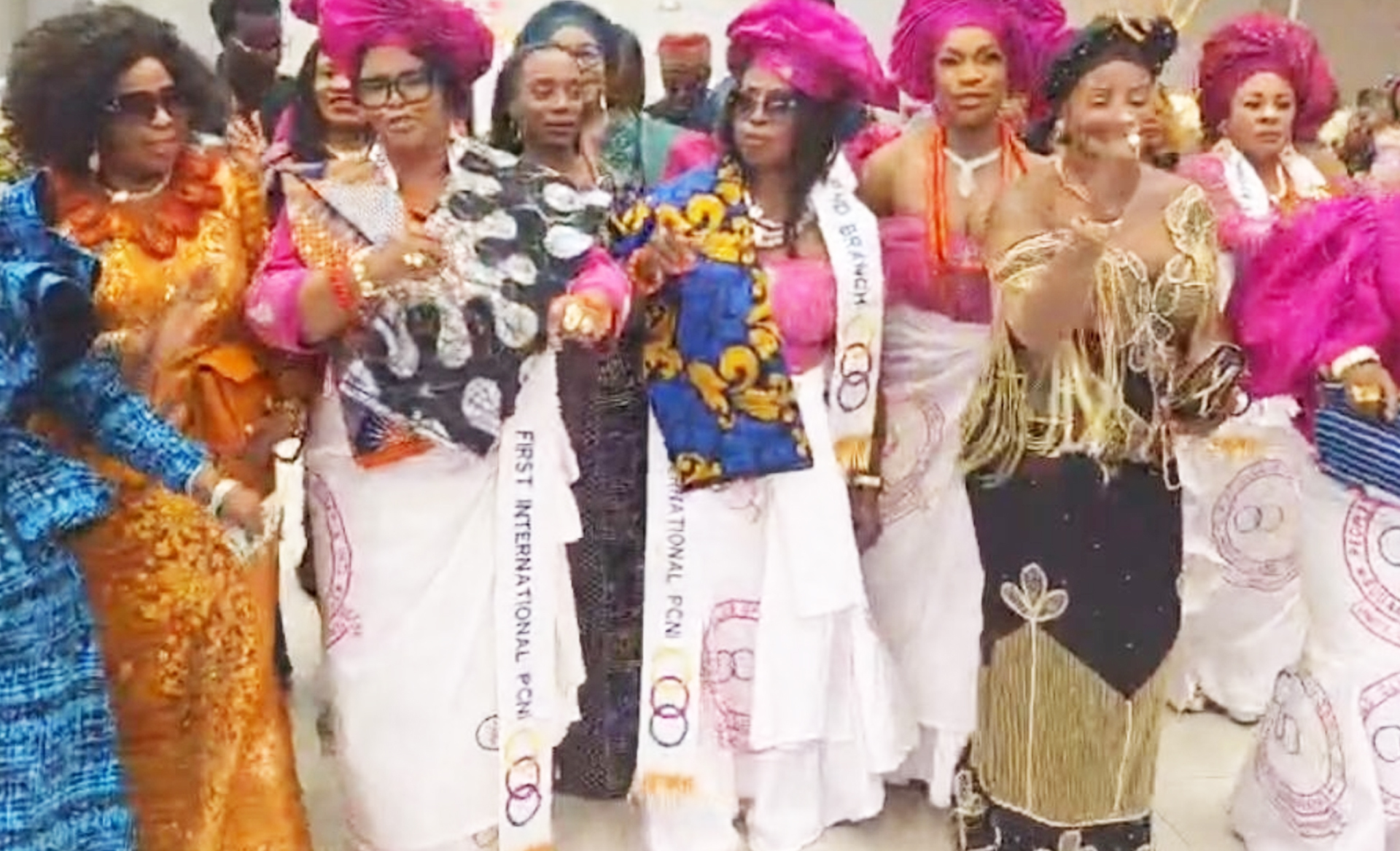
The cultural presentation was among the most visible features of the evening. Women members and associates appeared in coordinated traditional attire featuring red-pinkish blouses with matching head ties and white wrappers bearing the PCNI logo. The men wore all-white outfits complemented by customized PCNI cap pins and distinctive PCNI sashes worn as neckpieces.

The coordinated appearance created a colorful expression of Nigerian cultural identity while reinforcing the sense of unity that characterized the gathering.
As the formal program concluded, the ceremony transitioned into an extended social celebration. Members, inductees, and guests shared food and drinks before taking to the dance floor, with music and festivities continuing into the early hours of Sunday.
The presence of members and officials from different branches also gave the ceremony broader significance for Sugar Land, whose status as the First International Branch places it prominently in PCNI’s history outside Nigeria.
For Ulasi, however, the strongest indication of the event’s impact came afterward, as inquiries from prospective members continued to reach the branch.
He said that while the organization welcomes the increased interest, prospective members would be expected to understand the responsibilities and traditions associated with belonging to the People’s Club. “Membership is about much more than attending social events,” Ulasi said. “It is about service, friendship, responsibility, and commitment to one another. Those are the values we intend to preserve as the branch continues to grow.”
The September meeting is expected to consider how the branch will respond to increased membership interest and whether the success of the August ceremony provides sufficient grounds to move to an annual induction schedule. For the Sugar Land Branch, the aftermath of the August induction may prove as significant as the ceremony itself: 16 members entered the People’s Club that evening, but the celebration appears to have inspired many more to seek a place within its ranks.


People’s Club Sugar Land Is Growing — Grand Patron Mbachu Explains Why

Professor Josephine Onyido Earns Prestigious Nigerian Academy of Education Induction

PCNI Elevates Chief Dr. Emmanuel Opara to Patron in Historic Ihiagwa Investiture

Emotional Conflict: Is She Toying with Me?

Corruption at the Nigerian Consulate Atlanta – A Victim’s Nightmarish Experience

Gowon’s Book and the Dangerous Politics of Selective Memory

Video: Omambala Cultural Association in Houston Celebrates Motherhood with Joyous Igbo-Inspired Mother’s Day Event

VIDEO: Chris Hollins Opens Cartoon Art Showcase at TSU’s CommWeek

Commissioner Dexter L. McCoy speaks about the African-American Memorial Event
-
 Houston2 weeks ago
PCNI Elevates Chief Dr. Emmanuel Opara to Patron in Historic Ihiagwa Investiture
-

 Houston1 month ago
Membership Interest Soars After Sugar Land People’s Club’s Successful Induction
-

 Houston3 weeks ago
Membership Surge Continues as Dr. Nkem Ugwu Joins People’s Club
-
 Community2 weeks ago
People’s Club Sugar Land Is Growing — Grand Patron Mbachu Explains Why
-
 Education2 weeks ago
Professor Josephine Onyido Earns Prestigious Nigerian Academy of Education Induction