

News
2023: Igbos don’t want to be president under APC (Part 3)

Taking cognizance of the ills happening in Nigeria today, from the senseless killings to the high level of corruption, fraud, insecurity, social and economic failure, manipulation, brutality, kidnapping, injustice and conspiracy of silence, etc. by those who are supposed to speak and defend truth and justice, APC as a national ruling party was a national tragedy that befell Nigeria in 2015. The high level of moral decay in Nigerian society today under this administration is absurd and unacceptable and we cannot continue like this. Simply, the party flopped. Consequently, no member of APC should be honored and decorated with the highest political post no matter the academic qualification and societal position of that person. Anything to the contrary in this our resentful situation would amount to hypocrisy and one spitting at his/her own face.

As a developed mind, do not forget that anyone without morality has no integrity, and one without integrity cannot be a good leader. Warren Edward Buffett said, “Look for three things in a person, intelligence, energy, and integrity. And if they don’t have the last one, don’t even bother with the first two.” None of the APC’s presidential aspirants can be exonerated from the woeful failure of this government and the sufferings and agonies of Nigerians from Vice-President Prof. Yemi Osinbajo to the former Lagos State Governor Bola Tinubu, Minister of Transport Rotimi Amaechi, Minister of Labour and Employment Chris Ngige and the former governor of Imo State Rochas Okorocha, etc.
Prof. Yemi Osinbajo
If one has a conscience, where and how does one start to excuse the second in command from the dismal performances of this government? Prof. Osinbajo is the number two in the rank of those that have been managing Nigeria’s affairs since 2015 to this point of anarchy in some northern parts of the country, and he has promised to start wherever Buhari will stop if Nigerians should give him a chance to be fully in command in 2023. But Nigerians are currently insecure under Buhari, our economy has never been so bad as it is today and corruption is rising every day. So, what is the positive thing Buhari will leave that Prof. Osinbajo will continue? Prof. Osinbajo sometimes acted as the president when President Buhari was not around. I just hope that our foolishness and sycophancy will not becloud us again to make the same mistake we made in 2015 and 2019 and to think narrow-mindedly that Prof. Osinbajo is just a vice. Anyone who in his/her delusional mind thinks differently should tell the world why he has not resigned. The shocking and embarrassing thing is that there is even no pretense from him to hide his support of the cause of our suffering by telling Nigerians that he will continue where Buhari stopped. “The quality of a society will be judged by what the least privileged in it achieves,” said Robert K. Greenleaf. Are you happy and satisfied with the “next level” Buhari has taken you to so far? Do you want to continue the same path? What is actually wrong with Nigerians? Prof. Osinbajo has no moral right to be the president of Nigeria.
Bola Tinubu
Tinubu, the Jagaban of Borgu Kingdom is one person I will not dwell much on because the controversies surrounding him and the various allegations against him are in the public domain. But anyone who worked for the emergence of Buhari in 2015, supported him again in 2019, and still told Nigerians in 2022 that he is doing well does not deserve to be elevated by Nigerians. So, “Jagaban” is morally not qualified to be the Nigerian president.
“Conscience is an open wound; only truth can heal it.” Many thanks to Uthman Dan Fodio.
Rotimi Amaechi
In a normal functional society, Amaechi the Minister of transport should have either resigned by now or got sacked as a minister. Correspondingly too, he should be answering questions concerning the Kaduna rail attack. The manifest of the rail incident showed that three hundred and something people were on board but according to reports, the actual number was more than nine hundred. How was that possible? What happened to the money paid by over six hundred passengers? Or were those passengers’ invisible spirits sneaked into the train? How long has such been going on? Those in the right positions are not asking these questions. This is Nigeria for you, and it remains what it is.
Just a few days after this attack, instead of Amaechi joining Nigerians to mourn those that were killed and comforting families that lost their loved ones, we rather saw him celebrating and running around a stadium in the name of declaration for the presidency. Sadly, some of the kidnapped victims are still in the den of the terrorists. No moral value, and to say someone like this does not care about us is an understatement. That he even conceived the idea of declaring his presidential intention at that sad thick moment of our mourning and sorrow was a slap on our faces, and for many of us also to have shamelessly come out in large numbers in solidarity with his faulty aspiration called for the check of our sanity.
This single action of Amaechi is enough indictment of one without moral uprightness.
Chris Ngige
As a Minister of Labour and Employment, how many companies or factories have folded under him? How many new companies has his idea or policy made possible to spring up? How many Nigerians have gained employment since he became a minister and how many have lost their jobs? How many Nigerians were unemployed when he came to power, and how many are employed today? Check the statistics and you will see nothing but failures. So, “Why reinforce failure “– as Obasanjo put it? I will also not be surprised tomorrow to hear that the education minister Mallam Adamu Adamu, who has not been able to solve the ASUU problem, has declared his interest in being president, and many Nigerians will foolishly without shame campaign for him.
Rochas Okorocha
If results are yardsticks of the judgment of who has done well and not propaganda, lies, and press hype, then the former governor of Imo State Okorocha was the worst thing that happened to the Imo people as a governor. So, what magic will he do as a president? He was a monumental failure. If you are a leader and only you, your family members, aides, and cronies point to your achievements and not the populace, you should know that you are a failure. That is the best way to describe Okorocha’s painful reign in Imo. He can only be compared with Hope Uzodinmma after his term in determining who takes the trophy of the worst governor in the annals of Imo. Do not forget that the people of Imo state christened the roads he built “China” roads. Have you asked why? Some of the things he claimed to be his achievements as a governor were the statues of some animals and known people with a questionable character like Jacob Zuma of South Africa he molded in Owerri, and a church that was of no economic value he wasted Imo State money in building instead of a factory. Meanwhile, he was not able to pay pensioners and workers for many months.
Where were these people on the eve of 20th October 2020 when unarmed Nigerian youths protesting the SARS brutality were shot at the Lekki toll gate in Lagos State? What did they say? Any Igbo man who is a member of that party is carrying a moral burden.
Some of these Igbos politicians you would want to be president in 2023 were once governors, ministers, lawmakers, etc., and some of them are still currently in political positions: what were/are their achievements? All they left/supervise were/area scam, sham, decay, the allegation of embezzlement and corruption, pain, sorrow, and regret. Many of them abused their political positions by creating portfolios and ministries for their children and relatives to head just to siphon money. Some of them are still facing corruption allegations with EFCC. In a civilized society, many of them have no morality to stand for any elective post. But here is Nigeria where everything goes. I live in Austria, I am not even a white man but I am comfortable and have my rights respected sensibly. The electorates here do not know religion or tribe when they vote, and their politicians are morally sound, respect the laws and reasonably manage the affairs that concern their citizens with conscience and face the consequences when they fail. With this exposure you still expect me to support a failure because he/she is of a particular religion or tribe? Are you daft? What is wrong with you?
During the time of “Operation Python Dance” in Igbo land, how many of them spoke justly? What have they done to stop the killings going on in Igbo land? Igbo land today is militarized. Are we at war? What is the work of the military? How many innocent Igbo youths have died because of rascality and abuse of power? Please take emotions and sentiments away. How can these same sets of people soundly represent you? They thought it was smart to remain silent, but we know that not all silence is golden – some is in connivance of evil and some out of cowardliness and selfish interest. But every sane mind knew that in those moments of tragedies when we were in pain, sorrow, tears, and agony over the death of our loved ones, they calculatedly chose to maintain public silence, and not because what they saw was pleasant, but because they did not want to provoke those they believed would make ways for them to ascend to their desired positions in 2023 as ministers, lawmakers, governors, vice-presidents or presidents, etc. Because all they always think about is how to win the next election, but now the chicken has come home to roost and we must not fail to be guided properly by the truths and facts in our actions.
Enough is enough, otherwise, their trend of deception continues. When the next election of 2027 nears again, they will deceptively switch from flying first/business class to the economy from Lagos, Port-Harcourt, Kano and Owerri, etc. to Abuja – of course, they cannot travel by car because their incompetence made it possible for terrorists and kidnappers to take over the roads. How many of them or their family members were victims of the Kaduna train attack? The answer is none. They are aware of the danger their failure birthed, otherwise, they would have been dragging seats with us in buses just for their deception. They will soon start eating corns publicly, fry akara, and perhaps hawk fried plantain, bread and carrots, etc. on the streets like us and pose for pictures. Painfully we will stupidly and proudly too use these deceptive photos – things they did not and will not do after elections – to campaign for them, exactly what they wanted us to do. But when the elections are over, and the time comes to redeem their own electoral promises, like the case has always been, they will spit at us with greed, corruption, inefficiencies, and brutalities. When we complain of the pains we feel they send their political thugs after us.
In Africa, the emotions and efforts of many gullible people especially the poor ones who are even the most oppressed and abused expressed in supporting, defending, and catapulting the oppressors who impoverished them – even sometimes with their lives – because of tribe and religion to political posts are worrisome and becoming too idiotic. If we must get it right this time in Nigeria, we must be rational in our views and jettison all kinds of naivety, emotional thinking, and ethnicity in choosing who becomes the president in 2023, or else there will be an explosion, and how it starts and ends no one can tell correctly, but one thing is very obvious, it cannot end well.
In every part of Nigeria whether in the south, east, west or north we have people who are capable to lead Nigeria qualitatively, the only impediments that have continued to militate against getting these right leaders that could take us to the promised land are because the system is unjustly structured and corruptly, too. And political cabals and criminals are having filled days to the detriment of the progress, peace and happiness of all of us. Having said this, let me state this fact emphatically that I am not, have never been and will not be an advocator of zoning the president. But Nigeria is not run as a normal society. It has very insincere structures with failed people as leaders and many sycophants as followers. It is a country where politicians lack the political will to do the needful of correcting the abnormalities for the benefit of all. Therefore, if the politicians have agreed to zone where the president should come from as we have been severally made to understand, there is equally nothing bad about that, and I respect it. It was on this ground I say the time is now for the Nigerian people to forget the civil war, heal the wounds and make the Igbos have that sense of belonging and strongly support and campaign for an Igbo president for 2023 – nevertheless, not an Igbo man in APC.
However, do not forget that I have continued to say that Nigeria’s problem has never been the zone that produces or that should produce the president. The major problem of the country is its unjust fundamental base inherited from the colonial masters and unfortunately and insincerely sustained and sealed in the 1999 constitution as amended. So, it does not really matter where the president should come from, Nigeria will never attain its potential until the injustice as enshrined in the 1999 constitution is revisited, addressed, and Nigeria restructured. If Nigerian politicians stubbornly continue to refuse to sit in a round table discussion and fashion out acceptable terms for all to equitably and justly stay together, Nigeria will not have a chance for survival. It is only a matter of time as Nigeria continues to wobble and fumble. Those who say they do not see any reason for restructuring are liars.
2023: Nigerians are already aware that any APC candidate whether Igbo, Yoruba, Hausa or Fulani etc. is not a choice, as they hope for a new beginning in a new president from PDP.
♦ Uzoma Ahamefule, a refined African traditionalist and a patriotic citizen writes from Vienna, Austria. Contact Uzoma >>>>
READ PARTS 1 and 2



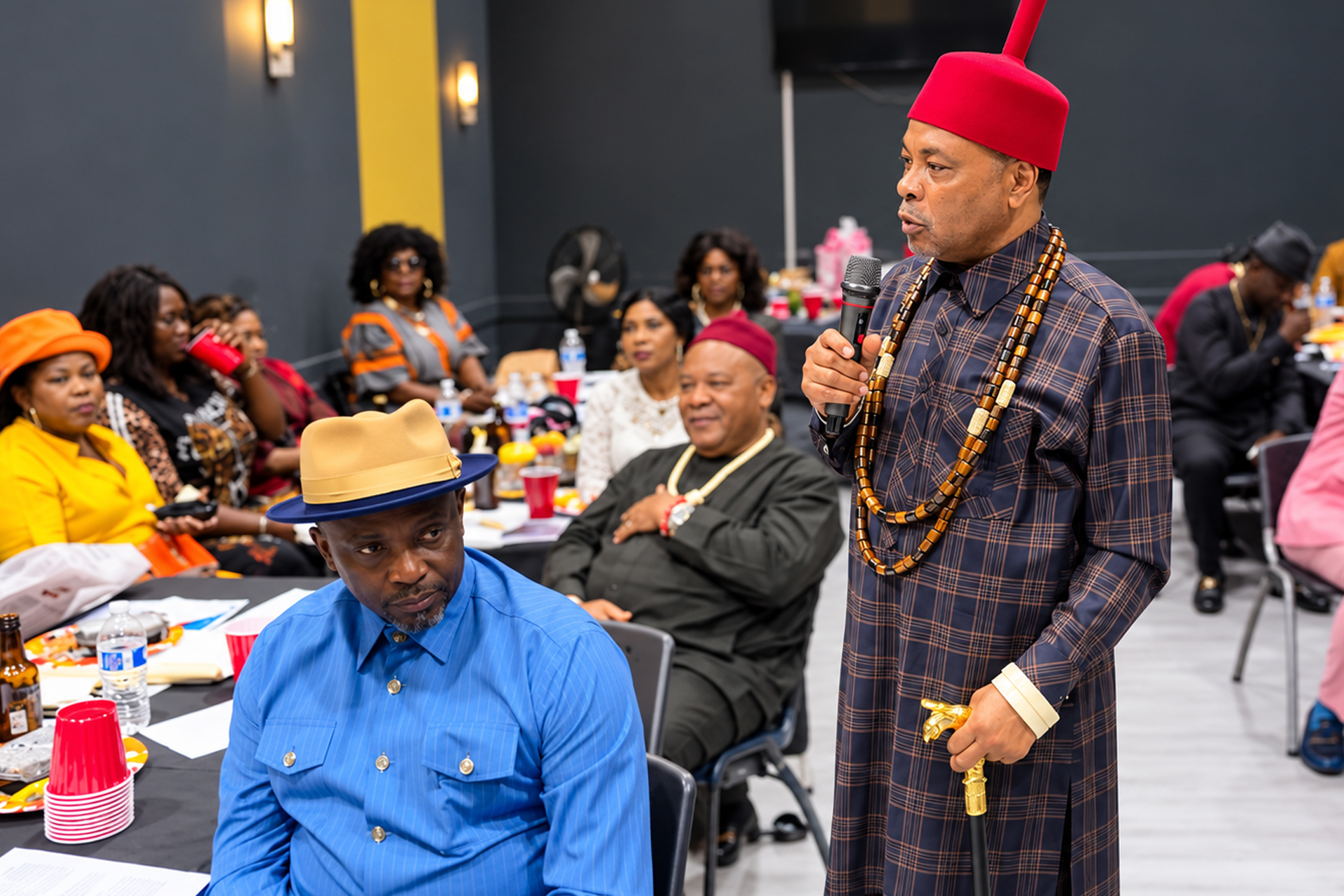
…Credits principled leadership, philanthropy, and a renewed commitment to “Unity, Love and Service” for the historic branch’s growing membership and influence.
SUGAR LAND, TEXAS — The recent growth and renewed visibility of the Sugar Land People’s Club of Nigeria International did not happen by accident. According to the branch’s Grand Patron, Ide Obinna Nnanyelugo Mbachu, its resurgence is rooted in something far more enduring than ceremonies, titles, or social gatherings: a commitment to putting the organization’s guiding principles into practice.
In an interview reflecting on the branch’s recent progress, Mbachu said the philosophy of “Unity, Love, and Service” remains central to the People’s Club’s identity and is increasingly defining the direction of its Sugar Land branch.
“Unity means recognizing that our individual differences must never become greater than the institution that brings us together,” Mbachu said. “Love means genuinely caring about one another—not only when we celebrate, but when members and their families face difficult moments. Service is where those values become action. If we cannot translate fellowship into service to humanity, then we have missed the purpose of the organization.”

Grand Patron, Ide Obinna Nnanyelugo Mbachu.
People’s Club of Nigeria International traces its origins to Nigeria in 1971 and has since expanded through branches in Nigeria and internationally. Sugar Land occupies a distinctive place in that history as the organization’s First International Branch.
Mbachu said that legacy carries responsibility.
“People’s Club is not simply a social club where people gather, celebrate, and go home,” he said. “At its core, it is a philanthropic institution committed to community welfare. Our fellowship must have a human purpose. We must be able to look beyond ourselves, identify needs within our communities, and respond with compassion, resources, and action.”
He pointed to the COVID-19 pandemic as one example of that philosophy at work.
“I will never forget the COVID period, when fear and uncertainty had disrupted virtually every aspect of life,” Mbachu recalled. “Members of our Sugar Land branch stepped forward to distribute food to families struggling through that crisis. People were concerned about their own safety, yet our members understood that service was most meaningful when the community needed us most. That experience demonstrated what the People’s Club should represent.”
The branch has recently experienced renewed momentum in membership. Following its successful 2026 biannual induction, 16 new members were formally admitted, while additional community members have continued to express interest in joining.
Mbachu attributes that growth partly to greater organizational visibility, active programming, and an environment where prospective members can see fellowship and community engagement working together.
He particularly credited Hon. Prof. Chris Ulasi, Group Chairman of SLPCNI, and his executive team with helping reposition the branch.
“Professor Ulasi and his team deserve tremendous credit,” Mbachu said. “Leadership requires consistency, patience, and the ability to bring different personalities together around a common objective. The progress we are witnessing reflects considerable work behind the scenes; organizing members, strengthening participation, and ensuring that the branch continues moving forward.”
Mbachu also acknowledged PCNI National President Atty. Fidelis Onyebueke, whose leadership he said has contributed to stronger relationships across the organization.
“The National President has emphasized peace, reconciliation, and mutual respect among branches,” he said. “An international organization cannot prosper when its branches operate in unnecessary conflict. His efforts to promote understanding, dialogue, and unity across the People’s Club family have contributed significantly to the stability and renewed enthusiasm we are experiencing.”
For Mbachu, however, growth cannot simply be measured by numbers. The quality and commitment of those joining remain equally important.
“Our doors are open to reputable men and women who believe in what People’s Club represents and are prepared to contribute positively,” he said. “We welcome people who value integrity, fellowship, community service, and mutual respect. Membership should never be about what title you receive; it should be about what value you bring.”
That distinction, Mbachu argues, will determine whether the current momentum becomes lasting institutional progress.
For Sugar Land People’s Club, the formula he offers is remarkably straightforward: protect unity, practice love and make service visible. “When those three principles are genuinely lived,” Mbachu said, “the organization does not have to advertise its greatness. The community will see it.”
Following a successful induction ceremony, the First International Branch continues to attract new members drawn to its tradition of friendship, service, culture, and community
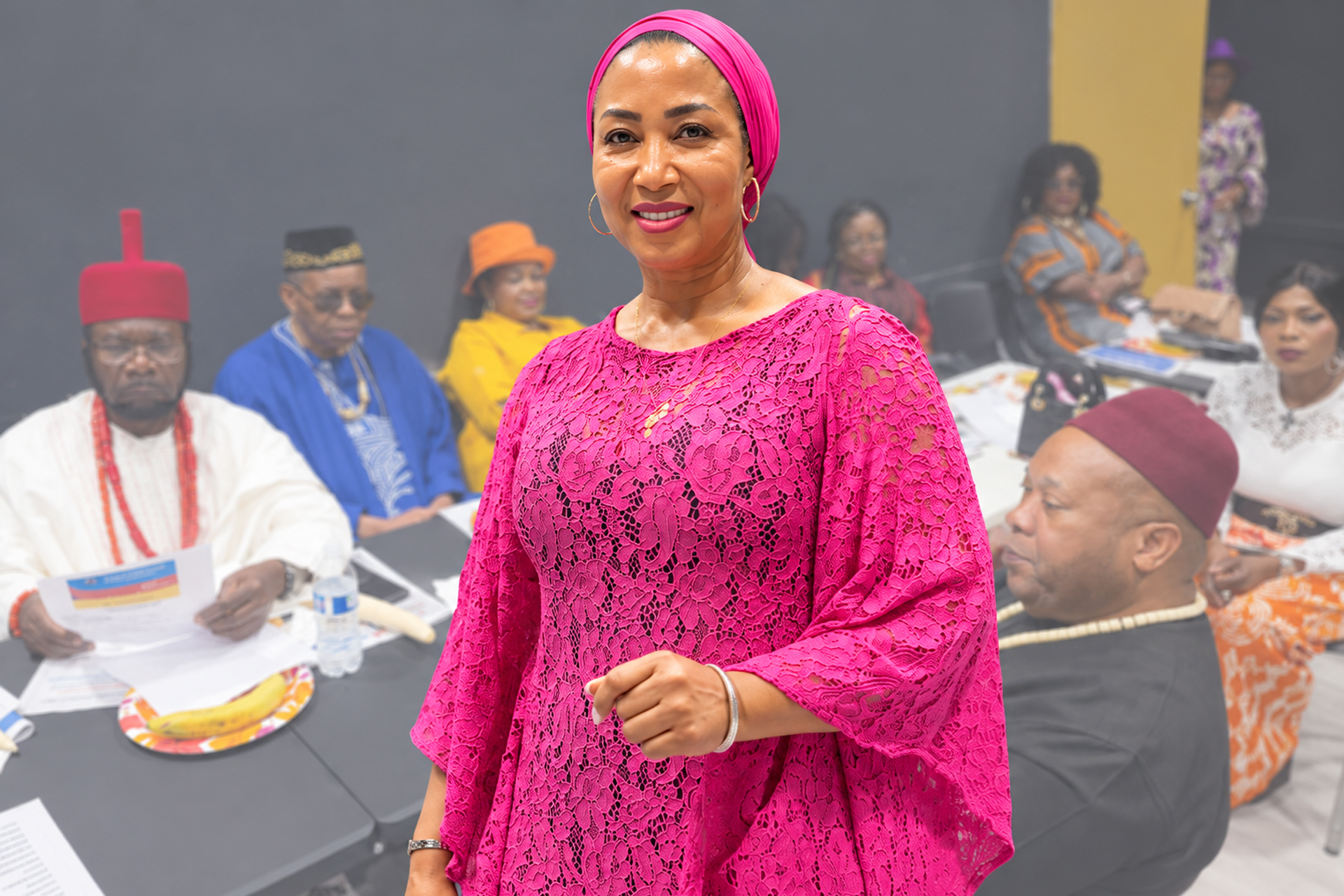
SUGAR LAND, TEXAS — The Sugar Land People’s Club of Nigeria International (SLPCNI) is continuing its membership expansion following its recently concluded induction ceremony, with Dr. Nkem Ugwu becoming one of the latest community members to join the organization.
Ugwu, a Sugar Land resident originally from Nsukka, Enugu State, Nigeria, is an entrepreneur and mother of three sons, a mother-in-law, and a grandmother. She describes service to others, family, and community engagement as important parts of her personal and professional life.

Grand Patron Ide Obinna Nnanyelugo Mbachu addressing the September Conference of the Sugar Land PCNI
Her membership comes on the heels of the branch’s successful bi-annual induction ceremony, during which 16 new members were formally sworn in by PCNI National President Atty. Fidelis Onyebueke. The celebration attracted national leaders, patrons, and members representing branches from across the People’s Club network.

Photo from left: Hon. Chief Sir Michael Okeke; Hon. Anaeto Okakpu “Oranwezuluaku”; Grand Patron Ide Obinna Nnanyelugo Mbachu; Hon. Dr. Nkem Ugwu ; Hon. Prof. Chris Ulasi, Group Chairman; Hon. Chief, Sir Basil Mbuba; Hon. Chief Sir Dr. Uche Egbuchuam “Akudo World Wide.”
Ugwu said joining the organization provides an opportunity to develop meaningful relationships while contributing to its mission.
“I am truly excited and honored to join the prestigious People’s Club of Nigeria International, Sugar Land Branch. I look forward to getting to know fellow members, building lasting friendships, and becoming actively involved in this vibrant and welcoming community. I am especially drawn to the Club’s tradition of fellowship, service, and mutual support, and I hope to contribute my experience, energy, and passion for serving others to its continued growth.”
Grand Patron Ide Obinna Nnanyelugo Mbachu welcomed Ugwu, describing continued interest in membership as encouraging for the historic First International Branch.

Membership Chairperson Hon. Chief Udoji Achebe and Hon. Ndidi Chidume
“When people of accomplishment and community spirit continue to identify with our organization, it tells us that the values upon which People’s Club was built remain relevant. We welcome Dr. Ugwu and look forward to the experience and fellowship she brings to our family.”
Hon. Prof. Chris Ulasi, Group Chairman, said the branch’s recent induction helped showcase an organization that continues to combine Nigerian cultural heritage with community engagement in Houston.
“Our successful induction created tremendous enthusiasm, but our focus goes beyond ceremonies. We are building a stronger organization rooted in friendship, responsibility and service. Dr. Ugwu’s decision to join reflects that continuing momentum.”

One of the meeting hosts, Hon. Professor Keih George, introduces the co-meeting hosts.
Membership Chairperson Hon. Chief Udoji Achebe said the branch remains interested in individuals prepared to participate actively in its programs and fellowship.
“Membership is about belonging, but it is equally about participation and contribution. We are delighted to welcome Dr. Ugwu and other prospective members who share the principles and aspirations of People’s Club.”
For SLPCNI, the growing interest following its induction represents another chapter in the evolution of a branch with a special place in the organization’s history.
And for Ugwu, it marks the beginning of a new journey—one centered on friendship, community, and service.
Branch considers annual induction as August celebration of prestige, culture and comradeship inspires growing community interest
HOUSTON, TEXAS — Membership requests to the Sugar Land Branch of People’s Club of Nigeria International (PCNI) have risen significantly following its successful August induction ceremony, prompting the organization to consider making the event an annual affair.
Group Chairman, Hon. Prof. Chris Ulasi, confirmed the surge in interest, saying the branch has received numerous inquiries from prospective members since the ceremony that formally admitted 16 new members to the organization.
“The response since the induction has been remarkable. We have seen a significant increase in people asking about membership and how they can become part of the People’s Club family,” Ulasi said. “Many of them attended the event or heard about it afterward and were impressed by the fellowship, dignity, cultural pride, and genuine comradeship they witnessed.”
Ulasi said the development, including a possible change from the current bi-annual induction arrangement to an annual ceremony, would be discussed at the branch’s September general meeting.
The renewed interest in membership comes on the heels of an elaborate induction that attracted national officers, patrons, branch chairmen, members, and guests from across the People’s Club family.
National President, Atty. Fidelis Onyebueke, who presided over the swearing-in of the 16 inductees, described the event as a total success and commended the Sugar Land Branch, PCNI’s First International Branch, for what he called an exceptional celebration of fellowship, culture, service, and unity.
During the formal ceremony, each inductee was invited to the podium to take the membership oath and receive a certificate from the national president, who was assisted by PCNI Attorney Chukwuka John Ukadike.
Beyond the admission of new members, however, the event offered guests a public display of the traditions that have historically defined the People’s Club: prestige, love, service, and comradeship. Those characteristics were reflected throughout the ceremony, from the reception of national officers and interaction among members to the formal induction, cultural presentation, and extended social celebration that followed.
Grand Patron, Ide Obinna Nnanyelugo Mbachu, said the growing interest in membership was an indication that the organization’s values resonated with guests who experienced the event.
“What people witnessed was the character of People’s Club—the love among members, respect for one another, willingness to serve, and the comradeship that brings us together,” Mbachu said. “Prestige is not simply about appearance; it is about how we conduct ourselves and how we treat people. When the community sees those values demonstrated, it is understandable that others would want to become part of the organization.”
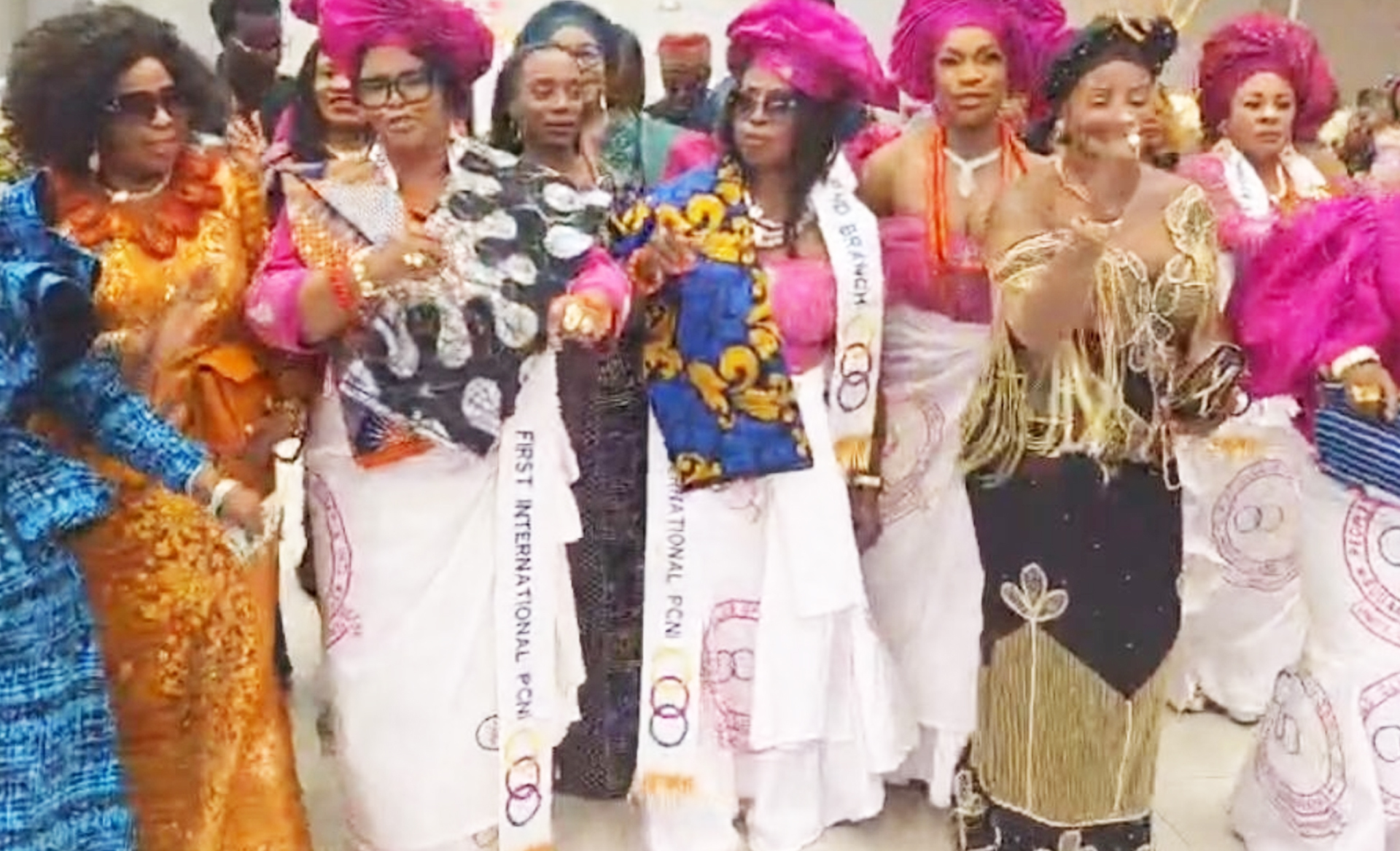
The cultural presentation was among the most visible features of the evening. Women members and associates appeared in coordinated traditional attire featuring red-pinkish blouses with matching head ties and white wrappers bearing the PCNI logo. The men wore all-white outfits complemented by customized PCNI cap pins and distinctive PCNI sashes worn as neckpieces.

The coordinated appearance created a colorful expression of Nigerian cultural identity while reinforcing the sense of unity that characterized the gathering.
As the formal program concluded, the ceremony transitioned into an extended social celebration. Members, inductees, and guests shared food and drinks before taking to the dance floor, with music and festivities continuing into the early hours of Sunday.
The presence of members and officials from different branches also gave the ceremony broader significance for Sugar Land, whose status as the First International Branch places it prominently in PCNI’s history outside Nigeria.
For Ulasi, however, the strongest indication of the event’s impact came afterward, as inquiries from prospective members continued to reach the branch.
He said that while the organization welcomes the increased interest, prospective members would be expected to understand the responsibilities and traditions associated with belonging to the People’s Club. “Membership is about much more than attending social events,” Ulasi said. “It is about service, friendship, responsibility, and commitment to one another. Those are the values we intend to preserve as the branch continues to grow.”
The September meeting is expected to consider how the branch will respond to increased membership interest and whether the success of the August ceremony provides sufficient grounds to move to an annual induction schedule. For the Sugar Land Branch, the aftermath of the August induction may prove as significant as the ceremony itself: 16 members entered the People’s Club that evening, but the celebration appears to have inspired many more to seek a place within its ranks.


People’s Club Sugar Land Is Growing — Grand Patron Mbachu Explains Why

Professor Josephine Onyido Earns Prestigious Nigerian Academy of Education Induction

PCNI Elevates Chief Dr. Emmanuel Opara to Patron in Historic Ihiagwa Investiture

Emotional Conflict: Is She Toying with Me?

Corruption at the Nigerian Consulate Atlanta – A Victim’s Nightmarish Experience

Gowon’s Book and the Dangerous Politics of Selective Memory

Video: Omambala Cultural Association in Houston Celebrates Motherhood with Joyous Igbo-Inspired Mother’s Day Event

VIDEO: Chris Hollins Opens Cartoon Art Showcase at TSU’s CommWeek

Commissioner Dexter L. McCoy speaks about the African-American Memorial Event
-

 Houston4 weeks ago
Membership Interest Soars After Sugar Land People’s Club’s Successful Induction
-
 Houston1 week ago
PCNI Elevates Chief Dr. Emmanuel Opara to Patron in Historic Ihiagwa Investiture
-

 Houston2 weeks ago
Membership Surge Continues as Dr. Nkem Ugwu Joins People’s Club
-
 Community6 days ago
People’s Club Sugar Land Is Growing — Grand Patron Mbachu Explains Why
-
 Education1 week ago
Professor Josephine Onyido Earns Prestigious Nigerian Academy of Education Induction