

Nigeria
Inflation: Nigerians groan as hardship bites

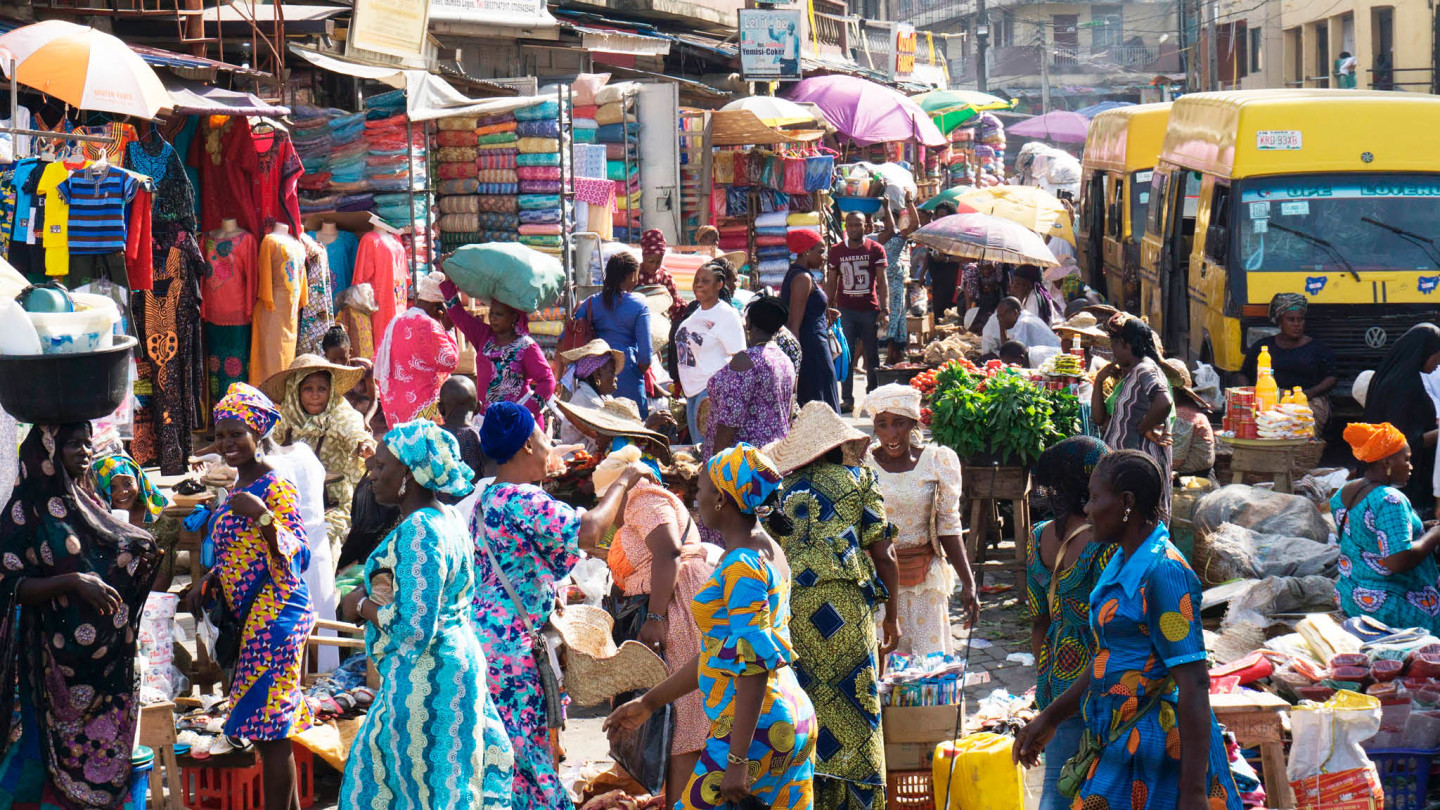
As double-digit inflation persists in the country, Nigerians, especially the middle class, have called for immediate remedies, lamenting that indeed, the situation has rendered them poorer as indicated by the latest World Bank Nigeria Development Update report.
The report, which was made public last Tuesday, had revealed that rising inflation pushed an estimated seven million Nigerians below the poverty line in 2020 alone.
Although Nigeria’s headline inflation retreated for the second time in May, dropping from 18.12 per cent reported in April to 17.93 per cent, Nigerians in the middle class segment insisted that the high cost of living has become almost unbearable for them, adding that they were getting poorer by the day.
As such, some economists and allied professionals have charged the government to retool its policies towards jumpstarting industrialisation, saying only active production could save the country’s economy from total collapse.
A primary school teacher in Igando area of Lagos State, Mrs. Victoria Osagie, lamented that the current economic situation has drastically affected her saving capacity, adding that it has become difficult for her to meet her basic needs.
“The current state of the country is not palatable. Workers are unable to save, because the income is not corresponding with the astronomic high prices of items. So, it makes it so difficult to cope in the country now.
“Feeding in Nigeria today is not easy as food, which is a basic need, has become a luxury. Prices of foodstuffs are now triple the prices they were before and they increase daily without control.
“You go to the market with a substantial amount of money, but you end up asking yourself what you bought because your shopping bag appears to be empty. This is after walking round the market to see where you can get fair prices,” Osagie said.
Another school teacher, Esther Amondy, said she was in severe pains, which were not caused by any sickness, but by the galloping increase in food prices in the country.
Her words: “Alarming cannot describe what is happening to me and many families around me. You will buy something today and two days later, the price of the same item has gone up significantly. Countries experience inflation, but what we are experiencing is beyond inflation. I have had to cut out fish/meat from our diet because a single fish now costs N1, 200. With five mouths to feed, how long will one fish last? Salaries and income remains static yet beans went from N900 to N2,600 when we are not at war. Since we have to eat, the portion of food everyone eats has been drastically reduced and we now eat just to put something in the stomach and not to assuage hunger. Salary finishes by the first week and it is only God that is sustaining us.
“Have you seen the price of pepper, spaghetti, noodles and garri? Garri that used to be regarded as poor man’s food is now gold; a crate of eggs costs almost N2000 and average loaf of bread goes for about N500. One single bell pepper now sells for N200. Five litres of groundnut oil is now over N5000, as for palm oil, anything you see, you take it like that.
“But the most amazing increase has come from frozen foods like chicken, turkey, fish and the likes. A kilo of chicken and turkey is now almost N2,500 and no matter how you cut it, you can never get up to 10 pieces. Even fruits I used to buy for my children have galloped out of reach. These are things that are grown and produced here, yet we can’t afford them. Does this government want us to drop dead before they know we are suffering?
“I have had to stop buying diapers for my last child because diapers have become luxury; I now use cloth napkins. The most painful for me is his food. The prices doubled and I had to abandon them; now he joins us to eat our rice, beans and garri because I can’t kill myself. I have tried.”
A freight forwarder at the Nigerian Aviation Handling Company (NAHCO), Murtala Mohammed International Airport, Lagos, Mr. Abayomi Idowu, described the present situation as unfortunate, saying: “The family economy is shrinking because the income generated is being used to buy items at exorbitant prices. Workers’ salaries have remained the same but prices of items keep increasing, which means that we now buy fewer items with the same money. As a matter of fact, the situation is causing rancour among couples,” he said.
For Elton Irioke, a private sector worker, there were too many things contending for attention even with poor economic power.
“Nigeria as a country needs serious divine intervention now. The worst is that we are the architects of our problem. Imagine that a set of sachet water, which we used to buy at N1,000, now sells for N1,200 and a sachet that hitherto sold for N5 and later became N10, now sells for N20, while four sachets sell for N50. Also, the price of bottled water has risen from N50 to N70 and N100, depending on location,” he said.
According to a meat seller at a meat market along LASU-Isheri road (Odo Eran), Kehinde Owoyemi, a cow that hitherto sold for N200,000 now goes for between N350,000 and N400,000, while that of N150,000 now sells for N300,000 or N550,000.
“A lot of customers often complain that the price of meat is high, but I tell them it is not our making, as the insecurity across the country is responsible. Anytime we go to the market, we come back with whatever we can afford. It is only God that will help us,” he said.
Iya Basit, a frozen foods trader in Isolo market, noted that traders were not finding the situation funny, saying she has been recording low patronage.
“In the past, I used to sell at least five cartons of fish in a day, different types of fishes. But now, if I finish selling two, that’s a good day. People are no longer buying and immediately they hear the price, they walk away, but I can only sell what I buy. Nobody is even asking for chicken and turkey again. Everyday, the price of frozen foods is going up with no end in sight; I don’t understand what is going on. I know the government is eating free food so they don’t know what is happening. But please help us tell them that we are dying here and people cannot afford to eat again,” she groaned.
A businessman who has his shop in Ifon-Osun community in Osun State, Mr. Friday Ugwueze, also lamented that, “I have been surviving by the grace of God.”
He disclosed that he no longer goes to distant markets to buy things because of hike in transport fare, adding that he has been reducing the quality of the food he eats just to cope with the situation.
Also speaking, a trader at Sasa area of Osogbo, the state capital, EmmyLee Agbor, said he has been experiencing low sales as a result of the state of the economy.
“How will customers buy the clothes I sell when they even complain of not eating three square meals in a day? Things are really difficult for the masses. I urge government to be human for once and do the needful. That is what we elected them to do, to cater for our welfare. They have failed us,” he decried.
A civil servant, Mrs. Odedeyi Mariam, said that it has been difficult to cater for her children and other family members.
She said: “Everything now is too tough. Pepper grinding is now N100 from N50. Transportation has increased by 100 per cent. My salary is not up to N300 per day. To and fro my workplace is N200 per day making it N1000 per week. We are living by the mercy of God,” she said.
RESIDENTS in Anambra State also recounted similar tales of woe. To a civil servant, Mr. Kenneth Uche, inflation has destroyed the totality of man in the past three years.
“Inflation has affected the psychological, emotional and physical being of man. For instance, a painter of garri cost between N300 to N400 before but now sells for N1,400. You cannot get enough foodstuffs to feed your family; you just manage the little you can afford. You eat what is available and not what you want. Life has become tough for families in this country,” he lamented.
For a businesswoman, who identified herself simply as Charity, what was used to sustain a family of four for one month in the last two years cannot last for two weeks now.
“Foodstuff like rice, tomatoes, yam, garri and even meat and fish have become very expensive since the past two years. You don’t talk about transport fare, which is also rising on a daily basis. The cost of fuel, gas and kerosine is high for the household to buy these days. A 12kg gas cylinder that normally cost N3,200 now costs N5,000. In Anambra State, fuel sells between N170 and N175 per litre but NNPC sells at N160 per litre. Nothing is easy for people in Nigeria today,” she said.
For Mr. Nduka Obi, a trader, the suffering he is going through now is the worst in his life as a Nigerian.
“Where do I start from? To travel from one town to another is not easy nowadays, as Awka to Onitsha takes N300; Awka to Enugu N500 while Awka to Owerri costs N2,000. This is double what people paid two years ago,” he noted.
IN Cross River State, a teacher who works in one of the private schools in Calabar, Sandra Edet, said the time was very tough for every worker in Nigeria given the meagre nature of the minimum wage.
According to her, food staples like garri, beans, rice and yam that were known to be for the common man are now for the rich.
“The money that you take to the market, it is as if somebody stole it from you after buying few things; the price of everything has gone up. For example, the tomato paste that we used to buy at N180, N150 or N170, I bought it two days ago at N300. Beans that we used to buy at N70, N80, N100 now sells for N150 not to talk of rice, vegetable oil and many more. It is still that same amount of money you are receiving as salary that you are still going to the market with and the rich people who do not feel it when prices of things are increasing on a daily basis buy things in the same market with you. We are really in trying times,” she said.
She appealed to the Federal Government to tweak its economic policies to enable salary earners and other small income earners to feed their families adequately.
“We are crying to the government of Nigeria. They talk about building of railways and all that. Yes, those infrastructures are good, but they need to look at what will benefit the common man in terms of stomach infrastructure before thinking of building social amenities. They should look at policies that are not favourable to us and create new ones. I don’t think that will take anything from them,” she said.
Another civil servant, who simply gave her name as Asuquo, lamented that a family of four where the mother and father are working could not eat three square meals any longer.
“I was talking to my colleague in the office and I told him that it is no more enjoyable to go to the market because of the high cost of items. That is the truth. Your families are there; the children are there to be taken care of. You have to send them to school, clothe them and shelter them. How do you manage with the little that is not even enough to feed the family,” she queried.
A trader, who identified herself as Mrs. Esther, said she has lost her customers who could not afford to pay back their credits even after collecting their salaries.
“Did you see that man and his wife with one child that just left here? They have been my customers for years. When I told them the new price of beans, did you see how the woman asked the man that they should leave? That is what we face every day.
“Some of my customers who are civil servants or salary earners collect things on credit and once they are paid salary, I get my money. But now, it is no more that way. They keep hiding from me because the salary cannot cover their needs anymore. At the end of the day, they couldn’t pay their credits.
“This is telling on us market women and men because we are losing our customers and they are not buying as they used to. Imagine someone that buys half bags of rice, garri and beans now buying in cups. We really need the government to help us get out of this terrible experience. We don’t know what is happening,” she said.
TO Mr. Ari Adamu, a civil servant in Lafia, Nasarawa State, present economic reality is harsh and cruel. He explained that as a civil servant who has not enjoyed any promotion allowance since 2011, he and his family members were not just sad but also suffering.
Mr. Hassan Lawal also said he was employed as a fresh graduate by the state government as a teacher in 2009, but has never enjoyed any promotion benefit since then.
He lamented that he now has a wife and three children to cater for with his meager salary.
“What we are going through at the moment given the rise in prices of food items, school fees, rent and other bills gets me into worry and I ask myself whether it is better to work with the state government or be a farmer,” he said.
Mrs. Hasana Ibrahim, a staff of Lafia local Council, who poured out her heart, said: “Life has become unbearable because the small money that come to our hands is like nothing. Do you know the bill AEDC sends to me every month? They send N12,000 estimated bill. My monthly salary is N50,000. I have a wife and three children. We are altogether five, living with 50,000 in a month. We used to buy a mudu of beans at N250 but now that same mudu costs N1000. The prices of everything are on the rise everyday and my salary is stagnant.”
CIVIL servants in Benue State and other middle class residents in the state also had similar stories to tell.
A private primary school teacher in the state, Josephine Achilekaa, who happens to be a widow, told The Guardian that she earns N20,000 per month, lamenting that she was no longer able to care for her two children, who are still in nursery classes.
“My husband died and left me behind with two kids and I have been trying to train them in school. But with the current trend of inflation, I have not been finding it easy. I wish that government at all levels would explore possible measures to cut down the high cost of living for us the poor citizens,”Achilekaa said.
Another junior worker with the Benue State Civil Service, Jonah Asemena, said he gets N45,000 as salary monthly, lamenting that the money was not enough to feed his family alone not to talk of paying the school fees of his three children.
“Government should make education free for all children in the primary and junior secondary schools to lessen the burden of inflation on families in the middle class category,” he suggested.
A dealer in textile materials in Makurdi Modern Market, Joseph Okeleke, said he has been witnessing low patronage since the beginning of this year, explaining that many his customers had told him that they no longer had money to buy clothes.
Okeleke said the development has forced him to delve into food sales at his shop to make ends meet. He called on the government to adopt urgent measures to assuage the sufferings of the people.
WORKERS in the middle class cadre in Ekiti State also lamented what they described as “crazy and prohibitive “ prices of goods and services.
The workers said that apart from the fact that prices of goods and services were high, they have also remained unstable and unpredictable, thus making planning difficult.
Many residents, who spoke with The Guardian in Ado Ekiti, also urged the government to intervene to prevent negative consequences on the citizens.
Mr. Raphael Ogbonnaiye, a civil servant residing in the state capital, said: “It has affected my family very negatively. A mudu of beans that sold for N450 now sells for above N1000, while prices of other foodstuffs have tripled. It has affected every sphere of the lives of an average family.
“I used to pay my children’s fees immediately after schools resume. But this time, my wife and I had to borrow money before we could pay the school fees. We no longer think of a balanced diet; we are more concerned about what to eat to sustain ourselves.
“If this trend continues, people may be dying of hardship. What is more, the salaries and allowances we depend on have been cut down because the government could not sustain the payment of minimum wage.”
For Mr. Alebiosu Ogundana, a civil servant at the state civil service, the situation in the state needs urgent intervention from the government.
“Our market women and men through their various associations are killing the middle class with crazy prices of goods, particularly foodstuffs. Comparatively, prices of goods and services appear to be cheaper in our neighbouring states.

“My family and I are surviving by the grace of God. My family now devises other income ventures to augment what we are getting from the government because our salaries can no longer meet our needs. There should be palliatives for Nigerians. Government can no longer fold its hands and pretend that all is well. If the trend is allowed to continue, it may lead to many negative consequences,” he said.
On her part, Mrs. Ojo Christiana, who works at Ikere local council, said: “We are living in a perilous time. In my home we are in serious debt because our salaries have been used to secure loans that we used to do developmental projects. The government does not help matters because of the backlog of salaries being owed workers at the state local governments.
“We have devised means to skip some meals. We no longer think of a balanced diet in my family. We are more concerned about how we will not starve or go to bed hungry. Our government must begin to redistribute wealth. There is inequality in the country; some people have more than they really need in their lifetime while others live perpetually below poverty lines.”
IN Owerri, Imo State, a retired News Manager with the Nigerian Television Authority (NTA), Nnorom Emecheta, blamed the poverty situation in Nigeria on bad governance.
Nnorom said: “Poverty situation in Nigeria is a function of bad governance created by the present All Progressives Congress (APC) administration. Nigeria has a robust economy, yet youth unemployment is growing by the day. There is hunger and poverty in the land and these negative tendencies are responsible for insecurity that Nigeria is experiencing today. The largest population of Nigeria is poor and hungry and unable to attend to their economic needs. It is worrisome that those in the rural areas are facing poverty and hardship. That is why the World Bank is releasing these figures.”
Also speaking in the same vein, a lecturer at a higher institution in the state, Kelechi Ohaji, said: “The cost of inflation in Imo State is terrible. A bag of pure water in Imo is N250, food stuff prices are very high. The problem is high. Workers are being owed. Owners of private schools in Imo want to increase fees. The problem is enormous. I agree with the World Bank’s submission.”
CHARTING the way out of the current economic woes in the country, Godwin Owoh, a professor of Applied Economics, said government at all levels must get involved in activities with “strong cashflow” and do away with the mentality that government cannot do business.
He said it was ironic that state governors, who preside over inefficient bureaucracies, manage flourishing businesses before or after their tenures.
Also speaking, Dr. Austen Nwaze, who teaches entrepreneurship at the Pan-Atlantic University, said rising unemployment signals an impending danger if nothing was done to address rising insecurity, which he blamed for the current de-industrialisation.
He said the herders/farmers conflict must be tackled head-on to encourage farmers to return to the fields and save the impending famine, which would worsen poverty and social tension.
Nwaze said employment would naturally reach a crisis level if farming, which employs over 60 per cent of the population, were not operational.
“The solution to poverty is simple. Let us get people to work. But how can people work in an insecure environment? Our politics is very volatile, so foreign investors are not willing to come. Even domestic investors are not expanding because of fear of insecurity,” he noted.
David Adonri, a financial expert and Vice Chairman of Highcap Securities Limited, said: “There is no quick fix to reducing poverty. Time is required to correct the politico-socio-economic imbalances and abnormalities that cause poverty. First is the need to identify all the microscopic and major factors responsible for poverty in Nigeria and carefully address them.
“Starting from social factors, overpopulation can readily be fingered. Nigeria has excess liquidity of people generated from excessive birth rates and the unbridled influx of aliens. This has escalated the huge reserve army of the unemployed.
“As it stands, the heavyweight of Nigeria’s idle and consuming population has severely outstretched the country’s capacity to enjoy socioe-conomic stability. Worse still is that it is growing at an astronomical rate that will sooner than later precipitate the dreaded Malthusian doomsday. Urgent population control is needed as a practical measure to reduce poverty in Nigeria. Another social hindrance to the reduction of poverty is the pervasive nationwide insecurity. If curtailed, an enabling social environment will be created for peace and progress.”
Adonri also corroborated that poverty could be combatted through appropriate economic policies centered on production.
“The role of money, though important, is only to facilitate the allocation of wealth and exchange of goods and services among people,” he noted, stressing that access to goods and services was basic to addressing poverty.
“Considering the peculiarities of the Nigerian situation and being the poverty capital of the world, applying contemporary macro-economic measures deployed by advanced economies will only worsen the already bad situation.
After careful study of the Nigerian economic situation, it is obvious that the challenges are foundational. They cannot be corrected overnight or at a fell swoop. Nigeria lacks a good foundation for production. This has robbed te country of the capacity to create adequate wealth and generate the productive employment needed to move the teeming masses out of poverty,” he said.
He warned that no country with the population size of Nigeria could run an import-dependent economy and conquer poverty. Thus, he called for the acquisition of production technologies to speedily facilitate job creation.
He continued: “It starts with the development of a sound technical and scientific education as the most primary infrastructure. After this is the development of the engineering infrastructure made up of the metallurgical, tools and machine industries as secondary infrastructure. Next is leveraging the primary and secondary infrastructure to develop tertiary infrastructure made up of the electric power, energy, chemical and ICT industries. These three classes of infrastructure constitute the heavy industrial base of a production-centred economy.”
He warned that the various intervention funds “recklessly deployed by the CBN” could not reduce poverty, stressing that the knee-jerk measures were wasteful.
“A time-bound strategy to take Nigeria through the various stages of the industrial revolution, from first to the current fourth, can make the country conquer poverty,” he added.
Corroborating Adonri’s position, Dr. Femi Saibu, a developmental economist at the University of Lagos, said massive industrialisation through large-scale manufacturing that could take off thousands of people from the labour market was capable of curbing the rising poverty.
He charged the government to partner with the private sector in achieving the much-needed industrialisation.
Culled from the Guardian Nigeria




Following a successful induction ceremony, the First International Branch continues to attract new members drawn to its tradition of friendship, service, culture, and community
SUGAR LAND, TEXAS — The Sugar Land People’s Club of Nigeria International (SLPCNI) is continuing its membership expansion following its recently concluded induction ceremony, with Dr. Nkem Ugwu becoming one of the latest community members to join the organization.
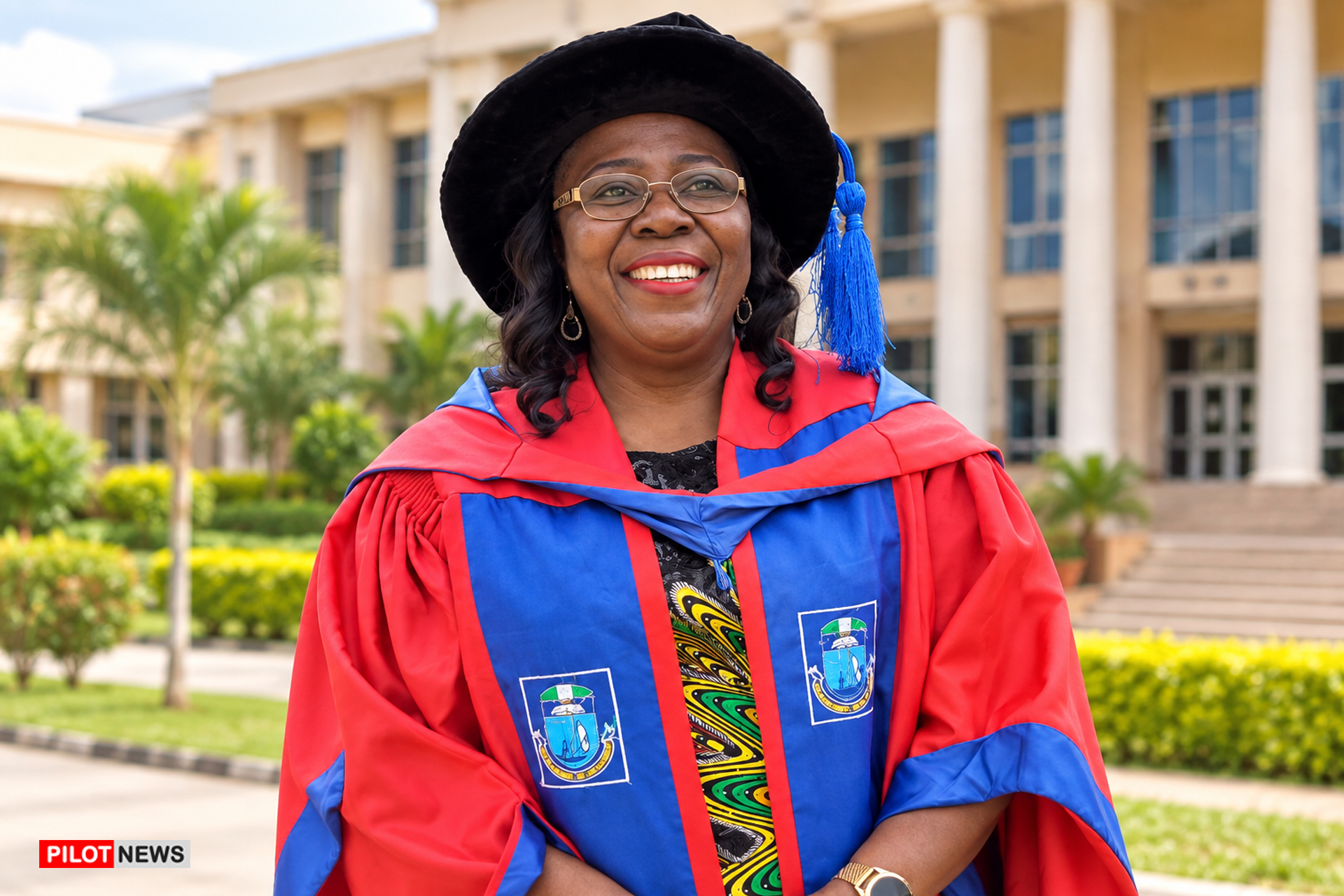
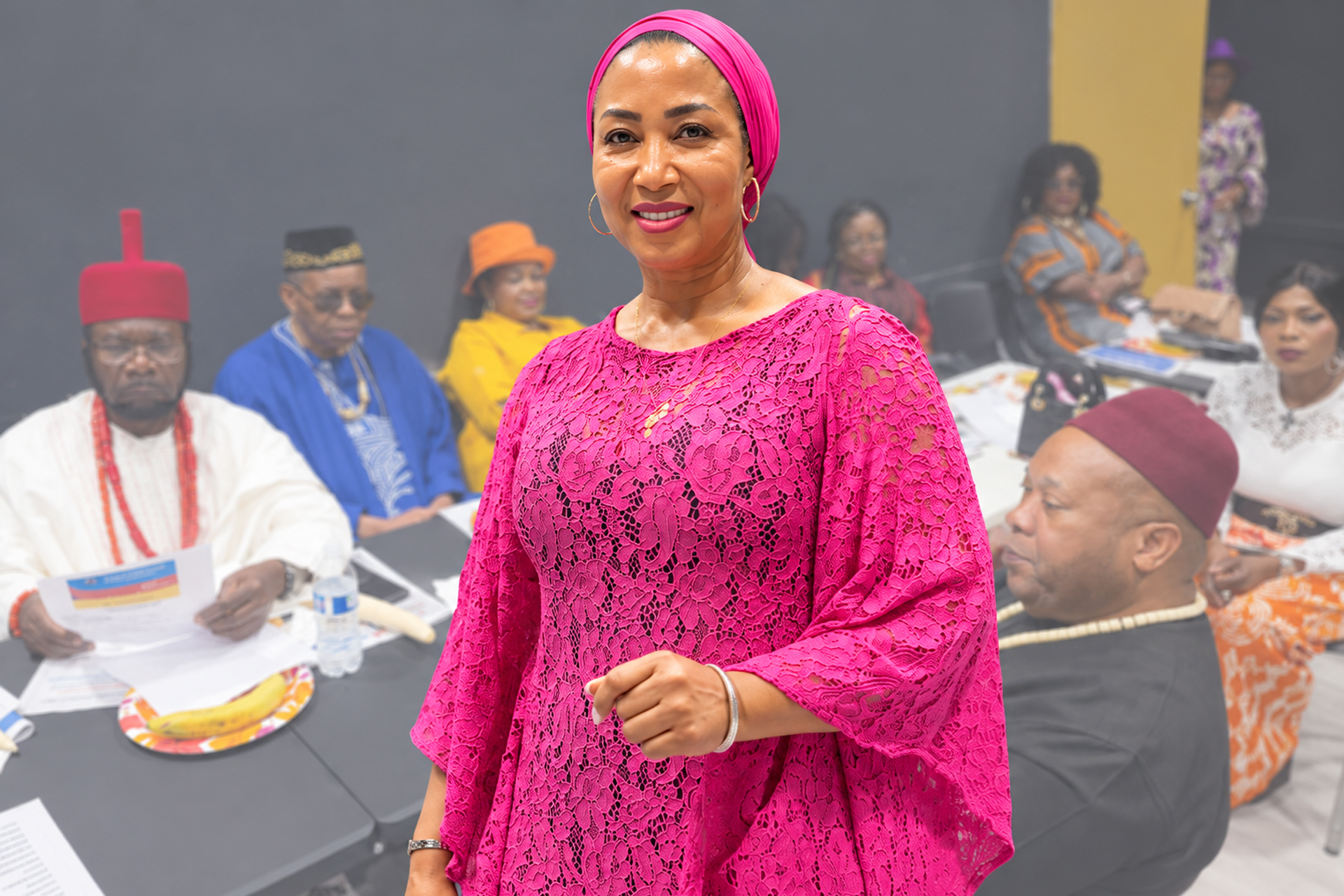
Ugwu, a Sugar Land resident originally from Nsukka, Enugu State, Nigeria, is an entrepreneur and mother of three sons, a mother-in-law, and a grandmother. She describes service to others, family, and community engagement as important parts of her personal and professional life.

Grand Patron Ide Obinna Nnanyelugo Mbachu addressing the September Conference of the Sugar Land PCNI
Her membership comes on the heels of the branch’s successful bi-annual induction ceremony, during which 16 new members were formally sworn in by PCNI National President Atty. Fidelis Onyebueke. The celebration attracted national leaders, patrons, and members representing branches from across the People’s Club network.

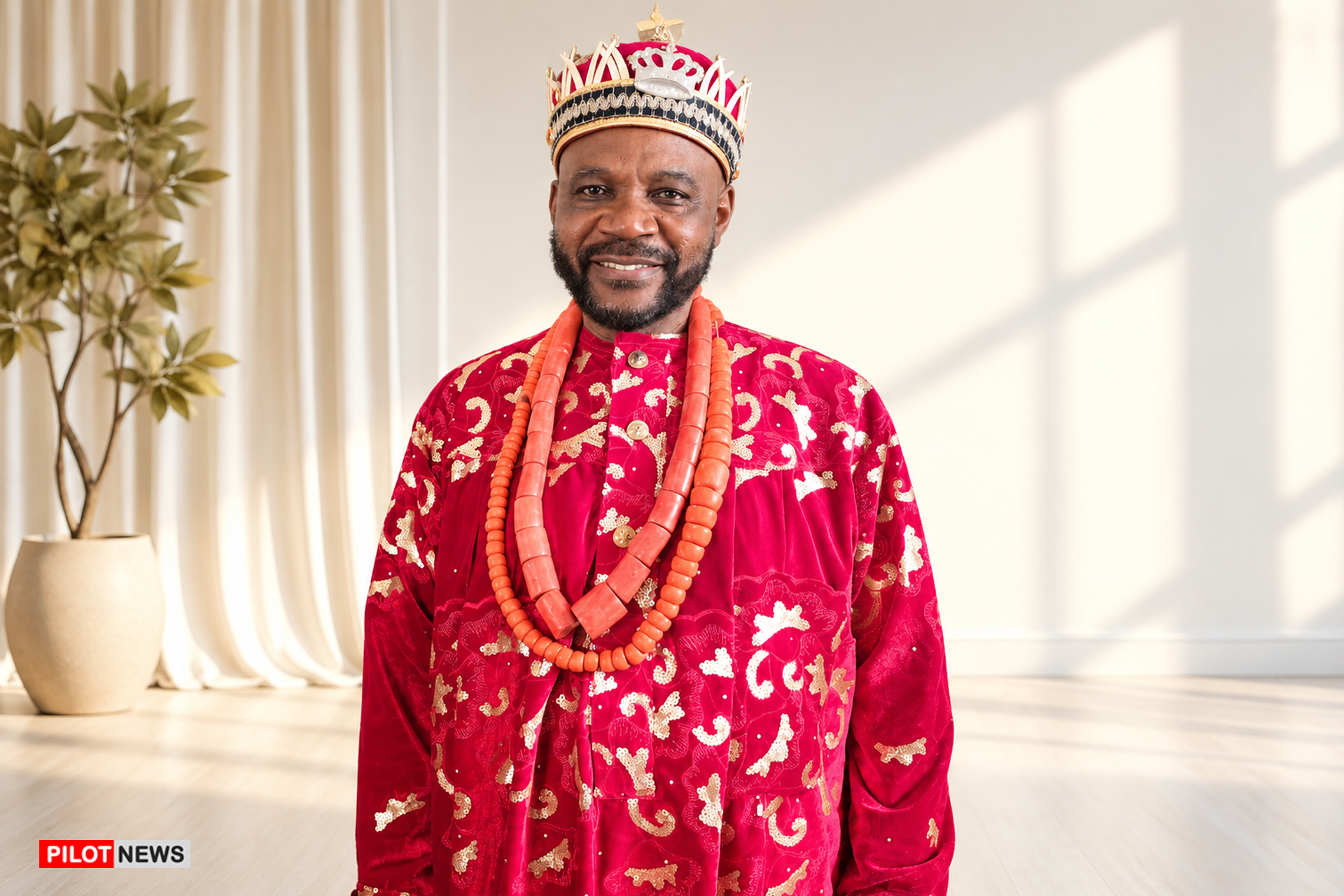
Photo from left: Hon. Chief Sir Michael Okeke; Hon. Anaeto Okakpu “Oranwezuluaku”; Grand Patron Ide Obinna Nnanyelugo Mbachu; Hon. Dr. Nkem Ugwu ; Hon. Prof. Chris Ulasi, Group Chairman; Hon. Chief, Sir Basil Mbuba; Hon. Chief Sir Dr. Uche Egbuchuam “Akudo World Wide.”
Ugwu said joining the organization provides an opportunity to develop meaningful relationships while contributing to its mission.
“I am truly excited and honored to join the prestigious People’s Club of Nigeria International, Sugar Land Branch. I look forward to getting to know fellow members, building lasting friendships, and becoming actively involved in this vibrant and welcoming community. I am especially drawn to the Club’s tradition of fellowship, service, and mutual support, and I hope to contribute my experience, energy, and passion for serving others to its continued growth.”
Grand Patron Ide Obinna Nnanyelugo Mbachu welcomed Ugwu, describing continued interest in membership as encouraging for the historic First International Branch.

Membership Chairperson Hon. Chief Udoji Achebe and Hon. Ndidi Chidume
“When people of accomplishment and community spirit continue to identify with our organization, it tells us that the values upon which People’s Club was built remain relevant. We welcome Dr. Ugwu and look forward to the experience and fellowship she brings to our family.”
Hon. Prof. Chris Ulasi, Group Chairman, said the branch’s recent induction helped showcase an organization that continues to combine Nigerian cultural heritage with community engagement in Houston.
“Our successful induction created tremendous enthusiasm, but our focus goes beyond ceremonies. We are building a stronger organization rooted in friendship, responsibility and service. Dr. Ugwu’s decision to join reflects that continuing momentum.”

One of the meeting hosts, Hon. Professor Keih George, introduces the co-meeting hosts.
Membership Chairperson Hon. Chief Udoji Achebe said the branch remains interested in individuals prepared to participate actively in its programs and fellowship.
“Membership is about belonging, but it is equally about participation and contribution. We are delighted to welcome Dr. Ugwu and other prospective members who share the principles and aspirations of People’s Club.”
For SLPCNI, the growing interest following its induction represents another chapter in the evolution of a branch with a special place in the organization’s history.
And for Ugwu, it marks the beginning of a new journey—one centered on friendship, community, and service.


Fifty and Fabulous: Chief Oby Marcel Celebrates a Golden Milestone in Houston

People’s Club Sugar Land Is Growing — Grand Patron Mbachu Explains Why

Professor Josephine Onyido Earns Prestigious Nigerian Academy of Education Induction

Emotional Conflict: Is She Toying with Me?

Corruption at the Nigerian Consulate Atlanta – A Victim’s Nightmarish Experience

Gowon’s Book and the Dangerous Politics of Selective Memory

Video: Omambala Cultural Association in Houston Celebrates Motherhood with Joyous Igbo-Inspired Mother’s Day Event

VIDEO: Chris Hollins Opens Cartoon Art Showcase at TSU’s CommWeek

Commissioner Dexter L. McCoy speaks about the African-American Memorial Event
-

 Houston1 month ago
PCNI Elevates Chief Dr. Emmanuel Opara to Patron in Historic Ihiagwa Investiture
-

 Houston1 month ago
Membership Surge Continues as Dr. Nkem Ugwu Joins People’s Club
-
 Community4 weeks ago
People’s Club Sugar Land Is Growing — Grand Patron Mbachu Explains Why
-
 Education1 month ago
Professor Josephine Onyido Earns Prestigious Nigerian Academy of Education Induction
-
 Houston2 weeks ago
Fifty and Fabulous: Chief Oby Marcel Celebrates a Golden Milestone in Houston