

News
Horrific: sixth-grade girl shoots 3 at Idaho middle school; teacher disarms her

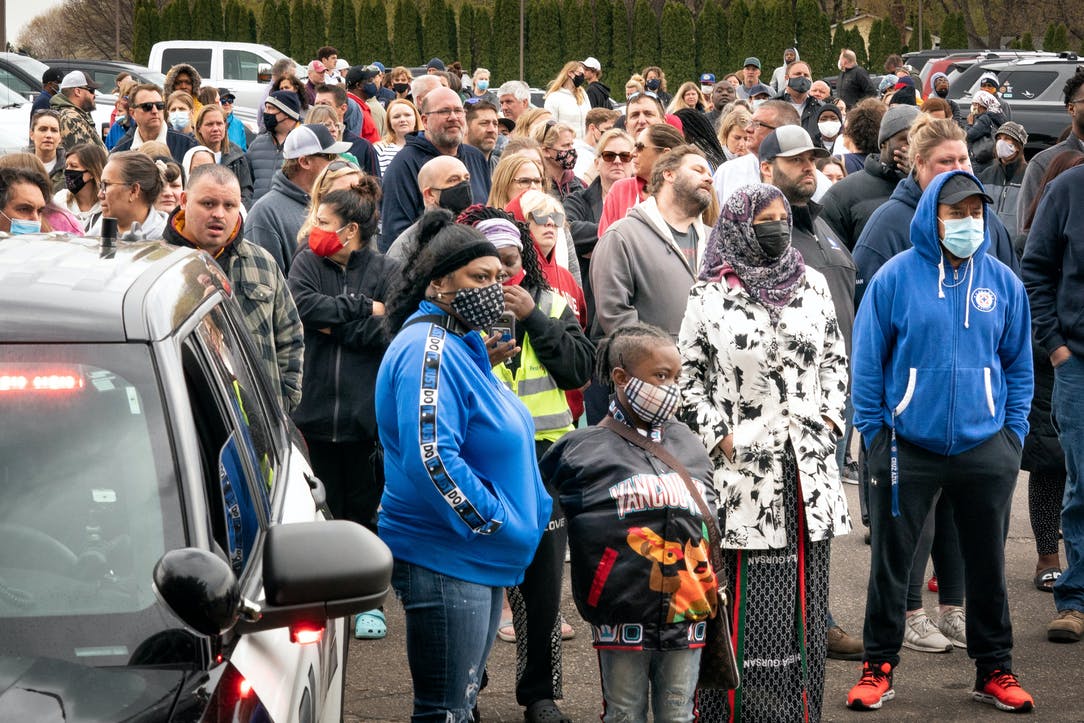
Authorities say a sixth-grade girl brought a gun to her Idaho middle school, shot two students and a custodian and then was disarmed by a teacher
BOISE, Idaho — Authorities say a sixth-grade girl brought a gun to her Idaho middle school, shot and wounded two students and a custodian and then was disarmed by a teacher.
All three victims were shot in their extremities. Authorities say they’re investigating the motive for the attack and where the girl got the gun.
THIS IS A BREAKING NEWS UPDATE. AP’s earlier story follows below.
BOISE, Idaho (AP) — A shooting at an eastern Idaho middle school Thursday injured two students and a custodian, and a student was taken into custody, authorities said.
The victims’ injuries were not believed to be life-threatening, Jefferson County Sheriff Steve Anderson said.
Police were called to the school around 9:15 a.m. after students and staffers heard gunfire. Multiple law enforcement agencies responded, and students were evacuated to a nearby high school to be reunited with their parents.
“Me and my classmate were just in class with our teacher — we were doing work — and then all of a sudden, here was a loud noise and then there were two more loud noises. Then there was screaming,” 12-year-old Yandel Rodriguez said. “Our teacher went to check it out, and he found blood.”
Yandel’s mom, Adela Rodriguez, said they were OK but “still a little shaky” from the shooting as they left the campus.
“Today we had the worst nightmare a school district could encounter. We had a school shooting here at Rigby Middle School,” Jefferson School District Superintendent Chad Martin said. “What we know so far is the shooter has been apprehended. There is no further threat to the students.”

Students embrace after a school shooting at Rigby Middle School in Rigby, Idaho on Thursday, May 6, 2021. Authorities say a shooting at the eastern Idaho middle school has injured two students and a custodian, and a male student has been taken into custody. (John Roark /The Idaho Post-Register via AP)

Bonneville County sheriff’s Sgt. Bryan Lovell said an investigation was underway and no additional information was immediately available. A news conference was scheduled for 4 p.m.
Rigby is a small city about 95 miles (145 kilometers) southwest of Yellowstone National Park. Rigby Middle School has about 1,500 students in sixth through eighth grades, according to the National Center for Education Statistics.
“I am praying for the lives and safety of those involved in today’s tragic events,” Gov. Brad Little said in a prepared statement. “Thank you to our law enforcement agencies and school leaders for their efforts in responding to the incident.”
Police tape surrounded the middle school, and small evidence markers were placed next to spots of blood on the ground. Investigators interviewed faculty and staffers individually.
Lucy Long, a sixth-grader at Rigby Middle School, told the Post Register newspaper in Idaho Falls that her classroom went into lockdown after they heard gunshots, with lights and computers turned off and students lined up against the wall.
Lucy comforted her friends and began recording on her phone, so police would know what happened if the shooter came in. The audio contained mostly whispers, with one sentence audible: “It’s real,” one student said.
Lucy said she saw blood on the hallway floor when police escorted them out of the classroom.
The shooter was quickly apprehended, and the three injured people were taken to a hospital by ambulance, Central Fire Chief Carl Anderson said.
The president of the Idaho Education Association, Layne McInelly, said the union was ready to provide whatever support school staffers, students and the community needs.
“We send positive thoughts to the victims of this tragic incident and hope for their full and rapid recovery. Patience will need to be at a premium while school officials and law enforcement agencies investigate the situation,” McInelly said in a statement.
The attack appears to be Idaho’s second school shooting. In 1999, a student at a high school in Notus fired a shotgun several times. No one was struck by the gunfire, but one student was injured by ricocheting debris from the first shell.
In 1989, a student at Rigby Junior High pulled a gun, threatened a teacher and students, and took a 14-year-old girl hostage, according to a Deseret News report. Police safely rescued the hostage from a nearby church about an hour later and took the teen into custody. No one was shot in that incident.



Houston
Houston Ready as People’s Club National President Arrives for Historic Sugar Land Branch Induction
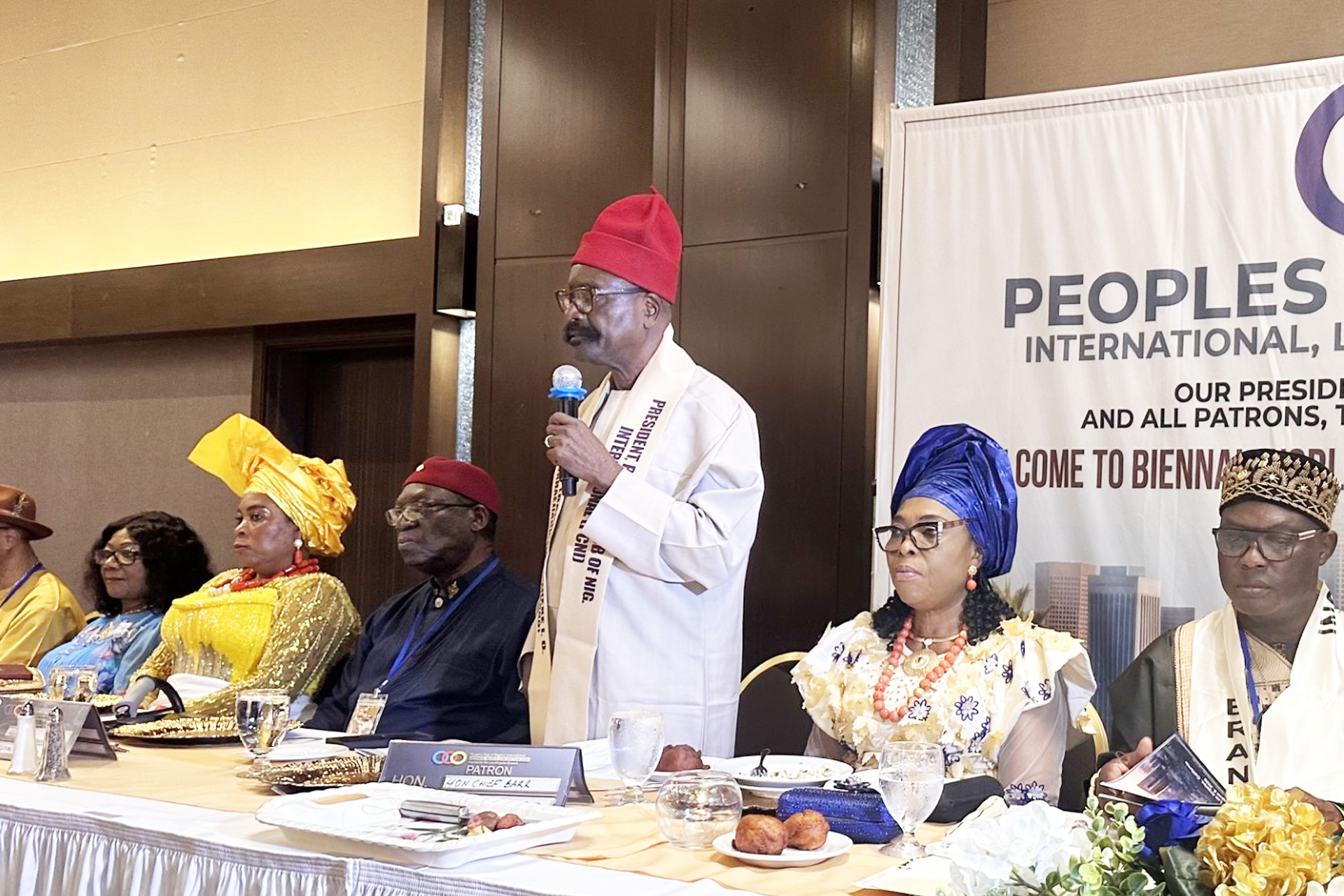
Atty. Fidelis Onyebueke’s arrival signals final preparations for the August 22 ceremony as the First International Branch prepares to welcome 17 new members into the People’s Club family
HOUSTON, TEXAS — Final preparations are underway in Houston as the Sugar Land People’s Club of Nigeria International (SPCNI), the First International Branch, puts the finishing touches on what promises to be a landmark evening of fellowship, leadership, and community celebration.
The arrival of Atty. Fidelis Onyebueke, National President of the People’s Club of Nigeria International, has added renewed excitement to the event, underscoring the significance of the Sugar Land branch and its place within the wider People’s Club family.

Grand Patron Ide Obinna Nnanyelugo Mbachu addresses Sugar Land PCNI’s August Conference. Insert: Atty. Fidelis Onyebueke, National President of the People’s Club of Nigeria International.
The organization will hold its 2026 Bi-Annual Induction Ceremony on Saturday, August 22, 2026, from 7:00 p.m. at the Igbo Catholic Community Hall, 8250 Creekbend Drive, Houston, Texas.
Seventeen distinguished men and women are expected to be formally inducted into the organization during the ceremony. The event is expected to bring together People’s Club members, community leaders, professionals, families, friends, and guests from Houston and beyond for an evening celebrating friendship, cultural identity, service, and community.
The arrival of Atty. Onyebueke is particularly significant because the Sugar Land organization is recognized as the First International Branch of People’s Club of Nigeria International.

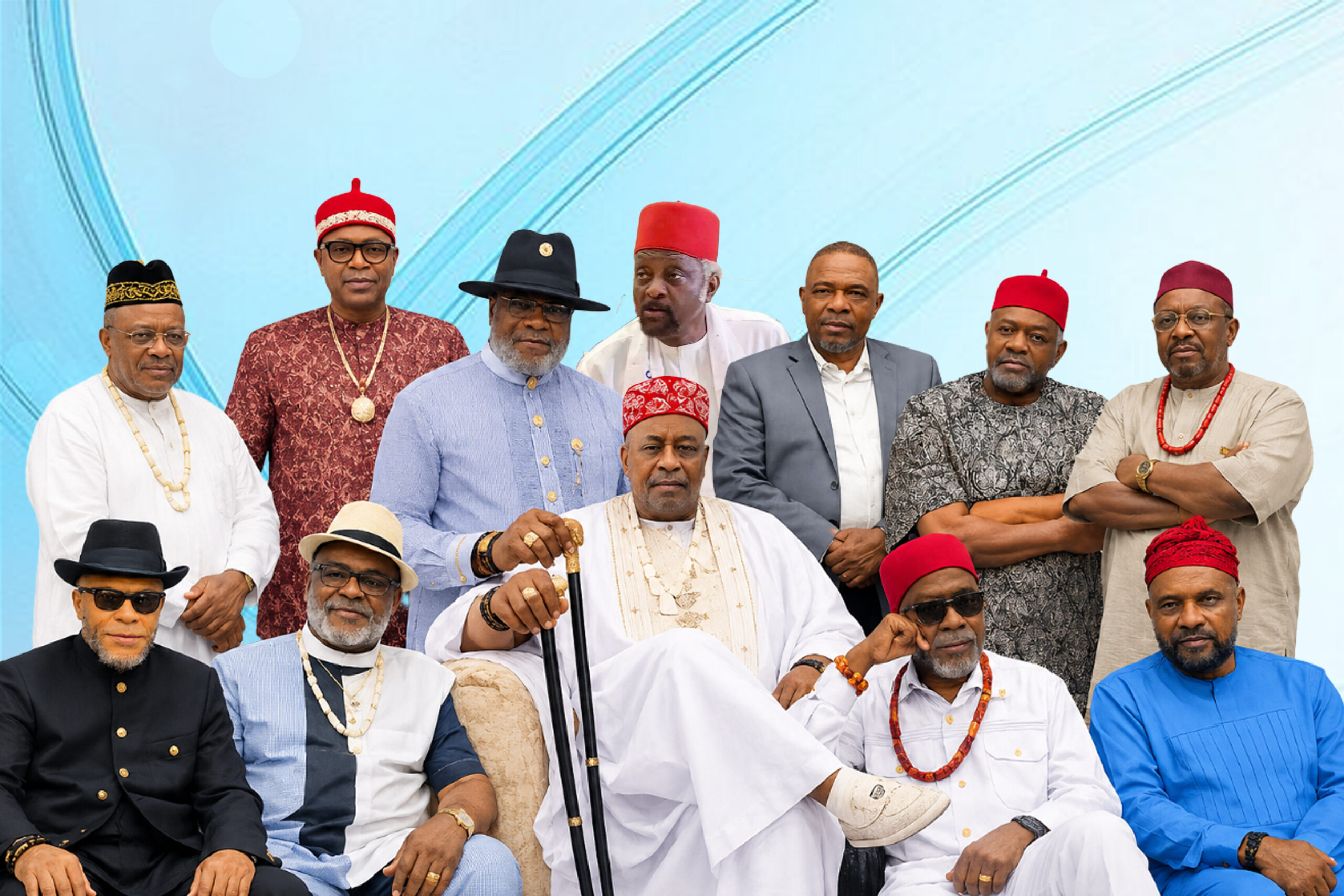
Group photo during PCNI’s August Conference.
While People’s Club has grown into a broad network with branches in Nigeria, North America, and Europe, the Sugar Land branch occupies a unique place in that expansion. It represents the first international extension of the organization and continues to regard itself as a custodian of the principles established by the founders of People’s Club in Nigeria.
For the branch’s leadership, that history carries both pride and responsibility. Grand Patron Ide Obinna Nnanyelugo Mbachu said that the national leadership’s presence in Houston reinforces the importance of the occasion and the values the organization represents.
“This is more than an induction ceremony; it is a celebration of continuity, friendship, love, and service. The arrival of our National President makes this occasion even more meaningful because it connects our First International Branch directly with the larger People’s Club family. We are welcoming new members into a legacy that must be protected, strengthened, and passed forward.”
Mbachu said the organization’s enduring values remain relevant because they are rooted in the fundamental needs of society: friendship, mutual respect, fellowship, responsibility, and service.

From left: Inductee, Hon. Evangelist Philomena Umoh, Chief Executive Officer of BlessedComfort Home; New member, Hon. Shanteria Onyemem, Houston-based entrepreneur.
Among the seventeen inductees is Evangelist Philomena Umoh, Chief Executive Officer of BlessedComfort Home, a philanthropist and titled chief whose work and personal commitment to helping others have touched numerous lives. For Umoh, the forthcoming induction represents both a personal honor and an opportunity to join a community whose values closely align with her commitment to service.
“I am deeply honored and genuinely excited to become part of the People’s Club family. For me, this is not simply about receiving a title or joining a social organization. It is about belonging to a community that values friendship, service, love, compassion, and giving back. I look forward to contributing meaningfully and building lasting relationships.” Her induction adds another dimension to an occasion already defined by diversity of professional experience, community involvement, and public service.

From Left: Hon. Ike Nwokoye; Hon. Prof. Emmanuel Opara; Hon. Basil Mbuba; and Hon. Udoji Achebe.

Left: Hon. Sir Charles Eloka Ikebuaku, wife, and Hon. Dr. Chris Ulasi.
Hon. Prof. Chris Ulasi, the Group’s Chairman, said that the ceremony will represent an important moment for both the inductees and the organization. Ulasi said the branch is prepared to receive its new members and celebrate the enduring relationships that have sustained the organization.
“Everything is coming together for what we expect to be a memorable evening. We are excited to welcome our National President and our distinguished inductees. This ceremony is about strengthening the bonds that make our organization a true family.”
The chairman emphasized that membership is not merely ceremonial. According to him, those joining the organization become part of an established fellowship with expectations to participate, contribute, and help strengthen the community.
The August 22 event is expected to combine the formal traditions of induction with the warmth and conviviality for which the Sugar Land branch is known. For an organization rooted in Nigerian cultural traditions but operating in one of America’s most diverse metropolitan areas, the ceremony also represents the continuing evolution of the Nigerian-American community in Houston.

-
As the First International Branch of People’s Club of Nigeria International prepares to induct 16 distinguished members in Houston, the historic Sugar Land chapter celebrates its enduring legacy of friendship, cultural identity, community service, and the values that have sustained the People’s Club tradition across generations.
All roads will lead to Houston, Texas, on Saturday, August 22, 2026, as the Sugar Land People’s Club of Nigeria International, the First International Branch, welcomes 16 new members into its prestigious social confraternity.
Scheduled to take place 7 pm, at the Igbo Catholic Community Hall, 8250 Creekbend Drive, Houston, the evening will mark the organization’s 2026 Bi-Annual Induction Ceremony, bringing together members, families, community leaders, professionals, friends, and supporters for an occasion that reaches beyond the formal admission of new members.
It will be a celebration of heritage, fellowship, and continuity, a ceremonial sharing of values from one generation of members to another.
For the People’s Club in general, induction represents more than membership. It signifies acceptance into a fraternity built around relationships, responsibility, dignity, and service. Those admitted become custodians of an identity that extends beyond individual accomplishment and asks members to translate friendship into action and success into service. That distinction is particularly important for the Sugar Land organization because of its position as the First International Branch of People’s Club of Nigeria.
There may be other organizations and chapters carrying the People’s Club identity throughout the Greater Houston area and elsewhere, but Sugar Land, as the first international branch, occupies a distinctive place in that history. It represents the genesis of the People’s Club and remains a branch established to preserve and transmit the principles set by its original founders in Nigeria.
Those principles have remained remarkably simple: bring people together, cultivate friendship, encourage achievement, support one another, celebrate culture, assist the community, and recognize that prosperity is more meaningful when it creates opportunities to improve others’ lives.
More Than a Social Club
Social organizations have always played an important role in community life, particularly among immigrant communities, where geographic relocation can disrupt family structures, cultural networks, and traditional systems of belonging. For Nigerians living thousands of miles from their homeland, organizations such as People’s Club can serve as a bridge between two worlds.
They provide a place where heritage can be celebrated without preventing integration into American society; where professional accomplishments can coexist with cultural responsibilities; and where friendships can develop into support systems that endure through celebrations, challenges, and changing circumstances.

This is particularly relevant in Houston, one of America’s most culturally diverse metropolitan areas and home to a vibrant African and Nigerian diaspora. Within such a city, social organizations can perform functions that go far beyond entertainment. They facilitate networking, mentorship, and civic participation. They connect newcomers with established residents. They mobilize resources when families experience hardship. They celebrate milestones, support charitable causes, and create spaces where cultural traditions can be passed down to younger generations.

Perhaps most importantly, they give people a sense of belonging. The Sugar Land People’s Club has built its identity around that understanding. Its reputation for sophistication, charity, civic engagement, and community outreach reflects an organization committed not only to the advancement and well-being of its membership but also to making those benefits meaningful within broader society.
Members bring different professional backgrounds, accomplishments, personalities, and life experiences into the organization, yet fellowship provides common ground. Membership, therefore, carries expectation, and the ability to coexist peacefully with others matters.
Preserving the Spirit of the Founders
People’s Club of Nigeria has grown beyond its Nigerian origins into a wider network of branches and members across Nigeria and the international community. Expansion, however, brings an important challenge: how does an organization grow without losing the principles that gave it life?
For the Sugar Land First International Branch, the answer has been to preserve the institution’s foundational values while allowing its membership to evolve with contemporary society.

The Group’s Grand Patron, Ide (Sir) Obinna Nnanyelugo Mbachu
The branch’s historical significance is consequently measured not merely by age or chronology, but also by its ability to remain connected to the spirit of the original People’s Club while creating a fraternity relevant to Nigerians and friends of Nigeria living in a modern American metropolis.
The Group’s Grand Patron, Ide (Sir) Obinna Nnanyelugo Mbachu, views the 2026 induction from precisely that perspective.
He said, “Every induction reminds us that we inherited something valuable that must be protected and strengthened. People’s Club represents unity, friendship, dignity, and service. As we welcome these distinguished members, we are not simply increasing our numbers; we are entrusting another generation with the responsibility of preserving our heritage and serving humanity.”
His message captures the significance of the ceremony, justifying that membership comes with both privilege and responsibility.
Sixteen New Members, One Shared Commitment
The 2026 ceremony assumes additional significance because of the professional and community backgrounds represented among the incoming members.
The 16 inductees are Hon. Ndy Okorie, Hon. Peter Nweke, Hon. Dan Nwadei, Hon. Arinze Ezebuilo, Hon. Ebele Eneh, Hon. Philo Umoh, Hon. Amuluonye Ufondu, Hon. Okwy Okpala, Hon. Prince Chime, Hon. Macdonald Okpalaobi, Hon. Tony Akale, Hon. Amechi Onyejegbu, Hon. Emma Igwilo, Hon. Eucharia Iloabachie, Hon. Anthony Ogbo, and Prof. Kieh.
Together, they represent the next chapter of a fraternity whose future depends upon members willing to invest their talents, relationships, and experiences in its continued development. Their induction also demonstrates an important dimension of sustainable social organizations: renewal.
Organizations endure when they can welcome new people without abandoning their identity. New members introduce ideas, professional networks, energy, and perspectives, while established members transmit institutional knowledge, traditions, and expectations. The result is continuity through renewal. Chairman of the Sugar Land People’s Club of Nigeria International, Hon. Prof. Chris Ulasi, describes that process as central to the organization’s future.
According to Hon. Dr. Ulasi, “We welcome our new members into a family strengthened by friendship, integrity and service, confident that their talents and commitment will enrich our fellowship and advance our collective mission.”
Among those scheduled for induction is Dr. Anthony “Tony” Ogbo, Publisher of Texas International Guardian and a professor at Texas Southern University. Ogbo’s professional journey in journalism, publishing, and higher education has centered largely on communication, community engagement, and public service. For him, joining the People’s Club represents something deeper than becoming affiliated with another organization. It represents finding a peaceful fraternity where friendship and social responsibility intersect.
Explaining his decision to accept membership, Ogbo said: “I chose Sugar Land People’s Club because I found a peaceful fraternity where friendship is genuine, and belonging has meaning. Here, the values we often advocate are not merely spoken about; they are practiced. I wanted to belong to a family that lives those principles every day.”
His perspective speaks to one of the fundamental attractions of social organizations: people ultimately seek communities where they can express their values. Indeed, professional accomplishments may create recognition, but belonging creates connection.

Chairman Hon. Prof. Chris Ulasi (Left); Hon. Achebe Udoji Achebe, Okosisi, (far right)

Hon. Prof. I. D. Onwudiwe, General Secretary (Left); Hon. Sir Jude Chibuzo Achuama (Akaekpuchionwa n’Oko), Public Relations Officer
Unity, Love, and Service
For Hon. Prof. I. D. Onwudiwe, General Secretary of the Sugar Land People’s Club of Nigeria International, the strength of the organization lies in the people who collectively sustain it. He credits the leadership of Chairman Hon. Prof. Chris Ulasi, the commitment of the executive team, the fellowship of members, and the guidance of Patron Hon. Sir Mbachu and Patron Elect Hon. Prof. Emma Opara with contributing to the organization’s continued growth.
Although a prior family commitment in London, England, will prevent Onwudiwe from attending the August 2026 induction ceremony, his message to the incoming members centers on the organization’s enduring motto: Unity, Love, and Service. “As SPCNI welcomes new members into its family, we remain firmly guided by Unity, Love, and Service. These values challenge us to support one another, promote harmony within our communities, and remain our brothers’ and sisters’ keepers. Together, we can accomplish far more than any of us could achieve alone.”
To the inductees, his message is equally warm: “I offer my heartfelt congratulations and warmest welcome to every new inductee. May your membership be rewarding, may the friendships you establish endure, and may this celebration become the beginning of many years of fellowship, service, shared accomplishment, and unforgettable memories within our People’s Club family.”
A Fellowship Without Barriers
That sense of family is echoed by Hon. Achebe Udoji Achebe, Okosisi, who sees social interaction not as a luxury but as an essential dimension of human existence. In his view, people naturally seek companionship, but meaningful fellowship becomes sustainable when individuals discover others who share compatible values and aspirations. “Socializing is in the fundamental nature of man, and it becomes sustainably inviting when you congregate with like minds. Social clubbing should therefore foster a conviviality that benefits everyone who participates. At PCNI Sugar Land First International Branch, members are treated as one family, and the love is evenly distributed.”
Achebe emphasizes another characteristic he believes distinguishes the organization: fellowship should not be used to create artificial divisions among members. He said, “Come to this branch where class distinction is not the bedrock. What binds us is fellowship, respect, and the joy of being together. Every meeting creates another reason to return because genuine friendship leaves you looking forward to the next opportunity to share, laugh, celebrate, and strengthen one another.”
Such an outlook is important because social organizations can easily become associated exclusively with prestige, status, or exclusivity. The deeper measure of their social value, however, lies in whether they create relationships that transcend those distinctions.
Membership With a Purpose
For Hon. Sir Jude Chibuzo Achuama (Akaekpuchionwa n’Oko), Public Relations Officer of the group, membership should ultimately translate into a positive contribution to society. “People’s Club represents what becomes possible when friendship is transformed into service. We celebrate one another, but we also recognize our obligation to the wider community. Every new member strengthens our capacity to promote unity, preserve our heritage, support worthy causes, and demonstrate through our actions what responsible fellowship truly means.”
That philosophy positions the organization as part of the community’s social infrastructure rather than merely a gathering place. Strong civic and social organizations can complement formal institutions by addressing human needs that government agencies, businesses, and professional organizations may not always reach.
A member dealing with bereavement may need companionship more than bureaucracy. A newly arrived immigrant may need advice from someone who understands both Nigerian and American systems. A family experiencing difficulty may require a network that can respond immediately. A younger person seeking professional guidance may benefit from access to experienced mentors. A cultural tradition at risk of disappearing may survive if an organization creates a venue where it can be practiced and explained. These seemingly ordinary functions can have extraordinary consequences for community stability.
Houston and the Power of Organized Community
Houston provides an especially fertile environment for organizations built around cultural heritage and civic participation. Its diversity means communities are constantly interacting across national, ethnic, professional, and generational boundaries. Maintaining cultural identity within such an environment does not require isolation. Rather, successful cultural organizations can use their heritage as a foundation for participating more effectively in broader society.
Nigerian organizations have become part of that social mosaic. Through cultural events, professional networking, charitable initiatives, educational support, health awareness, community celebrations, and civic participation, organized groups create opportunities for Nigerians to contribute visibly to the city while maintaining connections with their heritage. People’s Club operates within this broader tradition. Its relevance lies in its ability to build relationships that link personal success to collective responsibility.
Preparing for a Memorable Induction
The responsibility of transforming those principles into a memorable 2026 ceremony rests partly with the Induction Committee. Its chairman, Dr. John Ngene, views the upcoming celebration as an opportunity to welcome new members while reminding everyone of the ceremony’s significance. “This induction celebrates continuity, fellowship, and responsibility. We are welcoming accomplished individuals into our family while reaffirming the values of unity, friendship, service, and cultural pride that distinguish our historic branch.”
The ceremony will consequently celebrate the people entering the organization. Behind the pageantry, attire, food, music, photographs, and congratulations will be a more enduring message: a social institution survives only when its members believe that belonging carries obligations to one another.
Working alongside the Induction Committee is Hon. Flora Uchea, Co-Chair, whose organizational leadership and commitment to excellence have helped shape preparations for the historic ceremony. She believes the event is more than an induction; it is the beginning of a lifelong commitment to fellowship and service. “Every inductee joins not only an esteemed organization but also a family built on trust, respect, compassion, and shared purpose. We welcome each member with open hearts, confident they will strengthen our legacy of unity, meaningful friendships, community service, and enduring excellence.”

The Heart and Soul of a Continuing Legacy
The Sugar Land People’s Club of Nigeria International enters its 2026 induction with an unusual advantage. It knows where it came from. As the First International Branch, its identity carries a sense of history that cannot be manufactured or replicated simply by adopting a name. It marks the beginning of an international journey that carried the ideals of the People’s Club beyond Nigeria and planted them in a new social environment.
The challenge for every generation is to preserve the values that made the institution meaningful while ensuring those values remain relevant to contemporary life. For the incoming 16 members, August 22 will therefore represent both an ending and a beginning. It ends the process through which they progressed toward membership. But it begins something far more consequential, the responsibility of carrying the People’s Club tradition forward.
They will inherit its friendships; participate in its celebrations; enjoy its fellowship, and benefit from its networks. But they will also be expected to strengthen those networks, protect that fellowship, and extend its benefits beyond themselves.
As the Sugar Land People’s Club adds 16 names to its membership, the larger story remains about something much older and much bigger. It will be about sustaining an idea that friendship, community, heritage, and service still matter. That people become stronger when they choose to stand together. And that Unity, Love, and Service, when transformed from words into everyday practice, can remain powerful enough to bind generations together across continents, cultures, and time.

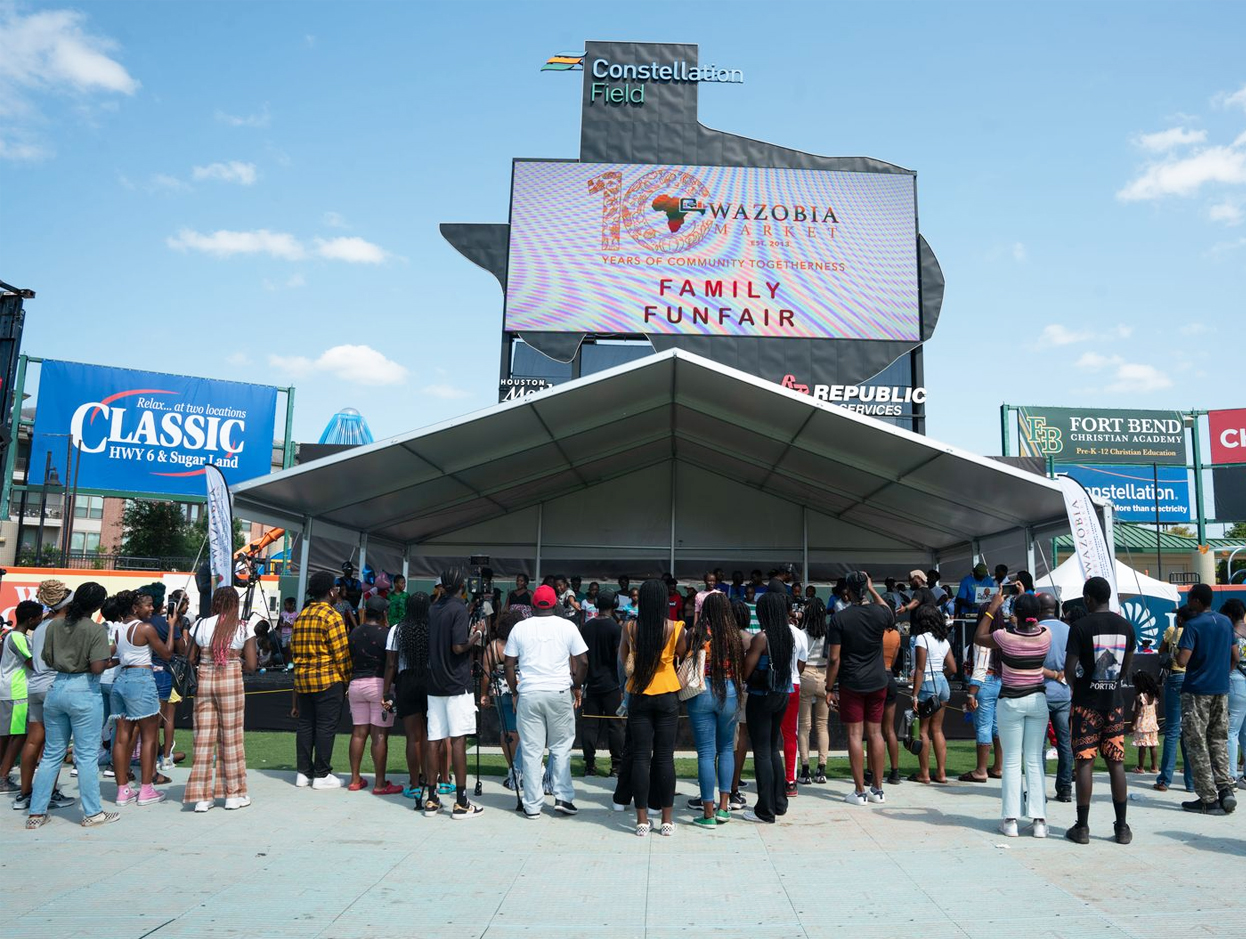
On July 25, 2026, families from across Houston will gather at the West Oaks Mall on 1000 West Oaks, Houston, to celebrate a milestone that extends far beyond food, music, and entertainment. The 10th Anniversary of the Wazobia Family Funfair represents a decade-long journey of community building, cultural preservation, entrepreneurship, and family-centered engagement.
What began as a customer appreciation initiative has evolved into one of the most recognizable African community events in Texas. For ten years, the Funfair has provided a space where families reconnect with culture, children experience heritage, entrepreneurs build relationships, and communities strengthen the bonds that define them.
The story of the anniversary begins with the story of Wazobia itself. Founded in 2013 by entrepreneur Tunde Fashina, Wazobia was created with a vision that stretched beyond commerce. According to Fashina, the goal was never simply to sell products.

FASHINA, OHAZURIKE: For Fashina, leadership carries responsibility. “The feeling is fantastic because you’ve achieved something,” he explained. “But it is also frightening because every decision affects many people.” He added: “The higher you are in an organization, the more people are affected by your decisions.” Those values influence the company’s culture and community engagement efforts.
“The emphasis was not more on getting the products,” he explained. “The emphasis was on creating a feeling of belonging to the customer, so that they feel at home any time they come to our place.”
That philosophy became the foundation of the business. Fashina spent nearly two years developing the business plan. The challenge was enormous. He had limited financial resources and relied heavily on relationships, determination, and faith.
“The business plan had to involve getting this business up with absolutely no money, because I didn’t have any,” he recalled.
The early years tested every aspect of his resolve. He performed multiple roles simultaneously.
“I was a cleaner. I was a restocker. I was a cashier. I did all the work,” he said. “I slept in the shop throughout for almost 18 months because I was working around the clock.”
Despite the challenges, growth came quickly.
“God showed up in ways that I could not describe,” Fashina said. “People started coming in little by little, and the growth rate exceeded everything in the business plan.”
Yet even as the company expanded, community remained central to the mission. “We created a sub-plan,” he explained. “How do we give back to those who built us? How do we let our customers know that we appreciate them?”
The answer became what is now known as the Wazobia Family Funfair.


Over the years, the event evolved from a modest appreciation day into a major annual celebration featuring cultural performances, African music, dance, games, food vendors, business showcases, and family activities.
For Paula Ohazurike, Project Manager at Wazobia, the event represents much more than an annual gathering. Her experience since she joined Wazobia reflects a recurring theme in conversations with employees and customers: Wazobia is viewed not merely as a business but as a community institution.
That philosophy is visible in the Family Funfair. The event creates a rare space where generations come together. Children born in America are introduced to African traditions through music, dance, language, fashion, and food. Parents and grandparents reconnect with memories of home while sharing those experiences with younger family members.
In a city as diverse as Houston, such gatherings carry significant cultural value. Houston is home to one of the largest African immigrant populations in the United States. Yet many families often struggle to maintain cultural connections while navigating modern American life. Events like the Wazobia Family Funfair help bridge that gap.
The significance of the Funfair extends beyond cultural preservation. It serves as a platform for economic empowerment. Small businesses, vendors, artists, and service providers use the event to connect with potential customers. Community organizations engage residents. Entrepreneurs build networks. Relationships formed during the event often extend throughout the year.
According to Ohazurike, the event has become one of the most effective community-engagement platforms within Houston’s African diaspora. The atmosphere itself reflects the spirit of family. Children enjoy games, bounce houses, and face painting. Families participate in contests and group activities. Music fills the air. Food vendors showcase culinary traditions from across Africa.
The result is an experience that feels both festive and deeply personal. Fashina believes that sense of belonging remains the event’s greatest achievement. “There is no reason for us not to provide an environment that people can be proud of,” he said. “A place where they can bring their friends and enjoy themselves.”


That vision continues to guide the organization. Today, Wazobia has expanded significantly, operating multiple locations and employing approximately 250 people. “It is something we are immensely proud of,” Fashina noted. “But this is only the beginning.” Growth, however, is measured by more than financial success.
For Fashina, leadership carries responsibility. “The feeling is fantastic because you’ve achieved something,” he explained. “But it is also frightening because every decision affects many people.” He added: “The higher you are in an organization, the more people are affected by your decisions.” Those values influence the company’s culture and community engagement efforts.
The Family Funfair embodies that philosophy by bringing people together in ways that strengthen relationships and encourage collective progress. Perhaps that is why the event has endured for ten years. Many community events emerge with enthusiasm but struggle to survive. Sustaining a large-scale annual celebration requires trust, consistency, and a genuine commitment to service. The Wazobia Family Funfair has achieved that longevity because it has remained focused on people.
Over the past decade, families have returned year after year. Children who attended the first Funfair now return as young adults. New immigrants have found friendships and support systems. Businesses have launched partnerships. Countless memories have been created.

The anniversary therefore represents more than a milestone date on a calendar; it represents ten years of shared experiences; ten years of preserving culture; ten years of supporting businesses; ten years of strengthening families; and ten years of building community.
As Houston prepares for the 2026 celebration, organizers are looking toward the future while honoring the past. For Ohazurike, the mission remains simple. “We want people to feel welcome,” she said. “We want families to come together and create memories.”
For Fashina, the broader vision remains rooted in possibility. “We can do it,” he said. “We just have to have a goal in mind and take it one step at a time.”
Those words capture the spirit of the Wazobia Family Funfair. At its heart, the event is not simply a festival. It is a living expression of community resilience, cultural pride, and family unity. It demonstrates how a business can become a community anchor. It illustrates how relationships can create opportunities. It reminds us that culture thrives when it is shared. Ten years after its inception, the Wazobia Family Funfair continues to embody the meaning of its name—an invitation for everyone to come together.
In a world increasingly defined by division and isolation, that invitation may be more important than ever. And as families gather once again this July, they will celebrate more than an anniversary. They will celebrate a decade of belonging.


People’s Club Sugar Land Celebrates Landmark Induction of 16 New Members

Houston Ready as People’s Club National President Arrives for Historic Sugar Land Branch Induction

Sugar Land People’s Club Welcomes a New Generation Into a Legacy of Unity, Love and Service

Emotional Conflict: Is She Toying with Me?

Corruption at the Nigerian Consulate Atlanta – A Victim’s Nightmarish Experience

Gowon’s Book and the Dangerous Politics of Selective Memory

Video: Omambala Cultural Association in Houston Celebrates Motherhood with Joyous Igbo-Inspired Mother’s Day Event

VIDEO: Chris Hollins Opens Cartoon Art Showcase at TSU’s CommWeek

Commissioner Dexter L. McCoy speaks about the African-American Memorial Event
-
 Houston4 weeks ago
Sugar Land People’s Club Welcomes a New Generation Into a Legacy of Unity, Love and Service
-
 Houston2 weeks ago
Houston Ready as People’s Club National President Arrives for Historic Sugar Land Branch Induction
-
 Houston1 week ago
People’s Club Sugar Land Celebrates Landmark Induction of 16 New Members