Connect with us

Africa

Dangote Refinery: A Grounded Disaster and Nigeria’s Disgrace

Published

on

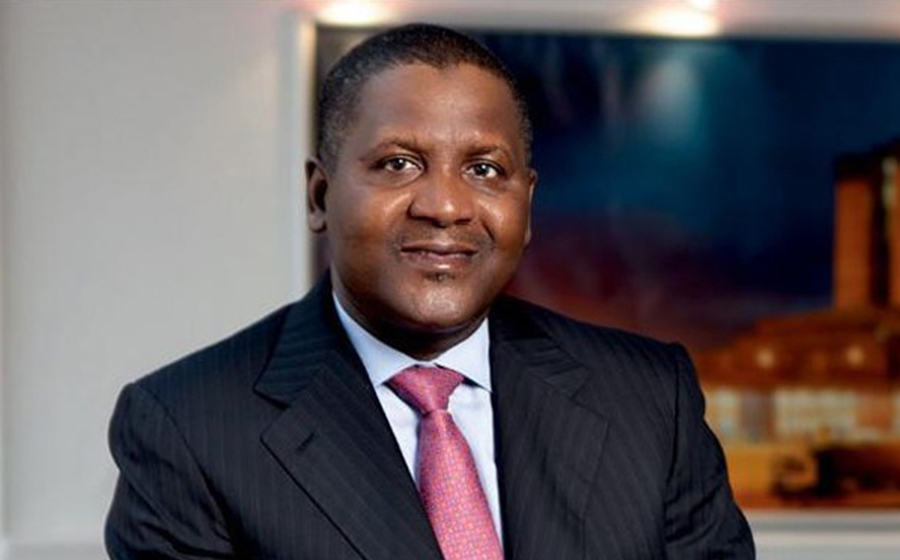
It was hailed as the best thing to happen in the oil and gas sector especially in Nigeria – a serial importer of crude products. The year was 2013 and in September of that year, Aliko Dangote, Africa’s richest man, announced yet another of his gargantuan projects – the construction of the biggest single train refinery in the world with production expected to begin in 2016. Many delays and postponements later, the project has been bogged down by barely serviceable debts, poor planning, lack of centralized project management, mismanagement and has now become a huge albatross on Nigeria’s neck costing the country lots of FX and creating huge problems in return.

VALUATION

A project that started as a 9billion dollars project is now being valued at over 16 billion dollars, albeit incorrectly. Sampling expert opinion from leading players in the oil & Gas industry, it is estimated that a refinery of that size should ideally cost within the range of 11 to 12 billion dollars to build in Nigeria. Notwithstanding the conflicting figures, it was recently announced that the Nigerian National Petroleum Corporation, NNPC, will be taking a 20% stake in the uncompleted, non-functional Dangote Refinery at the cost of 3.8billion dollars. Whilst this baffled many, NNPC’s actions effectively over-valued the yet to be completed refinery to 19billion dollars.

PROJECT DELAYS OR PROJECT DELAY-ED

As at last count, the completion of the refinery had been moved eight times. Whilst some might say this is in character for Dangote Industries and their numerous projects across different sectors, the problem is deeper rooted. A contractor at the delayed refinery project, speaking under the condition of anonymity said that poor planning, underpayment of contractors, and a lack of proper project management with over 40 contractors on site has led to most of the delays. He also added that of the 40, none is willing to commission as there is no clear delegation of duty and over-decentralization leading to absolute chaos.

With these incessant delays, Banks are already calling in their loans. At the announcement of the project in 2013, Mr. Dangote said he had secured financing of 3.3billion dollars. This debt burden has now risen to 7billion dollars with debt servicing of almost 700million dollars per annum. Whilst Mr. Dangote has been able to restructure the facilities from various local and international banks twice so far, most banks have totally refused to restructure for the third time with principal repayment also falling due – as well as the annual interest payments.

Things have gotten so bad for the billionaire that even income from his other businesses are barely enough to cover the interest rates talk less of the principal. This has led Mr. Dangote to seek innovative ways, including state capture, to prop up his business now that the refinery project has been consistently delayed and he has run out of money to repay. Enter the NNPC Connection, Nigeria’s controversial PIB Amendment and the Crude Swap Saga.

THE NNPC CONNECTION – BAILING OUT THE UNBAILABLE

After taking FX at concessionary rates from the CBN, Nigeria is inexplicably tied at the apron strings to Mr. Dangote’s now-threatened refinery. Estimates by professional industry analysts and those close to the project put its completion date in 2024 or 2025.

Recently, the NNPC announced, under some obscure arrangement, that it was taking a 20% equity in the Dangote refinery at 3.8billion dollars. The NNPC was later to explain that it was giving only 1 billion in cash and the balance in crude.

Whilst this is a welcome development, Mr. Dangote will have a hard time doing anything tangible with the 1billion dollars cash which is barely enough to cover one years’ interest. With some principal payments falling due and the banks’ unwillingness to restructure in the face of an estimated completion timeline of 2024 at the earliest, Messrs. Dangote will need at least 3 to 4 billion to complete the project over the next few years even with this bailout. Both the way the refinery project has been carried out, and this subsequent NNPC bailout for Dangote refinery has turned Nigeria into a laughingstock on the global stage.

As for the controversial PIB bill currently before the Nigerian National Assembly, it is now clear to keen watchers that the reason the government wants to give a monopoly of importation for petroleum products into the country to Messrs. Dangote is so he can make the excessive and extra profits he needs to manage his rising debt profile for the refinery (under the guise of ongoing refinery projects). Guess who will bear the brunt of the higher costs in petroleum products at a time when subsidies are being reduced? The Nigerian people.

With his refinery project costs way overboard, banks breathing down his neck and NNPC’s strange bailout seemingly meagre to take care of the principal and interest payments for his debts, is the Dangote Refinery a dead project even before it is completed, or will time be kind and permit the completion of this project to which Nigeria has mortgaged huge FX from its treasury to see it kick off in good time? The chicken has come home to roost, it may seem.

Finally, with the one billion dollars going towards the repayment of principal and interests which are falling due in August, the manipulations by NNPC and politicians at the National Assembly has now become clear for all to see… As it stands, some government agencies and politicians are more than willing to mortgage the interests of the nation and masses to bail out the unbailable refinery project. Welcome to the Republic of Dangote!

Culled from the Investoreel

Texas Guardian News
Continue Reading
Click to comment

Leave a Reply

Africa

Nigeria–Burkina Faso Rift: Military Power, Mistrust, and a Region Out of Balance

Published

on

The brief detention of a Nigerian Air Force C-130 Hercules aircraft and its crew in Burkina Faso may have ended quietly, but it exposed a deeper rift shaped by mistrust, insecurity, and uneven military power in West Africa. What was officially a technical emergency landing quickly became a diplomatic and security flashpoint, reflecting not hostility between equals, but anxiety between unequally matched states navigating very different political realities.

On December 8, 2025, the Nigerian Air Force transport aircraft made an unscheduled landing in Bobo-Dioulasso while en route to Portugal. Nigerian authorities described the stop as a precautionary response to a technical fault—standard procedure under international aviation and military safety protocols. Burkina Faso acknowledged the emergency landing but emphasized that the aircraft had violated its airspace, prompting the temporary detention of 11 Nigerian personnel while investigations and repairs were conducted. Within days, the crew and aircraft were released, underscoring a professional, if tense, resolution.

Yet the symbolism mattered. In a Sahel region gripped by coups, insurgencies, and fragile legitimacy, airspace is not merely technical—it is political. Burkina Faso’s reaction reflected a state on edge, hyper-vigilant about sovereignty amid persistent internal threats. Nigeria’s response, measured and restrained, reflected confidence rooted in capacity.

The military imbalance between the two countries is stark. Nigeria fields one of Africa’s most formidable armed forces, with a tri-service structure that includes a large, well-equipped air force, a dominant regional navy, and a sizable army capable of sustained operations. The Nigerian Air Force operates fighter jets such as the JF-17 and F-7Ni, as well as A-29 Super Tucanos for counterinsurgency operations, heavy transport aircraft like the C-130, and an extensive helicopter fleet. This force is designed not only for internal security but for regional power projection and multinational operations.

Burkina Faso’s military, by contrast, is compact and narrowly focused. Its air arm relies on a limited number of light attack aircraft, including Super Tucanos, and a small helicopter fleet primarily dedicated to internal counterinsurgency. There is no navy, no strategic airlift capacity comparable to Nigeria’s, and limited logistical depth. The Burkinabè military is stretched thin, fighting multiple insurgent groups while also managing the political consequences of repeated military takeovers.

This imbalance shapes behavior. Nigeria’s military posture is institutional, outward-looking, and anchored in regional frameworks such as ECOWAS. Burkina Faso’s posture is defensive, reactive, and inward-facing. Where Nigeria seeks stability through deterrence and cooperation, Burkina Faso seeks survival amid constant internal pressure. That difference explains why a technical landing could be perceived as a “serious security breach” rather than a routine aviation incident.

The incident also illuminates why Burkina Faso continues to struggle to regain political balance. Repeated coups have eroded civilian institutions, fractured command structures, and blurred the line between governance and militarization. The armed forces are not just security actors; they are political stakeholders. This creates a cycle where insecurity justifies military rule, and military rule deepens insecurity by weakening democratic legitimacy and regional trust.

Nigeria, despite its own security challenges, has managed to avoid this spiral. Civilian control of the military remains intact, democratic transitions—however imperfect—continue, and its armed forces operate within a clearer constitutional framework. This stability enhances Nigeria’s regional credibility and amplifies its military superiority beyond hardware alone.

The C-130 episode did not escalate into confrontation precisely because of this asymmetry. Burkina Faso could assert sovereignty, but not sustain defiance. Nigeria could have asserted its capability, but chose restraint. In the end, professionalism prevailed.

Still, the rift lingers. It is not about one aircraft or one landing, but about two countries moving in different strategic directions. Nigeria stands as a regional anchor with superior military power and institutional depth. Burkina Faso remains a state searching for equilibrium—politically fragile, militarily constrained, and acutely sensitive to every perceived threat from the skies above.


Texas Guardian News
Continue Reading

Africa

NBA pick Khaman Maluach Hoping to ‘Change the Narrative’ About Africa

Published

on

Immediately after getting drafted, Maluach was asked: “So many people, when they think about Africa, think about strife, think about war, think about not so great things about the continent, let alone South Sudan. How much of a responsibility do you think you have in changing perceptions of what people think Africa is in terms of thinking more about the resources, thinking about the people of Africa and South Sudan, specifically?”

Maluach’s native country, South Sudan, is undergoing a humanitarian crisis. His family fled the country to a suburb of Kampala, Uganda, in search of safety and opportunity during the South Sudan crisis. He now hopes to change the narrative about the region by highlighting its good parts on the world stage.

“I think about showing them the good parts of Africa,” Maluach said at the press conference after he was drafted. “I’m thinking about showing them the great places in Africa, like Kigali, whether it’s Senegal, whether it’s the safaris in Africa, and showing them the cultures we have and the people we have, which is different from the stuff they see on TV. I just want to change the narrative, the narrative of our people and how they see my continent.”

Maluach was born in Rumbek, once an important city in South Sudan that was ravaged by the country’s civil war. The 7’2″ center’s road to success was far from easy. The nearest basketball court to his house was nearly an hour’s walk away and usually packed. Moreover, he played his first game in Crocs, not basketball shoes. But his dedication was enough to catch the eye of local coaches Wal Deng and Aketch Garang.

Through the effort that he put in, Maluach made it to the NBA Academy Africa in Saly, Senegal, then to the Duke Blue Devils, and now the Suns. He hopes the moment inspires kids on the continent.

“Living in Africa, I had the whole continent on my back. Giving hope to young kids,” he said after the Suns selected him No. 10 overall.

Maluach considers basketball a gift God gave him, and hopes to finish off his NBA career as a Hall of Famer.

Texas Guardian News
Continue Reading

Africa

Nigeria’s first female fighter pilot Kafayat Sanni excels in Ghana

Published

on

After making history as Nigeria’s first female fighter pilot, Flt. Lt. Kafayat Sanni has emerged as the Best Allied Student and won the Best Assistant Commandant Paper award at the Ghana Armed Forces Command and Staff College, Accra, according to the News Agency of Nigeria (NAN).

In a statement released on Saturday and cited by NAN, the Director of Public Relations and Information of the Nigerian Air Force, Air Commodore Ehimen Ejodame, said the awards were presented on Friday during the College graduation ceremony which had in attendance top military personnel and dignitaries from across Africa.

Ejodame recalled how Sanni first made the news in 2019 after being decorated as the Nigerian Air Force’s first female fighter pilot following her pilot training in the U.S.

“Since then, she has flown the Alpha Jet as well as undertaken training sorties on the Super Mushshak as a prolific instructor pilot, producing and mentoring younger pilots for the NAF,” Ejodame said.

“Her outstanding performance at GAFCSC not only symbolises personal excellence and resilience but also underscores Nigeria’s growing leadership in regional defence and commitment to gender inclusion in the armed forces.

“This remarkable achievement further reflects the Nigerian Air Force’s strategic investment in human capital development under the visionary leadership of the Chief of the Air Staff, Air Marshal Hasan Abubakar,” he said.

In 2017, Sanni emerged as the overall best pilot at the Nigerian Air Force’s 401 training school before she moved to the United States to train at the U.S. Aviation Leadership program.

Upon completion, Sanni returned to Nigeria, where she, alongside 12 new fighter pilots, was decorated.

As Sanni became the first female fighter pilot in the 55-year history of the Nigerian Air Force, her colleague, Tolulope Arotile, also became the Force’s first female combat helicopter pilot.

“It is a privilege for me to be winged as the first female fighter pilot in the Nigerian Air Force,” Sanni said after being decorated.

Sanni said at the time she had always wanted to be a fighter pilot, and “I was just lucky to be chosen.”

“It was also my choice. It was what I wanted to do. And I felt that everyone is not supposed to fold their arms and watch what is happening in our country.

“Everyone could always play their part. So, I did not think there was any reason for me to think that it is not possible for me to actually fly the jet because there was no female that ever flew the jet. I believe I could achieve it and I did,” she said.

She then went on to advise younger girls to “never say no to opportunities.”

“They should always strive to be the best and put in their efforts. They should never look at anything that seems to want to overpower or overshadow them. For me, you can always attempt things and if they do not work out well; fine. But at every point in time, you just need to put in your best.”

Texas Guardian News
Continue Reading

Trending