Connect with us

Nigeria

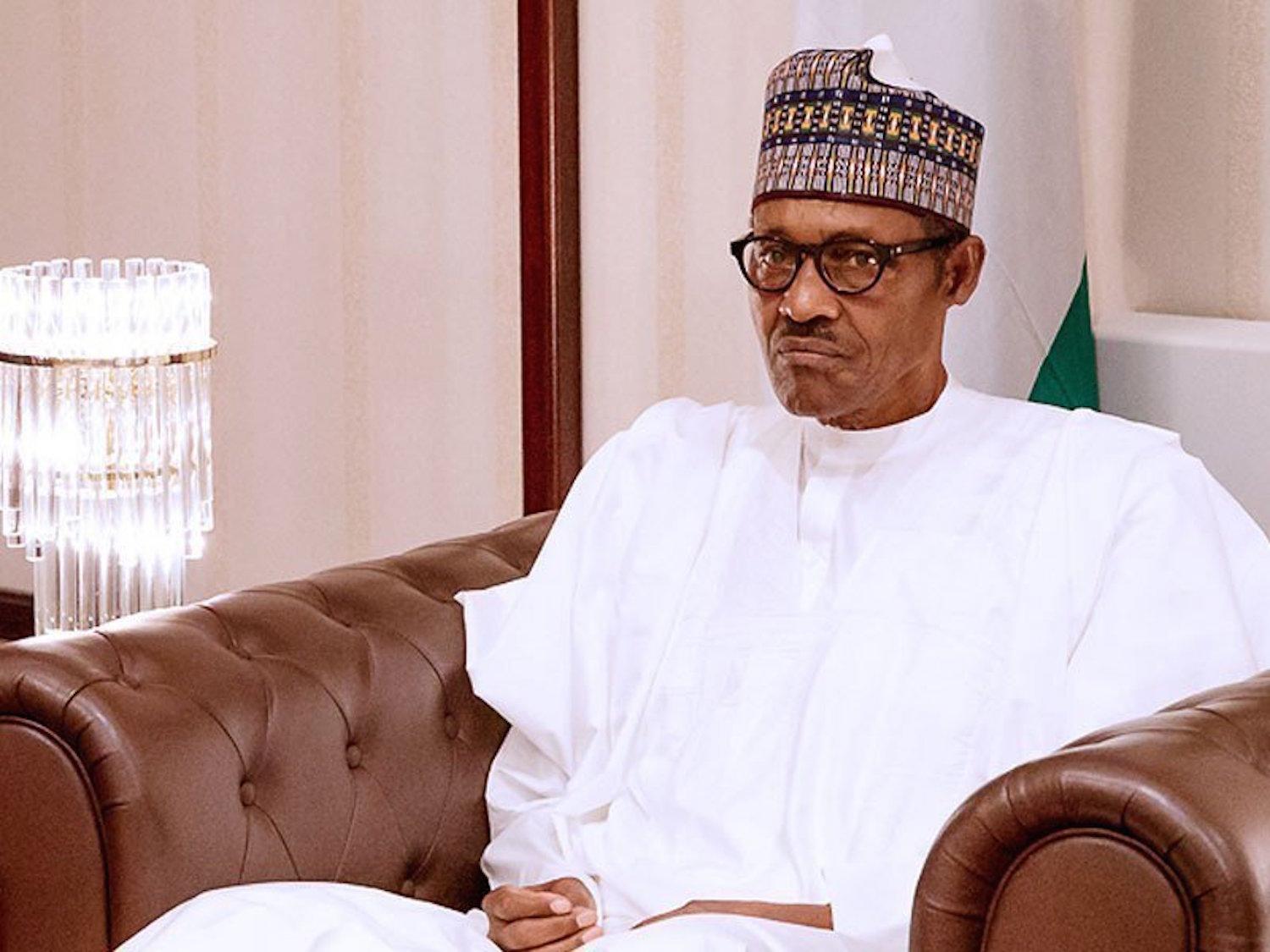
Buhari Should Give No More Interviews; We’ve Had Enough

Published

on

NOTES FROM ATLANTA WITH FAROOQ KPEROGI

ONE of the self-care treats I’ve chosen to indulge in, for my own sanity, is never to torment myself by watching a Muhammadu Buhari interview on television, but a good-natured yet “troublesome” friend of mine for whom I have profound respect never ceases to mischievously tyrannize me by forcing me to watch Buhari’s interviews obviously because he knows that seeing Buhari’s trademark parapraxises and unfailingly disastrous rhetorical incompetence would extract a response from me.

It was the friend who first sent me a link to the interview Buhari granted to Channels Television’s Maupe Ogun-Yusuf and Seun Okinbaloye on Thursday. After enduring 45 minutes of merciless self-torture to watch Buhari’s hollow, sadly familiar, and well-rehearsed ramblings, I came away with the same impressions I’ve always had of him.

I’ll taxonomize these impressions into three broad categories.

One, Buhari has a fixed, limited, predictable, and stereotyped repertoire of responses to every question or concern about Nigeria that he never transcends. For example, every response to questions his regime is abidingly prefaced with remarks about how the APC in 2015 ran on a campaign to stamp out insecurity, revamp the economy, and fight corruption. It’s a refrain he must repeat in every damn interview, and it’s immaterial if it is relevant to the question he was asked.

When he is questioned about the endemic insecurity in the country and the deepening oceans of blood that drench the land, like clockwork, he never fails to talk about how some local governments in Borno and Yobe used to be under the control of Boko Haram in 2015 and how his regime has liberated these local governments. He has said this in every public statement or interview since 2015. This is, of course, not true.

Even the Shehu of Borno told Buhari on November 30, 2018, that “the people of Borno State are still under Boko Haram siege,” that “Nobody can dare move out of Maiduguri by 10 kilometres without being confronted/attacked by Boko Haram,” and that “Quite a number of farmers are being killed and kidnapped on a daily basis.”

Boko Haram factions tax citizens in rural Borno and Yobe (a clear indication of their control of the states), and way more soldiers have been murdered by Boko Haram in the time Buhari has been in power than at any time in peacetime Nigeria.

When any question borders on rural and urban banditry in which Fulani outlaws are the perpetrators, his predictably safe, standard, prepackaged response is to regurgitate the nonsense about colonial cattle routes and grazing grounds.

Questions on the economy? Well, he has a ready-made story about how, when he came to power, petroleum production declined, the price of crude oil dwindled, and how “militants” from the Niger Delta were “unleashed” on his regime. The media and Dubawafact-checked his story about oil production and crude oil prices, which the fact-check showed he has repeated several times in the past, and determined that it is entirely false.

How about questions on unemployment—or anything that requires the government to live up to its own side of the social contract by being responsible and nurturant? His formulaic response is, “Go back to the land,” as if we are currently underwater creatures trapped in the seas or particles suspended in space. He’s started spouting this exact phrase since August 2015, a few months after he was sworn in as president.

During a meeting with Dr Kanayo Nwanze, the President of the International Fund for Agricultural Development (IFAD), at the Presidential Villa, Abuja, on August 7, 2015, Vanguard reported Buhari as saying, “It’s time to go back to the land. We must face the reality that the petroleum we had depended on for so long will no longer suffice.

We campaigned heavily on agriculture, and we are ready to assist as many want to go into agricultural ventures.”

In other words, Buhari is a scripted, robotic, unimaginative talking mannequin who has no capacity to veer off from the limited pool of stereotyped responses to questions he has memorized about seven years ago.

That is why every interview he has granted is characterized by mind-numbingly mechanical sameness.

The second broad category of my impressions of Buhari’s interviews is that his dementia, about which I sincerely feel sorry for him, comes through when he is confronted with questions that are unrehearsed, that require him to think on the spot, and that invite a demonstration of intimate familiarity with recent events.

One of the symptoms of early-stage dementia, which I suspect Buhari suffers, is trouble with short-term memory. Whenever any interaction requires him to use the resources of his old memories, he is often fine and can come across as clear-thinking.

Problems arise when he is faced with recent events, particularly when he is unscripted.

Unlike the softball questions he was asked during the recent Arise TV PR show dignified as a journalistic interview, Channels TV’s reporters went beyond the questions they were required to send to Buhari in advance and asked probing follow-up questions—like all good journalists should. And this was where Buhari’s cognitive and intellectual infirmities were laid bare.

Whenever Buhari is asked a question that requires an answer outside his narrow, well-rehearsed mental collection of ready-made responses that draw from his old memories, he instinctively picks any arbitrary response that comes to his mind, which is often at variance with the question he’s asked.

That was why when Channel TV’s Maupe Ogun-Yusuf challenged him to justify his opposition to direct primaries when he is himself a beneficiary of the process, he looked like a deer in headlights and said he expected to be asked “how did we overthrow the PDP.” And then he went off on a tangent about the 2015 election, which had no connection with the question he was asked but which allowed him the latitude to relapse to his comfort zone: reliving and regurgitating old memories while evading new ones.

A question about his appointment of Dr. Doyin Salami as his economic adviser and the specific role he will play in his new appointment was largely elided and instead yielded an incoherent waffling about agriculture, about how only 2.5 percent of Nigerian arable land is being cultivated, about border closures, rise in rice production in Nigeria, etc.

When Okinbaloye asked him about Nigeria’s rising debt profile, the progressive fall in the value of the naira, and the skyrocketing inflation in the country using the official statistical figures of the government he putatively heads, he was thrown off.

Then he deployed his time-tested strategy: he dug deep into old memories and invoked a ready-made response that had not the remotest relationship with the question asked.

“Well, I am not sure how correct your calculations are, but all I know is that we have to allow people to get access to the farm,” he said. “We just have to go back to the land.

What we have done so far, we have achieved some successes and people ought to measure our successes viz-a-viz the problems when we started.’’

Buhari is clearly the victim of recognizably diminished sentience and cognitive presence, and everyone around him knows it.

Everyone in the upper reaches of governance in Nigeria knows it. Even directors of a security agency reportedly politely admitted in a secret memo to Buhari, which Peoples Gazette of December 23, 2021, uncovered, that Buhari’s aides make him sign documents he doesn’t understand.

Culled from the Tribune News Nigeria

Texas Guardian News
Continue Reading
Click to comment

Leave a Reply

Column

From Noise to Votes: Nigerian Youth Must Turn Online Fire into Electoral Power

Published

on

Young Nigerians have shown a remarkable ability to create waves in the digital space. With a single click, they can expose a politician’s corruption, rally tens of thousands of supporters behind a single hashtag, and keep every political actor on edge from dawn until dusk. However, as the 2027 general elections draw closer, it is time to face an uncomfortable truth: loud online noise isn’t the same as real power in the political sphere. If Nigerian youth wish to get the best possible leadership from their nation’s leaders, they need to take their online activity offline (i.e., to places where actual democracy occurs) and start showing up to cast votes.

There is simply too much evidence to ignore that this needs to occur. Nigeria is a young country demographically. Together, Gen Z and Millennials comprise approximately half of the total population—50.1 percent—according to IntelPoint. Gen Z makes up 25.8 percent and Millennials account for 24.3 percent. When we consider Gen Alpha, the percentage rises to 85.7% of the population under 44. According to ActionAid Nigeria, more than 60% of Nigeria’s population is under 30. According to Afrobarometer, Nigeria has a median age of 18.1 years, and 58% of its population is aged 0-29. Therefore, Nigeria isn’t merely a young country; it is a country dominated by young people.

Based on this information, this dominant demographic should wield considerable political influence. Unfortunately, there often appears to be little correlation between these statistics and political influence. The contrast is striking. While a majority of Nigeria’s population is young, there remains a significant gap between how influential young people are politically and how influential they could be. This lack of influence is not due to a lack of ability among young people; rather, it stems from many young people stopping short of completing what is often called the “civic journey,” which involves moving from awareness to action. They consume politics, engage in political debate on social media, participate in meme politics, and express frustration with politics through social media rants; however, many young people still fail to register to vote (PVCs) or participate in elections in sufficient numbers to affect the outcome.

This disparity is important because youth dissatisfaction is far from abstract. More than 23% of Nigerian youth report being unemployed or seeking employment, according to Afrobarometer. Additionally, more than two-thirds of youth aged 18 to 35 report having some form of postsecondary or secondary-level education. Despite Nigeria ranking among the lowest in providing employment and opportunities for youth, and despite identifying high costs of living, unemployment, crime and security concerns, poverty, poor economic management practices, and insufficient access to electricity as the top five issues requiring immediate attention from government officials, youth dissatisfaction cannot be considered indifferent. Rather, youth dissatisfaction reflects citizens’ grievances and legitimate reasons to be deeply interested in who governs their country.

However, mere interest alone will not suffice. Democracy does not reward passion without participation. A young person can identify every weakness inherent in a political system; however, unless that person participates by casting a vote, they will remain a spectator to their own future. If you are mature enough to understand concepts such as inflation, insecurity, broken campaign promises, unemployment rates, and poorly managed governance systems, you are mature enough to accept responsibility for your role in creating solutions to those problems. That responsibility begins with voting.

In addition to continuing to use social media to raise awareness of voter registration, election knowledge, fact-checking mechanisms used during elections, and peaceful participation methods, social media can also serve as a vehicle for facilitating the transition from social media activism to actual civic engagement. Young Nigerians should leverage their social media presence to encourage voter registration, promote election literacy programs, provide fact-checking services to counter election misinformation, and advocate for nonviolent participation throughout the electoral cycle. They should convert their social media timelines into civic classrooms. Where can I find the information I need about voter registration processes? Where is my assigned polling station located? Where do I receive my Permanent Voter Card? How do I protect myself from spreading misinformation? How do I properly monitor election results? These are not dull topics; they represent essential tools required for surviving democracy.

Youth organizations, creators, and social media entities can also help facilitate offline civic engagement. Use your WhatsApp groups to alert others as registration deadlines approach. Use X Spaces and Instagram Live to focus on discussing relevant issues rather than hurling insults. Use TikTok to simplify the voting process. Use Facebook to motivate family members and first-time voters to participate in elections. Use whatever platforms are available to make civic obligation contagious. Nigeria’s youth have shown they can create viral content. Now they must begin to generate participation on a viral scale.

One of the most damaging myths in Nigerian politics is that “your vote doesn’t matter.” It is a self-fulfilling prophecy that only serves the interests of cynics, crooks, and machines whose success depends solely on low turnout. Yes, Nigeria’s electoral process has flaws. Yes, there have been numerous disappointments. However, the response to a flawed democracy is not abandonment; it is increased participation. By staying home on Election Day, youth essentially give their votes — and therefore control — directly to the very same groups they loathe.

Another mythological excuse for the youth’s failure to vote in Nigeria is the claim that “all politicians are alike.” No — they’re not all the same. While some politicians are inept, others are corrupt, and others exhibit both characteristics, democracy is not about seeking holy men or women; it is about making selections and enforcing accountability. An individual who refuses to make a selection for office because none of the options appear acceptable is ultimately selecting the candidate most likely to emerge victorious by default.

Nigeria’s youth already constitute the country’s largest demographic group. It is time for them to become its strongest democratic force as well. However, that will not be achieved by trending hashtags alone. Instead, it will be achieved when online energy is harnessed and directed toward political organization, civic education, voter registration, increasing voter turnout, and holding elected representatives accountable after elections.

The 2023 election saw remarkable youth participation but lacked follow-up. Therefore, the 2027 election should not produce another generation of disillusioned observers; instead, it should yield a new generation of participatory citizens. Let online flames ignite electoral power. Let debates become ballots. Let criticism evolve into participation. If Nigerian youth can dominate social media, they can also dominate democracy. The future will not be handed to them in a retweet. They must elect it into existence.

_________

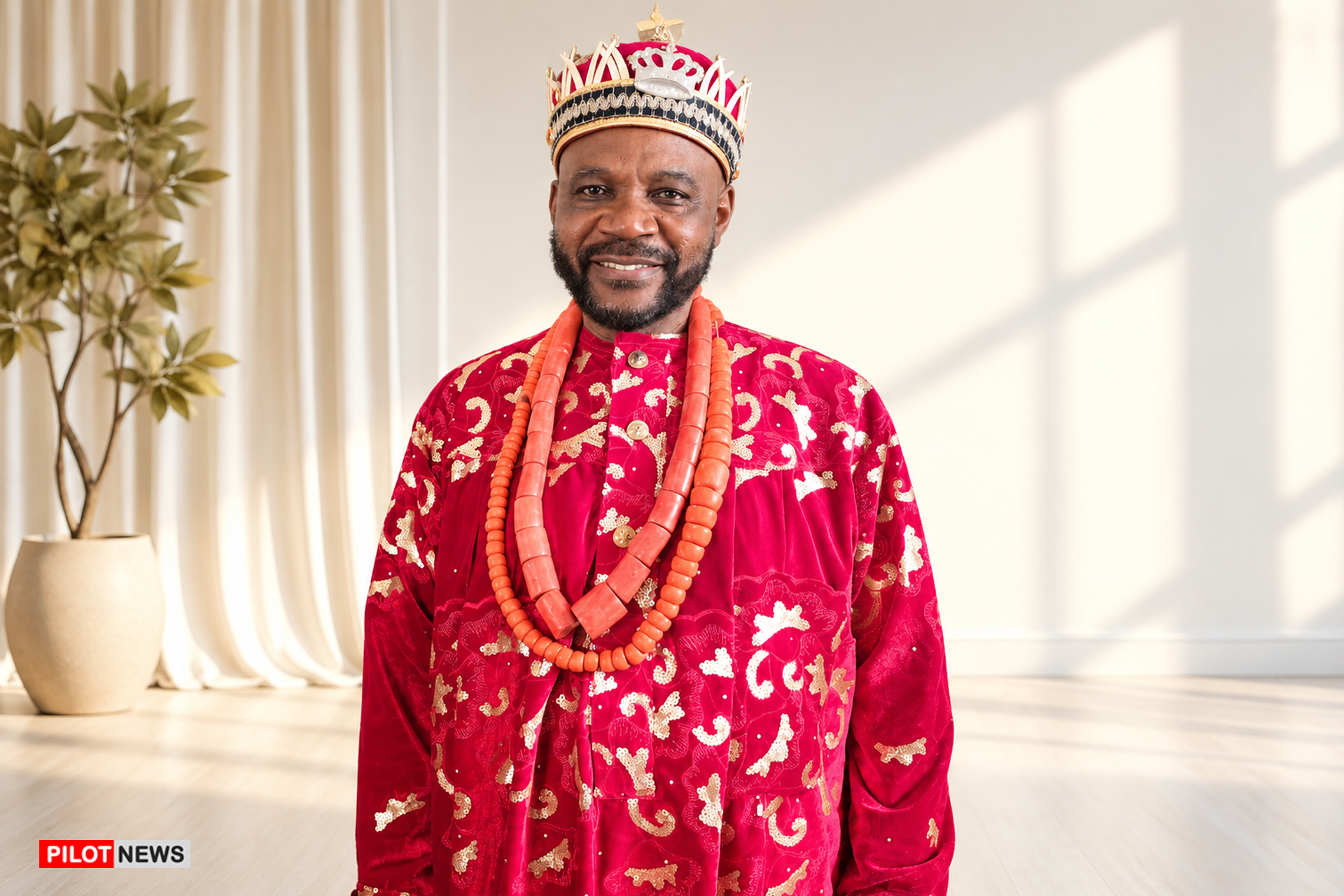
♦ Chris Ulasi is on the Editorial Board of The West African Pilot News. He contributes stories about culture and tradition, elite politics, ethnicity and national integration, civil society, and social movement. He is a university professor, community builder, poet, film producer, recording the emergent Nollywood cultural history through film.

Texas Guardian News
Continue Reading

Anthony Obi Ogbo

Between Silence and Sabotage: Jonathan’s Return to Political Manipulation

Published

on

“Jonathan’s calculated and weaponized ambiguity breeds deception and weakens emerging political alliances.” —Dr. Anthony Obi Ogbo

Former Nigerian President Goodluck Jonathan has once again found himself at the center of presidential speculation, floating silently above the country’s political waters while supporters aggressively market him as a possible candidate ahead of another critical election cycle. And once again, Jonathan is doing what he has mastered throughout his political career: saying nothing clearly while allowing political confusion to grow around him.

This pattern is not new. It is the same indecisive political behavior that defined some of the most consequential moments of his rise and fall. Jonathan became president in 2010 following the death of President Umaru Musa Yar’Adua. At the time, many northern political stakeholders within the then-ruling PDP believed there was an informal understanding that Jonathan would complete Yar’Adua’s term but not seek another full term in 2011, thereby preserving the party’s zoning arrangement between North and South. Instead of taking a clear and immediate position, Jonathan spent months dribbling the nation politically. He neither fully denied nor openly confirmed his intentions until the political tension had already escalated nationwide.

By the time he eventually declared his candidacy, the damage had been done. Many northern allies who initially supported him felt betrayed, politically cornered, or deceived. The PDP fractured internally, regional distrust deepened, and Jonathan’s relationship with major northern power blocs deteriorated permanently. Though he won the 2011 election, the cracks created by that indecision followed him into 2015, contributing significantly to the coalition that eventually removed him from power.

Yet Jonathan learned little from that experience. Since losing reelection in 2015, his name has repeatedly surfaced during every major electoral cycle as a potential presidential contender. Each time, his supporters strategically floated his candidacy across media platforms and political circles. Each time, Jonathan refused to decisively shut the door. Silence became his political instrument, whereas ambiguity became his strategy.

Now the country is witnessing the same playbook again. As coalition politics intensify and opposition forces attempt to consolidate around alternative political movements, Jonathan’s name has resurfaced aggressively. Reports and speculations about his presidential ambition continue to dominate political discussions, especially within camps seeking to disrupt the growing momentum surrounding Peter Obi and emerging opposition realignments.

The troubling part is not merely that Jonathan’s supporters are campaigning. The troubling part is that Jonathan fully understands the implications of his silence. He knows that his political stature carries enough weight to destabilize fragile coalition negotiations. He knows his name alone can divide campaign structures, weaken consensus-building, and inject uncertainty into opposition calculations. Yet he refuses to publicly and definitively state where he stands.

That is not statesmanship. That is calculated political ambiguity. Jonathan’s political history is filled with similarly contradictory choices. After losing power in 2015, he received widespread praise for conceding defeat peacefully. He initially framed that decision as a sacrifice made to preserve Nigerian lives and prevent violence. Later, however, different narratives emerged suggesting international pressure, particularly from the United States under President Obama. The shifting explanations weakened what could have remained one of his strongest democratic legacies.

Then came another contradiction. Despite emerging politically from the PDP, Jonathan gradually aligned himself closely with the administration of former President Muhammadu Buhari, serving in diplomatic and goodwill capacities that many PDP loyalists considered politically inappropriate. This unusual closeness fueled longstanding allegations that elements within the APC establishment viewed Jonathan as a useful political instrument capable of destabilizing opposition coalitions from within. Whether those allegations are true or not, Jonathan’s conduct has consistently created room for suspicion.

His political base remains uncertain. His campaign structure is invisible.

Today, his undeclared ambition is already generating confusion among supporters, coalition organizers, and opposition strategists. His political base remains uncertain. His campaign structure is invisible. His intentions are unclear. Yet his loyalists continue mobilizing aggressively in his name while he watches silently from the shadows.

Nigeria is too politically fragile for this kind of elite gamesmanship. At critical national moments, leadership demands clarity, courage, and accountability. Jonathan cannot continue operating as a permanent “maybe” in Nigeria’s political future, thoughtlessly hovering around every election season like an unanswered question designed to manipulate negotiations and weaken emerging alliances.

At this time, Jonathan should sit in or sit out! If he wants to run, he should declare openly, defend his record, and face the democratic process directly. If he does not intend to run, he should immediately and publicly withdraw his name from the political marketplace. Anything short of that increasingly looks less like political strategy and more like calculated deception. Nigeria deserves leaders who make difficult choices openly—not politicians who weaponize silence while others gamble with national uncertainty in their name.

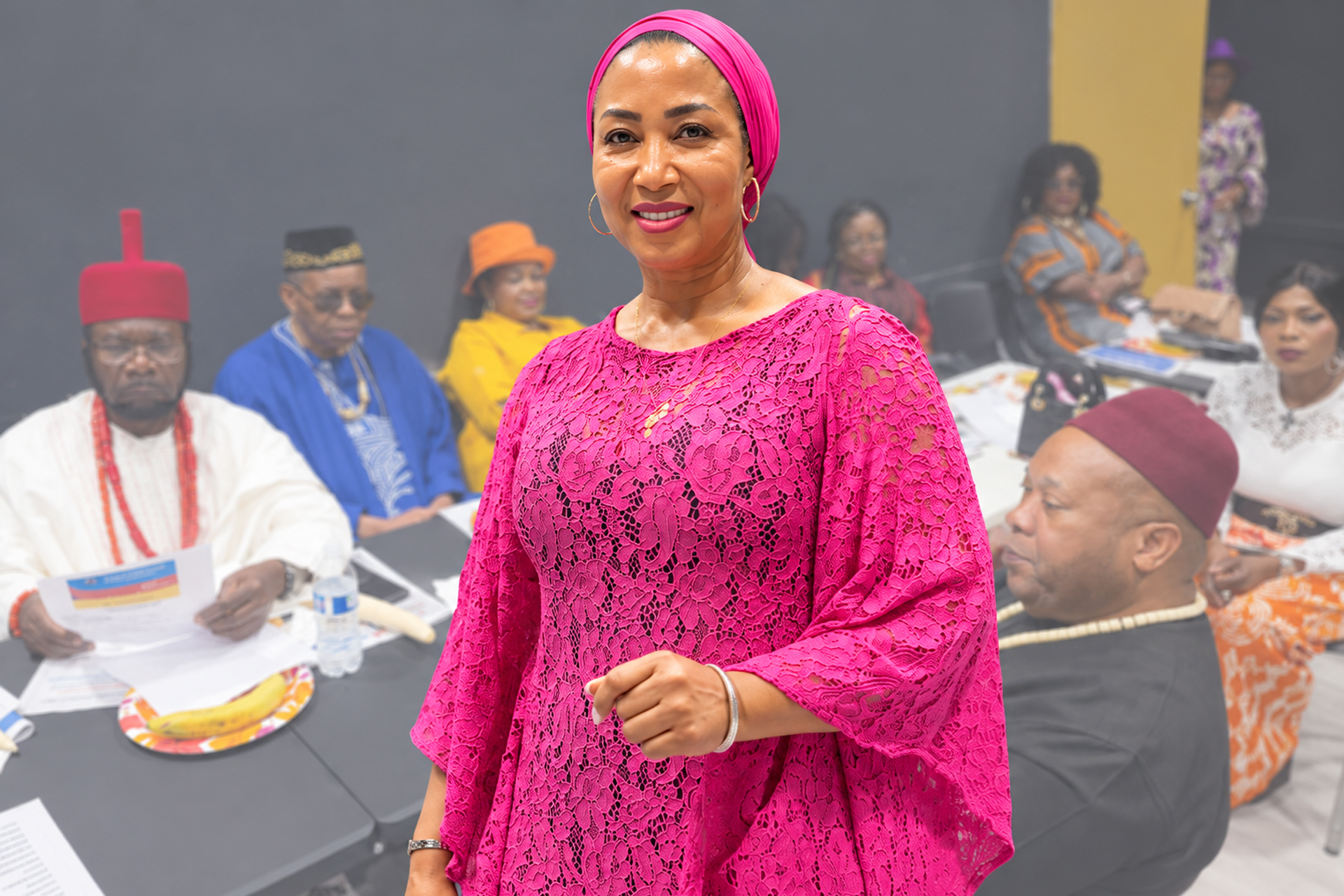
♦ Publisher of the Guardian News, Professor Anthony Obi Ogbo, Ph.D., is on the Editorial Board of the West African Pilot News. He is the author of the Influence of Leadership (2015)  and the Maxims of Political Leadership (2019). Contact: anthony@guardiannews.us

Texas Guardian News
Continue Reading

Nigeria

The Devastation of Insurgency: Nigeria Cannot Kill Its Way Out of Insecurity

Published

on

“Insecurity persists not only because armed groups are present but also because the state is often absent” —Dr. Declan Onwudiwe

Nigeria cannot kill its way out of insecurity. While military victories may win battles, only legitimacy, governance, and economic opportunity can secure lasting peace. Across the country, persistent violence, characterized by impunity and a tragic disregard for human life, has exposed the limits of a force-only approach. The time has come for a more sweeping and planned security response.

What is most troubling is the continuing victimization of innocent citizens, especially women and children. Reports of attacks on farmers, worshippers in churches and mosques, and travelers have become disturbingly routine. Kidnappings, sexual violence, and the killing of schoolchildren have weakened public confidence in the state’s ability to protect its people. These are not individual events but symptoms of a deeper structural crisis. Yet, Nigeria is not without options. A strategic and sustained plan can alter this trajectory.

Cooperation between Nigeria’s security forces and international partners is praiseworthy and necessary. However, a recurring weakness undermines these gains: areas cleared by the military are often left insufficiently secured, allowing insurgents and bandits to return. A viable strategy must go beyond clearing territory to consolidating control. Insurgent groups adapt rapidly; after defeat, they disperse, regroup, and re-emerge in areas where governance is weak. Every community reclaimed by force but left without sustained state presence risks becoming tomorrow’s battleground.

Experience from other regions underscores this point. Countries such as Colombia and Iraq that have made substantial progress against insurgency have done so by maintaining a firm and continuous government presence in liberated areas. Where state authority is visible through security, justice, and basic services, insurgents find it much harder to re-establish control. Where it is absent, violence returns. Nigeria must learn from this reality and prioritize holding territory as much as reclaiming it.

At the heart of the problem is a governance deficit. Insecurity persists not only because armed groups are present but also because the state is often absent. Recovered areas commonly lack functioning institutions, effective policing, and access to justice. Without these, citizens remain vulnerable, and security gains become temporary. A credible strategy must ensure that communities reclaimed by security forces are immediately supported with police presence, local administration, and basic services, including healthcare, education, and dispute resolution.

Equally important is the recognition that the population, not the battlefield, is the true center of gravity in counterinsurgency. Intelligence from local communities is indispensable, but it depends on trust. Where citizens feel protected and respected, they are more willing to share information. Where they feel neglected or abused, they withdraw. Strengthening this relationship between citizens and the state is essential.

Intelligence-led security operations are far more effective than broad, reactive force. Targeted precision, based on reliable information, disrupts insurgent leadership, logistics, and financing networks. But this requires the population’s cooperation. When criminals operate with impunity, and accountability is weak, citizens lose confidence and hesitate to engage. Restoring trust, therefore, requires both professionalism within the security forces and a justice system that swiftly and fairly punishes wrongdoing.

Beyond security operations, Nigeria must address the economic drivers of instability. Youth unemployment and underemployment remain major concerns. Many young people struggle to find meaningful livelihoods, keeping them vulnerable to exploitation by criminal and extremist networks. Security cannot be sustained without opportunity. Investments in agriculture, education, infrastructure, electricity, and small-scale industry are not just economic policies; they are security measures. A population rich in hope and opportunity is less susceptible to recruitment and radicalization by violent groups.

The question of self-defense has also entered public debate. While communities have a natural right to protect themselves and arm themselves, widespread and unregulated access to weapons carries serious risks. Criminological literature shows that the proliferation of arms without accountability can fuel cycles of violence and create new security challenges. The solution is not to transform communities into rival armed camps but to build structured partnerships between citizens and the state.

Community-based security initiatives can play a valuable role when properly organized, regulated, and integrated into the wider security framework. Groups such as local defense volunteers should operate under unambiguous legal authority, receive appropriate training, and remain accountable to state institutions. When managed effectively, such partnerships can enhance intelligence gathering, strengthen local resilience, and complement formal security forces.

Nigeria now remains at a crossroads. It can continue to approach insecurity primarily as a military problem and remain trapped in a cycle of temporary victories followed by renewed violence. Or it can adopt a more extensive, more strategic approach, one that acknowledges that sustainable security depends on governance, legitimacy, and opportunity as much as on force.

The way forward is clear. Nigeria must hold every liberated area through sustained security and governance. It must prioritize intelligence by building trust with local communities. It must deliver a visible and tangible state presence through schools, healthcare, and justice systems. It must formalize and regulate community-based security initiatives. And it must expand economic opportunities to reduce the appeal of violence and criminality.

Countries that have turned the tide against insurgency did so not through force alone, but by rebuilding the bond between the state and its people. Nigeria must do the same. Until that bond is strengthened, insecurity will remain not just a threat at the margins, but a challenge rooted at the core of the nation’s stability.

Only through a coordinated, long-term strategy can Nigeria move from managing insecurity to truly controlling it.

____

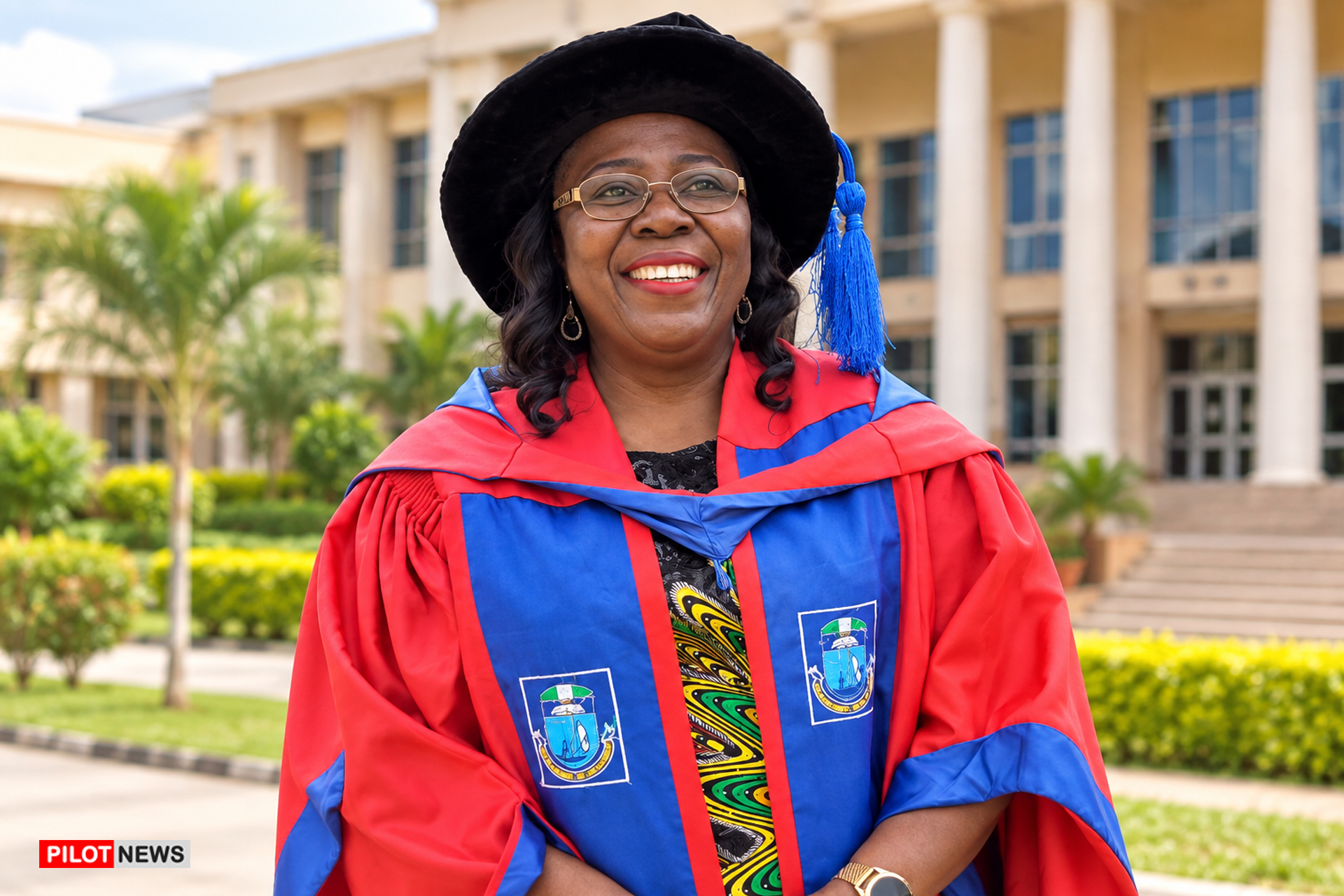
■ Ihekwoaba Declan Onwudiwe, Ph.D., of the School of Public Affairs, Texas Southern University, is a Professor and Director, Africa Institute for Strategic Security Studies (AISSS). He is also on the EDITORIAL BOARD of  the WAP

Texas Guardian News
Continue Reading

Trending