Connect with us

Africa

Pandora Papers: Uhuru Kenyatta family’s secret assets exposed by leak

Published

on

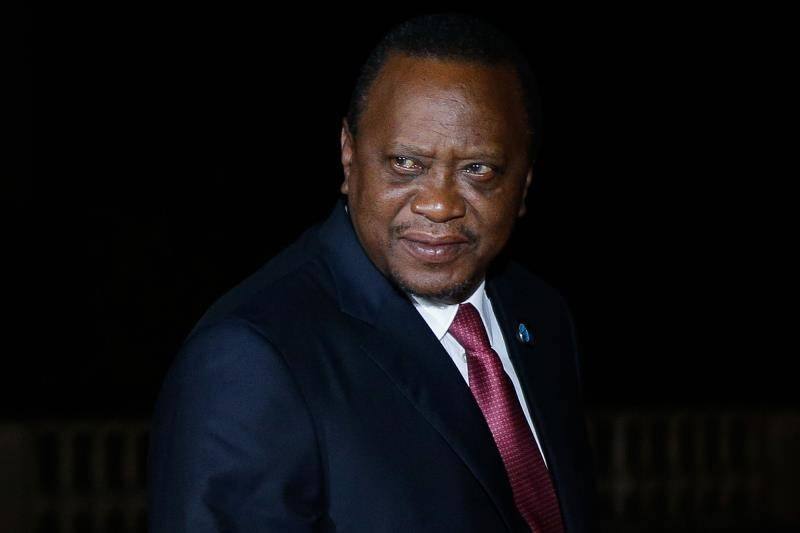
The family of Kenya’s President Uhuru Kenyatta secretly owned a network of offshore companies for decades, according to a huge leak of financial papers.

The Pandora Papers – 12 million files – is the biggest such leak in history.

Mr Kenyatta and six members of his family have been linked to 13 offshore companies.

He said he would “respond comprehensively” to the leak once he returned from a state visit abroad.

However, he added that the investigation would “go a long way in enhancing the financial transparency and openness that we require in Kenya and around the globe”.

The Kenyattas’ offshore investments, including a company with stocks and bonds worth $30m (£22m), were discovered among hundreds of thousands of pages of administrative paperwork from the archives of 14 law firms and service providers in Panama and the British Virgin Islands (BVI) and other tax havens.

The secret assets were uncovered by an investigation, published earlier on Sunday, by the International Consortium of Investigative Journalists (ICIJ), Finance UncoveredFinance UncoveredAfrica Uncensored and other news organisations.

Documents show that a foundation called Varies was set up in 2003 in Panama, naming Mr Kenyatta’s mother, Ngina, 88, as the first benefactor – and Kenya’s leader as the second benefactor, who would inherit it after her death.

The purpose of the foundation and the value of its assets are unknown.

Panamanian foundations are much sought after because the true owners of the assets are only known by their lawyers and they do not have to register their names with the Panamanian government, ICIJ reports.

The assets can also be designed to be transferred tax-free to a successor.

There’s no reliable estimate of the Kenyatta family’s net worth but its vast business interests span transport, insurance, hotels, farming, land ownership and the media industry in Kenya.

In 2018, Mr Kenyatta told the BBC Hardtalk programme that his family’s wealth was known to the public, and as president he had declared his assets as required by law.

“As I have always stated, what we own – what we have – is open to the public. As a public servant I’m supposed to make my wealth known and we declare every year,” Mr Kenyatta said.

“If there’s an instance where somebody can say that what we have done or obtained has not been legitimate, say so – we are ready to face any court,” he added.

In the same interview, Mr Kenyatta said he wanted fighting corruption and promoting transparency to be his legacy.

He promised to work with parliament to create a law that would oblige public officials to declare their wealth, but MPs are yet to pass this bill.

Other world leaders named in the Pandora Papers include the King of Jordan Abdullah II, former UK Prime Minister Tony Blair, Gabon’s President Ali Bongo Ondimba and President of Congo-Brazzaville Denis Sassou-Nguesso.

It is unclear if President Kenyatta, who retires next year after 10 years in office, knew about the Varies foundation but the timing of its opening may be instructive.

Seven months earlier, he had lost the 2002 presidential election to opposition candidate Mwai Kibaki, who had vowed to redress historical crimes as well as launch a war against corruption.

At the time, the family of outgoing president Daniel arap Moi, a friend of the Kenyattas, allegedly moved money out of the country, according to a 2014 leaked report by the international risk consultancy Kroll.

The Kenyatta family established its political and business interests during the rule of Kenya’s first president, Uhuru’s father Jomo. He has been accused of using his position to amass wealth.

After his death in 1978, Ngina Kenyatta, his fourth wife, played a pivotal role in expanding the family’s business interests.

In paperwork seen by the BBC, the Pandora Papers reveal that in 1999, Mrs Kenyatta and her two daughters, Kristina and Anna, set up an offshore company – Milrun International Limited – which was incorporated in the BVI.

According to the ICIJ, Mrs Kenyatta and her daughters were advised by experienced international wealth experts from the Swiss bank Union Bancaire Privée (UBP), which recruited Alcogal, a Panamanian law firm specialising in setting up and administering offshore companies.

The consortium says invoices from Alcogal to the bank show that the Swiss advisers referred to the Kenyattas with the code “client 13173”.

Alcogal provided a registered office for Milrun on the largest of the BVI islands, Tortola, and supplied staff members to act as the company’s official directors.

The result was an entirely anonymous company that could not be traced back to the Kenyatta family.

This company was used by Mrs Kenyatta and her daughters to buy an apartment in central London, which it still owns, according to filings at the UK Land Registry seen by Finance Uncovered.

The prime property, which was until recently rented by British Labour MP Emma Ann Hardy, is now estimated to be worth close to $1.3m.

Ms Hardy’s spokesperson said the MP, had “absolutely no knowledge” of who owned the property.

“She is shocked at what this investigation has uncovered, and believes it shows why more transparency is urgently needed,” her statement said.

According to Finance Uncovered, the Kenyatta family has used other offshore companies to buy two more properties in the UK.

UBP private-wealth advisers also helped Mr Kenyatta’s brother, Muhoho, set up a Panamanian entity called Criselle Foundation in 2003.

The foundation was registered to the offices of Alcogal in Panama City, and was nominally run by board members from the Panamanian law firm.

It was set up for the benefit of Muhoho Kenyatta, with his son Jomo Kamau Muhoho, as successor.

Another BVI company which Mr Muhoho owned had a $30m valuation in stocks and bonds as of November 2016.

A search of public records in BVI and Panama found that most of the companies linked to the Kenyattas are now dormant, some of them as a result of non-payment of regulatory fees.

It’s not illegal to run secret companies, but some have been used as a front to divert money, avoid taxes and for money laundering.

The Pandora Papers, however, show no evidence that the Kenyatta family stole or hid state assets in their offshore companies.

The Pandora Papers is a leak of almost 12 million documents and files exposing the secret wealth and dealings of world leaders, politicians and billionaires. The data was obtained by the International Consortium of Investigative Journalists in Washington DC which has led one of the the biggest ever global investigations.

More than 600 journalists from 117 countries have looked at the hidden fortunes of some of the most powerful people on the planet. BBC Panorama and the Guardian have led the investigation in the UK.

Texas Guardian News

Africa

Nigeria–Burkina Faso Rift: Military Power, Mistrust, and a Region Out of Balance

Published

on

The brief detention of a Nigerian Air Force C-130 Hercules aircraft and its crew in Burkina Faso may have ended quietly, but it exposed a deeper rift shaped by mistrust, insecurity, and uneven military power in West Africa. What was officially a technical emergency landing quickly became a diplomatic and security flashpoint, reflecting not hostility between equals, but anxiety between unequally matched states navigating very different political realities.

On December 8, 2025, the Nigerian Air Force transport aircraft made an unscheduled landing in Bobo-Dioulasso while en route to Portugal. Nigerian authorities described the stop as a precautionary response to a technical fault—standard procedure under international aviation and military safety protocols. Burkina Faso acknowledged the emergency landing but emphasized that the aircraft had violated its airspace, prompting the temporary detention of 11 Nigerian personnel while investigations and repairs were conducted. Within days, the crew and aircraft were released, underscoring a professional, if tense, resolution.

Yet the symbolism mattered. In a Sahel region gripped by coups, insurgencies, and fragile legitimacy, airspace is not merely technical—it is political. Burkina Faso’s reaction reflected a state on edge, hyper-vigilant about sovereignty amid persistent internal threats. Nigeria’s response, measured and restrained, reflected confidence rooted in capacity.

The military imbalance between the two countries is stark. Nigeria fields one of Africa’s most formidable armed forces, with a tri-service structure that includes a large, well-equipped air force, a dominant regional navy, and a sizable army capable of sustained operations. The Nigerian Air Force operates fighter jets such as the JF-17 and F-7Ni, as well as A-29 Super Tucanos for counterinsurgency operations, heavy transport aircraft like the C-130, and an extensive helicopter fleet. This force is designed not only for internal security but for regional power projection and multinational operations.

Burkina Faso’s military, by contrast, is compact and narrowly focused. Its air arm relies on a limited number of light attack aircraft, including Super Tucanos, and a small helicopter fleet primarily dedicated to internal counterinsurgency. There is no navy, no strategic airlift capacity comparable to Nigeria’s, and limited logistical depth. The Burkinabè military is stretched thin, fighting multiple insurgent groups while also managing the political consequences of repeated military takeovers.

This imbalance shapes behavior. Nigeria’s military posture is institutional, outward-looking, and anchored in regional frameworks such as ECOWAS. Burkina Faso’s posture is defensive, reactive, and inward-facing. Where Nigeria seeks stability through deterrence and cooperation, Burkina Faso seeks survival amid constant internal pressure. That difference explains why a technical landing could be perceived as a “serious security breach” rather than a routine aviation incident.

The incident also illuminates why Burkina Faso continues to struggle to regain political balance. Repeated coups have eroded civilian institutions, fractured command structures, and blurred the line between governance and militarization. The armed forces are not just security actors; they are political stakeholders. This creates a cycle where insecurity justifies military rule, and military rule deepens insecurity by weakening democratic legitimacy and regional trust.

Nigeria, despite its own security challenges, has managed to avoid this spiral. Civilian control of the military remains intact, democratic transitions—however imperfect—continue, and its armed forces operate within a clearer constitutional framework. This stability enhances Nigeria’s regional credibility and amplifies its military superiority beyond hardware alone.

The C-130 episode did not escalate into confrontation precisely because of this asymmetry. Burkina Faso could assert sovereignty, but not sustain defiance. Nigeria could have asserted its capability, but chose restraint. In the end, professionalism prevailed.

Still, the rift lingers. It is not about one aircraft or one landing, but about two countries moving in different strategic directions. Nigeria stands as a regional anchor with superior military power and institutional depth. Burkina Faso remains a state searching for equilibrium—politically fragile, militarily constrained, and acutely sensitive to every perceived threat from the skies above.


Texas Guardian News
Continue Reading

Africa

NBA pick Khaman Maluach Hoping to ‘Change the Narrative’ About Africa

Published

on

Immediately after getting drafted, Maluach was asked: “So many people, when they think about Africa, think about strife, think about war, think about not so great things about the continent, let alone South Sudan. How much of a responsibility do you think you have in changing perceptions of what people think Africa is in terms of thinking more about the resources, thinking about the people of Africa and South Sudan, specifically?”

Maluach’s native country, South Sudan, is undergoing a humanitarian crisis. His family fled the country to a suburb of Kampala, Uganda, in search of safety and opportunity during the South Sudan crisis. He now hopes to change the narrative about the region by highlighting its good parts on the world stage.

“I think about showing them the good parts of Africa,” Maluach said at the press conference after he was drafted. “I’m thinking about showing them the great places in Africa, like Kigali, whether it’s Senegal, whether it’s the safaris in Africa, and showing them the cultures we have and the people we have, which is different from the stuff they see on TV. I just want to change the narrative, the narrative of our people and how they see my continent.”

Maluach was born in Rumbek, once an important city in South Sudan that was ravaged by the country’s civil war. The 7’2″ center’s road to success was far from easy. The nearest basketball court to his house was nearly an hour’s walk away and usually packed. Moreover, he played his first game in Crocs, not basketball shoes. But his dedication was enough to catch the eye of local coaches Wal Deng and Aketch Garang.

Through the effort that he put in, Maluach made it to the NBA Academy Africa in Saly, Senegal, then to the Duke Blue Devils, and now the Suns. He hopes the moment inspires kids on the continent.

“Living in Africa, I had the whole continent on my back. Giving hope to young kids,” he said after the Suns selected him No. 10 overall.

Maluach considers basketball a gift God gave him, and hopes to finish off his NBA career as a Hall of Famer.

Texas Guardian News
Continue Reading

Africa

Nigeria’s first female fighter pilot Kafayat Sanni excels in Ghana

Published

on

After making history as Nigeria’s first female fighter pilot, Flt. Lt. Kafayat Sanni has emerged as the Best Allied Student and won the Best Assistant Commandant Paper award at the Ghana Armed Forces Command and Staff College, Accra, according to the News Agency of Nigeria (NAN).

In a statement released on Saturday and cited by NAN, the Director of Public Relations and Information of the Nigerian Air Force, Air Commodore Ehimen Ejodame, said the awards were presented on Friday during the College graduation ceremony which had in attendance top military personnel and dignitaries from across Africa.

Ejodame recalled how Sanni first made the news in 2019 after being decorated as the Nigerian Air Force’s first female fighter pilot following her pilot training in the U.S.

“Since then, she has flown the Alpha Jet as well as undertaken training sorties on the Super Mushshak as a prolific instructor pilot, producing and mentoring younger pilots for the NAF,” Ejodame said.

“Her outstanding performance at GAFCSC not only symbolises personal excellence and resilience but also underscores Nigeria’s growing leadership in regional defence and commitment to gender inclusion in the armed forces.

“This remarkable achievement further reflects the Nigerian Air Force’s strategic investment in human capital development under the visionary leadership of the Chief of the Air Staff, Air Marshal Hasan Abubakar,” he said.

In 2017, Sanni emerged as the overall best pilot at the Nigerian Air Force’s 401 training school before she moved to the United States to train at the U.S. Aviation Leadership program.

Upon completion, Sanni returned to Nigeria, where she, alongside 12 new fighter pilots, was decorated.

As Sanni became the first female fighter pilot in the 55-year history of the Nigerian Air Force, her colleague, Tolulope Arotile, also became the Force’s first female combat helicopter pilot.

“It is a privilege for me to be winged as the first female fighter pilot in the Nigerian Air Force,” Sanni said after being decorated.

Sanni said at the time she had always wanted to be a fighter pilot, and “I was just lucky to be chosen.”

“It was also my choice. It was what I wanted to do. And I felt that everyone is not supposed to fold their arms and watch what is happening in our country.

“Everyone could always play their part. So, I did not think there was any reason for me to think that it is not possible for me to actually fly the jet because there was no female that ever flew the jet. I believe I could achieve it and I did,” she said.

She then went on to advise younger girls to “never say no to opportunities.”

“They should always strive to be the best and put in their efforts. They should never look at anything that seems to want to overpower or overshadow them. For me, you can always attempt things and if they do not work out well; fine. But at every point in time, you just need to put in your best.”

Texas Guardian News
Continue Reading

Trending