

News
Trump Reportedly looted 15 Boxes of Presidential Files to Mar-a-Lago


The federal government’s official record keeper had to go down to Florida to retrieve 15 boxes of documents and other items from former President Donald Trump — which the agency says should have been handed over at the end of his time in office.
The National Archives and Records Administration (NARA) said in a statement on Tuesday that, in January, it “arranged for the transport from the Trump Mar-a-Lago property in Florida to the National Archives of 15 boxes that contained Presidential records, following discussions with President Trump’s representatives in 2021.”
A letter from former President Barack Obama left for his successor was among the items that had been packed up in boxes and taken to Florida, according to The Washington Post. Other correspondence with world leaders — including what Trump previously called “love letters” from North Korean leader Kim Jong Un — was also reportedly retrieved.
Reams of news clips printed out for the president, an item of clothing and a map that Trump infamously marked-up with a black Sharpie to show how Hurricane Dorian could hit Alabama in 2019 were also found in the boxes, The New York Times reports.
More items could be discovered, according to the National Archives. “Former President Trump’s representatives have informed NARA that they are continuing to search for additional Presidential records that belong to the National Archives,” the agency said in a statement. “As required by the Presidential Records Act (PRA), these records should have been transferred to NARA from the White House at the end of the Trump Administration in January 2021.”
Rep. Carolyn Maloney, a New York Demcrat who chairs the House Oversight Committee, said Monday she planned to “fully investigate” the incident.

Mar-a-Lago Club in Palm Beach, Florida. Inset: Donald Trump. | CREDIT: JOE RAEDLE/GETTY. INSET: ZACH GIBSON – POOL/GETTY
“The reporting on former President Trump’s apparent removal of presidential records and his failure to turn the records over to the National Archives for over a year is deeply troubling — but not surprising,” Maloney said in a statement.
“I sounded the alarm in December 2020 about the danger that the former President and senior Trump Administration officials were not properly transferring presidential records to the National Archives and unfortunately, we now know that was the case,” she continued. “I plan to fully investigate this incident to ensure the law is followed and records from the Trump Administration are with the National Archives where they belong, rather than stashed away in Trump’s golf resorts.”
The news that boxes of White House records were found at Mar-a-Lago is the latest in a series of reports about how the former president has apparently been mishandling official documents.
Last week, the National Archives confirmed that some of the files it did receive from the administration “included paper records that had been torn up by former President Trump.” Some of those ripped-up and reconstructed documents were reportedly among the more than 700 pages turned over to lawmakers investigating the Jan. 6 Capitol riots.
Former White House aide Omarosa Manigault Newman subsequently said Trump “loved to tear up those documents” and that she once allegedly saw him “chewing” on one of the ripped documents.
That incident “makes me worry that there are a lot of documents that may not be accounted for, that there may be documents that can tell the full story about what happened on the days leading up to January 6th for instance, that we may never see or may never come to light,” she said.
Archivist David S. Ferriero, who leads NARA, spoke about the Presidential Records Act in a statement provided in response to a request for comment on the boxes retrieved from Florida.
“The Presidential Records Act is critical to our democracy, in which the government is held accountable by the people,” he said. “Whether through the creation of adequate and proper documentation, sound records management practices, the preservation of records, or the timely transfer of them to the National Archives at the end of an Administration, there should be no question as to need for both diligence and vigilance. Records matter.”
A Trump spokeswoman did not respond to PEOPLE’s previous request about his record-keeping.
Culled from the People



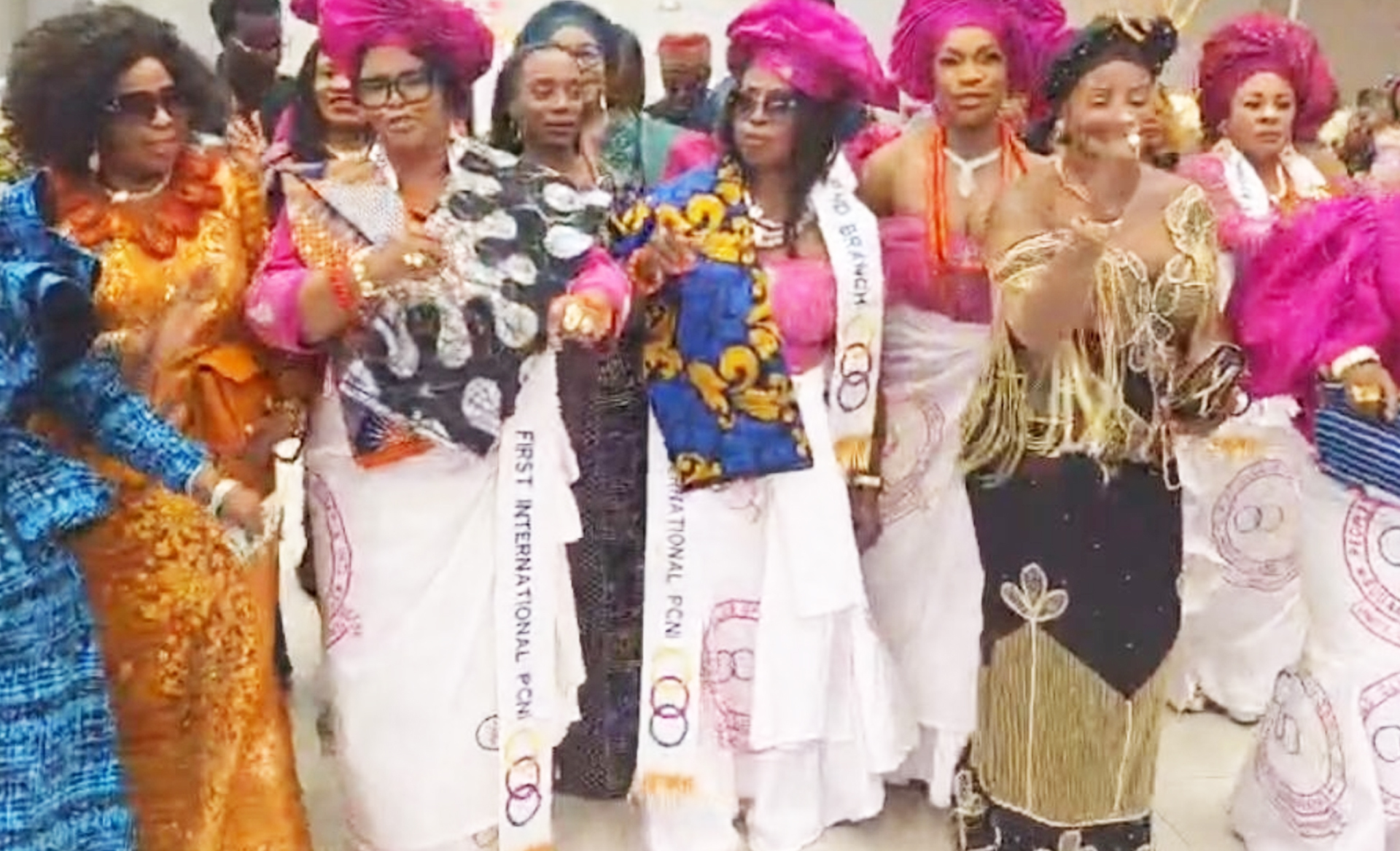
Branch considers annual induction as August celebration of prestige, culture and comradeship inspires growing community interest
HOUSTON, TEXAS — Membership requests to the Sugar Land Branch of People’s Club of Nigeria International (PCNI) have risen significantly following its successful August induction ceremony, prompting the organization to consider making the event an annual affair.
Group Chairman, Hon. Prof. Chris Ulasi, confirmed the surge in interest, saying the branch has received numerous inquiries from prospective members since the ceremony that formally admitted 16 new members to the organization.
“The response since the induction has been remarkable. We have seen a significant increase in people asking about membership and how they can become part of the People’s Club family,” Ulasi said. “Many of them attended the event or heard about it afterward and were impressed by the fellowship, dignity, cultural pride, and genuine comradeship they witnessed.”
Ulasi said the development, including a possible change from the current bi-annual induction arrangement to an annual ceremony, would be discussed at the branch’s September general meeting.
The renewed interest in membership comes on the heels of an elaborate induction that attracted national officers, patrons, branch chairmen, members, and guests from across the People’s Club family.
National President, Atty. Fidelis Onyebueke, who presided over the swearing-in of the 16 inductees, described the event as a total success and commended the Sugar Land Branch, PCNI’s First International Branch, for what he called an exceptional celebration of fellowship, culture, service, and unity.
During the formal ceremony, each inductee was invited to the podium to take the membership oath and receive a certificate from the national president, who was assisted by PCNI Attorney Chukwuka John Ukadike.
Beyond the admission of new members, however, the event offered guests a public display of the traditions that have historically defined the People’s Club: prestige, love, service, and comradeship. Those characteristics were reflected throughout the ceremony, from the reception of national officers and interaction among members to the formal induction, cultural presentation, and extended social celebration that followed.
Grand Patron, Ide Obinna Nnanyelugo Mbachu, said the growing interest in membership was an indication that the organization’s values resonated with guests who experienced the event.
“What people witnessed was the character of People’s Club—the love among members, respect for one another, willingness to serve, and the comradeship that brings us together,” Mbachu said. “Prestige is not simply about appearance; it is about how we conduct ourselves and how we treat people. When the community sees those values demonstrated, it is understandable that others would want to become part of the organization.”
The cultural presentation was among the most visible features of the evening. Women members and associates appeared in coordinated traditional attire featuring red-pinkish blouses with matching head ties and white wrappers bearing the PCNI logo. The men wore all-white outfits complemented by customized PCNI cap pins and distinctive PCNI sashes worn as neckpieces.

The coordinated appearance created a colorful expression of Nigerian cultural identity while reinforcing the sense of unity that characterized the gathering.
As the formal program concluded, the ceremony transitioned into an extended social celebration. Members, inductees, and guests shared food and drinks before taking to the dance floor, with music and festivities continuing into the early hours of Sunday.
The presence of members and officials from different branches also gave the ceremony broader significance for Sugar Land, whose status as the First International Branch places it prominently in PCNI’s history outside Nigeria.
For Ulasi, however, the strongest indication of the event’s impact came afterward, as inquiries from prospective members continued to reach the branch.
He said that while the organization welcomes the increased interest, prospective members would be expected to understand the responsibilities and traditions associated with belonging to the People’s Club. “Membership is about much more than attending social events,” Ulasi said. “It is about service, friendship, responsibility, and commitment to one another. Those are the values we intend to preserve as the branch continues to grow.”
The September meeting is expected to consider how the branch will respond to increased membership interest and whether the success of the August ceremony provides sufficient grounds to move to an annual induction schedule. For the Sugar Land Branch, the aftermath of the August induction may prove as significant as the ceremony itself: 16 members entered the People’s Club that evening, but the celebration appears to have inspired many more to seek a place within its ranks.
Houston
Houston Ready as People’s Club National President Arrives for Historic Sugar Land Branch Induction
Atty. Fidelis Onyebueke’s arrival signals final preparations for the August 22 ceremony as the First International Branch prepares to welcome 17 new members into the People’s Club family
HOUSTON, TEXAS — Final preparations are underway in Houston as the Sugar Land People’s Club of Nigeria International (SPCNI), the First International Branch, puts the finishing touches on what promises to be a landmark evening of fellowship, leadership, and community celebration.
The arrival of Atty. Fidelis Onyebueke, National President of the People’s Club of Nigeria International, has added renewed excitement to the event, underscoring the significance of the Sugar Land branch and its place within the wider People’s Club family.

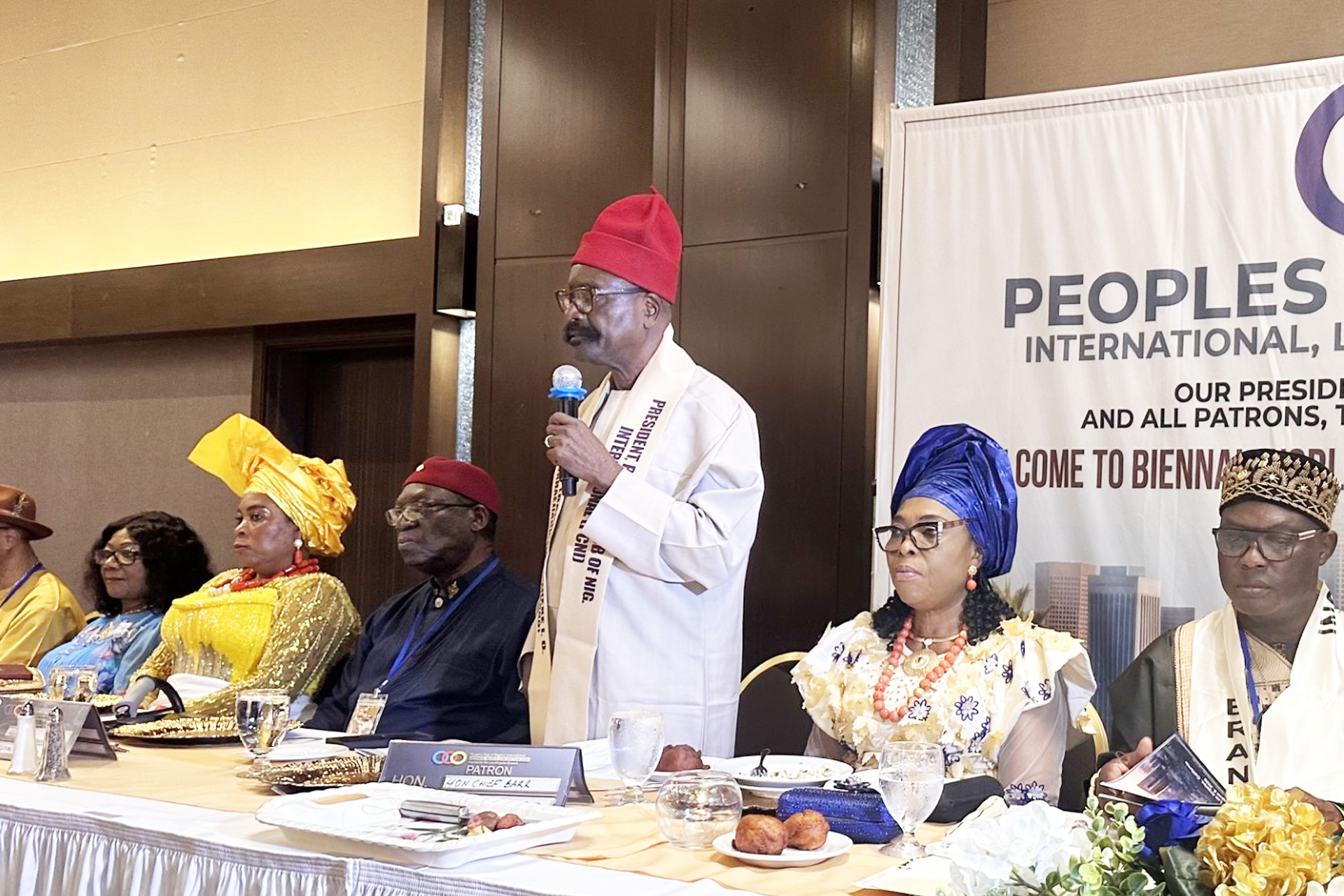
Grand Patron Ide Obinna Nnanyelugo Mbachu addresses Sugar Land PCNI’s August Conference. Insert: Atty. Fidelis Onyebueke, National President of the People’s Club of Nigeria International.
The organization will hold its 2026 Bi-Annual Induction Ceremony on Saturday, August 22, 2026, from 7:00 p.m. at the Igbo Catholic Community Hall, 8250 Creekbend Drive, Houston, Texas.
Seventeen distinguished men and women are expected to be formally inducted into the organization during the ceremony. The event is expected to bring together People’s Club members, community leaders, professionals, families, friends, and guests from Houston and beyond for an evening celebrating friendship, cultural identity, service, and community.
The arrival of Atty. Onyebueke is particularly significant because the Sugar Land organization is recognized as the First International Branch of People’s Club of Nigeria International.

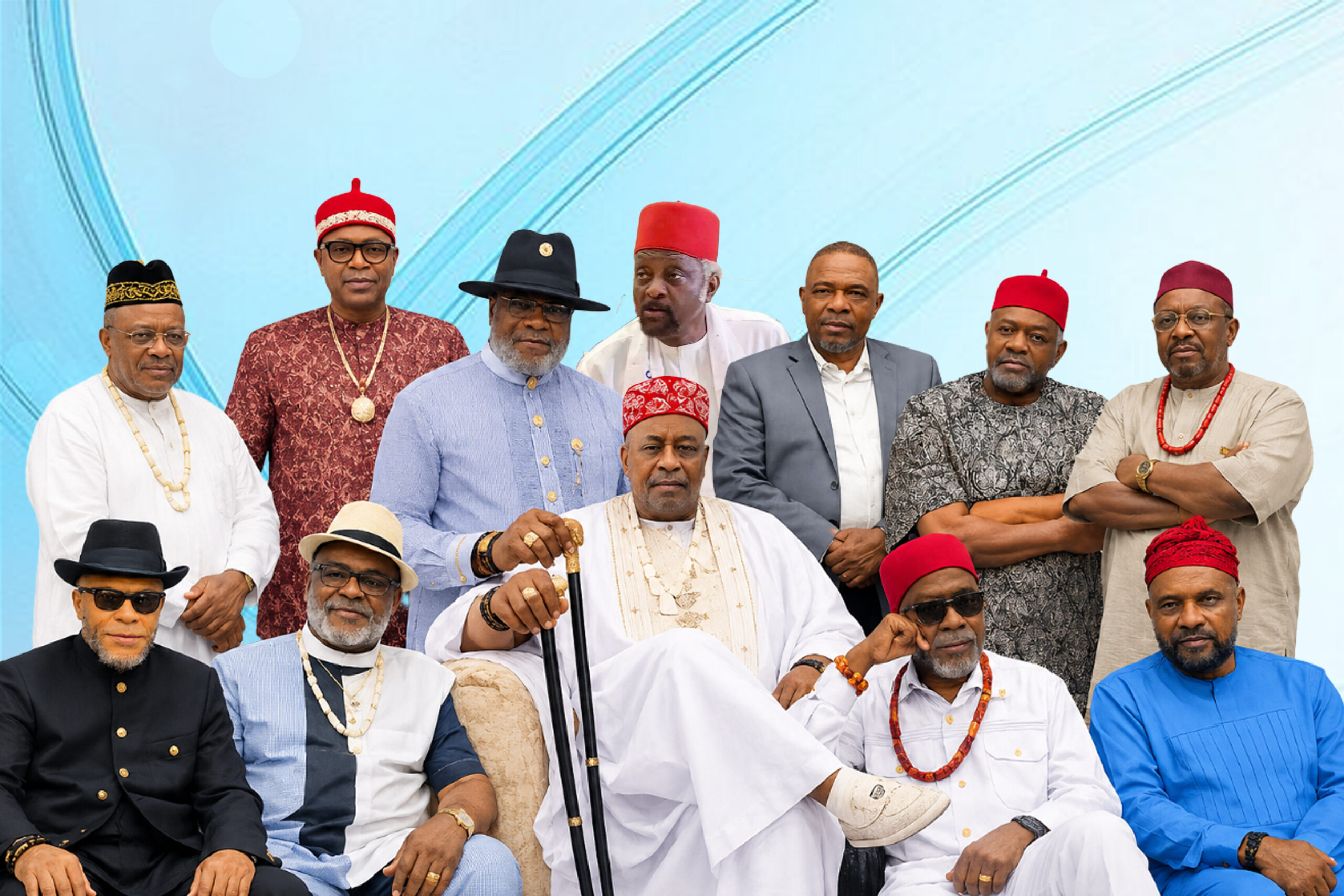
Group photo during PCNI’s August Conference.
While People’s Club has grown into a broad network with branches in Nigeria, North America, and Europe, the Sugar Land branch occupies a unique place in that expansion. It represents the first international extension of the organization and continues to regard itself as a custodian of the principles established by the founders of People’s Club in Nigeria.
For the branch’s leadership, that history carries both pride and responsibility. Grand Patron Ide Obinna Nnanyelugo Mbachu said that the national leadership’s presence in Houston reinforces the importance of the occasion and the values the organization represents.
“This is more than an induction ceremony; it is a celebration of continuity, friendship, love, and service. The arrival of our National President makes this occasion even more meaningful because it connects our First International Branch directly with the larger People’s Club family. We are welcoming new members into a legacy that must be protected, strengthened, and passed forward.”
Mbachu said the organization’s enduring values remain relevant because they are rooted in the fundamental needs of society: friendship, mutual respect, fellowship, responsibility, and service.

From left: Inductee, Hon. Evangelist Philomena Umoh, Chief Executive Officer of BlessedComfort Home; New member, Hon. Shanteria Onyemem, Houston-based entrepreneur.
Among the seventeen inductees is Evangelist Philomena Umoh, Chief Executive Officer of BlessedComfort Home, a philanthropist and titled chief whose work and personal commitment to helping others have touched numerous lives. For Umoh, the forthcoming induction represents both a personal honor and an opportunity to join a community whose values closely align with her commitment to service.
“I am deeply honored and genuinely excited to become part of the People’s Club family. For me, this is not simply about receiving a title or joining a social organization. It is about belonging to a community that values friendship, service, love, compassion, and giving back. I look forward to contributing meaningfully and building lasting relationships.” Her induction adds another dimension to an occasion already defined by diversity of professional experience, community involvement, and public service.

From Left: Hon. Ike Nwokoye; Hon. Prof. Emmanuel Opara; Hon. Basil Mbuba; and Hon. Udoji Achebe.

Left: Hon. Sir Charles Eloka Ikebuaku, wife, and Hon. Dr. Chris Ulasi.
Hon. Prof. Chris Ulasi, the Group’s Chairman, said that the ceremony will represent an important moment for both the inductees and the organization. Ulasi said the branch is prepared to receive its new members and celebrate the enduring relationships that have sustained the organization.
“Everything is coming together for what we expect to be a memorable evening. We are excited to welcome our National President and our distinguished inductees. This ceremony is about strengthening the bonds that make our organization a true family.”
The chairman emphasized that membership is not merely ceremonial. According to him, those joining the organization become part of an established fellowship with expectations to participate, contribute, and help strengthen the community.
The August 22 event is expected to combine the formal traditions of induction with the warmth and conviviality for which the Sugar Land branch is known. For an organization rooted in Nigerian cultural traditions but operating in one of America’s most diverse metropolitan areas, the ceremony also represents the continuing evolution of the Nigerian-American community in Houston.

-
As the First International Branch of People’s Club of Nigeria International prepares to induct 16 distinguished members in Houston, the historic Sugar Land chapter celebrates its enduring legacy of friendship, cultural identity, community service, and the values that have sustained the People’s Club tradition across generations.
All roads will lead to Houston, Texas, on Saturday, August 22, 2026, as the Sugar Land People’s Club of Nigeria International, the First International Branch, welcomes 16 new members into its prestigious social confraternity.
Scheduled to take place 7 pm, at the Igbo Catholic Community Hall, 8250 Creekbend Drive, Houston, the evening will mark the organization’s 2026 Bi-Annual Induction Ceremony, bringing together members, families, community leaders, professionals, friends, and supporters for an occasion that reaches beyond the formal admission of new members.
It will be a celebration of heritage, fellowship, and continuity, a ceremonial sharing of values from one generation of members to another.
For the People’s Club in general, induction represents more than membership. It signifies acceptance into a fraternity built around relationships, responsibility, dignity, and service. Those admitted become custodians of an identity that extends beyond individual accomplishment and asks members to translate friendship into action and success into service. That distinction is particularly important for the Sugar Land organization because of its position as the First International Branch of People’s Club of Nigeria.
There may be other organizations and chapters carrying the People’s Club identity throughout the Greater Houston area and elsewhere, but Sugar Land, as the first international branch, occupies a distinctive place in that history. It represents the genesis of the People’s Club and remains a branch established to preserve and transmit the principles set by its original founders in Nigeria.
Those principles have remained remarkably simple: bring people together, cultivate friendship, encourage achievement, support one another, celebrate culture, assist the community, and recognize that prosperity is more meaningful when it creates opportunities to improve others’ lives.
More Than a Social Club
Social organizations have always played an important role in community life, particularly among immigrant communities, where geographic relocation can disrupt family structures, cultural networks, and traditional systems of belonging. For Nigerians living thousands of miles from their homeland, organizations such as People’s Club can serve as a bridge between two worlds.
They provide a place where heritage can be celebrated without preventing integration into American society; where professional accomplishments can coexist with cultural responsibilities; and where friendships can develop into support systems that endure through celebrations, challenges, and changing circumstances.

This is particularly relevant in Houston, one of America’s most culturally diverse metropolitan areas and home to a vibrant African and Nigerian diaspora. Within such a city, social organizations can perform functions that go far beyond entertainment. They facilitate networking, mentorship, and civic participation. They connect newcomers with established residents. They mobilize resources when families experience hardship. They celebrate milestones, support charitable causes, and create spaces where cultural traditions can be passed down to younger generations.

Perhaps most importantly, they give people a sense of belonging. The Sugar Land People’s Club has built its identity around that understanding. Its reputation for sophistication, charity, civic engagement, and community outreach reflects an organization committed not only to the advancement and well-being of its membership but also to making those benefits meaningful within broader society.
Members bring different professional backgrounds, accomplishments, personalities, and life experiences into the organization, yet fellowship provides common ground. Membership, therefore, carries expectation, and the ability to coexist peacefully with others matters.
Preserving the Spirit of the Founders
People’s Club of Nigeria has grown beyond its Nigerian origins into a wider network of branches and members across Nigeria and the international community. Expansion, however, brings an important challenge: how does an organization grow without losing the principles that gave it life?
For the Sugar Land First International Branch, the answer has been to preserve the institution’s foundational values while allowing its membership to evolve with contemporary society.

The Group’s Grand Patron, Ide (Sir) Obinna Nnanyelugo Mbachu
The branch’s historical significance is consequently measured not merely by age or chronology, but also by its ability to remain connected to the spirit of the original People’s Club while creating a fraternity relevant to Nigerians and friends of Nigeria living in a modern American metropolis.
The Group’s Grand Patron, Ide (Sir) Obinna Nnanyelugo Mbachu, views the 2026 induction from precisely that perspective.
He said, “Every induction reminds us that we inherited something valuable that must be protected and strengthened. People’s Club represents unity, friendship, dignity, and service. As we welcome these distinguished members, we are not simply increasing our numbers; we are entrusting another generation with the responsibility of preserving our heritage and serving humanity.”
His message captures the significance of the ceremony, justifying that membership comes with both privilege and responsibility.
Sixteen New Members, One Shared Commitment
The 2026 ceremony assumes additional significance because of the professional and community backgrounds represented among the incoming members.
The 16 inductees are Hon. Ndy Okorie, Hon. Peter Nweke, Hon. Dan Nwadei, Hon. Arinze Ezebuilo, Hon. Ebele Eneh, Hon. Philo Umoh, Hon. Amuluonye Ufondu, Hon. Okwy Okpala, Hon. Prince Chime, Hon. Macdonald Okpalaobi, Hon. Tony Akale, Hon. Amechi Onyejegbu, Hon. Emma Igwilo, Hon. Eucharia Iloabachie, Hon. Anthony Ogbo, and Prof. Kieh.
Together, they represent the next chapter of a fraternity whose future depends upon members willing to invest their talents, relationships, and experiences in its continued development. Their induction also demonstrates an important dimension of sustainable social organizations: renewal.
Organizations endure when they can welcome new people without abandoning their identity. New members introduce ideas, professional networks, energy, and perspectives, while established members transmit institutional knowledge, traditions, and expectations. The result is continuity through renewal. Chairman of the Sugar Land People’s Club of Nigeria International, Hon. Prof. Chris Ulasi, describes that process as central to the organization’s future.
According to Hon. Dr. Ulasi, “We welcome our new members into a family strengthened by friendship, integrity and service, confident that their talents and commitment will enrich our fellowship and advance our collective mission.”
Among those scheduled for induction is Dr. Anthony “Tony” Ogbo, Publisher of Texas International Guardian and a professor at Texas Southern University. Ogbo’s professional journey in journalism, publishing, and higher education has centered largely on communication, community engagement, and public service. For him, joining the People’s Club represents something deeper than becoming affiliated with another organization. It represents finding a peaceful fraternity where friendship and social responsibility intersect.
Explaining his decision to accept membership, Ogbo said: “I chose Sugar Land People’s Club because I found a peaceful fraternity where friendship is genuine, and belonging has meaning. Here, the values we often advocate are not merely spoken about; they are practiced. I wanted to belong to a family that lives those principles every day.”
His perspective speaks to one of the fundamental attractions of social organizations: people ultimately seek communities where they can express their values. Indeed, professional accomplishments may create recognition, but belonging creates connection.

Chairman Hon. Prof. Chris Ulasi (Left); Hon. Achebe Udoji Achebe, Okosisi, (far right)

Hon. Prof. I. D. Onwudiwe, General Secretary (Left); Hon. Sir Jude Chibuzo Achuama (Akaekpuchionwa n’Oko), Public Relations Officer
Unity, Love, and Service
For Hon. Prof. I. D. Onwudiwe, General Secretary of the Sugar Land People’s Club of Nigeria International, the strength of the organization lies in the people who collectively sustain it. He credits the leadership of Chairman Hon. Prof. Chris Ulasi, the commitment of the executive team, the fellowship of members, and the guidance of Patron Hon. Sir Mbachu and Patron Elect Hon. Prof. Emma Opara with contributing to the organization’s continued growth.
Although a prior family commitment in London, England, will prevent Onwudiwe from attending the August 2026 induction ceremony, his message to the incoming members centers on the organization’s enduring motto: Unity, Love, and Service. “As SPCNI welcomes new members into its family, we remain firmly guided by Unity, Love, and Service. These values challenge us to support one another, promote harmony within our communities, and remain our brothers’ and sisters’ keepers. Together, we can accomplish far more than any of us could achieve alone.”
To the inductees, his message is equally warm: “I offer my heartfelt congratulations and warmest welcome to every new inductee. May your membership be rewarding, may the friendships you establish endure, and may this celebration become the beginning of many years of fellowship, service, shared accomplishment, and unforgettable memories within our People’s Club family.”
A Fellowship Without Barriers
That sense of family is echoed by Hon. Achebe Udoji Achebe, Okosisi, who sees social interaction not as a luxury but as an essential dimension of human existence. In his view, people naturally seek companionship, but meaningful fellowship becomes sustainable when individuals discover others who share compatible values and aspirations. “Socializing is in the fundamental nature of man, and it becomes sustainably inviting when you congregate with like minds. Social clubbing should therefore foster a conviviality that benefits everyone who participates. At PCNI Sugar Land First International Branch, members are treated as one family, and the love is evenly distributed.”
Achebe emphasizes another characteristic he believes distinguishes the organization: fellowship should not be used to create artificial divisions among members. He said, “Come to this branch where class distinction is not the bedrock. What binds us is fellowship, respect, and the joy of being together. Every meeting creates another reason to return because genuine friendship leaves you looking forward to the next opportunity to share, laugh, celebrate, and strengthen one another.”
Such an outlook is important because social organizations can easily become associated exclusively with prestige, status, or exclusivity. The deeper measure of their social value, however, lies in whether they create relationships that transcend those distinctions.
Membership With a Purpose
For Hon. Sir Jude Chibuzo Achuama (Akaekpuchionwa n’Oko), Public Relations Officer of the group, membership should ultimately translate into a positive contribution to society. “People’s Club represents what becomes possible when friendship is transformed into service. We celebrate one another, but we also recognize our obligation to the wider community. Every new member strengthens our capacity to promote unity, preserve our heritage, support worthy causes, and demonstrate through our actions what responsible fellowship truly means.”
That philosophy positions the organization as part of the community’s social infrastructure rather than merely a gathering place. Strong civic and social organizations can complement formal institutions by addressing human needs that government agencies, businesses, and professional organizations may not always reach.
A member dealing with bereavement may need companionship more than bureaucracy. A newly arrived immigrant may need advice from someone who understands both Nigerian and American systems. A family experiencing difficulty may require a network that can respond immediately. A younger person seeking professional guidance may benefit from access to experienced mentors. A cultural tradition at risk of disappearing may survive if an organization creates a venue where it can be practiced and explained. These seemingly ordinary functions can have extraordinary consequences for community stability.
Houston and the Power of Organized Community
Houston provides an especially fertile environment for organizations built around cultural heritage and civic participation. Its diversity means communities are constantly interacting across national, ethnic, professional, and generational boundaries. Maintaining cultural identity within such an environment does not require isolation. Rather, successful cultural organizations can use their heritage as a foundation for participating more effectively in broader society.
Nigerian organizations have become part of that social mosaic. Through cultural events, professional networking, charitable initiatives, educational support, health awareness, community celebrations, and civic participation, organized groups create opportunities for Nigerians to contribute visibly to the city while maintaining connections with their heritage. People’s Club operates within this broader tradition. Its relevance lies in its ability to build relationships that link personal success to collective responsibility.
Preparing for a Memorable Induction
The responsibility of transforming those principles into a memorable 2026 ceremony rests partly with the Induction Committee. Its chairman, Dr. John Ngene, views the upcoming celebration as an opportunity to welcome new members while reminding everyone of the ceremony’s significance. “This induction celebrates continuity, fellowship, and responsibility. We are welcoming accomplished individuals into our family while reaffirming the values of unity, friendship, service, and cultural pride that distinguish our historic branch.”
The ceremony will consequently celebrate the people entering the organization. Behind the pageantry, attire, food, music, photographs, and congratulations will be a more enduring message: a social institution survives only when its members believe that belonging carries obligations to one another.
Working alongside the Induction Committee is Hon. Flora Uchea, Co-Chair, whose organizational leadership and commitment to excellence have helped shape preparations for the historic ceremony. She believes the event is more than an induction; it is the beginning of a lifelong commitment to fellowship and service. “Every inductee joins not only an esteemed organization but also a family built on trust, respect, compassion, and shared purpose. We welcome each member with open hearts, confident they will strengthen our legacy of unity, meaningful friendships, community service, and enduring excellence.”

The Heart and Soul of a Continuing Legacy
The Sugar Land People’s Club of Nigeria International enters its 2026 induction with an unusual advantage. It knows where it came from. As the First International Branch, its identity carries a sense of history that cannot be manufactured or replicated simply by adopting a name. It marks the beginning of an international journey that carried the ideals of the People’s Club beyond Nigeria and planted them in a new social environment.
The challenge for every generation is to preserve the values that made the institution meaningful while ensuring those values remain relevant to contemporary life. For the incoming 16 members, August 22 will therefore represent both an ending and a beginning. It ends the process through which they progressed toward membership. But it begins something far more consequential, the responsibility of carrying the People’s Club tradition forward.
They will inherit its friendships; participate in its celebrations; enjoy its fellowship, and benefit from its networks. But they will also be expected to strengthen those networks, protect that fellowship, and extend its benefits beyond themselves.
As the Sugar Land People’s Club adds 16 names to its membership, the larger story remains about something much older and much bigger. It will be about sustaining an idea that friendship, community, heritage, and service still matter. That people become stronger when they choose to stand together. And that Unity, Love, and Service, when transformed from words into everyday practice, can remain powerful enough to bind generations together across continents, cultures, and time.


Membership Interest Soars After Sugar Land People’s Club’s Successful Induction

People’s Club Sugar Land Celebrates Landmark Induction of 16 New Members

Houston Ready as People’s Club National President Arrives for Historic Sugar Land Branch Induction

Emotional Conflict: Is She Toying with Me?

Corruption at the Nigerian Consulate Atlanta – A Victim’s Nightmarish Experience

Gowon’s Book and the Dangerous Politics of Selective Memory

Video: Omambala Cultural Association in Houston Celebrates Motherhood with Joyous Igbo-Inspired Mother’s Day Event

VIDEO: Chris Hollins Opens Cartoon Art Showcase at TSU’s CommWeek

Commissioner Dexter L. McCoy speaks about the African-American Memorial Event
-

 Houston1 month ago
Sugar Land People’s Club Welcomes a New Generation Into a Legacy of Unity, Love and Service
-
 Houston3 weeks ago
Houston Ready as People’s Club National President Arrives for Historic Sugar Land Branch Induction
-
 Houston3 weeks ago
People’s Club Sugar Land Celebrates Landmark Induction of 16 New Members
-
 Houston5 days ago
Membership Interest Soars After Sugar Land People’s Club’s Successful Induction