Nigeria
We’re seeking explanation from FG on Kanu’s arrest, says Britain
Published
5 years agoon
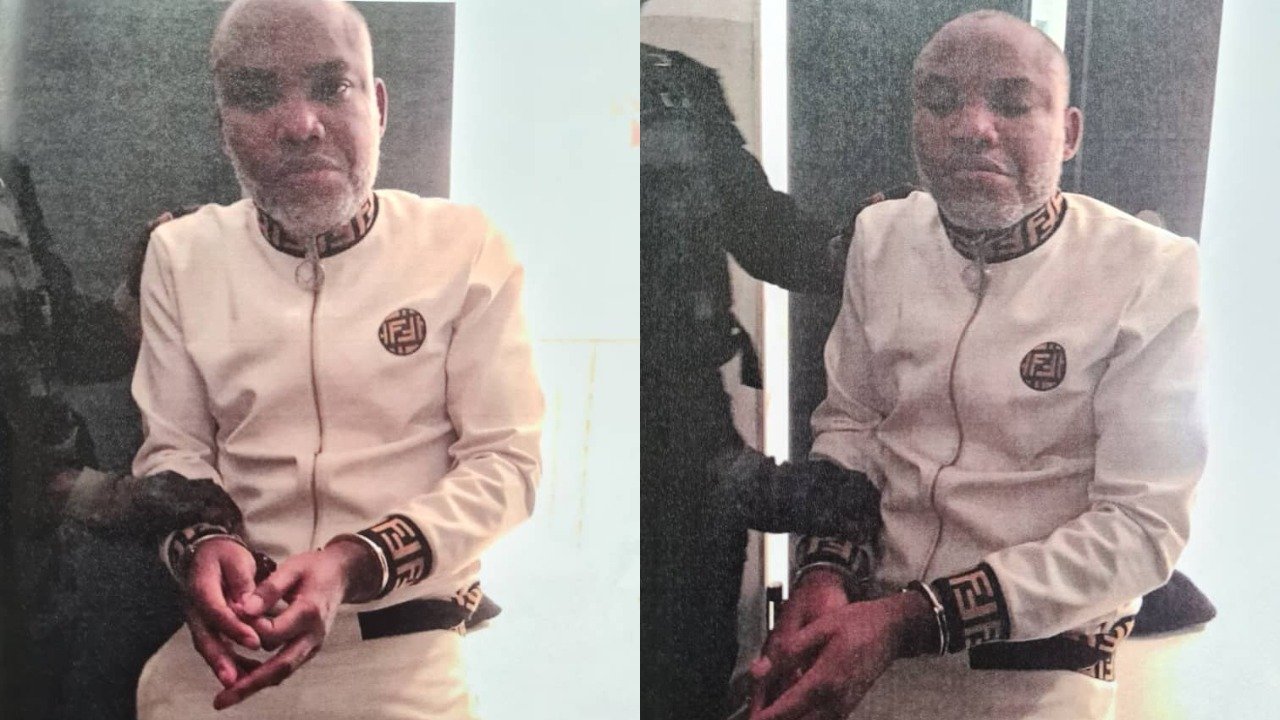
THE United Kingdom has said it will seek clarification from the Federal Government on the circumstances and legality of the arrest of Nnamdi Kanu, the leader of the Indigenous People of Biafra.
The Head of Communications, British High Commission, Mr Dean Hurlock, who stated this while responding to enquiries from one of our correspondents, said the UK was in the process of seeking explanations from the Federal Government on the circumstances surrounding Kanu’s arrest and extradition.
Hurlock said this as Ifeanyi Ejiofor, the lead counsel to the detained IPOB leader, said members of the legal team had formally applied to the Department of State Service to allow them access to their client.
Recall that Kanu, who is facing trial for treasonable felony, jumped bail in 2017 and fled the country for the UK when soldiers stormed his parents’ residence at Afaraukwu, Abia State.
On Tuesday, he was re-arraigned before Justice Binta Nyako of the Federal High Court, Abuja, two days after he was arrested and extradited to the country.
He is still being remanded in the custody of the Department of State Services by the Federal High Court.
The UK, which had on Tuesday said Kanu, who is also a British citizen, was not arrested within its territory, made further clarifications on Wednesday.
Responding to enquiries from one of our correspondents on the legality of Kanu’s arrest and extradition, the Head of Communications, British High Commission, Hurlock, on Wednesday reiterated that the IPOB leader was not arrested or extradited from the UK.
Hurlock said, “In response to any queries on whether Nnamdi Kanu was extradited from the UK, we can reaffirm that Nnamdi Kanu was not arrested in the UK nor was he extradited from the UK.
“With regards to any questions about the possible legality of his arrest, the British High Commission in Abuja is currently in the process of seeking clarification from the Nigerian government about the circumstances of the arrest.”
Trial must follow due process, Britain insists
The British Government also said its Foreign, Commonwealth and Development Office was ready to provide consular assistance to Kanu who was expected back in court on July 26.
Hurlock further said the UK expected the trial of the Biafran separatist to follow due process.
He noted, “With regard to any questions about whether the British High Commission is providing assistance in this case, we can confirm that the Foreign, Commonwealth and Development Office stands ready to provide consular assistance.
“With regard to any questions about what the UK thinks about the proposed legal process that Nnamdi Kanu is facing in Nigeria, the UK would expect any trial or legal proceedings to follow due process.”
Nnamdi Kanu was arrested in Kenya, says Brother
Meanwhile, the IPOB spokesperson, Emma Powerful, disclosed that Kanu was arrested in Kenya by security operatives.
Powerful, in a statement quoted Kanu’s brother, Kingsley, as stating that the IPOB leader was detained while visiting Kenya and handed over to the FG.
According to IPOB spokesman, Kanu’s brother stated, “My brother has been subject to extraordinary rendition by Kenya and Nigeria. They have violated the most basic principles of the rule of law.
“Extraordinary rendition is one of the most serious crimes states can commit. Both Nigeria and Kenya must be held to account. I demand justice for my brother, Nnamdi Kanu.”
Kingsley admonished the British High Commission to insist on his brother’s release, adding that the mission must guarantee his safety and security.
He stated, “The British High Commission in Nigeria must insist upon my brother’s immediate release. They must guarantee his safety and security.
“Nnamdi Kanu must be returned home to the UK to his wife and his sons who live here. The Foreign Secretary, Dominic Raab, must make it clear to the Nigerian authorities that they will not tolerate the unlawful detention of British citizens and that the UK government condemns the Nigerians and Kenyans for undermining the rule of law.
“Foreign Secretary, Raab must be clear: There will be consequences for those who resort to extraordinary rendition. The British Government must insist upon justice for Nnamdi Kanu.”
Also, IPOB leader younger brother, Kingsley Kanu, in a statement on Wednesday said Nnamdi Kanu was arrested in Kenya.
He said Nnamdi Kanu’s arrest was unlawful, saying he had been subjected to the most and serious violations of international law.
Kingsley Kanu said, “News has reached Mazi Nnamdi Kanu’s family that he has been unlawfully arrested in Kenya.”
Nnamdi Kanu’s legal team writes DSS, seeks audience with IPOB leader
On his part, Kanu’s lawyer said the DSS had yet to respond to the legal team’s application seeking access to the IPOB leader.
Ejiofor stated this in a telephone interview with one of our correspondents on Wednesday.
He said, “We have tried getting access to the office today to see him while he is being detained.
“In line with their procedure, we have written to the DSS to allow us access to see him, more so, in view of the subsisting charge.
“They have not responded to the application. We were requested to come formally; we have done that and we copied the court.
“We are awaiting their response to the application.”
Ejiofor also alleged that Kanu was abducted, contrary to the popular view that he was arrested.
He added, “Let me correct an impression. Nnamdi Kanu was not arrested. He was abducted by the Nigerian security agency in collaboration with African allies.
“If we are talking about arrest, it will sound civil. But in this case, he was abducted.
“I will confirm from him the exact location where he was abducted from.
“He was abducted and smuggled into Nigeria against all professional ethics and in complete violation of all diplomatic conventions.
“When we get to the bridge, we will cross it as it is a matter for the court to look into.”
Let nothing happen to Kanu, IPOB warns FG
Also on Wednesday, IPOB warned the Federal Government to be careful with the way it handled its leader, saying nothing must happen to him.
The secessionist group in a statement by its Director of Media and Publicity, Powerful, said Kanu was abducted, adding those against the Biafra struggle masterminded the ‘abduction’.
It stated, “We remind the Nigeria government and her security agencies that our leader deserves justice and fair hearing. We also want to state unequivocally, that no harm should befall our leader. Should anything untoward happen to him, Nigeria government will be held accountable for it.”
The group urged its members at home and in the Diaspora to remain calm. It added, “Our leader’s next court appearance is July 26, 2021 and Biafrans should mobilise and attend the court hearing.
“IPOB will not relent in the pursuit of Biafra freedom. We have crossed the Rubicon in our struggle for the restoration of Biafran sovereignty. There is no going back no matter the level of intimidation by our oppressors.”
An Igbo group, Nzuko Umunna, said Kanu should not suffer any harm.
In a statement on Wednesday by its Executive Secretary, Joe Odumuko, and Deputy Executive Secretary, Dr Uju Agomoh, Nzuko Umunna demanded fairness in Kanu’s trial, warning that he must not suffer any bodily harm in the DSS custody.
The group said, “We ask the government to ensure that Mazi Nnamdi Kanu’s fundamental rights are secured to the fullest extent possible. It is noteworthy that Section 31 of the Nigerian Constitution and Article 4 of the African Charter on Human and Peoples Rights obligate the Federal Government to ensure that Nnamdi Kanu does not suffer any bodily harm while in the custody of the state and its agencies. It bears repeating that it is the responsibility of the Federal Government to secure the bodily integrity and personal dignity of Mazi Nnamdi Kanu while in its custody. We shall hold the Nigerian government and all state actors to account on this obligation under domestic and international laws to the fullest extent possible.”
Respect Kanu’s human rights, Abaribe tells FG
On its part, the Minority Leader of the Senate, Enyinnaya Abaribe advised the Federal Government to apply caution and strict adherence to the rule of law in handling the issue of Kanu.
The Senator, who stood surety for Kanu, when he was first arraigned a few years ago, stated this in a statement by his Media Adviser, Uchenna Awom, on Wednesday.
The statement is titled, “Nnamdi Kanu: Abaribe urges respect to fundamental human rights, adherence to rule of law.”
The Senator also advised the Federal Government to be guided by the provisions of Section 31 of the 1999 Constitution of the Federal Republic of Nigeria as amended.
But a former Director of Public Relations of the Nigerian Army, Brigadier General Sani Usman, described arrest of Kanu, as heart-warming, calling for the speedy and diligent discharge of justice.
Usman said this on Wednesday morning while speaking on the Sunrise Daily show on Channels Television.
A group,, the International Society for Civil Liberties and Rule of Law (Intersociety) commended the Federal Government for not bringing Kanu ‘body bag’.
The rights group in statement signed by Emeka Umeagbalasi and other principal officers, Obianuju Igboeli, and Chidimma Udegbunam, however expressed worries about his safety.
However, the Archbishop of Enugu Provence Church of Nigeria Anglican Communion, Most Rev Emmanuel Chukwuma, warned Federal Government to know that if anything should happen to Kanu under custody that there would be greater trouble.
He said “If you kill Kanu that would amount to looking for the trouble of the Igbo.
“We will not allow him to be eliminated. Let him face his trial and judgment. They cannot eliminate anybody like that. If they eliminate him, then they are looking for more trouble.”
Kanu: Afenifere asks Buhari to use same energy in addressing killer herders’ menace
Also, The pan-Yoruba socio-political organisation, Afenifere, called on the President, Major General Muhammadu Buhari to deploy energy used in arresting Kanu to tackle the insecurity in the country.
The Secretary General of the association, Mr Sola Ebiseni, who reacted to the extradition of the IPOB leader, said the arrest of Kanu, even in a foreign land, showed how efficient and effective the Nigerian security services and forces could be when operating under the right environment uninfluenced by political considerations and tribal body languages of the political actors in the illegitimate exercise of the powers granted them by the people.
According to the group, there is nothing cheering in the arrest against the backdrop of the “dubious approach of the Federal Government to fighting crimes and criminality in Nigeria. “
Ebiseni said, “Nnamdi Kanu is answerable to charges against him and having now been brought before the court, the mode of effecting his arrest has become a mere academic exercise. Nonetheless, as a citizen of Nigeria, he is absolutely entitled to the protection of his fundamental human rights as guaranteed by the constitution and other global norms, including the right of presumption of innocence until proven beyond reasonable doubt by the state.
“However, such level of enormous energy, resources and logistics deployed by government to effect the arrest of Kanu, in whichever locations outside our shores, would not have been required to pick members of the Fulani ethnic militias, masquerading as herdsmen, whose innumerable criminal activities were at the roots of such violent and incendiary activities that have engulfed the nation since the advent of the Buhari administration and in reaction to which self determination agitations have taken the central stage of our political existence.
“Rather than the presidential admonition that victims of mass murder and destruction of economic lives should seek peaceful coexistence, in their own ancestral communities, with their invading assailant herdsmen, the Federal Government should not only act but be seen to deploy requisite security measures against herdsmen and kidnappers who have held the southern and Middle Belt regions hostage for so long and, in recent times, emboldened by government duplicity to have also invaded local farmers and indigenous tribes of the North- West.
“It leaves a sour taste in the mouth that the Nigerian military and security forces which used to be the toast of international community in peace keeping exercises and the renowned deterrence force in the West African sub region are now subjected to the insult and ridicule of negotiations with bandits who bear arms in their presence and their negotiator agents given field days on television.” ,,
Culled from the Punch News Nigeria
You may like
-
IPOB threatens Kumuyi: Don’t Hold Any Crusade In Abia State
-
Otu-Umuokpu Anambra, USA Association Congratulates New Anambra Governor
-
High Court Orders Nigerian Government To Pay Kanu N1b
-
Abia High Court Orders FG To Pay Kanu 1bn Over Abuse of His Fundamental Rights
-
Sit-At-Home: Complete Compliance In South Eastern States Of Nigeria
-
Nigerian Government Files Fresh Terrorism Charges Against Nnamdi Kanu
Books
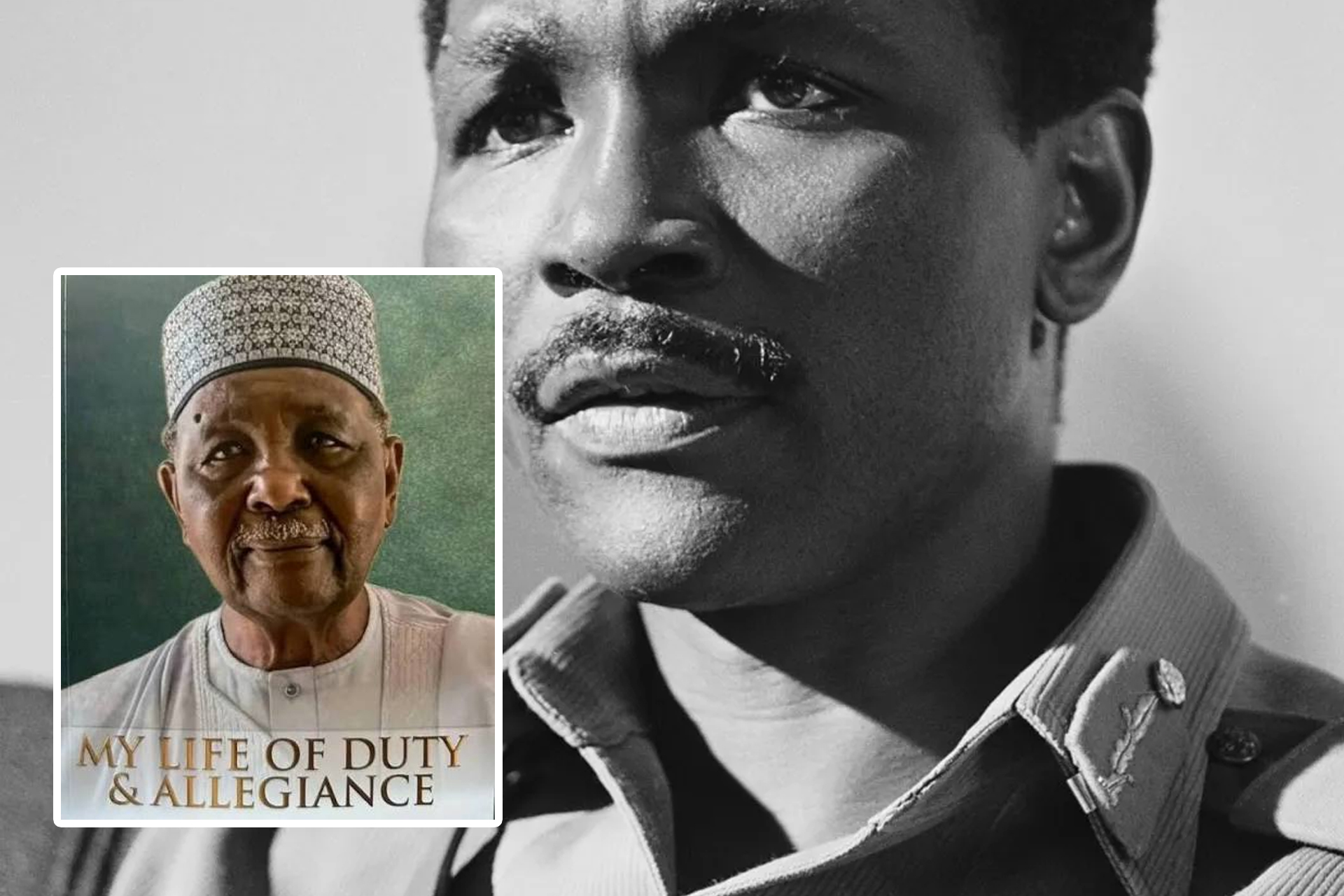
‘My Life of Duty and Allegiance’ —An Elder Statesman’s Version of the Truth
Published
7 days agoon
November 8, 2026
- Book Title: My Life of Duty and Allegiance
- Author: Yakubu Gowon
- Publishers: Continuity Books.
- Reviewer: Dr Emeaba O. Emeaba
- Pages: 881
When a military ruler who presided over a nation’s most catastrophic civil war waits until his tenth decade to publish his memoirs, the reader expects either a profound exercise in grand self-justification or an unburdening of the conscience. In My Life of Duty and Allegiance, General Yakubu Gowon—who assumed power in Nigeria in 1966 at the astonishingly raw age of 31—attempts to give us both. What emerges across 881 densely packed pages is a deeply complex, often moving, yet fundamentally contradictory document: the work of an elder statesman striving to polish his historical legacy, even as his own words repeatedly fracture the varnish.

Gowon’s narrative arc follows a classic post-independence path. Raised in Daura and Wusasa by Christian missionary parents, he traces his early life with an endearing warmth, detailing his rapid ascent through Sandhurst and the Royal Military Academy into the elite officer corps of a newly independent Nigeria. But the heart of the volume, inevitably, is the thirty-month Nigerian Civil War (1967–1970), born of the widespread anti-Igbo pogroms that drove a traumatized populace back to the Eastern Region, where secession was declared not out of mere political ambition, but as a desperate, last-stand effort to protect a people facing systemic annihilation—and the turbulent decade of military rule that surrounded it.
To his credit, Gowon writes with an understated dignity that sets his work apart from the bombastic memoirs typical of West Africa’s mid-century military junta leaders. He paints himself not as a tyrant, but as a reluctant servant of statehood—a devout Christian officer forced by tragedy and duty to hold a fracturing federation together at all costs. His reflections on the post-war reconciliation era, anchored by his famous post-conflict decree of “No victor, no vanquished,” radiate a genuine desire to present himself as a noble unifier.
Yet, for all its graceful prose and pious framing, the memoir’s historical value lies less in what it succeeds in proving than in where it visibly falters under critical scrutiny. For historians and careful readers alike, My Life of Duty and Allegiance contains profound textual and factual fractures—moments where the author’s defensive manoeuvring unwittingly conflicts with established records and even his own narrative logic.
Consider Gowon’s account of the chaotic July 29, 1966 counter-coup that brought him to power. Seeking to distance himself from the brutal assassination of his predecessor, General Aguiyi-Ironsi, Gowon writes of an impulsive attempt to save the Supreme Commander by phoning the Ikeja airport to order a rescue helicopter under “Major Paul Dickson.” It is a dramatic, noble story—except that military archives establish there was no officer by that name in the armed forces; the only Paul Dickson present was an Air Force staff sergeant tasked with sentry duty. More damaging still is the author’s silence regarding documented transcripts from that very afternoon, in which he authorized the arrest of Ironsi by rebellious officers, famously pausing before asking, “Can you do it?”
This habit of offering personal alibis in place of historical accountability recurs at key junctures. Addressing the collapse of the crucial January 1967 Aburi Accord in Ghana—the peace agreement that represented the last diplomatic exit ramp before full-scale war—Gowon attributes his acquiescence to a “shivering fever,” claiming he was too ill upon returning to Lagos to make sound decisions. Yet audio recordings of the conference reveal a lucid, composed negotiator. The subsequent dismantling of the accord via Decree No. 8 was not the by-product of malaria, but a calculated political retreat orchestrated under heavy pressure from senior federal bureaucrats and military advisers who feared a loss of centralized revenue and power.
Perhaps most unsettling is the book’s arithmetic of tragedy. In describing the devastating human toll of the civil war—where federal blockades and famine devastated the civilian population—Gowon routinely reduces the casualties to “thousands who perished.” To reduce a conflict in which an estimated one to two million Biafran non-combatants died of starvation and military action to a mere “thousand” is not simply an exercise in semantic gobbledygook; it is an attempt to rewrite the scale of a national catastrophe.
When the text turns to post-war governance, the contradictions deepen. Gowon presents his fiscal policies and the post-war “Three Rs” (Reconstruction, Rehabilitation, and Reconciliation) as gestures of generous magnanimity. Yet he glosses over the brutal reality of the federal policy that awarded a flat sum of just £20 to returning Easterners regardless of their prior bank balances, alongside the controversial Abandoned Properties Act. To reconcile such economic penalization with the high-minded rhetoric of “No victor, no vanquished” requires a degree of cognitive dissonance that the memoir simply cannot sustain.
Similarly, Gowon defends his 1974 decision to indefinitely postpone the transition to civilian rule—a betrayal of his own promises that directly prompted his overthrow in 1975—by citing the political unreadiness of the nation. It is the classic, self-serving paradox of the military autocrat: claiming the nation is too fragile for democracy after nearly a decade of absolute military control without constructing the very institutions necessary to support it.
The performative nature of the memoir’s publication was further underscored at its public launch in Abuja, where General Theophilus Danjuma—the key officer behind the July 1966 operation against Ironsi that vaulted Gowon to supreme power—served as the event’s primary benefactor, donating a staggering ₦3 billion to the project. For critics, the spectacle was less an act of literary patronage than a symbolic closing of ranks among the war’s chief beneficiaries. That a former career officer whose vast post-military fortune stems not from industrial enterprise, manufacturing, or commercial risk, but from lucrative state-awarded discretionary oil concessions, could single-handedly underwrite the celebration of the regime’s official story speaks volumes. It highlights a troubling continuation of the “spoils of war”—a political economy where the wealth and historical narrative of the state remain firmly concentrated in the hands of the very men who reshaped it by force.
My Life of Duty and Allegiance remains an indispensable primary source. It offers an intimate, highly readable window into the mind of a leader who stood at the absolute epicentre of modern Africa’s most traumatic conflict. But readers seeking a candid historical accounting will be disappointed. General Gowon has given us an evidence of faith, duty, and deliberate selective memory. In trying so painstakingly to defend his record, the aging commander has inadvertently provided the very evidence that destabilizes his official history.
_________
♦ Dr. Emeaba, the author of “A Dictionary of Literature,” writes dime novels in the style of the Onitsha Market Literature sub-genre.
Anthony Obi Ogbo
Can Nigerian Voters Replicate America’s Midterm Electoral Revolt?
Published
7 days agoon
November 8, 2026
“Nigeria does not merely need a voters’ revolt. It needs an electoral revolution.” —Dr. Anthony Obi Ogbo
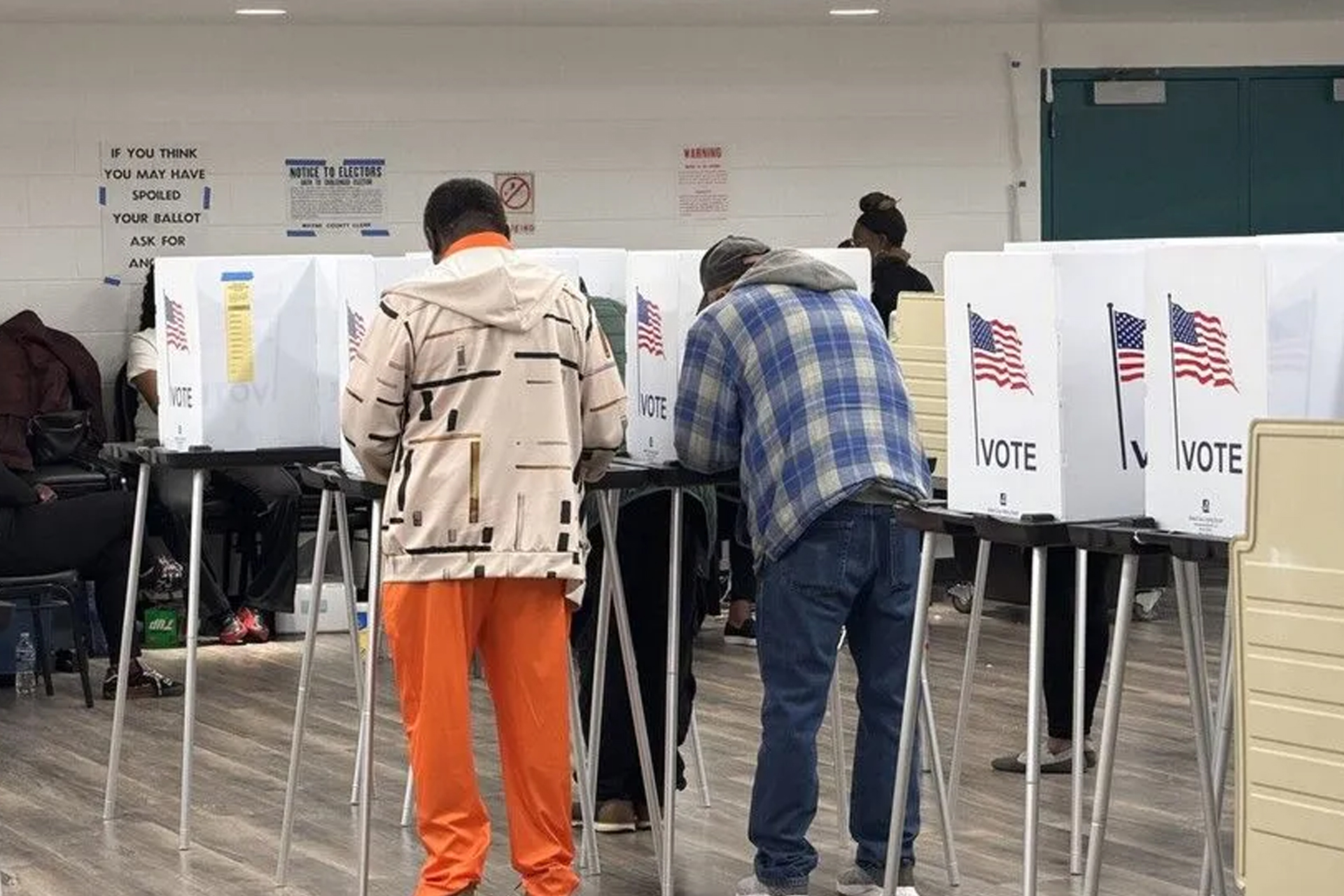
Over the past few days, I have been reflecting on America’s historic midterm elections and reading various analyses of the remarkable voter revolt against the political establishment. American voters demonstrated their willingness to punish political failure at the ballot box. But can Nigerians similarly defeat entrenched power when the very institutions entrusted with protecting their votes remain vulnerable to political interference?

America’s November 3 midterm elections delivered a devastating political verdict. Voters, frustrated by rising living costs, the Iran war, and growing dissatisfaction with President Donald Trump’s leadership, handed Democrats control of both chambers of Congress. Republican strongholds fell, political loyalties shifted, and voters demonstrated that incumbency is no insurance against public anger.
The message was unmistakable: when governance fails, the electorate can withdraw its mandate. But across Nigeria, the American revolt has inspired a provocative question: Can Nigerians replicate this electoral uprising in the 2027 presidential election?
The comparison is compelling, but the institutional realities are profoundly different.
Nigeria has no shortage of reasons for electoral rebellion. Economic hardship, persistent inflation, unemployment, deteriorating purchasing power, insecurity, and widespread distrust of government have created a deeply frustrated population. From kidnapping and rural banditry to failing infrastructure and declining public confidence, the country’s governance challenges demand serious political accountability.
Yet frustration alone does not remove a government. Elections do. And therein lies Nigeria’s democratic predicament.
In the United States, elections are administered through decentralized state and local institutions operating under federal and state laws. Election officials, courts, observers, and established legal procedures provide multiple layers of accountability. The system is imperfect, frequently litigated, and vulnerable to partisan disputes. Nevertheless, its decentralized structure makes nationwide electoral manipulation by a single executive authority considerably more difficult.
Nigeria operates differently. The Independent National Electoral Commission (INEC) is constitutionally established as an independent institution. However, its chairman and national commissioners are appointed by the president, subject to Senate confirmation. This arrangement creates legitimate concerns about institutional autonomy, particularly when the appointing authority belongs to a political party contesting the elections.
Nigeria’s electoral history reinforces these concerns. The controversial 2007 presidential election exposed serious weaknesses in electoral administration. In 2015, however, Nigerians demonstrated that incumbency could be defeated when Goodluck Jonathan lost to Muhammadu Buhari. That historic transition remains powerful evidence that peaceful electoral change is possible.
But the 2023 presidential election again exposed institutional distrust. Disputes over electronic result transmission, transparency, and electoral procedures eventually reached the Supreme Court, which upheld President Bola Tinubu’s victory.
Courts are constitutionally empowered to resolve election disputes. The problem is not judicial involvement itself, but the perception that electoral outcomes increasingly depend on litigation rather than the unquestioned credibility of votes cast.
When citizens begin to believe that ballots are merely preliminary documents awaiting judicial interpretation, democracy suffers a dangerous credibility crisis.
Equally troubling is the protection of votes. INEC administers federal elections, while the Nigeria Police Force and other security agencies provide electoral security. These institutions operate within a centralized federal framework, raising concerns about executive influence over personnel, deployment, and operational independence.
How, then, can Nigerians stage an American-style electoral revolt when the institutions protecting their votes are themselves subjects of public suspicion? The answer requires more than opposition slogans, social media outrage, or massive political rallies.
First, Nigeria must constitutionally reform INEC’s appointment process. An independent, multipartisan selection mechanism, transparent public hearings, protected tenure, and guaranteed funding would reduce executive influence and strengthen electoral credibility.
Second, judicial independence must become nonnegotiable. Transparent appointments, financial autonomy, enforceable ethical standards, and expedited election petitions are essential. Courts must remain impartial arbiters, not become perceived substitutes for the electorate.
Third, electronic transmission and public verification of polling-unit results must become legally enforceable safeguards, supported by independent audits and meaningful penalties for manipulation.
Fourth, election security must be operationally insulated from partisan directives. Electoral offenses, including intimidation, ballot destruction, and result falsification, must attract swift and credible prosecution.
Voters must organize beyond ethnic loyalty
Finally, voters must organize beyond ethnic loyalty, religious sentiment, and online activism. They must register, mobilize, monitor polling units, document irregularities, and protect their electoral mandate through lawful civic participation. The ultimate tragedy of Nigerian democracy is not that citizens lack the courage to reject failed leadership. It is that they cannot consistently trust the machinery entrusted with translating their rejection into political change.
America’s midterms demonstrated the power of electoral accountability. Nigeria’s 2027 elections must confront a more fundamental question: whether the ballot remains stronger than the political establishment.
A democracy becomes a dangerous deception when citizens are permitted to vote but cannot confidently determine who wins. Nigeria does not merely need a voters’ revolt. It needs an electoral revolution in which institutions become stronger than incumbents, ballots become stronger than political influence, and the people’s verdict becomes stronger than the machinery of power.
♦ Publisher of the Guardian News, Professor Anthony Obi Ogbo, Ph.D., is on the Editorial Board of the West African Pilot News. He is the author of the Influence of Leadership (2015) and the Maxims of Political Leadership (2019). Contact: anthony@guardiannews.us
Education
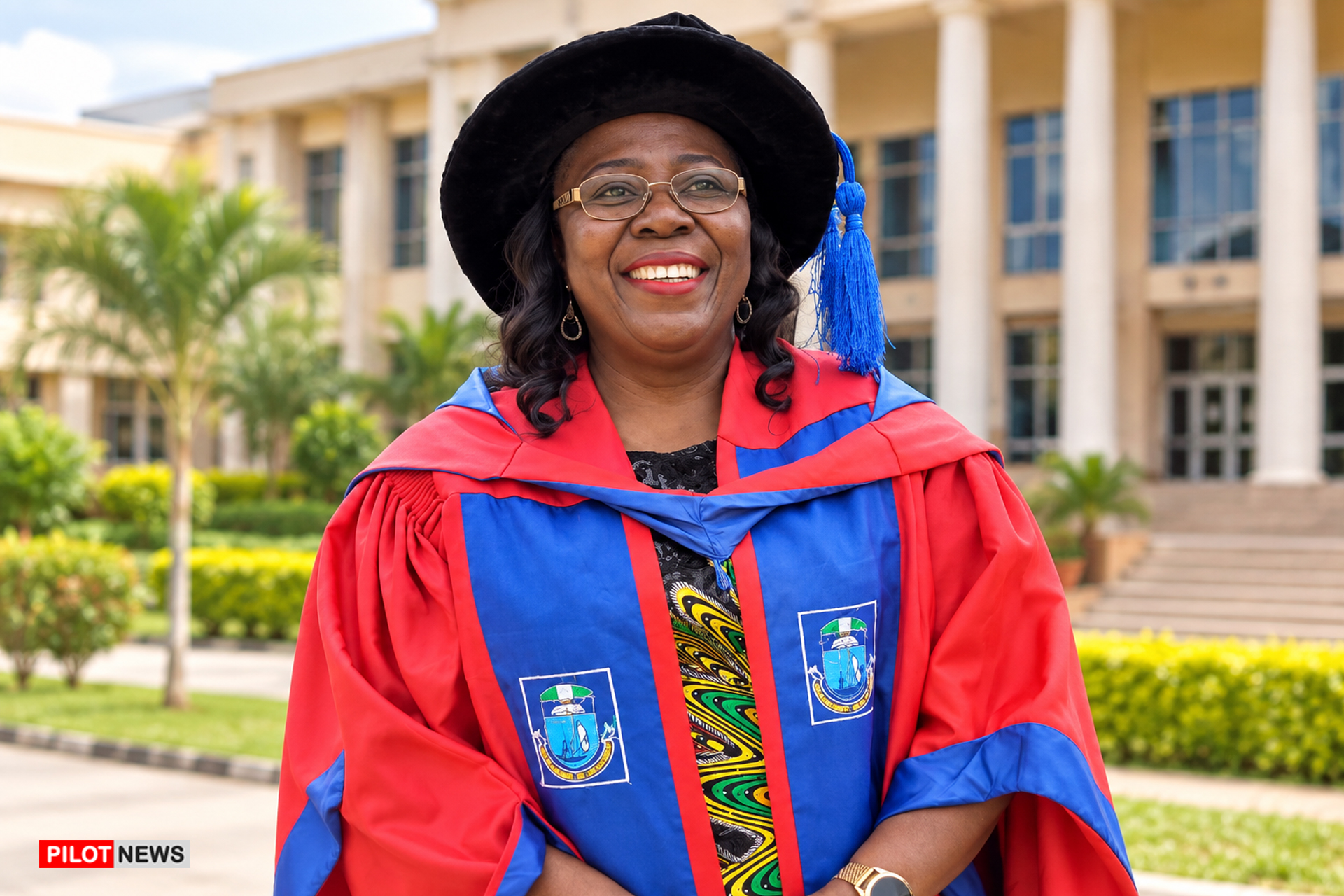
Professor Josephine Onyido Earns Prestigious Nigerian Academy of Education Induction
Published
2 months agoon
September 26, 2026By
Anthony Ogbo
University of Port Harcourt scholar will be inducted into Nigeria’s apex education academy in Abuja, marking another milestone in a career spanning teaching, research, leadership, mentorship and advocacy
HOUSTON, TEXAS — Professor Josephine Azuka Onyido, an accomplished scholar and academic leader at the University of Port Harcourt, will be inducted into the Nigerian Academy of Education on Wednesday, November 4, 2026, in recognition of her contributions to the advancement of education.
The ceremony, scheduled for the Conference Hall of the National Commission for Colleges of Education in Abuja, places Onyido among scholars recognized for sustained contributions to education, research, and academic development in Nigeria.
A Professor in the Department of Educational Foundations at the University of Port Harcourt, Onyido has built a career encompassing teaching, research, administration, mentorship, curriculum development, and institutional service.
She described the forthcoming recognition as both an honor and a renewed obligation to education. “I receive this recognition with profound gratitude and humility. My journey in education has always been driven by the belief that scholarship must extend beyond the classroom and contribute meaningfully to society. This induction is not simply a personal achievement; it strengthens my responsibility to continue advancing quality education, mentoring future scholars, and promoting opportunities for women and girls. I am deeply grateful to my family, colleagues, students, and everyone who has been part of this journey.”
Onyido earned a Bachelor of Arts in Education (English), a Master of Education, and a Ph.D. in Sociology of Education. She is also a permanent member of the University of Port Harcourt Senate. Her scholarly record includes more than 90 journal articles, book chapters and Sociology of Education Made Easy, a textbook developed to make concepts in the discipline more accessible to students.
Much of her research examines the intersection of education and society, with particular emphasis on gender, women’s empowerment, educational development, social justice and the rights of women and girls. Her work advocates translating academic research into policies and practices that expand educational opportunities and strengthen human-capital development.
Beyond research, Onyido has occupied several academic leadership positions. She served as Acting Head of the Department of Educational Foundations from 2021 to 2023 and has worked as the Departmental Coordinator of Postgraduate Programs, the Anti-Plagiarism Coordinator, the Academic Adviser, and the Editor of the Port Harcourt Journal of Education Studies.
Her influence also extends beyond her university. She has served as an external examiner for several institutions and has participated as a resource person for the National Teachers’ Institute, the University of Port Harcourt, the Centers for Higher Education and Sandwich Programs, and the National Universities Commission verification exercise.
Internationally, Onyido represented the Niger Delta Development Commission at the African Women in Leadership Conference in Kigali, Rwanda, expanding her engagement with issues of women’s leadership, empowerment, and social transformation.
She belongs to several professional organizations, including the Teachers Registration Council of Nigeria, the Association of Sociologists of Education of Nigeria, and the International Association for Gender Equity.
Her academic and community work have earned numerous recognitions, including the Millennium Development Ambassador Award, Lecturer of the Year, Outstanding Project Supervisor, and Professional Service awards.
Yet Onyido’s story also reaches deeply into heritage and service. She is the great-great-granddaughter of King Josiah Constance Ockiya, MINGI VII, Amanyanabo of Nembe Kingdom and Supreme King of Brass. Her great-grandfather, Rev. Daniel Ockiya, translated the Bible into the Nembe language.
A committed Catholic and Jerusalem pilgrim, she has also served in church and community leadership positions and was recognized by the Catholic Women Organization of the Port Harcourt Diocese as a “Quintessential Woman.”
For Onyido, the November 4 induction represents more than another distinction on an extensive academic résumé. It recognizes a career built around an enduring principle: education achieves its greatest value when knowledge is transformed into opportunity, service, and social progress.
‘My Life of Duty and Allegiance’ —An Elder Statesman’s Version of the Truth
Can Nigerian Voters Replicate America’s Midterm Electoral Revolt?
Fifty and Fabulous: Chief Oby Marcel Celebrates a Golden Milestone in Houston
Emotional Conflict: Is She Toying with Me?
Corruption at the Nigerian Consulate Atlanta – A Victim’s Nightmarish Experience
Gowon’s Book and the Dangerous Politics of Selective Memory
Video: Omambala Cultural Association in Houston Celebrates Motherhood with Joyous Igbo-Inspired Mother’s Day Event
VIDEO: Chris Hollins Opens Cartoon Art Showcase at TSU’s CommWeek