

Anthony Obi Ogbo
The HISD Nightmare – Superintendent Mike Miles Must Go

“Initially brought in to facilitate a solution, Miles is now seen as the problem“ —Anthony Ogbo
________________________
Since assuming the role of Superintendent of the Houston Independent School District in June of 2023, Mike Miles has consistently been making headlines, albeit for all the wrong reasons. Despite his responsibilities in organizing, leading, directing, policy-making, and execution, Miles has failed to pass every test required to excel in his position. Month after month, he finds himself under fire, with the latest allegations accusing him of misusing Texas public school funding. An investigation by Spectrum News revealed that Miles allegedly funneled public school funds from the state to a Colorado Charter School. This scandal comes at a time when the district is facing a projected $450 million budget shortfall, leading to proposed position cuts, including teacher layoffs and benefit reductions.

In response to the accusations, Superintendent Miles defended his actions, claiming that such financial arrangements are common between charter schools and their management organizations. The Texas Education Agency (TEA) has initiated a review of the matter. Meanwhile, State Democrat Ana Hernandez has called for Miles to be removed from his position and for a thorough investigation to be conducted.
The challenges facing Miles go beyond the current scandal, as he struggles to lead the largest school district in Texas and the eighth-largest in the United States. Teachers are feeling distressed and uncertain about their roles, parents are worried about their children’s future, and students are losing interest in their education. The situation at HISD is dire, and it is clear that a change in leadership may be necessary to restore trust and stability within the district.
Just last week, displeasure among parents worsened as some pushed back against layoffs while others protested recent budget cuts. Despite the opposition, Superintendent Miles remained steadfast in his proposal to lay off employees, although he did not disclose the exact number of individuals who would be affected. The board had previously approved a comprehensive list of positions, spanning nearly 20 pages, that were at risk of layoffs, including teachers, principals, and custodians. HISD leaders emphasized that the teacher cuts were based on performance rather than budget constraints.
Miles acknowledged that he was unable to provide specific figures regarding the number of teachers or principals facing job loss, but assured that this information would be available in the coming weeks. Several teachers reportedly received notices to attend a Zoom call to discuss their future employment with the district, although the purpose of this call was not clear.
The contentious relationship between Miles and the HISD community seemingly began when he assumed his position. In July 2023, just a month after taking office, Miles disclosed during a virtual forum that the district’s central office was reducing its staffing levels by over 2,300 positions. This reduction included the elimination of 1,675 vacant positions and the layoff of 672 employees. Miles attributed this decision to the central office’s excessive growth over the past decade, despite a significant decrease in student enrollment by 27,000 students.
In August 2023, The Houston Federation of Teachers filed a lawsuit against Miles and the board, accusing them of violating Texas Education Code requirements in the development of teacher evaluations. The teacher’s union alleged that Miles had created an illegal evaluation system without input from teachers and other stakeholders. The lawsuit was later dropped after the board of managers decided to use the state’s appraisal system for teachers instead of Miles’ system.
One of the key issues with Miles is his failure to thoroughly analyze the HISD operational environment before proposing his solutions. This lack of understanding often results in his recommendations being disconnected from the reality of the situation. Without a comprehensive assessment of the unique challenges and intricacies within the district, his strategies failed to effectively address the underlying issues and even led to unintended consequences. Indeed, Miles did not take the time to gain a deep understanding of the complexities of HISD before implementing his changes.
In any school district, the primary stakeholders are the teachers, students, and parents. However, it is crucial to acknowledge that other stakeholders also play a vital role in the success of schools. These include administrators, support staff, community members, and local businesses. Each of these groups brings unique perspectives and resources to the table, all of which contribute to creating a positive learning environment for students. By fostering collaboration and valuing the input of all stakeholders, school districts can enhance their ability to meet the diverse needs of students and support them in achieving academic success. This approach stands in stark contrast to the leadership perspectives held by Miles, which do not prioritize such inclusive and cooperative practices.
Initially brought in to facilitate a solution, Miles is now seen as the problem. He was thought to be the key to resolving the issue at hand, given his expertise and experience, making him the obvious choice to lead the team. However, as time passed, it became evident that Miles was hindering progress rather than aiding it. His stubbornness, lack of communication, and unwillingness to consider alternative perspectives were causing tension within the group and impeding any real solutions from being reached. It was increasingly clear that Miles himself was the primary obstacle standing in the way of a resolution.
HISD would need to address this issue with TEA if they are ever going to move forward and achieve their goals. Removing Miles from his position would allow for a fresh start and a more collaborative approach to problem-solving, ultimately benefiting the students, teachers, and community as a whole. It is time for HISD to move forward without Miles at the helm.
♦Publisher of the Guardian News, Journalism and RTF Professor, Dr. Anthony Obi Ogbo, is on the Editorial Board of the West African Pilot News. He is the author of the Influence of Leadership (2015) and the Maxims of Political Leadership (2019). Contact: anthony@guardiannews.us



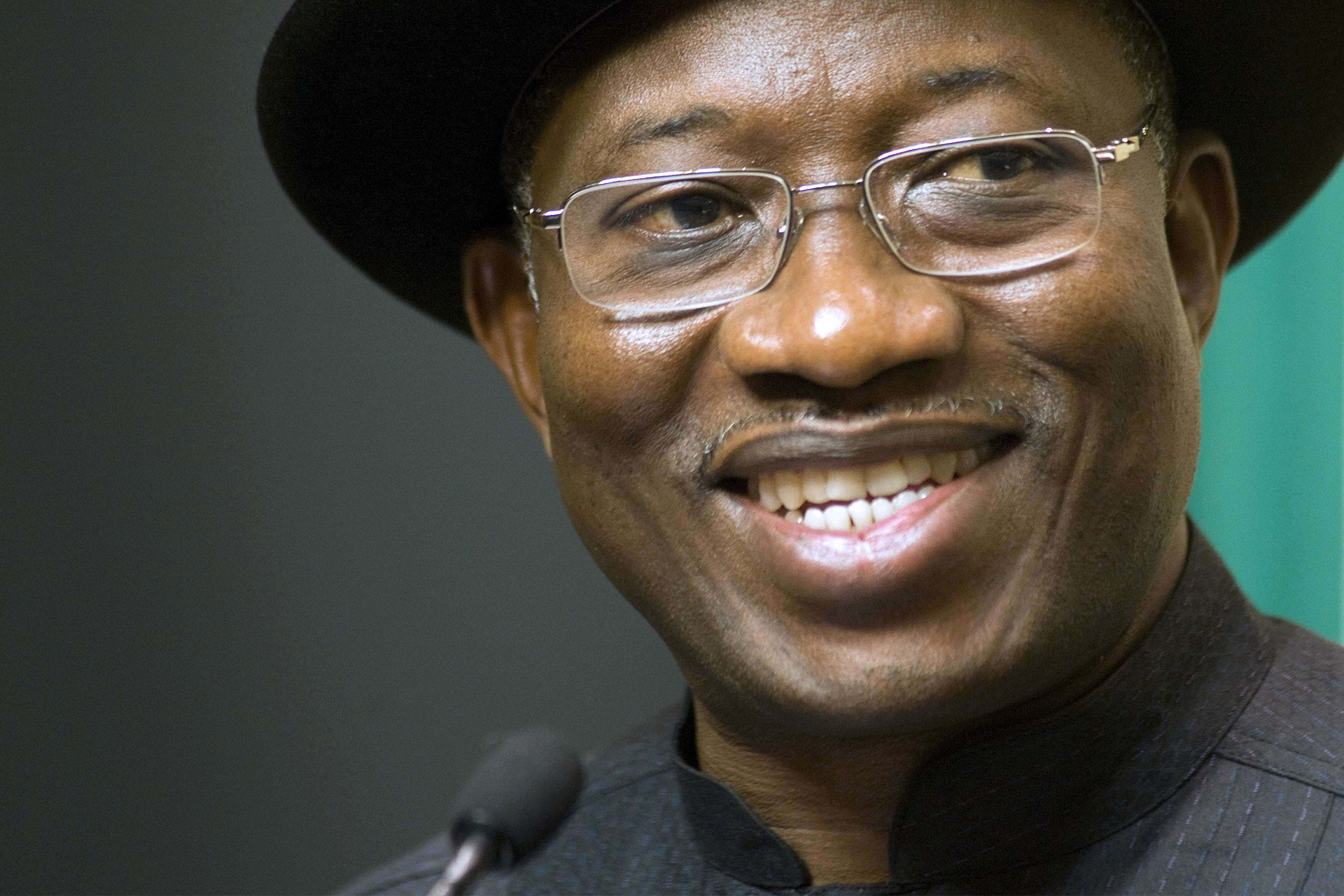
“Jonathan’s calculated and weaponized ambiguity breeds deception and weakens emerging political alliances.” —Dr. Anthony Obi Ogbo
Former Nigerian President Goodluck Jonathan has once again found himself at the center of presidential speculation, floating silently above the country’s political waters while supporters aggressively market him as a possible candidate ahead of another critical election cycle. And once again, Jonathan is doing what he has mastered throughout his political career: saying nothing clearly while allowing political confusion to grow around him.

This pattern is not new. It is the same indecisive political behavior that defined some of the most consequential moments of his rise and fall. Jonathan became president in 2010 following the death of President Umaru Musa Yar’Adua. At the time, many northern political stakeholders within the then-ruling PDP believed there was an informal understanding that Jonathan would complete Yar’Adua’s term but not seek another full term in 2011, thereby preserving the party’s zoning arrangement between North and South. Instead of taking a clear and immediate position, Jonathan spent months dribbling the nation politically. He neither fully denied nor openly confirmed his intentions until the political tension had already escalated nationwide.
By the time he eventually declared his candidacy, the damage had been done. Many northern allies who initially supported him felt betrayed, politically cornered, or deceived. The PDP fractured internally, regional distrust deepened, and Jonathan’s relationship with major northern power blocs deteriorated permanently. Though he won the 2011 election, the cracks created by that indecision followed him into 2015, contributing significantly to the coalition that eventually removed him from power.
Yet Jonathan learned little from that experience. Since losing reelection in 2015, his name has repeatedly surfaced during every major electoral cycle as a potential presidential contender. Each time, his supporters strategically floated his candidacy across media platforms and political circles. Each time, Jonathan refused to decisively shut the door. Silence became his political instrument, whereas ambiguity became his strategy.
Now the country is witnessing the same playbook again. As coalition politics intensify and opposition forces attempt to consolidate around alternative political movements, Jonathan’s name has resurfaced aggressively. Reports and speculations about his presidential ambition continue to dominate political discussions, especially within camps seeking to disrupt the growing momentum surrounding Peter Obi and emerging opposition realignments.
The troubling part is not merely that Jonathan’s supporters are campaigning. The troubling part is that Jonathan fully understands the implications of his silence. He knows that his political stature carries enough weight to destabilize fragile coalition negotiations. He knows his name alone can divide campaign structures, weaken consensus-building, and inject uncertainty into opposition calculations. Yet he refuses to publicly and definitively state where he stands.
That is not statesmanship. That is calculated political ambiguity. Jonathan’s political history is filled with similarly contradictory choices. After losing power in 2015, he received widespread praise for conceding defeat peacefully. He initially framed that decision as a sacrifice made to preserve Nigerian lives and prevent violence. Later, however, different narratives emerged suggesting international pressure, particularly from the United States under President Obama. The shifting explanations weakened what could have remained one of his strongest democratic legacies.
Then came another contradiction. Despite emerging politically from the PDP, Jonathan gradually aligned himself closely with the administration of former President Muhammadu Buhari, serving in diplomatic and goodwill capacities that many PDP loyalists considered politically inappropriate. This unusual closeness fueled longstanding allegations that elements within the APC establishment viewed Jonathan as a useful political instrument capable of destabilizing opposition coalitions from within. Whether those allegations are true or not, Jonathan’s conduct has consistently created room for suspicion.
His political base remains uncertain. His campaign structure is invisible.
Today, his undeclared ambition is already generating confusion among supporters, coalition organizers, and opposition strategists. His political base remains uncertain. His campaign structure is invisible. His intentions are unclear. Yet his loyalists continue mobilizing aggressively in his name while he watches silently from the shadows.
Nigeria is too politically fragile for this kind of elite gamesmanship. At critical national moments, leadership demands clarity, courage, and accountability. Jonathan cannot continue operating as a permanent “maybe” in Nigeria’s political future, thoughtlessly hovering around every election season like an unanswered question designed to manipulate negotiations and weaken emerging alliances.
At this time, Jonathan should sit in or sit out! If he wants to run, he should declare openly, defend his record, and face the democratic process directly. If he does not intend to run, he should immediately and publicly withdraw his name from the political marketplace. Anything short of that increasingly looks less like political strategy and more like calculated deception. Nigeria deserves leaders who make difficult choices openly—not politicians who weaponize silence while others gamble with national uncertainty in their name.
♦ Publisher of the Guardian News, Professor Anthony Obi Ogbo, Ph.D., is on the Editorial Board of the West African Pilot News. He is the author of the Influence of Leadership (2015) and the Maxims of Political Leadership (2019). Contact: anthony@guardiannews.us
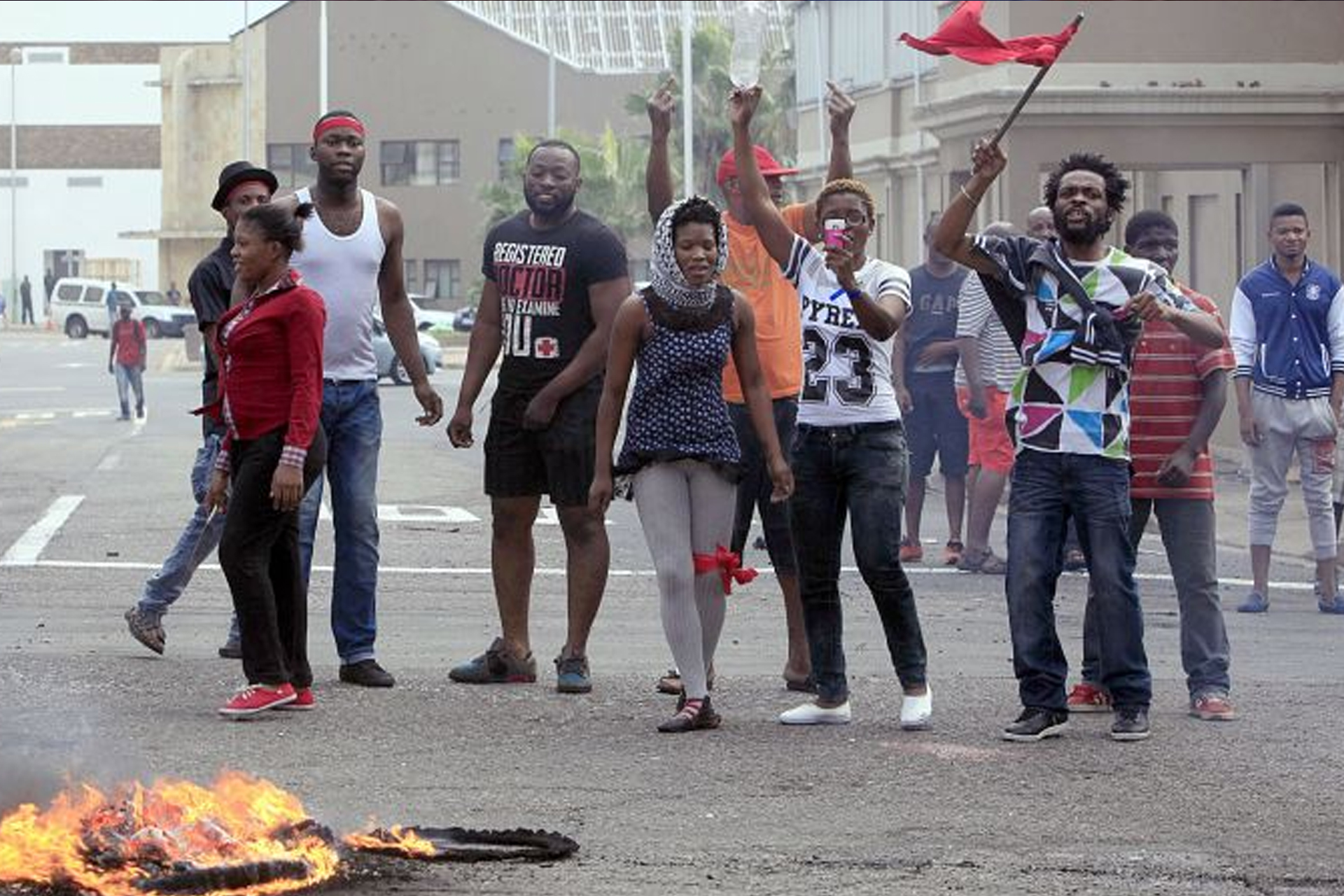
Nigeria’s Forgotten Sacrifice and the Tragedy of Xenophobia in South Africa
As George Santayana famously warned, “Those who cannot remember the past are condemned to repeat it.” The unfolding xenophobic tensions in South Africa reflect more than economic strain; they reveal a deeper crisis of memory and meaning. When history fades, gratitude dissolves, and fear replaces solidarity. The violence directed at fellow Africans is not merely social unrest; it is a philosophical failure to reconcile past sacrifice with present identity, reminding us that nations, like individuals, must remember to remain whole.
.
I recall that when I was in college in Nigeria, all Southern African students, present in substantial numbers, were on full federal government scholarships and received an additional income called a bursary. They lived better than many Nigerians; some even drove cars. Many adopted Nigerian names, assimilated seamlessly, and secured opportunities with ease, while Nigerian graduates faced rising unemployment. It was a quiet but powerful demonstration of solidarity, Nigeria investing in the future of a region still shackled by apartheid.
Today, that history feels almost erased.
For years now, waves of xenophobic attacks in South Africa, often targeting Nigerians, and more recently Ghanaians and other African nationals, have revealed a troubling pattern: violence fueled by economic frustration, misinformation, and historical amnesia. Shops are looted, homes burned, and lives disrupted under the recurring claim that “foreigners are taking jobs.” Yet this narrative collapses under even the most basic scrutiny of history.
Nigeria was not a bystander in South Africa’s liberation; it was a central force.
Under the military leadership of Olusegun Obasanjo, Nigeria became the first country in history to boycott the Commonwealth Games in protest against apartheid. That decision was not symbolic; it was costly, bold, and globally consequential. Obasanjo went further, advocating a continental defense posture and proposing what he termed a “Black bomb,” a radical idea reflecting the urgency of protecting African sovereignty against external aggression.
Nigeria’s commitment extended beyond rhetoric. During the Ibrahim Babangida regime, South Africa sought to exert strategic influence in Equatorial Guinea, offering infrastructure support before the discovery of oil. Nigeria recognized the geopolitical implications and decisively intervened, severing ties and offering its own support. The situation escalated to the point where Equatorial Guinea petitioned Nigeria at the United Nations for intervention. Nigeria did not retreat. This was not interference; it was protection. It was foresight. It was leadership.
Nigeria funded liberation movements, provided education, opened its economy, and bore economic sacrifices, including the nationalization of British Petroleum assets, to pressure the apartheid regime. These were not acts of charity; they were acts of conviction rooted in a vision of a free and united Africa.
And yet, decades later, Nigerians are hunted in the very land their country helped liberate.
The tragedy of xenophobia in South Africa is not merely about violence—it is about the collapse of historical consciousness. A generation disconnected from its past becomes vulnerable to manipulation, scapegoating, and misplaced anger. Economic hardship is real, but it does not justify the erasure of truth or the targeting of fellow Africans.
If history were remembered accurately, perhaps the conversation would be different. Perhaps the anger would be redirected toward structural inequalities rather than neighboring nationals. Perhaps the bonds of Pan-African solidarity would still hold.
But memory has faded, and in its absence, resentment has grown. Africa cannot afford selective memory. Nations that forget who stood with them in their darkest hours risk losing their moral compass in moments of crisis. Nigeria’s role in the liberation of South Africa is not a footnote—it is a foundation. To ignore it is to misunderstand both the past and the present.
Equally troubling is the persistent failure of successive South African governments to decisively confront and eradicate xenophobic violence. Such inaction, whether intentional or not, signals a dangerous tolerance, if not tacit endorsement, of these attacks, allowing them to recur with impunity. If brotherhood is to mean anything, it must be anchored in truth and reinforced by responsible leadership. And if Africa is to move forward, it must first remember and act.
♦ Publisher of the Guardian News, Professor Anthony Obi Ogbo, Ph.D., is on the Editorial Board of the West African Pilot News. He is the author of the Influence of Leadership (2015) and the Maxims of Political Leadership (2019). Contact: anthony@guardiannews.us
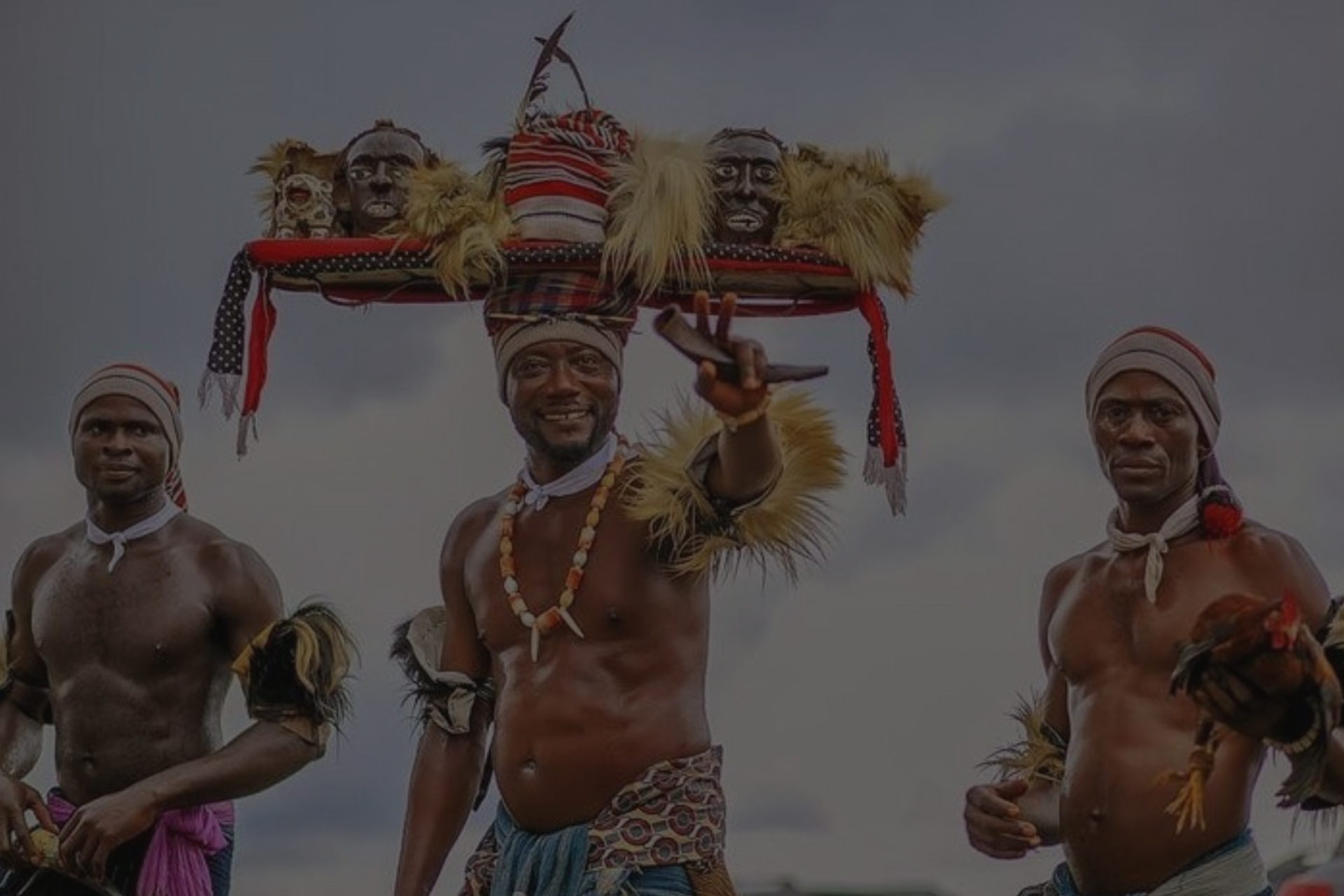
The cost of this misalignment extends beyond politics and erodes the strength and perception of the Igbo brand itself — Dr. Anthony Ogbo
Few ethnic groups in the modern world embody resilience, adaptability, and entrepreneurial drive like the Igbo of southeastern Nigeria. Forged by history, particularly the trauma and aftermath of the Nigerian Civil War, the Igbo spirit has evolved into a global force defined by education, commerce, and labor. Across Africa, Europe, Asia, and the Americas, Igbo professionals, traders, academics, and innovators have exerted disproportionate influence. Their philosophy of self-determination, “Igbo enwe eze” (the Igbo have no king), has fostered a decentralized, merit-driven culture that rewards initiative and hard work.
In many respects, this dynamism mirrors that of the Jewish people. Like the Jews, the Igbo have leveraged education as a primary tool of advancement, often placing extraordinary value on academic achievement as a pathway to mobility. In commerce, both groups demonstrate remarkable networking capabilities, building trust-based systems that transcend geography. In labor, their willingness to start from the margins and climb through persistence is widely documented. These parallels are not superficial; they point to a shared cultural DNA rooted in survival, adaptability, and intellectual capital.
Yet this comparison begins to diverge in political cohesion and strategic alignment.
While Jewish communities globally have often demonstrated coordinated political engagement, aligning interests, influencing policy, and maintaining a unified voice, the Igbo have struggled to translate their economic and intellectual strength into sustained political power within Nigeria. This gap has had significant consequences, affecting not only their representation but also their broader cultural and national standing.
A critical example is their overwhelming support for Goodluck Jonathan in the 2011 and 2015 elections. While politically understandable at the time, this near-unanimous alignment left the Igbo politically exposed following his defeat in 2015. In the aftermath, many Igbo communities perceived a decline in federal inclusion and influence, reinforcing a sense of marginalization in Nigeria’s power structure.
This pattern appeared to repeat, albeit in a different form, with the passionate and often uncompromising support for Peter Obi in the 2023 elections. Obi’s candidacy energized millions, particularly among youth and the diaspora, and represented a shift toward issue-based politics. However, the “all-or-nothing” posture adopted by segments of his support base, both online and offline, arguably alienated potential allies across Nigeria’s diverse political landscape. What could have evolved into a broad coalition instead deepened ethnic and regional fault lines, weakening the strategic positioning of the Igbo in national politics.
Beyond electoral choices, the Igbo political challenge is also structural. The absence of a unified political leadership or central coordinating body has made it difficult to articulate and pursue long-term collective interests. Internal divisions, elite fragmentation, and the rise of competing advocacy voices, some constructive, others reactionary, have further complicated alignment. Additionally, separatist agitations, while rooted in legitimate grievances, have sometimes overshadowed pragmatic engagement with Nigeria’s political institutions, limiting opportunities for negotiation and influence.
The cost of this misalignment is not merely political; it touches the Igbo brand itself. A people known globally for enterprise and intellect risk being perceived domestically through a narrower lens of political disunity or agitation. This perception, whether fair or not, has implications for investment, partnerships, and national integration.
The way forward requires a recalibration, one that does not dilute Igbo identity but strengthens its strategic expression. First, there must be a deliberate effort to build political coalitions beyond ethnic lines. Nigeria’s complexity demands alliances; no single group can achieve national power in isolation. Second, Igbo leaders across business, academia, and civil society must converge on a shared political agenda that prioritizes inclusion, infrastructure, security, and economic development for the region within the Nigerian framework.
Third, political engagement must shift from emotional mobilization to strategic negotiation. This includes cultivating influence within major political parties, supporting diverse candidates across regions, and investing in long-term policy advocacy rather than election-cycle enthusiasm. Finally, the Igbo diaspora, arguably one of the most powerful in Africa, should be more intentionally integrated into political strategy, leveraging its global networks for both advocacy and investment.
Igbo dynamism remains undeniable. The challenge is not capacity, but coordination. If the same ingenuity that built global commercial networks can be applied to political alignment, the Igbo will not only preserve their cultural and economic stature but also secure a more decisive role in shaping Nigeria’s future.
______
♦ Publisher of the Guardian News, Professor Anthony Obi Ogbo, Ph.D., is with the School of Communication, Texas Southern University. Dr. Ogbo is on the Editorial Board of the West African Pilot News. He is also the author of the Influence of Leadership (2015) and the Maxims of Political Leadership (2019). Contact: anthony@guardiannews.us
-

 Houston4 weeks ago
Sugar Land People’s Club Welcomes a New Generation Into a Legacy of Unity, Love and Service
-

 Houston2 weeks ago
Houston Ready as People’s Club National President Arrives for Historic Sugar Land Branch Induction
-

 Houston1 week ago
People’s Club Sugar Land Celebrates Landmark Induction of 16 New Members