Connect with us

Nigeria

The 2023 Presidential Election: Reflections on ‘Igbo Unity’

Published

on

“Opposition against the political ambition of individuals is guided by political interests, not by ethnic identity” ―Ebuka Onyekwelu

The concept of ‘Igbo unity’ seems to interest all Nigerians of all ethnic nationalities, particularly as it concerns national politics. Discussions on Igbo unity arise only in relation to national politics, especially when the presidential election is around the corner. But also when there is an argument on the propriety of ‘allowing’ an Igbo man to become president. Whatever this Igbo unity means, fascinatingly, it is only relevant for x-raying why an Igbo man is yet to become President of Nigeria since the end of the civil war.

In most recent memory, that is between 1999 and now, no Igbo man has yet to become Nigeria’s president, while the other two major groups and President Jonathan from the minority South-South geo-political zone have governed the country. Having this conversation, most Nigerians tend to agree that the reason is that Igbos are not united politically. For so many years, this narrative about Igbo political disunity has been told over and over, mostly unchallenged to the point that it has been mainstreamed without questions. While it is unclear what exactly many Nigerians mean by Igbo unity in national politics, or Igbo unity within the context of pursuit of national political ambition, the usual line of argument however, is suggestive of singleness of political aspiration and pursuit of a political agenda through a single strategy or through an individual. But the shocking reality is that Igbo people might be the only people group in the world who are expected or indeed, tasked to belong to the same political party or have a consensus candidate for presidential elections. Perhaps adopt an ‘Igbo candidate’ before party primaries, an ideal case of putting one’s cart before the horse.

The argument also bends towards having a one-party system, and without a doubt admonishes Igbo people to become intolerant and hostile towards the individual ambitions of their people. This is not all as the notion of Igbo unity in politics could be extended to accommodate whatever the propagators of this skewed concept mean.  The fact nonetheless, is that this is not the standard through which other ethnic nationalities are viewed in Nigeria by most Nigerians. Then also politics does not thrive on unity because in and of itself, politics is divisive. So there is no such thing as speaking with one political voice or acting in one political direction for people that belong to different political parties or for those in the same party but have different political interests.

Gen. Mohammadu Buhari contested against former President Musa Yar’Adua, both were candidates of the two major political parties, yet, it is not ‘Northern disunity’.

It gives great pleasure to observers and peddlers of this spurious narration on Igbo political disunity to point out just how political disagreement between Orji Uzor Kalu and Theodor Orji is a pointer to political disunity which negates Igbo people’s national aspiration. They allude to the disagreement between Peter Obi and Willie Obiano as a case of political disunity, that hinders the chances of Igbos in the national political contest. But when it gets to other regions, it is different. Gen. Mohammadu Buhari contested against former President Musa Yar’Adua, both were candidates of the two major political parties, yet, it is not ‘Northern disunity’. When Tinubu opposed former President Olusegun Obasanjo and both were locked in a long battle for the soul of Southwest politics, nobody called it ‘Yoruba disunity’. The Minister of Transport Rotimi Amaechi joined the opposition and fought former President Goodluck Jonathan and no one called it ‘South-South disunity or ‘Ijaw-Ikwere disunity’. In fact, Timi Sylva, President Goodluck’s own brother also joined forces with opposition and it is not ‘Ijaw disunity.’ Rotimi Amaechi fought Nyesom Wike to a telling point to stop him from returning to Rivers State Government House, but no one called it ‘Ikwere disunity’. However, Rochas Okorocha and Hope Uzodimma’s disagreement is a classical case of Igbo disunity in politics, which hampers the chances of Ndi Igbo in taking a shot at Nigeria’s Presidency.

In 2019, simply because Peter Obi was made Atiku Abubakar’s running mate, the Southeast gave Atiku remarkable support, but perhaps, because his nomination was questioned by two or three members of Southeast PDP; that is another case of Igbo disunity in politics. But even Tambuwal contested against Atiku in that same primary election and yet, it is not characterised as ‘Hausa or Fulani political disunity.’ Godswill Akpabio fought Emmanuel Udom with everything he has to stop him from being reelected as governor of Akwa Ibom State, despite fighting to make him governor in the previous election cycle. But this is not suggestive of any ethnic or people group disunity in politics. In Edo State, we are all witnesses to how Adams Oshiomole was cut to size by Godwin Obaseki whom he campaigned earlier to succeed him as governor of Edo State. The fight was the most remarkable in recent political memory. Yet, none of these emergency specialists on Igbo politics called that ‘Edo disunity’.

It is obvious that disagreements are part of politics. Opposition against the political ambition of individuals is guided by political interests, not by ethnic identity. No matter how advocates of Igbo disunity in politics may wish to present that false impression, evidence from across the country and elsewhere points to the fact that people are at liberty to pursue their political ambitions that is independent of their ethnic nationality and that politics is inherently divisive which naturally attracts opposition or support, either of which is determined by interests.

While others are expected to belong to different political parties, Igbos are expected to belong to a single political front and present a single political façade.

It is indeed disingenuous to talk of political unity, worst still when the standard for measuring such political unity applies only to Igbos. What is mere political disagreement for other ethnic nationalities in Nigeria is interpreted as disunity for the Igbos. While others are expected to belong to different political parties, Igbos are expected to belong to a single political front and present a single political façade. Meanwhile, former President Olusegun Obasanjo and Chief Falae can belong to the two major political parties and become their presidential candidates and it is not a sign of Yoruba political disunity, just as Former President Musa Yar Adua and President Mohammadu Buhari can become candidates of the two major political parties and it is not a case of Fulani political disunity.

Now, without the PDP or APC having picked a candidate for the 2023 presidential contest, people talk of the number of Igbos already expressing interest to contest the presidential election. Even though President Buhari contested the 2015 APC primary with Rabiu Kwankwaso and Atiku Abubakar, just as Atiku did in PDP with Bafarwa, Dankwambo, Kwankwaso, Lamido, Makarfi, Saraki, Tambuwal, in 2019. But it is now a sign of disunity for Orji Uzor Kalu to contest against David Umahi in APC or Anyim Pius to contest against Ohuawumba in PDP. Those who want to test Igbo unity should test it by giving Igbo man presidential ticket in the two major political parties or forming a formidable third force and then granting Prof. Kingsley Moghalu the presidential ticket of the third force. That is how to test the resolve of the Igbo to see if they are politically united, not offering baseless advice on how Igbos should put their political eggs in a single basket. Nobody does that!

In 2023, Igbo people will support one of their own who will emerge from a formidable political platform that stands a chance in the election. If this option is not available, then, they will align with any of their closest neighbours who have emerged from a party that stands a chance at winning. For now, every Igbo man or woman who is capable of contesting and winning the election should not delay in joining the contest. At least, if Igbo people will emerge candidates in PDP, APC, and third force, then, that will offer lessons on the Igbo man’s desire for excellence and fairness. The election will be about real issues and about the candidate who is most qualified and prepared for the job. This is what 2023 must be about. Igbos do not need to rally around one man to be able to win a presidential ticket or the Presidential election.

♦ Ebuka Onyekwelu, strategic governance exponent,  is a columnist with the WAP


Education

Professor Josephine Onyido Earns Prestigious Nigerian Academy of Education Induction

Published

on

University of Port Harcourt scholar will be inducted into Nigeria’s apex education academy in Abuja, marking another milestone in a career spanning teaching, research, leadership, mentorship and advocacy

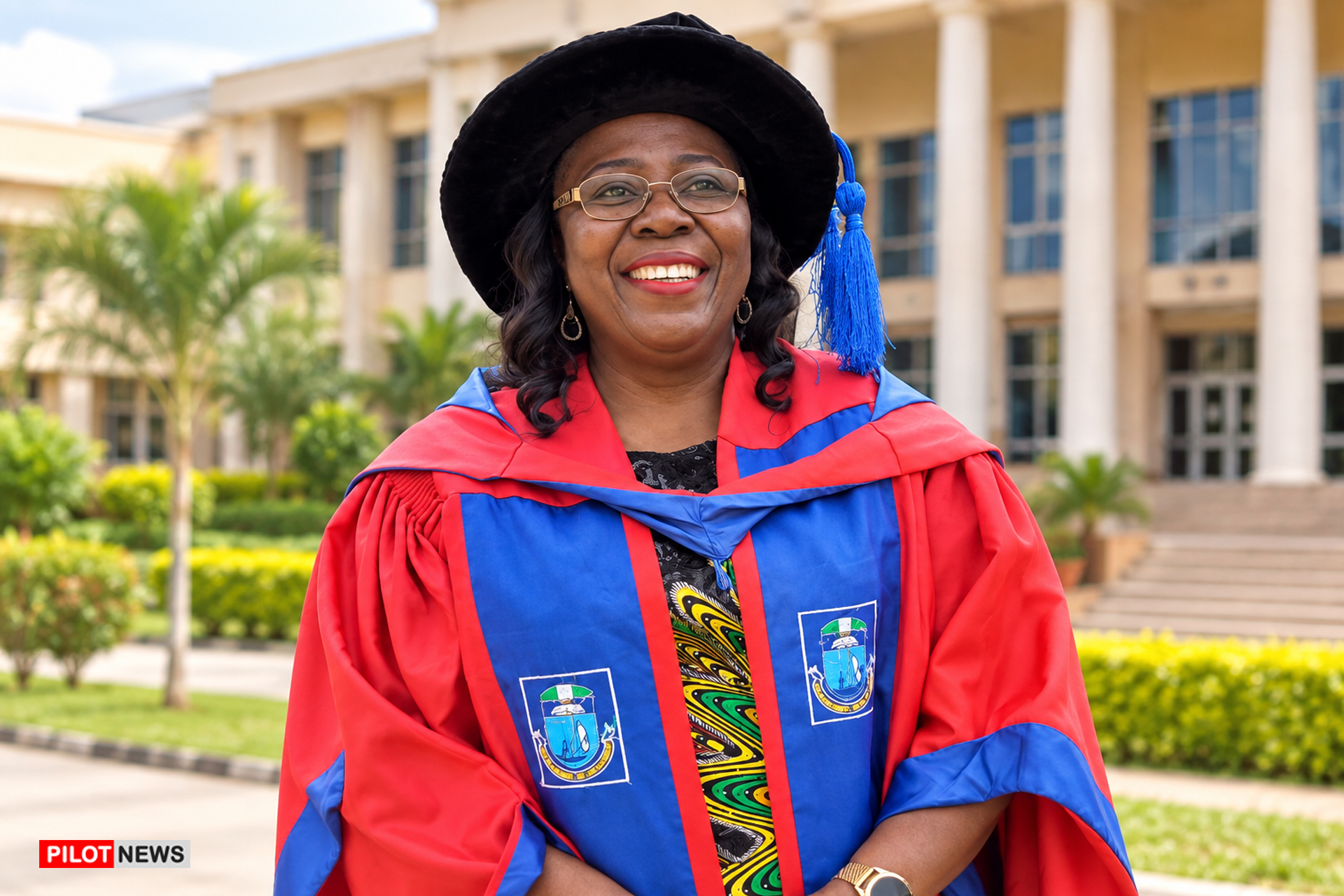
HOUSTON, TEXAS — Professor Josephine Azuka Onyido, an accomplished scholar and academic leader at the University of Port Harcourt, will be inducted into the Nigerian Academy of Education on Wednesday, November 4, 2026, in recognition of her contributions to the advancement of education.

The ceremony, scheduled for the Conference Hall of the National Commission for Colleges of Education in Abuja, places Onyido among scholars recognized for sustained contributions to education, research, and academic development in Nigeria.

A Professor in the Department of Educational Foundations at the University of Port Harcourt, Onyido has built a career encompassing teaching, research, administration, mentorship, curriculum development, and institutional service.

She described the forthcoming recognition as both an honor and a renewed obligation to education. “I receive this recognition with profound gratitude and humility. My journey in education has always been driven by the belief that scholarship must extend beyond the classroom and contribute meaningfully to society. This induction is not simply a personal achievement; it strengthens my responsibility to continue advancing quality education, mentoring future scholars, and promoting opportunities for women and girls. I am deeply grateful to my family, colleagues, students, and everyone who has been part of this journey.”

Onyido earned a Bachelor of Arts in Education (English), a Master of Education, and a Ph.D. in Sociology of Education. She is also a permanent member of the University of Port Harcourt Senate. Her scholarly record includes more than 90 journal articles, book chapters and Sociology of Education Made Easy, a textbook developed to make concepts in the discipline more accessible to students.

Much of her research examines the intersection of education and society, with particular emphasis on gender, women’s empowerment, educational development, social justice and the rights of women and girls. Her work advocates translating academic research into policies and practices that expand educational opportunities and strengthen human-capital development.

Beyond research, Onyido has occupied several academic leadership positions. She served as Acting Head of the Department of Educational Foundations from 2021 to 2023 and has worked as the Departmental Coordinator of Postgraduate Programs, the Anti-Plagiarism Coordinator, the Academic Adviser, and the Editor of the Port Harcourt Journal of Education Studies.

Her influence also extends beyond her university. She has served as an external examiner for several institutions and has participated as a resource person for the National Teachers’ Institute, the University of Port Harcourt, the Centers for Higher Education and Sandwich Programs, and the National Universities Commission verification exercise.

Internationally, Onyido represented the Niger Delta Development Commission at the African Women in Leadership Conference in Kigali, Rwanda, expanding her engagement with issues of women’s leadership, empowerment, and social transformation.

She belongs to several professional organizations, including the Teachers Registration Council of Nigeria, the Association of Sociologists of Education of Nigeria, and the International Association for Gender Equity.

Her academic and community work have earned numerous recognitions, including the Millennium Development Ambassador Award, Lecturer of the Year, Outstanding Project Supervisor, and Professional Service awards.

Yet Onyido’s story also reaches deeply into heritage and service. She is the great-great-granddaughter of King Josiah Constance Ockiya, MINGI VII, Amanyanabo of Nembe Kingdom and Supreme King of Brass. Her great-grandfather, Rev. Daniel Ockiya, translated the Bible into the Nembe language.

A committed Catholic and Jerusalem pilgrim, she has also served in church and community leadership positions and was recognized by the Catholic Women Organization of the Port Harcourt Diocese as a “Quintessential Woman.”

For Onyido, the November 4 induction represents more than another distinction on an extensive academic résumé. It recognizes a career built around an enduring principle: education achieves its greatest value when knowledge is transformed into opportunity, service, and social progress.

Continue Reading

Houston

PCNI Elevates Chief Dr. Emmanuel Opara to Patron in Historic Ihiagwa Investiture

Published

on

Sugar Land People’s Club leaders celebrate their First Vice Chairman’s December 22 investiture, describing the honor as recognition of leadership, scholarship, service, and commitment to the enduring ideals of the People’s Club

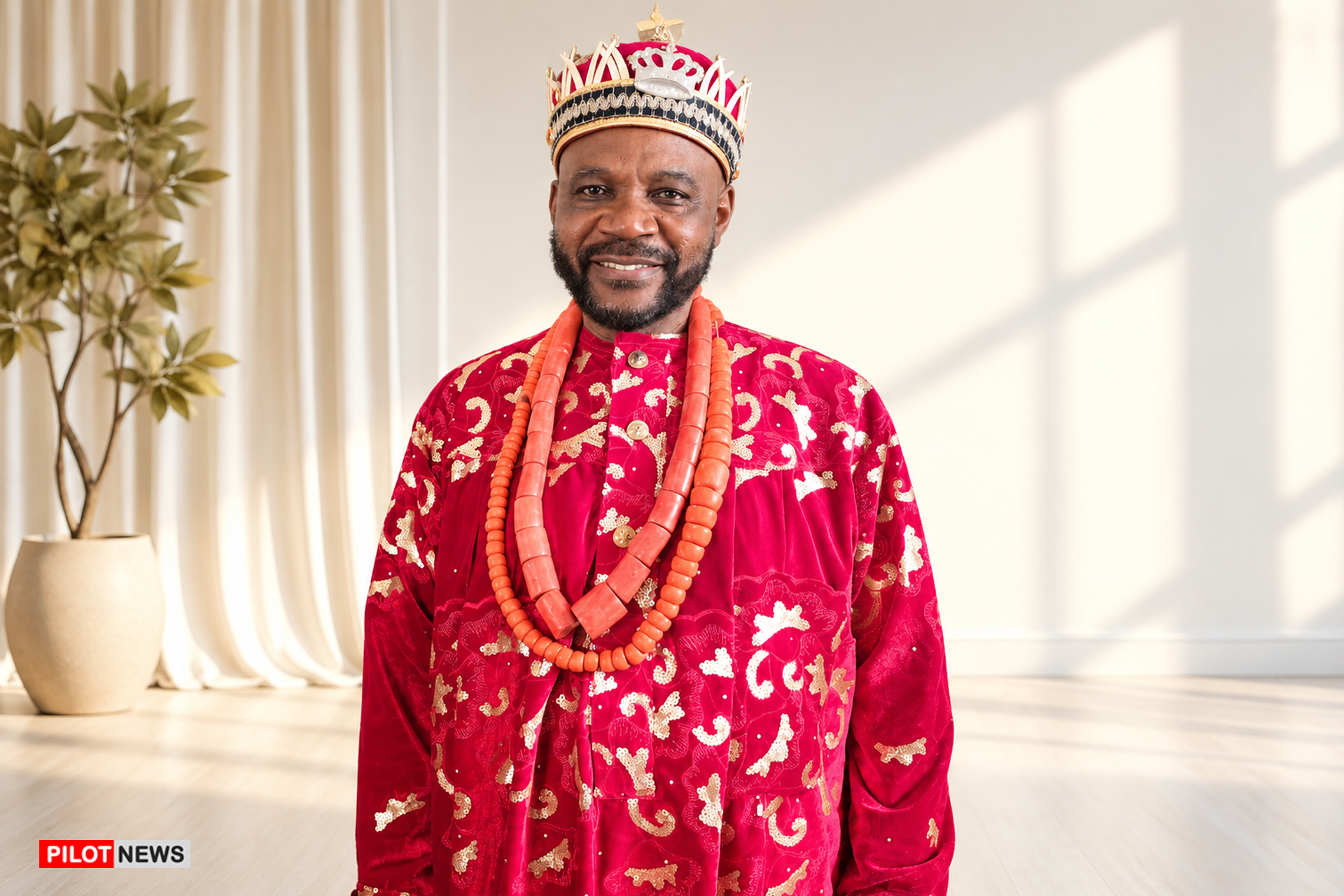
HOUSTON, TEXAS — All roads will lead to Ihiagwa, Owerri, Imo State, Nigeria, on December 22, 2026, as members, associates, and well-wishers of People’s Club of Nigeria International gather for the Patronship Investiture of Hon. Chief Dr. Emmanuel Uzoma Opara, First Vice Chairman of the Sugar Land People’s Club of Nigeria International (SLPCNI).

The ceremony will mark another milestone for the Sugar Land branch, historically recognized within the organization as its First International Branch, and will elevate one of its senior officers into the distinguished circle of PCNI patrons.

Since its inception in 1971, the People’s Club of Nigeria has developed into an international social and philanthropic organization with branches in Nigeria, the United States, and Europe. Its tradition emphasizes fellowship, community service, and the principles of Love, Unity, and Service.

Within that tradition, patronship carries significance beyond a ceremonial title. Patrons are expected to serve as senior advisers, custodians of institutional values, and respected voices in sustaining the organization’s heritage and direction. The recognition is traditionally associated with sustained service, leadership, and commitment to the Club and society.

For Opara, the honor also recognizes a professional life extending far beyond community leadership.

An academic and technology specialist, Opara’s scholarly interests span cybersecurity, digital and media forensics, artificial intelligence, and Agentic AI. His research includes digital forensic investigation, incident response and threat analysis, memory analysis, advanced-adversary containment and intrusion detection, including applications of Python programming.

His work also engages with memory forensics and investigative technologies, as well as the offensive and defensive dimensions of cybersecurity, commonly characterized as Red Team and Blue Team operations.

Opara is a Fellow of the International Information Management Association (FIIMA) and serves as an Associate Editor of the Journal of International Technology and Information Management (JITIM).

Reflecting on the forthcoming investiture, Opara described the recognition as a responsibility rather than simply another distinction.

“I receive this honor with profound gratitude and humility. Patronship represents a responsibility to protect the values that have sustained People’s Club for generations: love, unity, service, and genuine fellowship. Whatever we achieve professionally becomes more meaningful when we use our knowledge, experience, and resources to strengthen our communities and create opportunities for others. I look forward to serving the Club at an even greater level.”

Grand Patron of SLPCNI, Hon. Ide Obinna Nnanyelugo Mbachu, said Opara’s elevation reflects the leadership qualities expected of those entrusted with preserving the organization’s legacy. “Chief Dr. Opara represents the combination of intellectual accomplishment, community service, and organizational commitment that the People’s Club should continue to encourage. Patronship is not merely about recognition; it carries an obligation to guide, support and protect the institution. We are proud that another leader from our Sugar Land family has earned this important honor.”

Hon. Prof. Chris Ulasi, Group Chairman of SLPCNI, said the investiture demonstrates the depth of leadership within the Sugar Land branch. “This is a proud moment for Sugar Land People’s Club. Chief Dr. Opara has distinguished himself through service, scholarship, and dedication to our organization. His investiture strengthens our branch while reinforcing our connection to the national and international People’s Club family. We congratulate him and look forward to celebrating with him in Ihiagwa.”

The December gathering is expected to draw PCNI leaders, patrons, members, family, friends, and community representatives from Nigeria and abroad. Beyond the pageantry of the ceremony, however, Opara’s investiture carries a broader institutional message: leadership within the People’s Club is ultimately measured by service.

On December 22, Ihiagwa will host the celebration. But for Sugar Land, the occasion will also be a celebration of one of its own—a scholar, technology professional, and community leader entering a new chapter of responsibility in the People’s Club tradition.

Continue Reading

Houston

Membership Surge Continues as Dr. Nkem Ugwu Joins People’s Club

Published

on

Following a successful induction ceremony, the First International Branch continues to attract new members drawn to its tradition of friendship, service, culture, and community

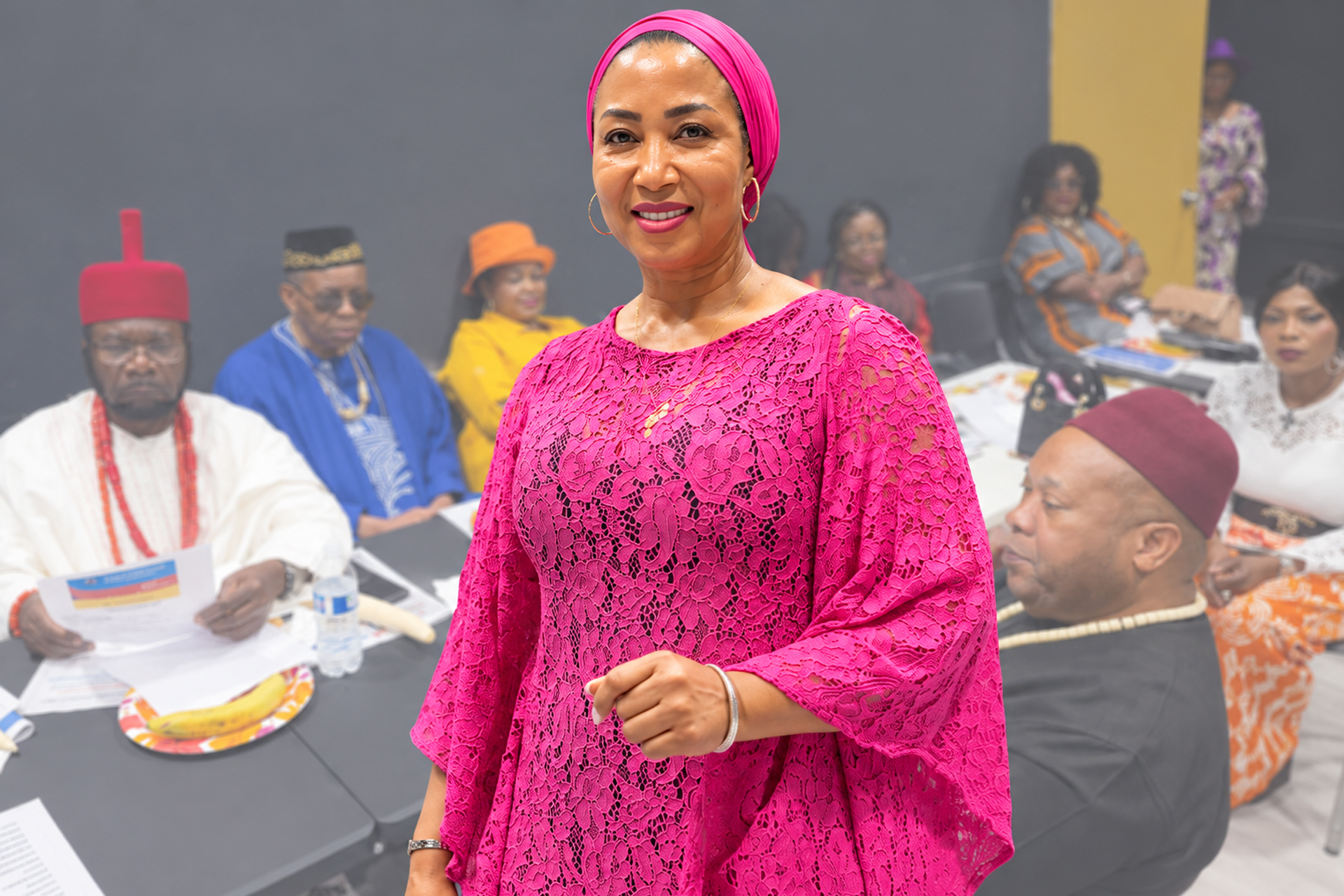
SUGAR LAND, TEXAS — The Sugar Land People’s Club of Nigeria International (SLPCNI) is continuing its membership expansion following its recently concluded induction ceremony, with Dr. Nkem Ugwu becoming one of the latest community members to join the organization.

Ugwu, a Sugar Land resident originally from Nsukka, Enugu State, Nigeria, is an entrepreneur and mother of three sons, a mother-in-law, and a grandmother. She describes service to others, family, and community engagement as important parts of her personal and professional life.

Grand Patron Ide Obinna Nnanyelugo Mbachu addressing the September Conference of the Sugar Land PCNI

Her membership comes on the heels of the branch’s successful bi-annual induction ceremony, during which 16 new members were formally sworn in by PCNI National President Atty. Fidelis Onyebueke. The celebration attracted national leaders, patrons, and members representing branches from across the People’s Club network.

Photo from left: Hon. Chief Sir Michael Okeke; Hon. Anaeto Okakpu “Oranwezuluaku”; Grand Patron Ide Obinna Nnanyelugo Mbachu; Hon. Dr. Nkem Ugwu ; Hon. Prof. Chris Ulasi, Group Chairman; Hon. Chief, Sir Basil Mbuba; Hon. Chief Sir Dr. Uche Egbuchuam “Akudo World Wide.”

Ugwu said joining the organization provides an opportunity to develop meaningful relationships while contributing to its mission.

“I am truly excited and honored to join the prestigious People’s Club of Nigeria International, Sugar Land Branch. I look forward to getting to know fellow members, building lasting friendships, and becoming actively involved in this vibrant and welcoming community. I am especially drawn to the Club’s tradition of fellowship, service, and mutual support, and I hope to contribute my experience, energy, and passion for serving others to its continued growth.”

Grand Patron Ide Obinna Nnanyelugo Mbachu welcomed Ugwu, describing continued interest in membership as encouraging for the historic First International Branch.

Membership Chairperson Hon. Chief Udoji Achebe and Hon. Ndidi Chidume

“When people of accomplishment and community spirit continue to identify with our organization, it tells us that the values upon which People’s Club was built remain relevant. We welcome Dr. Ugwu and look forward to the experience and fellowship she brings to our family.”

Hon. Prof. Chris Ulasi, Group Chairman, said the branch’s recent induction helped showcase an organization that continues to combine Nigerian cultural heritage with community engagement in Houston.

“Our successful induction created tremendous enthusiasm, but our focus goes beyond ceremonies. We are building a stronger organization rooted in friendship, responsibility and service. Dr. Ugwu’s decision to join reflects that continuing momentum.”

One of the meeting hosts, Hon. Professor Keih George, introduces the co-meeting hosts.

Membership Chairperson Hon. Chief Udoji Achebe said the branch remains interested in individuals prepared to participate actively in its programs and fellowship.

“Membership is about belonging, but it is equally about participation and contribution. We are delighted to welcome Dr. Ugwu and other prospective members who share the principles and aspirations of People’s Club.”

For SLPCNI, the growing interest following its induction represents another chapter in the evolution of a branch with a special place in the organization’s history.

And for Ugwu, it marks the beginning of a new journey—one centered on friendship, community, and service.

Continue Reading

Trending