Connect with us

Houston

Texas Health Facilities in Trouble for Dispensing Nearly 4M Opioid Pills

Published

on

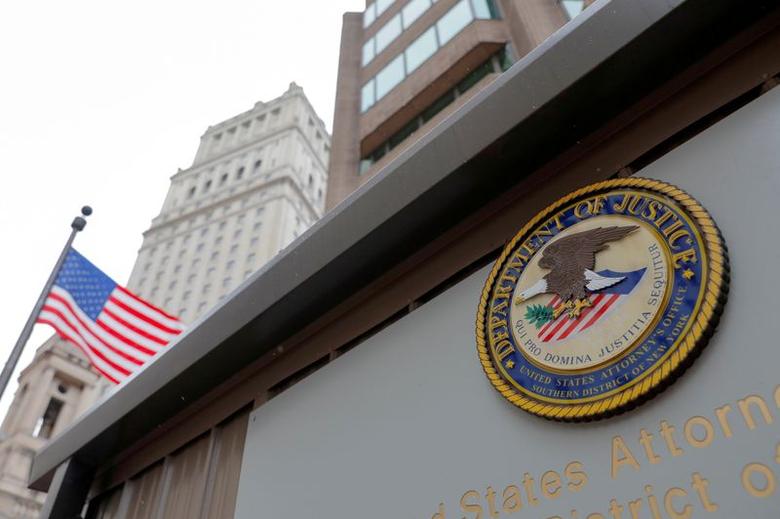
Operators of Three Texas Pharmacies and Two Pain Clinics Arrested for Illegally Dispensing Nearly Four Million Opioid Pills

Three Houston-area pharmacists, a doctor, and a pharmacy technician have been arrested for allegedly running three pharmacies and two clinics as “pill mills;” distributing hydrocodone, oxycodone, and other controlled drugs without a legitimate medical purpose.

According to court documents, since January 2018, Chrisco Pharmacy (Chrisco), Keystone Pharmacy (Keystone), and Peoples Pharmacy (Peoples) illegally dispensed nearly four million pills of the Schedule II opioids hydrocodone and oxycodone. Keystone owner and pharmacist-in-charge Anthony Obute, 46, of Houston, was indicted yesterday in the U.S. District Court for the Southern District of Texas for illegally distributing and dispensing hydrocodone and the Schedule IV muscle relaxer carisoprodol. According to the filed criminal complaint leading to Obute’s arrest on Dec. 2, Obute operated Keystone as a pill mill, illegally distributing hydrocodone and oxycodone. The complaint further alleges that from about September 2018 to about September 2020, Obute directed Keystone to purchase around 1.1 million of the highest-strength, short-acting hydrocodone and oxycodone pills commercially available, which he then sold to so-called “crew leaders,” or drug traffickers who pay individuals to pose as patients in order to obtain pills to sell onto the black market.

Ophelia Emeakoroha, 50, of Pearland, was arrested on Dec. 2 on a criminal complaint, filed in the U.S. District Court for the Southern District of Texas, alleging that Emeakoroha, the pharmacist-in-charge at Peoples, illegally distributed and dispensed hydrocodone and oxycodone. According to court documents, from about Jan. 1, 2019, to about Dec. 31, 2019, Emeakoroha caused Peoples to purchase around 250,000 of the highest-strength, short-acting hydrocodone and oxycodone pills commercially available, which she then sold to crew leaders in a scheme similar to Keystone’s.

Shivarajpur Ravi, M.D., 65, of Houston, was arrested on Dec. 2 on a criminal complaint, filed in the U.S. District Court for the Southern District of Texas, alleging that he operated two pill-mill clinics in the Houston area, which he used to illegally distribute and dispense hydrocodone and carisoprodol. According to court documents, undercover officers obtained illegitimate prescriptions from Ravi, once in 2020 at his clinic operating out of 12555 Ste. B Gulf Freeway in Houston, and again at a new clinic located at 3333 Bayshore Dr., Ste. 250, Pasadena, which he opened in 2021. The papers detail how crew leaders were observed paying for groups of patients, filling out their paperwork, and coaching them on what to say to the doctor as they waited to be seen. The 2020 purported consult with Ravi is alleged to have lasted less than two minutes, after which officers had the prescription filled at Keystone. In both cases, the visit ended with Ravi prescribing large quantities of hydrocodone and carisoprodol.

A few weeks prior to the arrests of Obute, Emeakoroha, and Ravi, Christopher Obaze, 61, of Richmond, and Eric Tubbe, 36, of Rosenberg, were arrested on charges brought in the U.S. District Court for the Southern District of Texas related to their alleged illicit operation of Chrisco as a pill mill. The eight-count indictment alleged that in doing so, Obaze and Tubbe conspired to illegally distribute and dispense hydrocodone and oxycodone, maintained Chrisco as a drug-involved premises in proximity to a facility for children, and laundered their ill-gotten gains, using the proceeds to promote the enterprise, depositing cash in amounts below $10,000 to avoid bank reporting requirements, and transferring the proceeds through numerous accounts to obscure the funds’ origins. Obaze was also charged with tax crimes. According to court documents, from around January 2018, to around October 2021, Obaze was the pharmacist-in-charge and Tubbe was a pharmacy technician at Chrisco, which the two men used as a front to purchase and then illegally sell around 2.25 million of the highest-strength short-acting hydrocodone and oxycodone pills commercially available. The indictment alleges that Obaze and Tubbe sold the pills, in bulk, directly to drug traffickers, without the involvement of doctors, prescriptions, or patients.

Federal charges related to the illegal distribution of Schedule II opioids like hydrocodone and oxycodone, which all of the indicted defendants face, carry statutory maximums of 20 years in prison. Obaze and Tubbe are both charged with money laundering crimes that carry statutory maximums of 10 and 20 years in prison, while Obaze’s tax charges carry a statutory maximum of three years. A federal district court judge will determine any sentence after considering the U.S. Sentencing Guidelines and other statutory factors.

Assistant Attorney General Kenneth A. Polite Jr. of the Justice Department’s Criminal Division; Administrator Anne Milgram of the Drug Enforcement Administration (DEA); Acting Assistant Director Jay Greenberg of the FBI’s Criminal Investigative Division; Assistant Special Agent in Charge Ramsey E. Covington of the IRS Criminal Investigation (IRS-CI) Houston Field Office; Acting Special Agent in Charge Conrad Barnett of U.S. Postal Service Office of Inspector General (USPS-OIG); Acting Inspector in Charge Dana Carter of the U.S. Postal Inspection Service, Houston Division; Texas Attorney General Office’s Medicare Fraud Control Unit (MFCU); and Houston Police Department (HPD) made the announcement.

_______________

♦Indictments and criminal complaints are merely allegations and all defendants are presumed innocent until proven guilty beyond a reasonable doubt in a court of law.

Texas Guardian News
Continue Reading
Click to comment

Leave a Reply

Community

Wazobia Family Funfair AT 10 – Decade of Family, Culture, and Community

Published

on

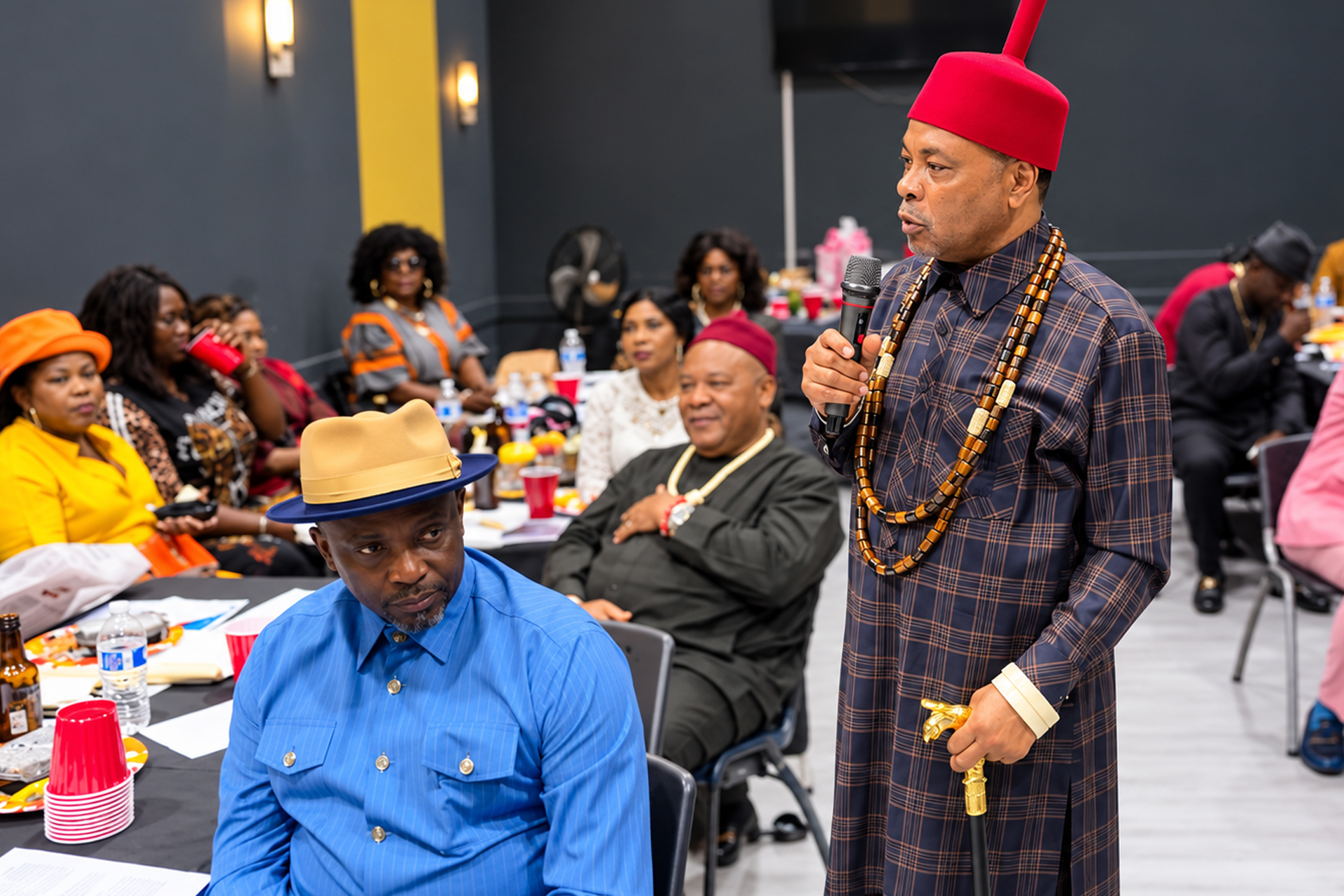
On July 25, 2026, families from across Houston will gather at the West Oaks Mall on 1000 West Oaks, Houston, to celebrate a milestone that extends far beyond food, music, and entertainment. The 10th Anniversary of the Wazobia Family Funfair represents a decade-long journey of community building, cultural preservation, entrepreneurship, and family-centered engagement.

What began as a customer appreciation initiative has evolved into one of the most recognizable African community events in Texas. For ten years, the Funfair has provided a space where families reconnect with culture, children experience heritage, entrepreneurs build relationships, and communities strengthen the bonds that define them.

The story of the anniversary begins with the story of Wazobia itself. Founded in 2013 by entrepreneur Tunde Fashina, Wazobia was created with a vision that stretched beyond commerce. According to Fashina, the goal was never simply to sell products.

FASHINA, OHAZURIKE: For Fashina, leadership carries responsibility. “The feeling is fantastic because you’ve achieved something,” he explained. “But it is also frightening because every decision affects many people.” He added: “The higher you are in an organization, the more people are affected by your decisions.” Those values influence the company’s culture and community engagement efforts.

“The emphasis was not more on getting the products,” he explained. “The emphasis was on creating a feeling of belonging to the customer, so that they feel at home any time they come to our place.”

That philosophy became the foundation of the business. Fashina spent nearly two years developing the business plan. The challenge was enormous. He had limited financial resources and relied heavily on relationships, determination, and faith.

“The business plan had to involve getting this business up with absolutely no money, because I didn’t have any,” he recalled.

The early years tested every aspect of his resolve. He performed multiple roles simultaneously.

“I was a cleaner. I was a restocker. I was a cashier. I did all the work,” he said. “I slept in the shop throughout for almost 18 months because I was working around the clock.”

Despite the challenges, growth came quickly.

“God showed up in ways that I could not describe,” Fashina said. “People started coming in little by little, and the growth rate exceeded everything in the business plan.”

Yet even as the company expanded, community remained central to the mission. “We created a sub-plan,” he explained. “How do we give back to those who built us? How do we let our customers know that we appreciate them?”

The answer became what is now known as the Wazobia Family Funfair.


Over the years, the event evolved from a modest appreciation day into a major annual celebration featuring cultural performances, African music, dance, games, food vendors, business showcases, and family activities.

For Paula Ohazurike, Project Manager at Wazobia, the event represents much more than an annual gathering. Her experience since she joined Wazobia reflects a recurring theme in conversations with employees and customers: Wazobia is viewed not merely as a business but as a community institution.

That philosophy is visible in the Family Funfair. The event creates a rare space where generations come together. Children born in America are introduced to African traditions through music, dance, language, fashion, and food. Parents and grandparents reconnect with memories of home while sharing those experiences with younger family members.

In a city as diverse as Houston, such gatherings carry significant cultural value. Houston is home to one of the largest African immigrant populations in the United States. Yet many families often struggle to maintain cultural connections while navigating modern American life. Events like the Wazobia Family Funfair help bridge that gap.

The significance of the Funfair extends beyond cultural preservation. It serves as a platform for economic empowerment. Small businesses, vendors, artists, and service providers use the event to connect with potential customers. Community organizations engage residents. Entrepreneurs build networks. Relationships formed during the event often extend throughout the year.

According to Ohazurike, the event has become one of the most effective community-engagement platforms within Houston’s African diaspora. The atmosphere itself reflects the spirit of family. Children enjoy games, bounce houses, and face painting. Families participate in contests and group activities. Music fills the air. Food vendors showcase culinary traditions from across Africa.

The result is an experience that feels both festive and deeply personal. Fashina believes that sense of belonging remains the event’s greatest achievement. “There is no reason for us not to provide an environment that people can be proud of,” he said. “A place where they can bring their friends and enjoy themselves.”


That vision continues to guide the organization. Today, Wazobia has expanded significantly, operating multiple locations and employing approximately 250 people. “It is something we are immensely proud of,” Fashina noted. “But this is only the beginning.” Growth, however, is measured by more than financial success.

For Fashina, leadership carries responsibility. “The feeling is fantastic because you’ve achieved something,” he explained. “But it is also frightening because every decision affects many people.” He added: “The higher you are in an organization, the more people are affected by your decisions.” Those values influence the company’s culture and community engagement efforts.

The Family Funfair embodies that philosophy by bringing people together in ways that strengthen relationships and encourage collective progress. Perhaps that is why the event has endured for ten years. Many community events emerge with enthusiasm but struggle to survive. Sustaining a large-scale annual celebration requires trust, consistency, and a genuine commitment to service. The Wazobia Family Funfair has achieved that longevity because it has remained focused on people.

Over the past decade, families have returned year after year. Children who attended the first Funfair now return as young adults. New immigrants have found friendships and support systems. Businesses have launched partnerships. Countless memories have been created.


The anniversary therefore represents more than a milestone date on a calendar; it represents ten years of shared experiences; ten years of preserving culture; ten years of supporting businesses; ten years of strengthening families; and ten years of building community.

As Houston prepares for the 2026 celebration, organizers are looking toward the future while honoring the past. For Ohazurike, the mission remains simple. “We want people to feel welcome,” she said. “We want families to come together and create memories.”
For Fashina, the broader vision remains rooted in possibility. “We can do it,” he said. “We just have to have a goal in mind and take it one step at a time.”

Those words capture the spirit of the Wazobia Family Funfair. At its heart, the event is not simply a festival. It is a living expression of community resilience, cultural pride, and family unity. It demonstrates how a business can become a community anchor. It illustrates how relationships can create opportunities. It reminds us that culture thrives when it is shared. Ten years after its inception, the Wazobia Family Funfair continues to embody the meaning of its name—an invitation for everyone to come together.

In a world increasingly defined by division and isolation, that invitation may be more important than ever. And as families gather once again this July, they will celebrate more than an anniversary. They will celebrate a decade of belonging.

Texas Guardian News
Continue Reading

Anthony Obi Ogbo

Texas’ 18th Congressional District Runoff: Amanda Edwards Deserves This Seat

Published

on

Her persistence and long-term investment make a clear case: she has earned this opportunity. —Anthony Obi Ogbo

In the special election to fill Texas’s 18th Congressional District, no candidate won a majority on November 4, 2025, leading to a January 31, 2026, runoff between Democratic frontrunners Christian Menefee and Amanda Edwards. Menefee, Harris County Attorney, led the field with roughly 29% of the vote, while former Houston City Council member Edwards finished second with about 26%. Both are vying to represent a district left vacant after the death of U.S. Rep. Sylvester Turner.

The 18th Congressional District is far more than a geographic area. Anchored in Houston’s historic Black communities, it is a political and cultural stronghold shaped by civil rights history, faith institutions, and grassroots activism. Sheila Jackson Lee represented this district for nearly three decades (1995–2024), becoming more than a legislator—she was a constant presence at churches, funerals, protests, and community milestones. For residents, her leadership carried spiritual weight, reflecting stewardship, protection, and a deep, almost pastoral guardianship of the district. Her tenure symbolized continuity, cultural pride, and a profound connection with the people she served.

Houstonians watched as Jackson Lee entered the 2023 Houston mayoral race, attempting to transition from Congress to city leadership. Despite high-profile endorsements, including outgoing Mayor Sylvester Turner and national Democratic figures, she lost the December 9, 2023, runoff to State Senator John Whitmire by a wide margin. Following that defeat, Jackson Lee filed to run for re-election to her U.S. House seat, even as Edwards—who had briefly joined the mayoral race before withdrawing—remained in the congressional primary.

At that time, Jackson Lee’s health was visibly declining, yet voters still supported her, honoring decades of service. She defeated Edwards in the 2024 Democratic primary before announcing her battle with pancreatic cancer. Her passing in July 2024 left the seat vacant.

Edwards, already a candidate, sought to fill the seat, but timing and party rules intervened. Because Jackson Lee died too late for a regular primary, Harris County Democratic Party precinct chairs selected a replacement nominee. Former Houston Mayor Sylvester Turner, a retired but widely respected figure, narrowly edged out Edwards for the nomination, effectively blocking her despite her prior campaigning efforts. Turner won the general election but died in March 2025, triggering a special election in 2025, in which Edwards advanced to a runoff.

The January 31, 2026, runoff will hinge on turnout, coalition-building, and key endorsements. Both candidates led a crowded November field but fell short of a majority, with Menefee narrowly ahead. Endorsements such as State Rep. Jolanda Jones’ support for Edwards could consolidate key Democratic blocs, particularly among Black women and progressive voters. In a heavily Democratic district where voter confusion and turnout patterns have been inconsistent, the candidate who best mobilizes supporters and unites constituencies is likely to prevail.

Amanda Edwards’ case is compelling. Although both candidates share similar values and qualifications, her claim rests on dedication, consistency, and timing that have been repeatedly denied. She pursued this seat with focus and purpose, maintaining a steady commitment to the district and its future. Her path was interrupted by the prolonged political ambitions of Jackson Lee and Turner—figures whose stature reshaped the race but delayed generational transition. Edwards did not step aside; she remained visible, engaged, and prepared. In a moment demanding both continuity and renewal, her persistence and long-term investment make a clear case: she has earned this opportunity.

This race comes down to trust, perseverance, and demonstrated commitment. Amanda Edwards has consistently shown up for the district, even when political circumstances repeatedly delayed her chance. Her dedication reflects readiness, respect for the electorate, and an unwavering commitment to service. Voting for Amanda Edwards is not only justified—it is the right choice for Houston’s 18th Congressional District.

♦Publisher of the Guardian News, Professor Anthony Obi Ogbo, Ph.D., is on the Editorial Board of the West African Pilot News. He is the author of the Influence of Leadership (2015)  and the Maxims of Political Leadership (2019). Contact: anthony@guardiannews.us

Texas Guardian News
Continue Reading

Houston

Turnout, Trust, and Ground Game: What Decided Houston’s Runoff Elections

Published

on

Low-turnout runoff races for Houston City Council and Houston Community College trustee seats revealed how message discipline, local credibility, and voter mobilization determined clear winners—and decisive losers.

The final ballots are counted, and Houston’s runoff elections have delivered clear outcomes in two closely watched local races, underscoring a familiar truth of municipal politics: in low-turnout elections, organization and credibility matter more than name recognition alone.

In the race for Houston City Council At-Large Position 4, Alejandra Salinas secured a decisive victory, winning 25,710 votes (59.27%) over former council member Dwight A. Boykins, who garnered 17,669 votes (40.73%). The margin was not accidental. Salinas ran a campaign tightly aligned with voter anxiety over public safety and infrastructure—two issues that consistently dominate Houston’s civic conversations. Her emphasis on keeping violent criminals off city streets and expanding Houston’s water supply spoke directly to quality-of-life concerns that resonate across districts, especially in an at-large contest where candidates must appeal to the city as a whole.

Salinas’ win reflects the advantage of message clarity. In a runoff, voters are not looking to be introduced to candidates—they are choosing between candidates they are already familiar with. Salinas presented herself as forward-looking and solutions-oriented, while Boykins, despite his experience and political history, struggled to reframe his candidacy beyond familiarity. In runoffs, nostalgia rarely outperforms momentum.

The second race—for Houston Community College District II trustee—followed a similar pattern. Renee Jefferson Patterson won with 2,497 votes (56.63%), defeating Kathleen “Kathy” Lynch Gunter, who received 1,912 votes (43.37%). Though the raw numbers were smaller, the dynamics were just as telling.

Patterson’s victory was powered by deep local ties and a clear institutional vision. As an HCC alumna, she effectively positioned herself as both a product and a steward of the system. Her pledge to expand the North Forest Campus and direct resources to Acres Home connected policy goals to place-based advocacy. In trustee races, voters often respond less to ideology and more to proximity—those who understand the campus, the students, and the neighborhood. Patterson checked all three boxes.

By contrast, Gunter’s loss highlights the challenge of overcoming a candidate with genuine community roots in a runoff scenario. Without a sharply differentiated message or a strong geographic base, turnout dynamics tend to favor candidates with existing neighborhood networks and direct institutional relevance.

What ultimately decided both races was not a surprise, but execution. Runoffs reward campaigns that can re-mobilize supporters, simplify their message, and convert familiarity into trust. Salinas and Patterson did exactly that. Their opponents, though credible, were unable to expand or energize their coalitions in a compressed electoral window.

The lesson from Houston’s runoff elections is straightforward but unforgiving: winners win because they align message, identity, and ground game. Losers lose because, in low-turnout contests, anything less than that alignment is insufficient.

Texas Guardian News
Continue Reading

Trending