


News
July 4 parade slaughter again shows nowhere is safe from America’s mass killing contagion—CNN

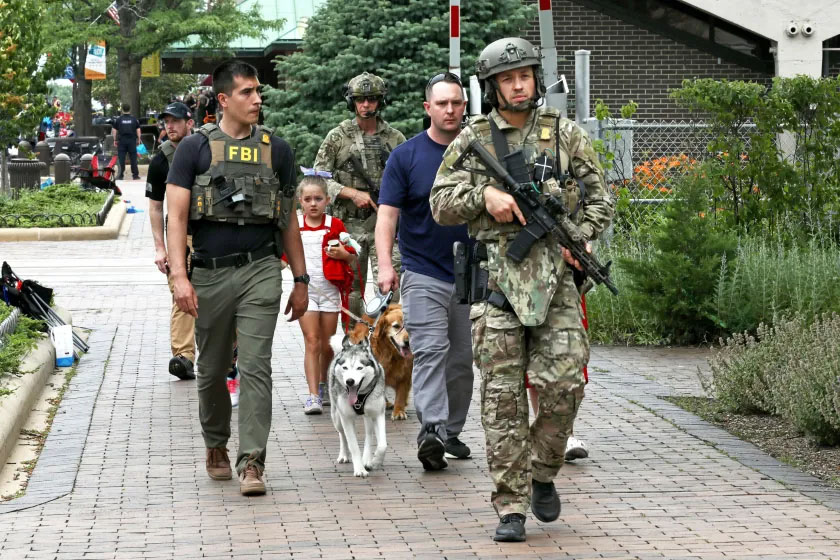
(CNN) America’s latest mass shooting turned a cherished July Fourth parade from a scene of patriotic joy into one of fear and death.
The rapid bursts of a high-powered rifle brought the chilling reality that no one can be sure they are safe, anywhere, to one of the nation’s most unifying gatherings.
In that instant, Highland Park joined Uvalde, Columbine, Newtown and Parkland and a long list of cities and towns known across the country for the massacre of innocents in a gun violence contagion that makes the United States an outlier in developed societies.

Chicago Sun-Times reporter Lynn Sweet captured this from video on the morning of July 4, 2022, at the Fourth of July parade in Highland Park. People begin running after they hear gunshots.Lynn Sweet/Sun-Times
Detritus strewn at the scene, a lone shoe, discarded backpacks, upturned camping chairs and empty strollers did not just tell the story of the hurried panic of those who fled for their lives. It reflected yet another scene of normality shattered by a mass shooting. In this case, six people who simply went out to celebrate America on its birthday are dead. More than two dozen — aged 8 to 85, according to doctors — are injured.
Only Monday’s venue — on a day dedicated to national celebration — was variable. Similar horror unfolded in May in an elementary school in Texas and a Buffalo, New York, supermarket. Mass shootings targeted graduation parties last month in Texas and South Carolina. In Philadelphia, shooters sprayed a nightlife crowd. In Tulsa, Oklahoma, there was carnage in a medical center. In Brooklyn, the shooter was on the subway.

Terrified parade-goers fled Highland Park’s Fourth of July parade after shots were fired, leaving behind their belongings as they sought safety.Lynn Sweet/ Sun-Times
Television pictures Monday of police vehicles in Highland Park rushing to help beneath a billowing American flag added an ironic, new dimension to this latest horror. It took place as Americans gathered to celebrate the 246th anniversary of the freedoms inherent in American independence. Yet what unfolded encapsulated the quintessentially American cycle of death by firearms. When a gunman killed three people in a mall shooting in Copenhagen, Denmark, over the weekend, it was shocking because it was unusual. But while Monday’s shooting outside Chicago was unexpected, another mass shooting in the US was hardly a surprise.
“It is devastating that a celebration of America was ripped apart by our uniquely American plague,” Illinois Gov. J.B. Pritzker said. “A day dedicated to freedom has put into stark relief the one freedom we, as a nation, refuse to uphold: The freedom of our fellow citizens to live without the daily fear of gun violence.”

Police escort people away from the parade scene after the shooting in Highland Park Monday.Tyler Pasciak LaRiviere/Sun-Times
Shocked residents relate a day of terror
Still, residents of the affluent, largely White suburb with a thriving Jewish community expressed shock that such horror visited their town.
Some related scenes of wounded victims on the sidewalk, of families fleeing with their kids in terror and of one man who put his children inside a dumpster for safety.
This was “just inconceivable in a community like Highland Park,” Jeff Leon, an eye witness who at first thought the pops of the rifle were July Fourth fireworks, told CNN.
Democratic Rep. Brad Schneider, who represents Illinois’ 10th Congressional District, expressed similar disbelief. “No one thinks that this could happen in our community, but that is true across the country,” he told CNN’s Kaitlan Collins. And Dr. Brigham Temple, medical director of emergency preparedness for NorthShore University HealthSystem, told reporters: “It is a little surreal to have to take care of an event such as this.”

Police from several local municipalities including the Illinois State Police search downtown Highland Park after the mass shooting at the Fourth of July parade Monday. Tyler Pasciak LaRiviere/Sun-Times
A common sentiment of people caught up in such mass shootings is disbelief that their community, which they had considered safe, has been hit. But in a nation awash in guns, nowhere is immune. Even at July Fourth celebrations across the country that were perfectly safe, how many of the attendees didn’t have a flash of concern about their security? Having to think about the possibility of mass shooting — at a school or a movie theater or a place of worship — has now become part of life since it’s happened so often. It’s another weight of anxiety and stress on a national psyche strained by the Covid-19 pandemic, soaring inflation and vicious political divides that contributed to a pessimistic mood this July Fourth.
Gun violence is hardly new in American society. But the proliferation of deadly weapons is now forcing people everywhere in the United States to face worries long endured by those familiar with the horrific toll of firearms in cities.
It’s gotten nowhere near as much coverage. But the high-profile shootings in Uvalde and Highland Park, for instance, are taking place against a backdrop of incessant killings elsewhere.
There have been at least the 311 mass shooting in the United States so far this year, including 14 in just the first four days of this month, according to the Gun Violence Archive.
And it’s only July.
The politics of gun control
The suspect, Robert E. Crimo III, has been taken into custody near Lake Forest, Illinois, authorities said during a brief news conference Monday night after an hours-long manhunt.
Sgt. Chris Covelli, of the Lake County Major Crime Task Force, said earlier in the day that the firearm used in shooting was a “high powered rifle” but declined to give further details. If that is borne out, it would just be the latest occasion when a weapon with the capacity to quickly fire multiple rounds with deadly effect has been used in a mass shooting.
President Joe Biden and firearms safety advocates have called for a reinstatement of a nationwide assault weapons ban, which expired in 2004. There is no chance, however, that such a measure could get through Republican opposition in the US Senate because of filibuster rules that require a 60-vote majority for major legislation. It’s unlikely Democrats with their wafer-thin majority could pass it on their own, and they lack the votes needed to change the filibuster rules.
The Highland Park mass shooting is the first to come to national attention since the passage of the first major gun safety legislation in Congress in a generation. It is far too early to know whether that measure — which poured new money into mental health resources and potentially slowed the pace at which people under 21 can get guns — could have prevented this tragedy or whether the incident will expose its limited scope. Biden and families of the victims of recent gun massacres had pleaded with Congress to do far more, but Republican opposition makes it all but impossible to pass meaningful overhauls of firearm laws, including expanded background checks.
The July Fourth holiday meant that there was little immediate political reaction to Monday’s mass killing from Republicans, even as Democrats such as Vice President Kamala Harris and Pritzker demanded more gun restrictions.

President Joe Biden and firearms safety advocates have called for a reinstatement of a nationwide assault weapons ban, which expired in 2004.
The rituals of America’s incessant mass shootings will likely now see Republicans try to point to other factors besides the availability of guns. It’s true that most gun owners in America are law-abiding. But logic suggests that America’s massive proliferation of guns compared with other nations and the high incidence of mass killings are linked. And it’s clear that more people having guns — what the National Rifle Association would call “good guys with guns” — isn’t stopping all of these killings.
Second Amendment activists insist that the right to own high-powered weapons is within every American’s rights to bear arms. And the conservative US Supreme Court majority is setting about loosening existing gun restrictions. All of which suggests that Monday’s shooting will result in no action that makes America safer. The heavy lift in passing even the limited gun safety legislation last month suggests that a gridlocked political system has already done as much as it can bear.
Yet each recent mass shooting poses the same questions, which are especially acute on a day that America celebrates its freedoms.
Why do the rights of those who insist they have the constitutional blessing to own such deadly weapons outweigh the right of others to life — especially since a majority of Americans support more comprehensive gun control? And why, for instance, should moms, dads, kids or grandparents have to so often run for their lives?
“It can happen any place,” Miles Zaremski, who witnessed the shooting in Highland Park, told CNN on Monday afternoon. “I’ve been around many years on this planet and what I observed shook me to the core.”
“If it can happen on July 4, in a peaceful law-abiding community that we have in Highland Park … it can happen any place.



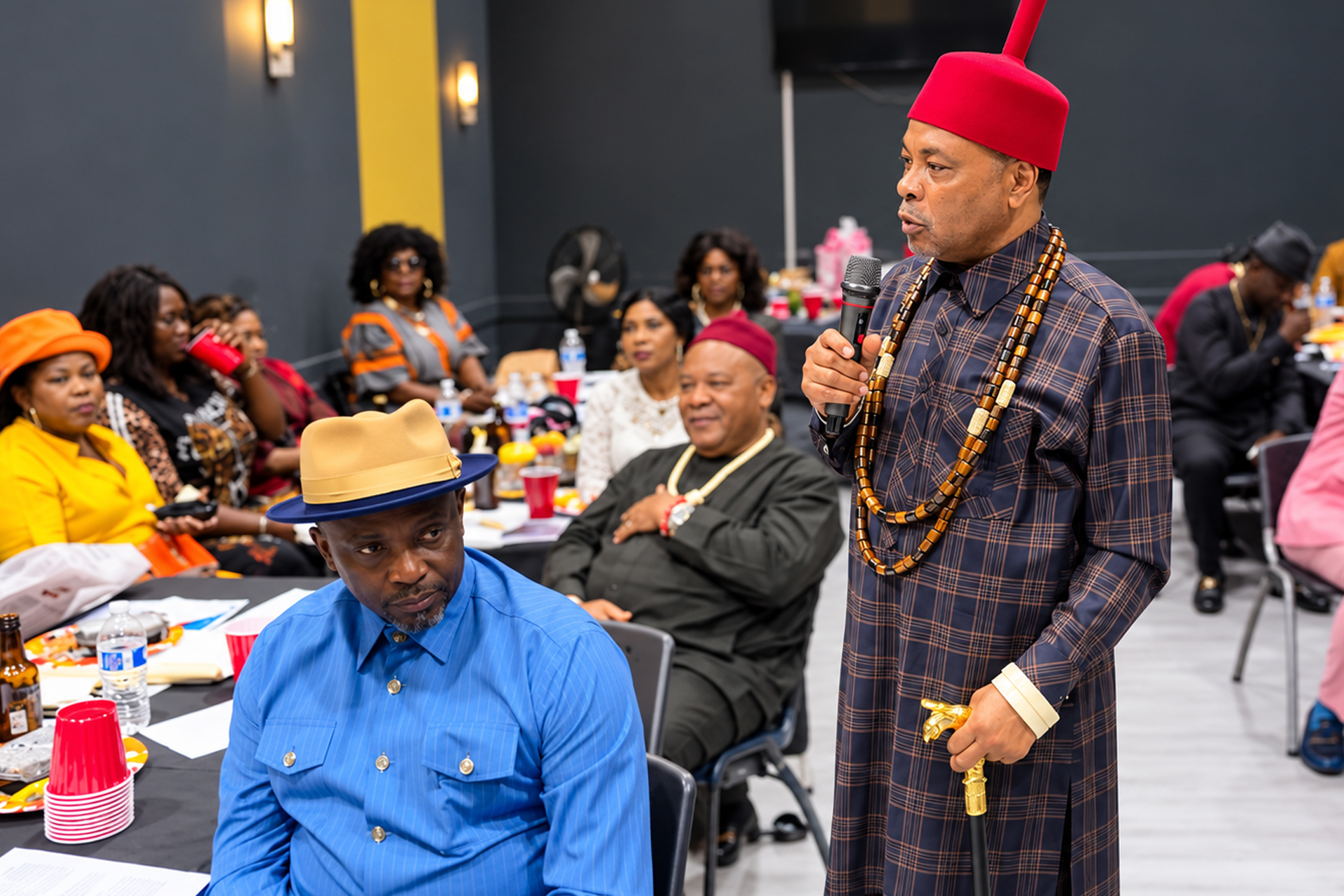
…Credits principled leadership, philanthropy, and a renewed commitment to “Unity, Love and Service” for the historic branch’s growing membership and influence.
SUGAR LAND, TEXAS — The recent growth and renewed visibility of the Sugar Land People’s Club of Nigeria International did not happen by accident. According to the branch’s Grand Patron, Ide Obinna Nnanyelugo Mbachu, its resurgence is rooted in something far more enduring than ceremonies, titles, or social gatherings: a commitment to putting the organization’s guiding principles into practice.
In an interview reflecting on the branch’s recent progress, Mbachu said the philosophy of “Unity, Love, and Service” remains central to the People’s Club’s identity and is increasingly defining the direction of its Sugar Land branch.
“Unity means recognizing that our individual differences must never become greater than the institution that brings us together,” Mbachu said. “Love means genuinely caring about one another—not only when we celebrate, but when members and their families face difficult moments. Service is where those values become action. If we cannot translate fellowship into service to humanity, then we have missed the purpose of the organization.”

Grand Patron, Ide Obinna Nnanyelugo Mbachu.
People’s Club of Nigeria International traces its origins to Nigeria in 1971 and has since expanded through branches in Nigeria and internationally. Sugar Land occupies a distinctive place in that history as the organization’s First International Branch.
Mbachu said that legacy carries responsibility.
“People’s Club is not simply a social club where people gather, celebrate, and go home,” he said. “At its core, it is a philanthropic institution committed to community welfare. Our fellowship must have a human purpose. We must be able to look beyond ourselves, identify needs within our communities, and respond with compassion, resources, and action.”
He pointed to the COVID-19 pandemic as one example of that philosophy at work.
“I will never forget the COVID period, when fear and uncertainty had disrupted virtually every aspect of life,” Mbachu recalled. “Members of our Sugar Land branch stepped forward to distribute food to families struggling through that crisis. People were concerned about their own safety, yet our members understood that service was most meaningful when the community needed us most. That experience demonstrated what the People’s Club should represent.”
The branch has recently experienced renewed momentum in membership. Following its successful 2026 biannual induction, 16 new members were formally admitted, while additional community members have continued to express interest in joining.
Mbachu attributes that growth partly to greater organizational visibility, active programming, and an environment where prospective members can see fellowship and community engagement working together.
He particularly credited Hon. Prof. Chris Ulasi, Group Chairman of SLPCNI, and his executive team with helping reposition the branch.
“Professor Ulasi and his team deserve tremendous credit,” Mbachu said. “Leadership requires consistency, patience, and the ability to bring different personalities together around a common objective. The progress we are witnessing reflects considerable work behind the scenes; organizing members, strengthening participation, and ensuring that the branch continues moving forward.”
Mbachu also acknowledged PCNI National President Atty. Fidelis Onyebueke, whose leadership he said has contributed to stronger relationships across the organization.
“The National President has emphasized peace, reconciliation, and mutual respect among branches,” he said. “An international organization cannot prosper when its branches operate in unnecessary conflict. His efforts to promote understanding, dialogue, and unity across the People’s Club family have contributed significantly to the stability and renewed enthusiasm we are experiencing.”
For Mbachu, however, growth cannot simply be measured by numbers. The quality and commitment of those joining remain equally important.
“Our doors are open to reputable men and women who believe in what People’s Club represents and are prepared to contribute positively,” he said. “We welcome people who value integrity, fellowship, community service, and mutual respect. Membership should never be about what title you receive; it should be about what value you bring.”
That distinction, Mbachu argues, will determine whether the current momentum becomes lasting institutional progress.
For Sugar Land People’s Club, the formula he offers is remarkably straightforward: protect unity, practice love and make service visible. “When those three principles are genuinely lived,” Mbachu said, “the organization does not have to advertise its greatness. The community will see it.”
Following a successful induction ceremony, the First International Branch continues to attract new members drawn to its tradition of friendship, service, culture, and community
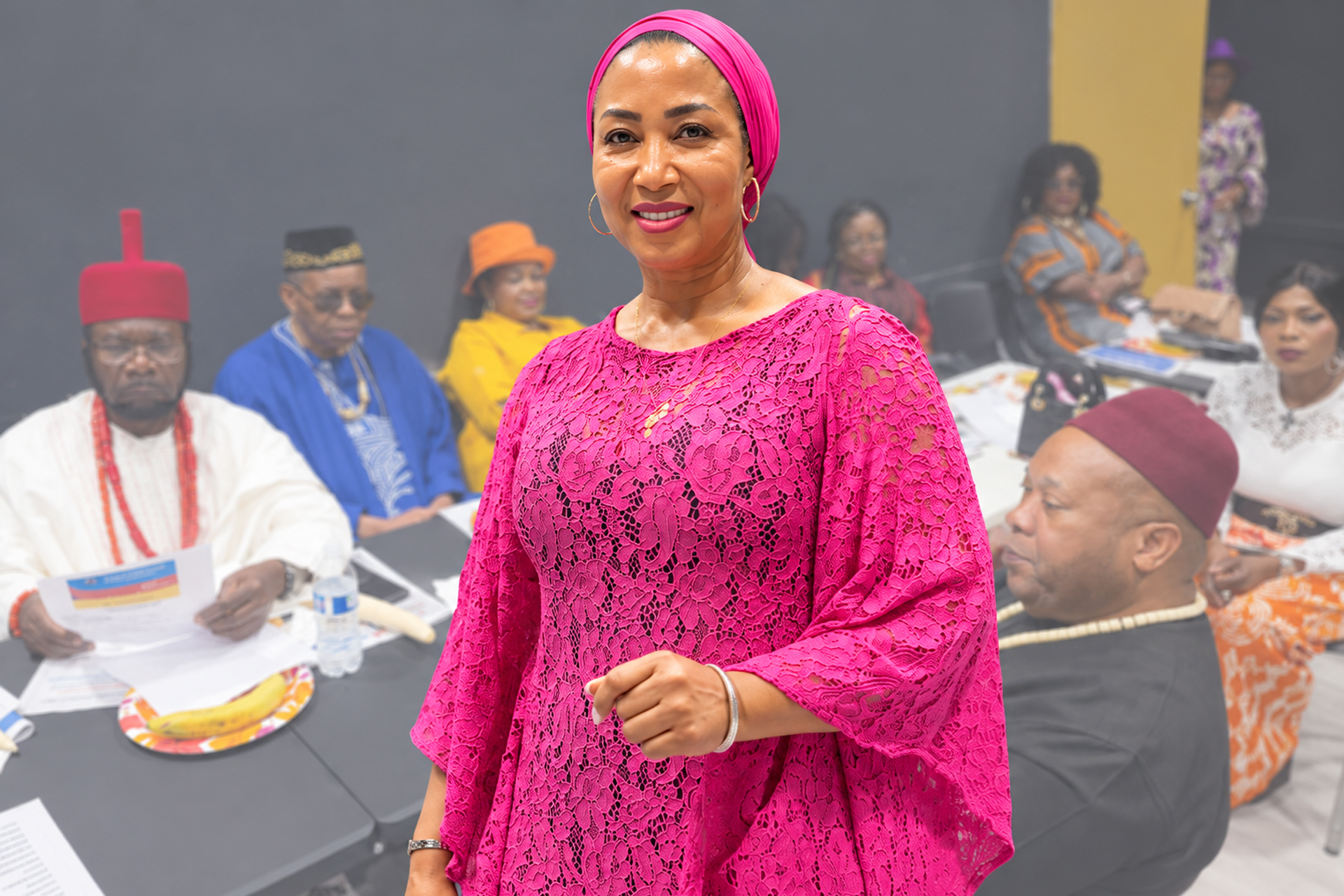
SUGAR LAND, TEXAS — The Sugar Land People’s Club of Nigeria International (SLPCNI) is continuing its membership expansion following its recently concluded induction ceremony, with Dr. Nkem Ugwu becoming one of the latest community members to join the organization.
Ugwu, a Sugar Land resident originally from Nsukka, Enugu State, Nigeria, is an entrepreneur and mother of three sons, a mother-in-law, and a grandmother. She describes service to others, family, and community engagement as important parts of her personal and professional life.

Grand Patron Ide Obinna Nnanyelugo Mbachu addressing the September Conference of the Sugar Land PCNI
Her membership comes on the heels of the branch’s successful bi-annual induction ceremony, during which 16 new members were formally sworn in by PCNI National President Atty. Fidelis Onyebueke. The celebration attracted national leaders, patrons, and members representing branches from across the People’s Club network.

Photo from left: Hon. Chief Sir Michael Okeke; Hon. Anaeto Okakpu “Oranwezuluaku”; Grand Patron Ide Obinna Nnanyelugo Mbachu; Hon. Dr. Nkem Ugwu ; Hon. Prof. Chris Ulasi, Group Chairman; Hon. Chief, Sir Basil Mbuba; Hon. Chief Sir Dr. Uche Egbuchuam “Akudo World Wide.”
Ugwu said joining the organization provides an opportunity to develop meaningful relationships while contributing to its mission.
“I am truly excited and honored to join the prestigious People’s Club of Nigeria International, Sugar Land Branch. I look forward to getting to know fellow members, building lasting friendships, and becoming actively involved in this vibrant and welcoming community. I am especially drawn to the Club’s tradition of fellowship, service, and mutual support, and I hope to contribute my experience, energy, and passion for serving others to its continued growth.”
Grand Patron Ide Obinna Nnanyelugo Mbachu welcomed Ugwu, describing continued interest in membership as encouraging for the historic First International Branch.

Membership Chairperson Hon. Chief Udoji Achebe and Hon. Ndidi Chidume
“When people of accomplishment and community spirit continue to identify with our organization, it tells us that the values upon which People’s Club was built remain relevant. We welcome Dr. Ugwu and look forward to the experience and fellowship she brings to our family.”
Hon. Prof. Chris Ulasi, Group Chairman, said the branch’s recent induction helped showcase an organization that continues to combine Nigerian cultural heritage with community engagement in Houston.
“Our successful induction created tremendous enthusiasm, but our focus goes beyond ceremonies. We are building a stronger organization rooted in friendship, responsibility and service. Dr. Ugwu’s decision to join reflects that continuing momentum.”

One of the meeting hosts, Hon. Professor Keih George, introduces the co-meeting hosts.
Membership Chairperson Hon. Chief Udoji Achebe said the branch remains interested in individuals prepared to participate actively in its programs and fellowship.
“Membership is about belonging, but it is equally about participation and contribution. We are delighted to welcome Dr. Ugwu and other prospective members who share the principles and aspirations of People’s Club.”
For SLPCNI, the growing interest following its induction represents another chapter in the evolution of a branch with a special place in the organization’s history.
And for Ugwu, it marks the beginning of a new journey—one centered on friendship, community, and service.
Branch considers annual induction as August celebration of prestige, culture and comradeship inspires growing community interest
HOUSTON, TEXAS — Membership requests to the Sugar Land Branch of People’s Club of Nigeria International (PCNI) have risen significantly following its successful August induction ceremony, prompting the organization to consider making the event an annual affair.
Group Chairman, Hon. Prof. Chris Ulasi, confirmed the surge in interest, saying the branch has received numerous inquiries from prospective members since the ceremony that formally admitted 16 new members to the organization.
“The response since the induction has been remarkable. We have seen a significant increase in people asking about membership and how they can become part of the People’s Club family,” Ulasi said. “Many of them attended the event or heard about it afterward and were impressed by the fellowship, dignity, cultural pride, and genuine comradeship they witnessed.”
Ulasi said the development, including a possible change from the current bi-annual induction arrangement to an annual ceremony, would be discussed at the branch’s September general meeting.
The renewed interest in membership comes on the heels of an elaborate induction that attracted national officers, patrons, branch chairmen, members, and guests from across the People’s Club family.
National President, Atty. Fidelis Onyebueke, who presided over the swearing-in of the 16 inductees, described the event as a total success and commended the Sugar Land Branch, PCNI’s First International Branch, for what he called an exceptional celebration of fellowship, culture, service, and unity.
During the formal ceremony, each inductee was invited to the podium to take the membership oath and receive a certificate from the national president, who was assisted by PCNI Attorney Chukwuka John Ukadike.
Beyond the admission of new members, however, the event offered guests a public display of the traditions that have historically defined the People’s Club: prestige, love, service, and comradeship. Those characteristics were reflected throughout the ceremony, from the reception of national officers and interaction among members to the formal induction, cultural presentation, and extended social celebration that followed.
Grand Patron, Ide Obinna Nnanyelugo Mbachu, said the growing interest in membership was an indication that the organization’s values resonated with guests who experienced the event.
“What people witnessed was the character of People’s Club—the love among members, respect for one another, willingness to serve, and the comradeship that brings us together,” Mbachu said. “Prestige is not simply about appearance; it is about how we conduct ourselves and how we treat people. When the community sees those values demonstrated, it is understandable that others would want to become part of the organization.”
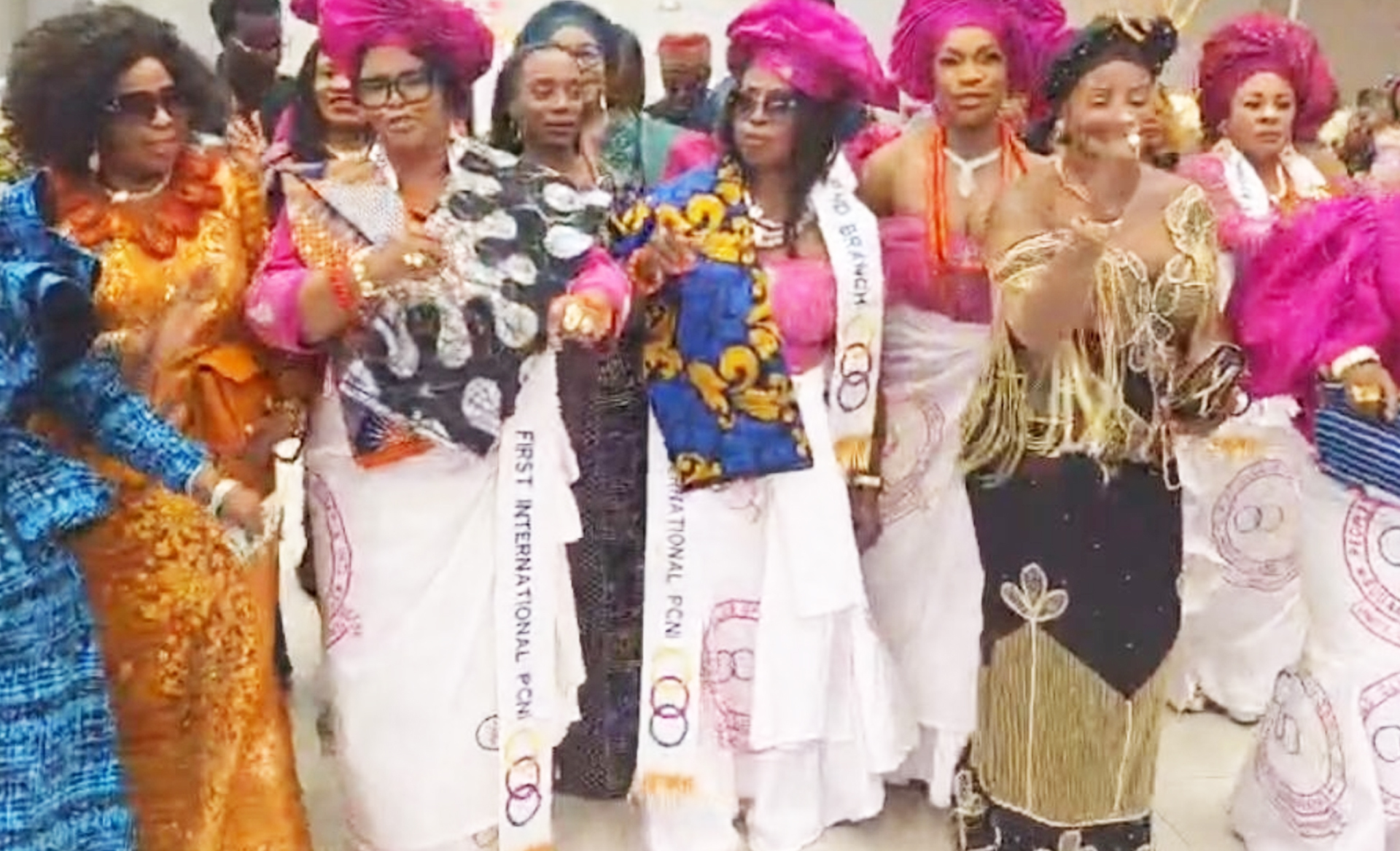
The cultural presentation was among the most visible features of the evening. Women members and associates appeared in coordinated traditional attire featuring red-pinkish blouses with matching head ties and white wrappers bearing the PCNI logo. The men wore all-white outfits complemented by customized PCNI cap pins and distinctive PCNI sashes worn as neckpieces.

The coordinated appearance created a colorful expression of Nigerian cultural identity while reinforcing the sense of unity that characterized the gathering.
As the formal program concluded, the ceremony transitioned into an extended social celebration. Members, inductees, and guests shared food and drinks before taking to the dance floor, with music and festivities continuing into the early hours of Sunday.
The presence of members and officials from different branches also gave the ceremony broader significance for Sugar Land, whose status as the First International Branch places it prominently in PCNI’s history outside Nigeria.
For Ulasi, however, the strongest indication of the event’s impact came afterward, as inquiries from prospective members continued to reach the branch.
He said that while the organization welcomes the increased interest, prospective members would be expected to understand the responsibilities and traditions associated with belonging to the People’s Club. “Membership is about much more than attending social events,” Ulasi said. “It is about service, friendship, responsibility, and commitment to one another. Those are the values we intend to preserve as the branch continues to grow.”
The September meeting is expected to consider how the branch will respond to increased membership interest and whether the success of the August ceremony provides sufficient grounds to move to an annual induction schedule. For the Sugar Land Branch, the aftermath of the August induction may prove as significant as the ceremony itself: 16 members entered the People’s Club that evening, but the celebration appears to have inspired many more to seek a place within its ranks.


Community5 days ago
People’s Club Sugar Land Is Growing — Grand Patron Mbachu Explains Why

Education1 week ago
Professor Josephine Onyido Earns Prestigious Nigerian Academy of Education Induction

Houston1 week ago
PCNI Elevates Chief Dr. Emmanuel Opara to Patron in Historic Ihiagwa Investiture

Nellie Onwuchekwa6 years ago
Emotional Conflict: Is She Toying with Me?

Africa6 years ago
Corruption at the Nigerian Consulate Atlanta – A Victim’s Nightmarish Experience

Anthony Obi Ogbo4 months ago
Gowon’s Book and the Dangerous Politics of Selective Memory

Houston1 year ago
Video: Omambala Cultural Association in Houston Celebrates Motherhood with Joyous Igbo-Inspired Mother’s Day Event

Houston1 year ago
VIDEO: Chris Hollins Opens Cartoon Art Showcase at TSU’s CommWeek

Community2 years ago
Commissioner Dexter L. McCoy speaks about the African-American Memorial Event
-

 Houston4 weeks ago
Membership Interest Soars After Sugar Land People’s Club’s Successful Induction
-
 Houston1 week ago
PCNI Elevates Chief Dr. Emmanuel Opara to Patron in Historic Ihiagwa Investiture
-

 Houston2 weeks ago
Membership Surge Continues as Dr. Nkem Ugwu Joins People’s Club
-
 Community5 days ago
People’s Club Sugar Land Is Growing — Grand Patron Mbachu Explains Why
-
 Education1 week ago
Professor Josephine Onyido Earns Prestigious Nigerian Academy of Education Induction