

Houston
Houston is back in the Final Four, primed to end a streak of truly bad luck

INDIANAPOLIS — They danced, they laughed, Kelvin Sampson gave his kids hugs. Houston was one band of happy Cougars to be back in the Final Four this week. Of course, the program has been there before, quite some time ago.
It didn’t end well.
Five times it didn’t end well. In fact, you could make the case that few programs have had a more star-crossed Final Four history than Houston, which now has a chance to vastly improve on that situation. Illinois and Oklahoma are the only other schools who have been to as many as five Final Fours and are yet to win a title. If the current Cougars lose next weekend, they will stand alone at six.

And it’s just not the record, but how it’s happened. They have had meaty roles for two of the most famous Final Four games in history — as the victims. In their five past trips they somehow managed to run into Kareem Abdul-Jabbar . . . and Michael Jordan . . . and Patrick Ewing. A wall of Hall of Famers for Houston to beat its collective heads against.
But let’s start at the beginning.
1967 — Timing is everything, and the Cougars didn’t have it. They advanced to their first Final Four and who should be waiting for them but one of the greatest teams in history; unbeaten UCLA with Lew Alcindor – later Abdul-Jabbar — in his first season of steamrolling college basketball.
The Houston players had an idea of what they were in for the day prior to the game, when they were sitting in their hotel lobby pretty much to themselves and in strolled the Bruins, surrounded by a gaggle of fans and media. UCLA arrived like rock stars, while the Cougars, Don Chaney would say years later, “felt like country bumpkins.”
The next day, Alcindor had 19 points and 20 rebounds and UCLA breezed to a 15-point victory.
1968 — Houston ended UCLA’s 47-game winning streak by two points in the Astrodome in a made-for-TV January spectacular that was instantly billed The Game of the Century. Two months later they were together again in the Final Four in Los Angeles, with the Cougars unbeaten and No. 1 and the Bruins with only that one loss. It was the rematch everyone wanted, and the nation settled back to watch college basketball’s version of Frazier vs. Ali.
What the nation got was more like an accountant vs. Ali. The first bad sign for Houston was when its student manager – selling leftover tickets from the team allotment outside the arena as coach Guy Lewis had requested – was arrested by LA police, taken to jail and charged with scalping.
It wasn’t any more pleasant inside the building for the players. Alcindor had a scratched cornea in the January meeting but was at full speed for the rematch, and he and the rest of the Bruins had a message to send. It ended 101-69. Houston star Elvin Hayes, who had vexed the Bruins with 39 points in January, was held to 10, nearly 28 points under his average.
Lewis called it then “the greatest exhibition of basketball I have ever seen in my life.” A lot of people could say that.
1982 — More than 61,000 people were in the Superdome audience when Houston took on North Carolina, which included stars such as Sam Perkins and James Worthy, and a freshman named Jordan. As was their custom back then, the Tar Heels got the lead and then four-cornered the Cougars into oblivion, 68-63.
1983 — The one that haunts the most. Phi Slama Jama was all the rage, as the high-flying Cougars soared into the national championship game by beating Louisville in a 94-81 dunkathon in the semifinals. The media immediately dubbed that game 21st century basketball, and all that was left for No. 1 Houston was to finish off a 10-loss team from North Carolina State that barely eked into the tournament.
The Wolfpack dictated a slow tempo in this pre-shot clock era, but the Cougars put together a 17-2 run for a late seven-point lead. Then Houston started missing free throws, North Carolina State rallied and had the ball in the final seconds in a 52-52 tie. Guard Dereck Whittenburg put up a desperation 30-foot shot with four seconds left that was way short and . . . you might know the rest. They do in Houston. Lorenzo Charles was waiting under the basket to grab the errant shot and slammed it home with one second left. Phi Slama Jama had lived by the dunk, and died by the dunk. The scene of North Carolina State coach Jim Valvano running wildly around the court gets replayed every spring as an iconic and wonderful tournament moment – except for the team he had just beaten.
For hollow consolation, Houston’s Akeem later-to-be-Hakeem Olajuwon was named Most Outstanding Player, and 38 years later, is still the last member of a losing team to be so.
1984 — There was enough left over of Phi Slama Jama — especially Olajuwon — that Houston returned to the national title game. But the Cougars ran into Ewing and Georgetown’s defense and lost 84-75. The golden days were over. Houston would not win another NCAA tournament game for 34 years.
The Cougars’ special brand of Final Four pain can be measured with numbers. They are one of only four programs to go to three consecutive Final Fours and not win any of them. UCLA, Ohio State and North Carolina are also in that club, but those three all have national championships from other years. Houston is also one of four programs to lose consecutive title games — with Cincinnati, Michigan and Butler.
But maybe another number explains how tough it has been for the Cougars, because the opponent has a lot to do with fate. Take away the North Carolina State fairy tale, and the four other teams Houston lost to in the Final Four had a combined record of 118-6 when they met

So now here the Cougars are again 37 years later, and Sampson is telling stories about how much he wishes his parents were alive to see this. And about the Sweet 16 in 2002 when he was coaching at Oklahoma, and how he was in the hospital until 4 a.m. the day of the game waiting for his father to come out of surgery with a brain aneurysm. Those Sooners would eventually get to the Final Four. And how his old boss at Oklahoma, athletics director Joe Castiglione sent Sampson a big package when he got the job at Houston. Inside the package was a ladder to both symbolize Sampson’s career climb and the hope he would be needing it to cut down nets in the future.
Final Four: Here’s what the world was like last time Baylor made it
This Houston team has nothing like the glamour of Phi Slama Jama or the Elvin Hayes bunch that took down UCLA in the middle of the Astrodome. “We may not have the brightest lights,” Sampson said, “but our lights shine as bright as anybody else’s.”
These Cougars now have a chance to do what those Houston teams could not. And if it doesn’t turn out, if there is defeat at the end for a sixth time?
Well, it’s not a bad legacy for a program to have, losing lots of Final Four games.
_______________
Culled from the NCAA.COM. Writer, Mike Lopresti is a member of the US Basketball Writers Hall of Fame, Ball State journalism Hall of Fame and Indiana Sportswriters and Sportscasters Hall of Fame. He has covered college basketball for 43 years, including 39 Final Fours. He is so old he covered Bob Knight when he had dark hair and basketball shorts were actually short.
The views on this page do not necessarily reflect the views of the NCAA or its member institutions.
.gif?resize=532%2C299&ssl=1)

- From Threats to Partnership: How Diplomacy Repositioned Nigeria in Washington - January 13, 2026
- Burbank Marriage Unravels After Woman Allegedly Used Tracking Devices to Monitor Husband - December 27, 2025
- U.S. Signals More Strikes in Nigeria as Abuja Confirms Joint Military Campaign - December 27, 2025

“Her persistence and long-term investment make a clear case: she has earned this opportunity.“ —Anthony Obi Ogbo
In the special election to fill Texas’s 18th Congressional District, no candidate won a majority on November 4, 2025, leading to a January 31, 2026, runoff between Democratic frontrunners Christian Menefee and Amanda Edwards. Menefee, Harris County Attorney, led the field with roughly 29% of the vote, while former Houston City Council member Edwards finished second with about 26%. Both are vying to represent a district left vacant after the death of U.S. Rep. Sylvester Turner.

The 18th Congressional District is far more than a geographic area. Anchored in Houston’s historic Black communities, it is a political and cultural stronghold shaped by civil rights history, faith institutions, and grassroots activism. Sheila Jackson Lee represented this district for nearly three decades (1995–2024), becoming more than a legislator—she was a constant presence at churches, funerals, protests, and community milestones. For residents, her leadership carried spiritual weight, reflecting stewardship, protection, and a deep, almost pastoral guardianship of the district. Her tenure symbolized continuity, cultural pride, and a profound connection with the people she served.
Houstonians watched as Jackson Lee entered the 2023 Houston mayoral race, attempting to transition from Congress to city leadership. Despite high-profile endorsements, including outgoing Mayor Sylvester Turner and national Democratic figures, she lost the December 9, 2023, runoff to State Senator John Whitmire by a wide margin. Following that defeat, Jackson Lee filed to run for re-election to her U.S. House seat, even as Edwards—who had briefly joined the mayoral race before withdrawing—remained in the congressional primary.
At that time, Jackson Lee’s health was visibly declining, yet voters still supported her, honoring decades of service. She defeated Edwards in the 2024 Democratic primary before announcing her battle with pancreatic cancer. Her passing in July 2024 left the seat vacant.
Edwards, already a candidate, sought to fill the seat, but timing and party rules intervened. Because Jackson Lee died too late for a regular primary, Harris County Democratic Party precinct chairs selected a replacement nominee. Former Houston Mayor Sylvester Turner, a retired but widely respected figure, narrowly edged out Edwards for the nomination, effectively blocking her despite her prior campaigning efforts. Turner won the general election but died in March 2025, triggering a special election in 2025, in which Edwards advanced to a runoff.
The January 31, 2026, runoff will hinge on turnout, coalition-building, and key endorsements. Both candidates led a crowded November field but fell short of a majority, with Menefee narrowly ahead. Endorsements such as State Rep. Jolanda Jones’ support for Edwards could consolidate key Democratic blocs, particularly among Black women and progressive voters. In a heavily Democratic district where voter confusion and turnout patterns have been inconsistent, the candidate who best mobilizes supporters and unites constituencies is likely to prevail.
Amanda Edwards’ case is compelling. Although both candidates share similar values and qualifications, her claim rests on dedication, consistency, and timing that have been repeatedly denied. She pursued this seat with focus and purpose, maintaining a steady commitment to the district and its future. Her path was interrupted by the prolonged political ambitions of Jackson Lee and Turner—figures whose stature reshaped the race but delayed generational transition. Edwards did not step aside; she remained visible, engaged, and prepared. In a moment demanding both continuity and renewal, her persistence and long-term investment make a clear case: she has earned this opportunity.
This race comes down to trust, perseverance, and demonstrated commitment. Amanda Edwards has consistently shown up for the district, even when political circumstances repeatedly delayed her chance. Her dedication reflects readiness, respect for the electorate, and an unwavering commitment to service. Voting for Amanda Edwards is not only justified—it is the right choice for Houston’s 18th Congressional District.
♦Publisher of the Guardian News, Professor Anthony Obi Ogbo, Ph.D., is on the Editorial Board of the West African Pilot News. He is the author of the Influence of Leadership (2015) and the Maxims of Political Leadership (2019). Contact: anthony@guardiannews.us
- From Threats to Partnership: How Diplomacy Repositioned Nigeria in Washington - January 13, 2026
- Burbank Marriage Unravels After Woman Allegedly Used Tracking Devices to Monitor Husband - December 27, 2025
- U.S. Signals More Strikes in Nigeria as Abuja Confirms Joint Military Campaign - December 27, 2025
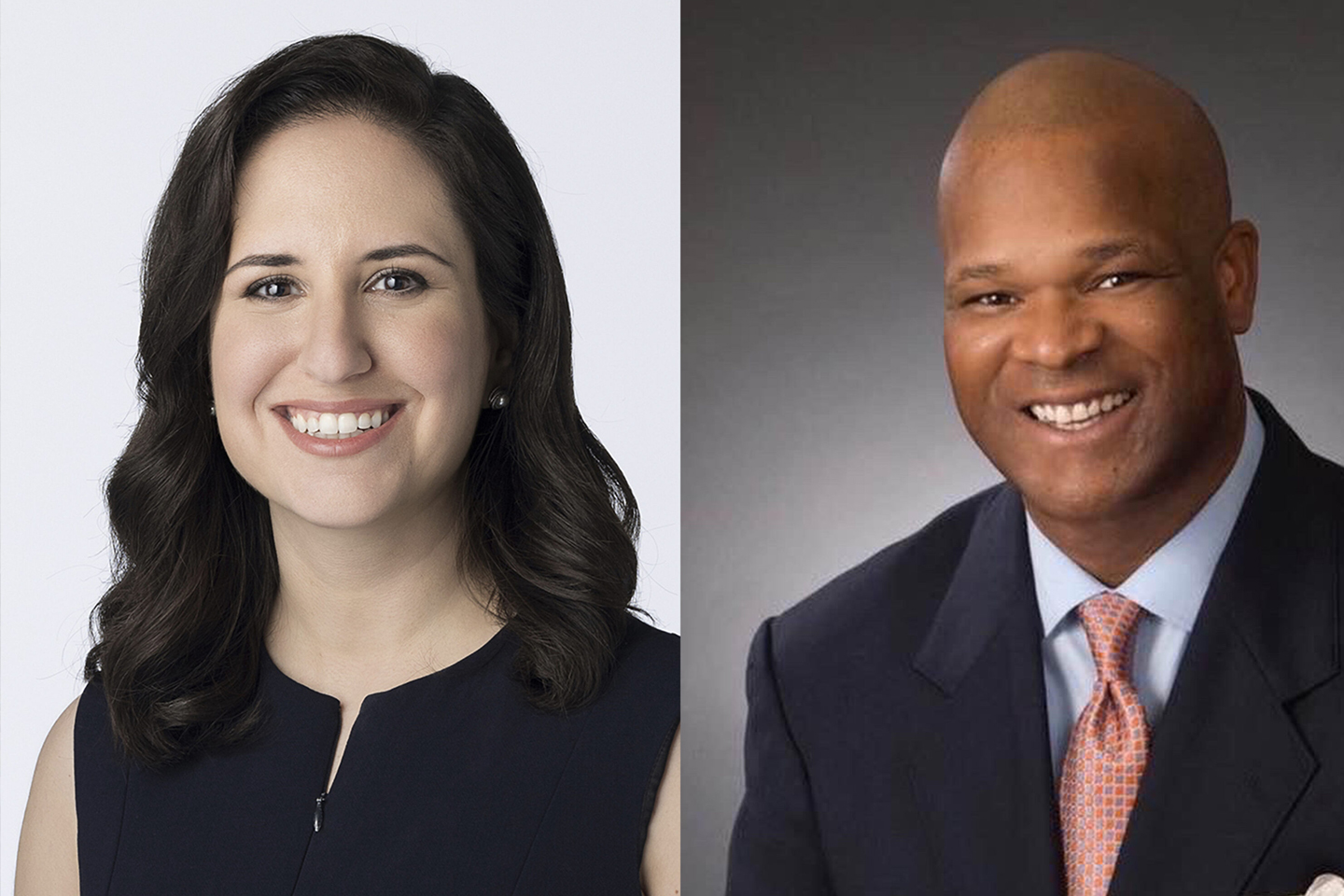
Low-turnout runoff races for Houston City Council and Houston Community College trustee seats revealed how message discipline, local credibility, and voter mobilization determined clear winners—and decisive losers.
The final ballots are counted, and Houston’s runoff elections have delivered clear outcomes in two closely watched local races, underscoring a familiar truth of municipal politics: in low-turnout elections, organization and credibility matter more than name recognition alone.
In the race for Houston City Council At-Large Position 4, Alejandra Salinas secured a decisive victory, winning 25,710 votes (59.27%) over former council member Dwight A. Boykins, who garnered 17,669 votes (40.73%). The margin was not accidental. Salinas ran a campaign tightly aligned with voter anxiety over public safety and infrastructure—two issues that consistently dominate Houston’s civic conversations. Her emphasis on keeping violent criminals off city streets and expanding Houston’s water supply spoke directly to quality-of-life concerns that resonate across districts, especially in an at-large contest where candidates must appeal to the city as a whole.
Salinas’ win reflects the advantage of message clarity. In a runoff, voters are not looking to be introduced to candidates—they are choosing between candidates they are already familiar with. Salinas presented herself as forward-looking and solutions-oriented, while Boykins, despite his experience and political history, struggled to reframe his candidacy beyond familiarity. In runoffs, nostalgia rarely outperforms momentum.
The second race—for Houston Community College District II trustee—followed a similar pattern. Renee Jefferson Patterson won with 2,497 votes (56.63%), defeating Kathleen “Kathy” Lynch Gunter, who received 1,912 votes (43.37%). Though the raw numbers were smaller, the dynamics were just as telling.
Patterson’s victory was powered by deep local ties and a clear institutional vision. As an HCC alumna, she effectively positioned herself as both a product and a steward of the system. Her pledge to expand the North Forest Campus and direct resources to Acres Home connected policy goals to place-based advocacy. In trustee races, voters often respond less to ideology and more to proximity—those who understand the campus, the students, and the neighborhood. Patterson checked all three boxes.
By contrast, Gunter’s loss highlights the challenge of overcoming a candidate with genuine community roots in a runoff scenario. Without a sharply differentiated message or a strong geographic base, turnout dynamics tend to favor candidates with existing neighborhood networks and direct institutional relevance.
What ultimately decided both races was not a surprise, but execution. Runoffs reward campaigns that can re-mobilize supporters, simplify their message, and convert familiarity into trust. Salinas and Patterson did exactly that. Their opponents, though credible, were unable to expand or energize their coalitions in a compressed electoral window.
The lesson from Houston’s runoff elections is straightforward but unforgiving: winners win because they align message, identity, and ground game. Losers lose because, in low-turnout contests, anything less than that alignment is insufficient.
- From Threats to Partnership: How Diplomacy Repositioned Nigeria in Washington - January 13, 2026
- Burbank Marriage Unravels After Woman Allegedly Used Tracking Devices to Monitor Husband - December 27, 2025
- U.S. Signals More Strikes in Nigeria as Abuja Confirms Joint Military Campaign - December 27, 2025
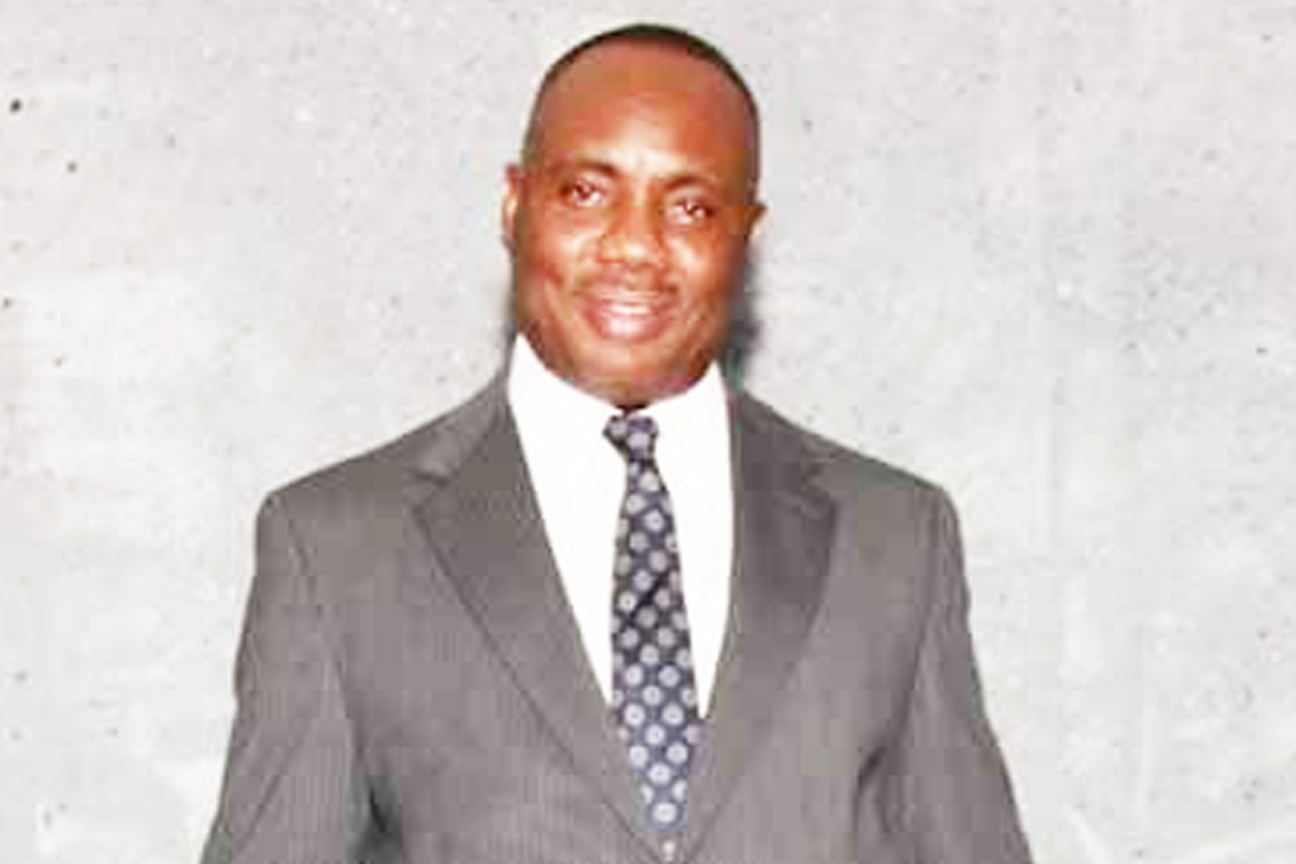
Houston was thrown into mourning on September 19, 2025, following the sudden passing of businessman and community advocate Lawrence Mike Obinna Anozie, who peacefully joined his ancestors. Immediate family member in Houston, Nick Anozie, confirmed his untimely death and expressed gratitude for the outpouring of love and condolences from both the Houston and Owerri communities.
Lawrence was born to Chief Alexander and Lolo Ether Anozie of Owerri in Imo State, Nigeria, and will be dearly remembered by family members, friends, and the entire Houston community.
An accomplished accountant, the late Lawrence incorporated and successfully managed three major companies: Universal Insurance Company, LLC, Universal Mortgage LLC, and Universal Financial Services. Through these enterprises, he not only built a thriving business career but also created opportunities for countless individuals to achieve financial stability. His contributions to entrepreneurship and community development will remain a lasting legacy.
According to the family, arrangements for his final funeral rites are in progress and will be announced in due course.
Lawrence will forever be remembered as a loving and compassionate man who dedicated much of his life to uplifting others. He helped countless young Nigerians and African Americans overcome economic challenges by providing mentorship, financial guidance, and career opportunities. His generosity touched the lives of many who otherwise might not have found their footing. A devout Catholic, he was unwavering in his faith and never missed Mass, drawing strength and inspiration from his church community. To those who knew him, Lawrence was not only a successful businessman but also a pillar of kindness, humility, and faith whose legacy of service and compassion will continue to inspire generations.
For more information, please contact Nick Anozie – 832-891-2213
- From Threats to Partnership: How Diplomacy Repositioned Nigeria in Washington - January 13, 2026
- Burbank Marriage Unravels After Woman Allegedly Used Tracking Devices to Monitor Husband - December 27, 2025
- U.S. Signals More Strikes in Nigeria as Abuja Confirms Joint Military Campaign - December 27, 2025


From Threats to Partnership: How Diplomacy Repositioned Nigeria in Washington

When Air Power Becomes a Christmas Performance: The Illusion of Success in Trump’s Nigerian Strike

Burbank Marriage Unravels After Woman Allegedly Used Tracking Devices to Monitor Husband

Emotional Conflict: Is She Toying with Me?

Corruption at the Nigerian Consulate Atlanta – A Victim’s Nightmarish Experience
From Threats to Partnership: How Diplomacy Repositioned Nigeria in Washington

Video: Omambala Cultural Association in Houston Celebrates Motherhood with Joyous Igbo-Inspired Mother’s Day Event

VIDEO: Chris Hollins Opens Cartoon Art Showcase at TSU’s CommWeek
