

Politics
Congress rolls out ‘Better Deal,’ new economic agenda
Neque porro quisquam est, qui dolorem ipsum quia dolor sit amet, consectetur, adipisci velit, sed quia non numquam.






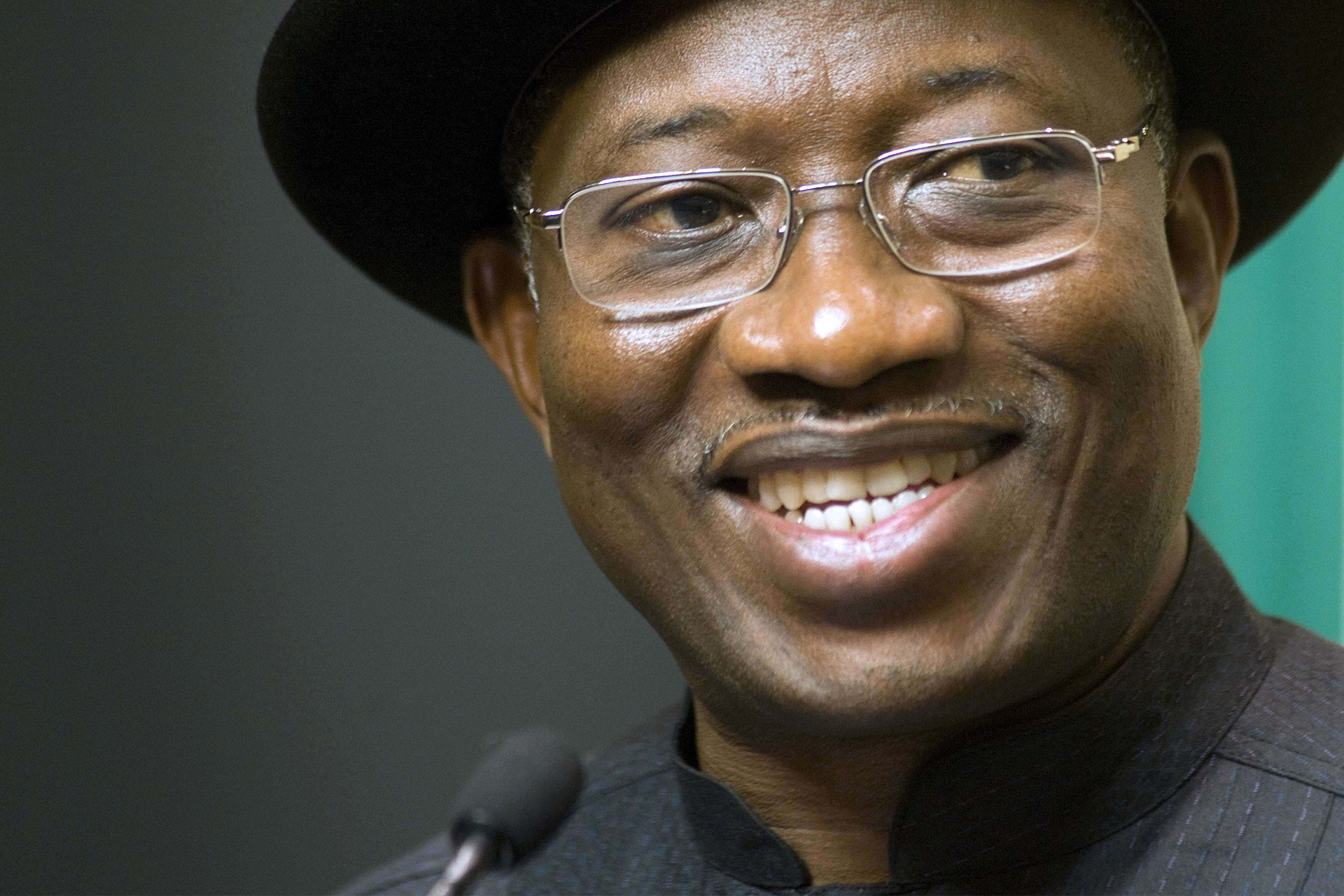
“Jonathan’s calculated and weaponized ambiguity breeds deception and weakens emerging political alliances.” —Dr. Anthony Obi Ogbo
Former Nigerian President Goodluck Jonathan has once again found himself at the center of presidential speculation, floating silently above the country’s political waters while supporters aggressively market him as a possible candidate ahead of another critical election cycle. And once again, Jonathan is doing what he has mastered throughout his political career: saying nothing clearly while allowing political confusion to grow around him.

This pattern is not new. It is the same indecisive political behavior that defined some of the most consequential moments of his rise and fall. Jonathan became president in 2010 following the death of President Umaru Musa Yar’Adua. At the time, many northern political stakeholders within the then-ruling PDP believed there was an informal understanding that Jonathan would complete Yar’Adua’s term but not seek another full term in 2011, thereby preserving the party’s zoning arrangement between North and South. Instead of taking a clear and immediate position, Jonathan spent months dribbling the nation politically. He neither fully denied nor openly confirmed his intentions until the political tension had already escalated nationwide.
By the time he eventually declared his candidacy, the damage had been done. Many northern allies who initially supported him felt betrayed, politically cornered, or deceived. The PDP fractured internally, regional distrust deepened, and Jonathan’s relationship with major northern power blocs deteriorated permanently. Though he won the 2011 election, the cracks created by that indecision followed him into 2015, contributing significantly to the coalition that eventually removed him from power.
Yet Jonathan learned little from that experience. Since losing reelection in 2015, his name has repeatedly surfaced during every major electoral cycle as a potential presidential contender. Each time, his supporters strategically floated his candidacy across media platforms and political circles. Each time, Jonathan refused to decisively shut the door. Silence became his political instrument, whereas ambiguity became his strategy.
Now the country is witnessing the same playbook again. As coalition politics intensify and opposition forces attempt to consolidate around alternative political movements, Jonathan’s name has resurfaced aggressively. Reports and speculations about his presidential ambition continue to dominate political discussions, especially within camps seeking to disrupt the growing momentum surrounding Peter Obi and emerging opposition realignments.
The troubling part is not merely that Jonathan’s supporters are campaigning. The troubling part is that Jonathan fully understands the implications of his silence. He knows that his political stature carries enough weight to destabilize fragile coalition negotiations. He knows his name alone can divide campaign structures, weaken consensus-building, and inject uncertainty into opposition calculations. Yet he refuses to publicly and definitively state where he stands.
That is not statesmanship. That is calculated political ambiguity. Jonathan’s political history is filled with similarly contradictory choices. After losing power in 2015, he received widespread praise for conceding defeat peacefully. He initially framed that decision as a sacrifice made to preserve Nigerian lives and prevent violence. Later, however, different narratives emerged suggesting international pressure, particularly from the United States under President Obama. The shifting explanations weakened what could have remained one of his strongest democratic legacies.
Then came another contradiction. Despite emerging politically from the PDP, Jonathan gradually aligned himself closely with the administration of former President Muhammadu Buhari, serving in diplomatic and goodwill capacities that many PDP loyalists considered politically inappropriate. This unusual closeness fueled longstanding allegations that elements within the APC establishment viewed Jonathan as a useful political instrument capable of destabilizing opposition coalitions from within. Whether those allegations are true or not, Jonathan’s conduct has consistently created room for suspicion.
His political base remains uncertain. His campaign structure is invisible.
Today, his undeclared ambition is already generating confusion among supporters, coalition organizers, and opposition strategists. His political base remains uncertain. His campaign structure is invisible. His intentions are unclear. Yet his loyalists continue mobilizing aggressively in his name while he watches silently from the shadows.
Nigeria is too politically fragile for this kind of elite gamesmanship. At critical national moments, leadership demands clarity, courage, and accountability. Jonathan cannot continue operating as a permanent “maybe” in Nigeria’s political future, thoughtlessly hovering around every election season like an unanswered question designed to manipulate negotiations and weaken emerging alliances.
At this time, Jonathan should sit in or sit out! If he wants to run, he should declare openly, defend his record, and face the democratic process directly. If he does not intend to run, he should immediately and publicly withdraw his name from the political marketplace. Anything short of that increasingly looks less like political strategy and more like calculated deception. Nigeria deserves leaders who make difficult choices openly—not politicians who weaponize silence while others gamble with national uncertainty in their name.
♦ Publisher of the Guardian News, Professor Anthony Obi Ogbo, Ph.D., is on the Editorial Board of the West African Pilot News. He is the author of the Influence of Leadership (2015) and the Maxims of Political Leadership (2019). Contact: anthony@guardiannews.us


Fifty and Fabulous: Chief Oby Marcel Celebrates a Golden Milestone in Houston

People’s Club Sugar Land Is Growing — Grand Patron Mbachu Explains Why

Professor Josephine Onyido Earns Prestigious Nigerian Academy of Education Induction

Emotional Conflict: Is She Toying with Me?

Corruption at the Nigerian Consulate Atlanta – A Victim’s Nightmarish Experience

Gowon’s Book and the Dangerous Politics of Selective Memory

Video: Omambala Cultural Association in Houston Celebrates Motherhood with Joyous Igbo-Inspired Mother’s Day Event

VIDEO: Chris Hollins Opens Cartoon Art Showcase at TSU’s CommWeek

Commissioner Dexter L. McCoy speaks about the African-American Memorial Event
-

 Houston3 weeks ago
PCNI Elevates Chief Dr. Emmanuel Opara to Patron in Historic Ihiagwa Investiture
-

 Houston1 month ago
Membership Interest Soars After Sugar Land People’s Club’s Successful Induction
-

 Houston4 weeks ago
Membership Surge Continues as Dr. Nkem Ugwu Joins People’s Club
-
 Community2 weeks ago
People’s Club Sugar Land Is Growing — Grand Patron Mbachu Explains Why
-
 Education3 weeks ago
Professor Josephine Onyido Earns Prestigious Nigerian Academy of Education Induction
-
 Houston2 days ago
Fifty and Fabulous: Chief Oby Marcel Celebrates a Golden Milestone in Houston