Bandits Kill 30 In Niger
Few hours after the Nigerian Senate called on President Muhammadu Buhari to declare bandits terrorists, the daredevil gunmen attacked a community in Niger State, killing 30 people and abducting many others.
The Senate had yesterday called on Buhari to, as a matter of urgency, declare bandits as terrorists and wage a total war against them, urging the president to give orders to the military to eliminate them by bombing their hideouts.
The Senate also asked President Buhari to immediately declare all known leadership of the bandits wanted, and track them wherever they are for arrest and prosecution.
These formed part of resolutions reached yesterday after the chamber considered a motion on banditry in Sokoto during plenary.
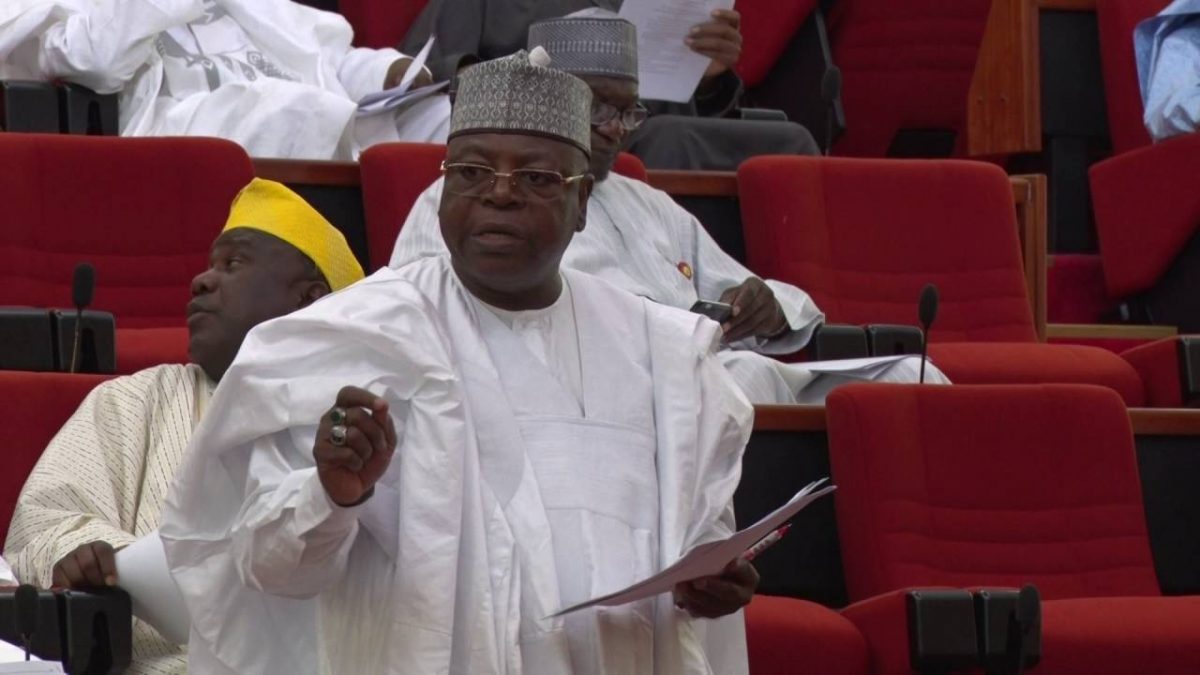
The motion was sponsored by Senator Ibrahim Gobir (APC, Sokoto East).
Presenting his motion, the lawmaker lamented that Sokoto East Senatorial District has now become a safe haven for bandits, following a crackdown on them by the military in neighbouring Zamfara.
He expressed worry that on Saturday, September 25, this year, 21 security personnel were killed in Dama and Gangara villages by rampaging bandits.
The lawmaker disclosed that those murdered included 15 soldiers, three mobile policemen and three members of Nigeria Security and Civil Defence Corps, in addition to yet-to-be-ascertained number of civilians from the sorrounding villages.
“This has gone to portray the seriousness of the problem which require concerted and urgent action by the declaration of total war on banditry,” he said.
According to Gobir, “Losing such numbers of trained security personnel will further deplete the numerical strength of the security personnel we have in the country, therefore jeopardising the security architecture of the country.”
He added that most of the bandits have now relocated to Sabon Bimini and Isa local governments due to the sustained military operation at the Zamfara axis.
The lawmaker observed that while the crackdown on the bandits was taking place in Zamfara state, no concc rete measures have so far been taken in Sokoto State, leaving it totally exposed to the activities of bandits.
He further expressed worry that the present military onslaught on the bandits is not well coordinated because it is only being orchestrated in Zamfara State, instead of all the front line states ravaged by bandits.
Gobir, therefore, called on the military to carry out a holistic operation on frontline states such as Sokoto, Katsina, Niger and Kaduna in order to produce an effective result.
The Senate president, Ahmad Lawan, commended the efforts of the Armed Forces in the sustained fight against insecurity in the country.
While calling for increased funding for the military, the Senate President asked relevant Committees of the National Assembly to ensure that funds appropriated to the armed forces are judiciously applied for the purpose for which they are budgeted.
“Distinguished colleagues, I think the issue of insecurity is one issue we will never get tired of debating here, and we must commend our Armed Forces and other security agencies.
“They give their lives in trying to secure this country, and that is the ultimate sacrifice anybody could pay.
“I believe that they are doing their best, but we also need to do our best as a government by giving them the kind of resources that they need.
“I believe we have done that in the supplementary budget as pointed out, but we also need to improve the annual appropriation for them.
“If we could pass over N800 billion in the supplementary budget, I don’t see why we cannot improve the resources up to N1 trillion and then hold our security agencies accountable.
“And I believe that we need to monitor the procurement processes when we give such kinds of resources to our Armed Forces.
“The security related committees, particularly the armed forces-related committees – Defence, Army, Navy and Airforce Committees – need to work very closely on the procurement processes by these Services.
“We must ensure that funds appropriated are not put in the wrong areas, and ensure that this fight is taken to its logical conclusion,” Lawan said.
The Senate, accordingly, in its resolutions, urged the President and Commander in Chief to declare the bandits as terrorists and wage total war against them, including bombing all their locations to annihilate and eliminate them.
It also urged President Buhari to declare all known leadership of the bandits wanted and track them wherever they are for arrest and prosecution.
The upper chamber also directed the National Emergency Management Agency (NEMA) and other relevant Federal Government agencies to, as a matter of urgency, give all the necessary support to the victims of the menace of bandits in Sokoto and other parts of the country.
It also observed a minute silence in honor of the fallen heroes and civilians who lost their lives in the unwholesome activities of the bandits.
Meanwhile, bandits yesterday sack Kachiwe in Munya local government area of Niger State, killing 30 and abducting many of the villagers.
Kachiwe has many adjoining villages near Sarkin Pawa, the headquarters of the local government, sharing boundaries with Kaduna State
It was learnt that the bandits on motorcycles invaded the village in the evening and shot randomly at the villagers, and at press time no fewer than 30 dead bodies were counted.
The secretary to the Niger State Government, Ahmed Ibrahim Matane, who confirmed the incident, described it as unfortunate, adding that the actual figure of of deaths and abductors is not yet clear
According to him, the state government will not be deterred in its effort to rid the state of crime and criminality.
He, however, appealed to the people to provide security agencies with credible information in order to take proactive measures in the fight against banditry.
Similarly, the commissioner of police in charge of the state command, Mr Monday Bala Kuryas, confirmed the attack
He said efforts are on to track down the perpetrators as a policemen have been despatch to the area to safeguard lives and properties of the people
Meanwhile, the commissioner confirmed that three people were killed in the attack on the Emir of Kalgara’s palace on Tuesday evening.
Anxiety in Kaduna as government shuts down telecom networks today
Meanwhile, following the persistent attacks, kidnapping and unwarranted killings of innocent citizens by bandits, Kaduna State Government has announced the shutting down of telecommunication services in some local governments of the state starting today, September 30, 2021.
Similarly, the state government has also banned the use of all forms of motorcycles, both for commercial and private purposes.
The government, however, said the shutdown would not cover the entire state, but that only the local government areas bordering the troubled Zamfara and Katsina states where military onslaught against bandits is ongoing will be affected.
The state governor, Mallam Nasir el-Rufai, who disclosed this during a media chat with some radio stations, said the security operatives are prepared to launch an offensive on bandits hiding in some parts of the state.
The governor said he had already written to the federal government about the telecommunication shutdown which, he said, had been approved by President Muhammadu Buhari.
The governor revealed that due to the shutdown of telecommunication services in Zamfara and Katsina, some bandits crossed over to neighbouring local government areas in Kaduna to make phone calls and demand ransom.
“There is no doubt that bandits and other criminals rely on telecommunication to communicate with their informants as well as with relatives of kidnapped victims so as to demand ransom,” he said.
El-Rufai also said the state government had established a task force that will go round the hinterlands to monitor compliance on some of the security measures adopted by the state to ensure that fuel stations and markets are closed to further strangulate bandits in the forest.
While advising residents on the need to identify and report informants or accomplices of bandits, the Governor said: “Anyone who comes to buy between 20 to 100 loaves of bread, sell it to him but also notify security agents.
“Or when someone comes with about 20 phones and wants to charge them, let them charge them, but also notify security agents,” he said.
Meanwhile, addressing a press conference on the shutdown and ban, the Commissioner, Ministry of Internal Security and Home Affairs, Samuel Aruwan, said, “I am here to inform you and to formally announce the implementation of certain measures to assist the security agencies in parts of the state.
“You will recall that Governor Nasir el-Rufai announced in a media chat Tuesday (28th September 2021) that the state government has formally requested the federal government to enforce the shutdown of telecom services in parts of the state identified by security agencies as requiring such measures.
“The relevant federal agencies have today informed the Kaduna State Government that the processes for telecoms shutdown in parts of the state have commenced.
“As part of the steps to address the current security situation in Kaduna State and neighbouring states in the North-West and North-Central regions, KDSG has held several meetings with security agencies to adopt critical measures towards crushing bandits in their identified hideouts.
“The military and other security forces have been carrying out assaults on the identified locations. The state government is advised that certain measures are now necessary to assist the spirited efforts of these security agencies.
“The following measures become effective from Thursday, 30th September 2021: the complete ban on the use of motorcycles, either for commercial or personal purposes, for three months in the first instance.
” Ban on possession of, or wielding of, dangerous weapons. Tricycles are allowed to operate only from 6am to 7pm. All tricycles must remove all curtains. Movement of all tricycles are restricted from dusk till dawn (7pm to 6am).
“All vehicles used for commercial transport must be painted in yellow and black within 30 days. Vehicles that are part of ride hailing services are to carry yellow and black stripes.
“Ban on the sale of petrol in jerry-cans or other containers in Birnin Gwari, Giwa, Chikun, lgabi, Kachia, Kagarko and Kajuru LGAs.
“Other containment measures previously communicated by the Kaduna State Government remain in place. These include ban on felling of trees and forestry activities in Birnin Gwari, Giwa Igabi, Chikun, Kachia, Kagarko and Kajuru LGAs.
” Ban on firewood and charcoal transportation, ban on the transportation of livestock into and out of the state. Cessation of weekly markets in the frontline local government areas of Birnin Gwari, Giwa, Chikun, Igabi, Kajuru and Kawo weekly market of Kaduna North local government”.
Aruwan said the Kaduna State government regretted the severe strain and inconvenience these measures will place on peaceful and law-abiding citizens and appealed for the understanding and cooperation of all residents of the affected areas and indeed across the state, stressing that the difficult times have demanded that difficult decisions be made.
“The measures had been adopted purely in the interest of our collective safety and security, and to assist the brave forces in their fight against the criminals,” he said, adding that too many lives have been lost, and too many families have been shattered.
“Small groups of wicked persons cannot continue to hold us to ransom, and force us to live in perpetual fear.
“Once again, the government craves the understanding of all citizens. The hardship we face will be temporary, and we are confident that, at the end, it will pay off. Good will prevail over evil,” el-Rufai stated.
Kaduna Residents React
Kaduna residents, particularly those in business, have expressed mixed feelings to the shutdown of telecommunication services and use of motorcycles among others security measures being put in place in Kaduna State.
Cynthia Haembor, a tailor, said, “I’m not happy about the government decision to shut down the telecommunication services, I could not get across to my customers since Tuesday. It is very frustrating and now motorcycles are also banned. it is not going to be funny at all.”
Alhaji Maikudi Usman who is a commercial motorcyclist said, “I am not against measures against insecurity but for me it is rather very harsh because it is with the motorcycle (Okada) that I raise money for my family’s upkeep, pay my children’s school fees and other needs. So to be at home for the next three months doing nothing, only God knows how we will survive,” he said.
To another resident who simply calls himself Danladi, “This ban, particularly on commercial motorcyclists (Okada), will most likely introduce another challenge because if those boys that rely on Okada to survive have nothing to do, they may take to theft and that will pose another challenge. I advise that the government should have a rethink honestly.”
Mr Peter Idoko, who operates a POS business in Bayan Dutse, said, “We started experiencing challenges since Tuesday and thought it was going to be restored, but alas we now know that it was gradual shutting down of telecom services.
“This is certainly going to send many out of business and will add to the poverty situation among people”.
However, Mr Abdullahi Mundi said, ” If this is going to help address the insecurity situation, it is a sacrifice that is worth it, though it is not going to be easy but we must bear the situation since it is only a temporary measure. We need to support the government in all measures that will check the activities of banditry and other forms of criminalities.”
CP, Monarch Decry Killing Of Akunyili, Others
The commissioner of police in Anambra state, Mr. Tony Olofu, has decried the wave of killings going on in the state since the past three days by a gang of rampaging gunmen, and urged other sister security agencies in the state and members of the public to give support to the command to bring the situation under control.
CP Olofu, according to the spokesman of the police in the state, Mr. Ikenga Tochukwu, made the appeal after visiting the various scenes across the state where the dare-devil gang had launched attacks and killed several people, including the husband to the late Minister of Information, Professor Dora Akunyili, Dr. Chike Akunyili, police officers and other law-abiding people in the state.
Also, the monarch of Agulu community, the native town of the Akunyilis, Igwe Innocent Obodoako, along with former governor of the state and Vice-presidential candidate of the Peoples Democratic Party in the November 2019 general elections, Mr. Peter Obi, told newsmen in his palace yesterday evening that his “heart had been broken by the several killings in the state since the past few days, especially the killing of Dr. Akunyili by persons whose identities had eluded identification by security operatives.
When approached for his comment, Mr. Obi declined, “You can see that I am mourning”.
CP Olofu, who said he had had deployed policemen from the state police command to go after the rampaging killer-gang, presented statistics of the killings thus:
He said on at about 2pm on 28/09/2021, a team of policemen attached to Aguata Area Command, while on routine patrol duty along Ezinifite/Igboukwu road, was attacked by hoodlums riding in two unmarked Sienna vehicle and a Toyota Hummer bus. The hoodlums set the patrol vehicle ablaze and fled the scene. No life was lost and normalcy has been restored in the area.
“Similarly, there was a gun attack on a member of the public at about 5pm along Oko road. The criminal elements set the vehicle of the victim ablaze, leaving him with a bullet wound and escaped. The victim was rescued and taken to hospital where he is responding to treatment.
“In related development, at about 4pm of 28/09/2021 the undesirable elements, in an attempt to snatch a Lexus 350 from its driver along Agulu Road, shot him. The attackers abandoned the victim and the car and fled. The victim was immediately rushed to the hospital, but was confirmed dead by doctors on duty. Meanwhile the body has been deposited to the hospital and the said vehicle recovered.
“Also, the miscreants at about 5pm along Nkpor round about, without any provocation, attacked and shot a police inspector attached to a VIP. He was quickly rushed to the hospital but was confirmed dead by the doctor on duty. The assailants also beheaded a yet-to-be-identified man and fled the scene.
“At Afor Nkpor junction, three unknown lifeless bodies were recovered, a burnt Toyota Hilux and a vandalized Toyota hummer bus were also seen at the scene. The bodies were taken to the hospital and, regrettably, one of the bodies was identified as one Mr Chike Akunyili. ”
DSS Denies Allegation Of Killing Dr. Akunyili
The Department of State Services (DSS) has denied media reports that its operatives killed Dr. Chike Akunyili.
DSS spokesperson, Dr Peter Afunanya, in a statement last night, said the allegations are spurious and illogical as there was no basis for the DSS to kill the medical doctor and/or fellow law enforcement agents.
Part of the DSS statement read that “the attention of the Department of State Services (DSS) has been drawn to an allegation that its operatives killed Dr. Chike Akunyili. Also, the Service was alerted to a social media video claiming that the “Nigerian DSS” murdered security escorts at Nkpor, Anambra State on 28th September, 2021.
“The Service hereby denies these allegations and wishes to clearly state that they are spurious and illogical. There was no basis for the DSS to kill the medical doctor and/or fellow law enforcement agents. The Service cherishes life and believes in the rule of law.
“The public should, therefore, be wary of the false narratives by those desirous of using it (the Service) to cover up their heinous acts. The operations of these hostile elements are already well known in the public space and to the discerning. Moreover, their desperate effort to divert attention or deploy reverse psychology to deceive unsuspecting members of the public has become a stock in trade that has defined their patterns and trends. It is a matter of time before the law will catch up with them.”
The DSS added that the Service and sister agencies will not relent in tracking down those behind the breakdown of law and order in parts of the country with a view to bringing them to justice.
Culled from the Leadership News Nigeria















 Houston4 weeks ago

 Houston2 weeks ago
