

Africa
Ivory Coast’s ex-President Gbagbo returns home after ICC acquittal

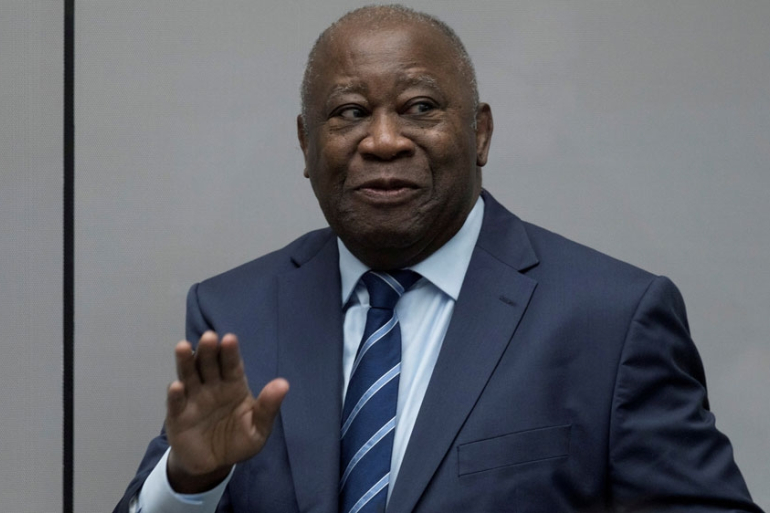
Former Ivory Coast President Laurent Gbagbo has returned home, 10 years after he was taken to the International Criminal Court (ICC) on charges of crimes against humanity.
Mr Gbagbo has been living in the Belgian capital Brussels since his release from detention three years ago.
His successor and rival President Alassane Ouattara invited him back.
He was the first former head of state to go on trial at the ICC but was acquitted of all charges.
The 76-year-old was charged after his refusal to accept defeat in a 2010 election triggered a civil war that left 3,000 people dead. He always denied all the allegations.
In March, the ICC appeals court upheld a 2019 acquittal, saying the prosecution had failed to prove its case against Mr Gbagbo and Charles Blé Goudé, an ally and former youth leader who was accused of leading a militia backing him.
Who is Gbagbo?
Born in the south-central region of Gagnoa in 1945 to a Catholic family, Mr Gbagbo was educated in a Christian seminary and later became a history professor.
He cut his political teeth in the trade union movement where he became a vocal opponent of Ivory Coast’s then one-party state. He started out on the political left, but in the 1980s took a strong nationalist, stance, which critics say bordered on xenophobia.
After 20 years in opposition, he was finally elected president in 2000, but civil war broke out just two years later. Mr Gbagbo’s supporters were accused of carrying out xenophobic attacks in areas they controlled – against those from the mainly Muslim north, immigrants from neighbouring African countries, and Westerners.
They accused former colonial power France and the UN of not doing enough to put down a rebellion which had split Ivory Coast in two, with rebels allied with Mr Ouattara seizing the north.
The crisis led to the postponement of the 2005 presidential elections six times before they were finally held in 2010 but Mr Gbagbo refused to concede defeat to Mr Ouattara after a runoff.
The five months of violence that followed were described as some of the most brutal violence the country had ever seen.
Mr Gbagbo said the dispute over Ivory Coast’s presidency was a fight for Ivorian – and indeed African – sovereignty and he accused the French and Americans of siding against him.
However, this argument did not prevail and the African Union backed the UN’s finding that Mr Gbagbo lost the election and should stand down.
He was finally captured in April 2011 in a presidential palace bunker by UN and French-backed forces supporting Mr Ouattara.
What Mr Gbagbo’s return means and its impact is uncertain, but for some Ivorians the hope is that it will help reconcile the country and shift the government’s attention to economic reforms and to dealing with the spillover of the Islamist insurgency from neighbouring Burkina Faso and Mali.
However, for many victims of Mr Gbagbo’s rule, time has not healed their physical and emotional wounds. His return is a reminder of the violence they suffered and the injustice they still endure.
This West African nation wants peace in its borders to be achieved through reconciling its people – whether it can achieve this without justice for victims of its civil wars, only time will tell.
Why was Gbagbo cleared by the ICC?
In 2019, the judges ruled that prosecutors had failed to demonstrate “the existence of a ‘common plan’ to keep Mr Gbagbo in power” which included crimes against civilians, or a “policy to attack a civilian population”.
Presiding Judge Cuno Tarfusser said the prosecution had also “failed to demonstrate that public speeches by Gbagbo constituted ordering or inducing the alleged crimes”.
In March, an ICC appeals court upheld the acquittal, dismissing the prosecution’s argument that there had been procedural errors in how the original verdict was delivered and that thousands of documents and 96 witnesses presented during the trial had proved the guilt of Mr Gbagbo beyond reasonable doubt.
Despite his acquittal at the ICC, he could still serve time in prison after Ivorian authorities sentenced him in absentia in November 2019 for “looting” the Central Bank of West African States (Bceao) in the aftermath of the 2010 disputed poll.
The 20-year sentence had ruled him out of taking part in last year’s election.
Why did Gbagbo go back?
After his acquittal President Ouattara invited him to return to Ivory Coast, which is still striving for political stability. Mr Gbagbo responded, by saying he wanted to promote peace in his country.
Although bitterness and division remain a decade after the election, and civil war, observers say Mr Ouattara feels politically secure after winning a controversial third term last year and is therefore willing to reconcile with his political nemesis.

Some of Mr Gbagbo’s allies were welcomed home two months ago after years in exile
But others point to the 2018 amnesty given to Mr Gbagbo’s wife, Simone, and several others jailed for crimes committed during the 2010-11 crisis, saying the reconciliation effort started a while ago.
Six other former allies of Mr Gbagbo returned two months ago after years in exile.
Amid the attention given to Mr Gbagbo, many victims of his rule are resentful and feel forgotten because few people have been convicted for their crimes.
“This creates impunity and paves the way for other crimes,” Issiaka Diaby of the Collective of Victims in Ivory Coast told news agency AFP.

The brief detention of a Nigerian Air Force C-130 Hercules aircraft and its crew in Burkina Faso may have ended quietly, but it exposed a deeper rift shaped by mistrust, insecurity, and uneven military power in West Africa. What was officially a technical emergency landing quickly became a diplomatic and security flashpoint, reflecting not hostility between equals, but anxiety between unequally matched states navigating very different political realities.
On December 8, 2025, the Nigerian Air Force transport aircraft made an unscheduled landing in Bobo-Dioulasso while en route to Portugal. Nigerian authorities described the stop as a precautionary response to a technical fault—standard procedure under international aviation and military safety protocols. Burkina Faso acknowledged the emergency landing but emphasized that the aircraft had violated its airspace, prompting the temporary detention of 11 Nigerian personnel while investigations and repairs were conducted. Within days, the crew and aircraft were released, underscoring a professional, if tense, resolution.

Yet the symbolism mattered. In a Sahel region gripped by coups, insurgencies, and fragile legitimacy, airspace is not merely technical—it is political. Burkina Faso’s reaction reflected a state on edge, hyper-vigilant about sovereignty amid persistent internal threats. Nigeria’s response, measured and restrained, reflected confidence rooted in capacity.
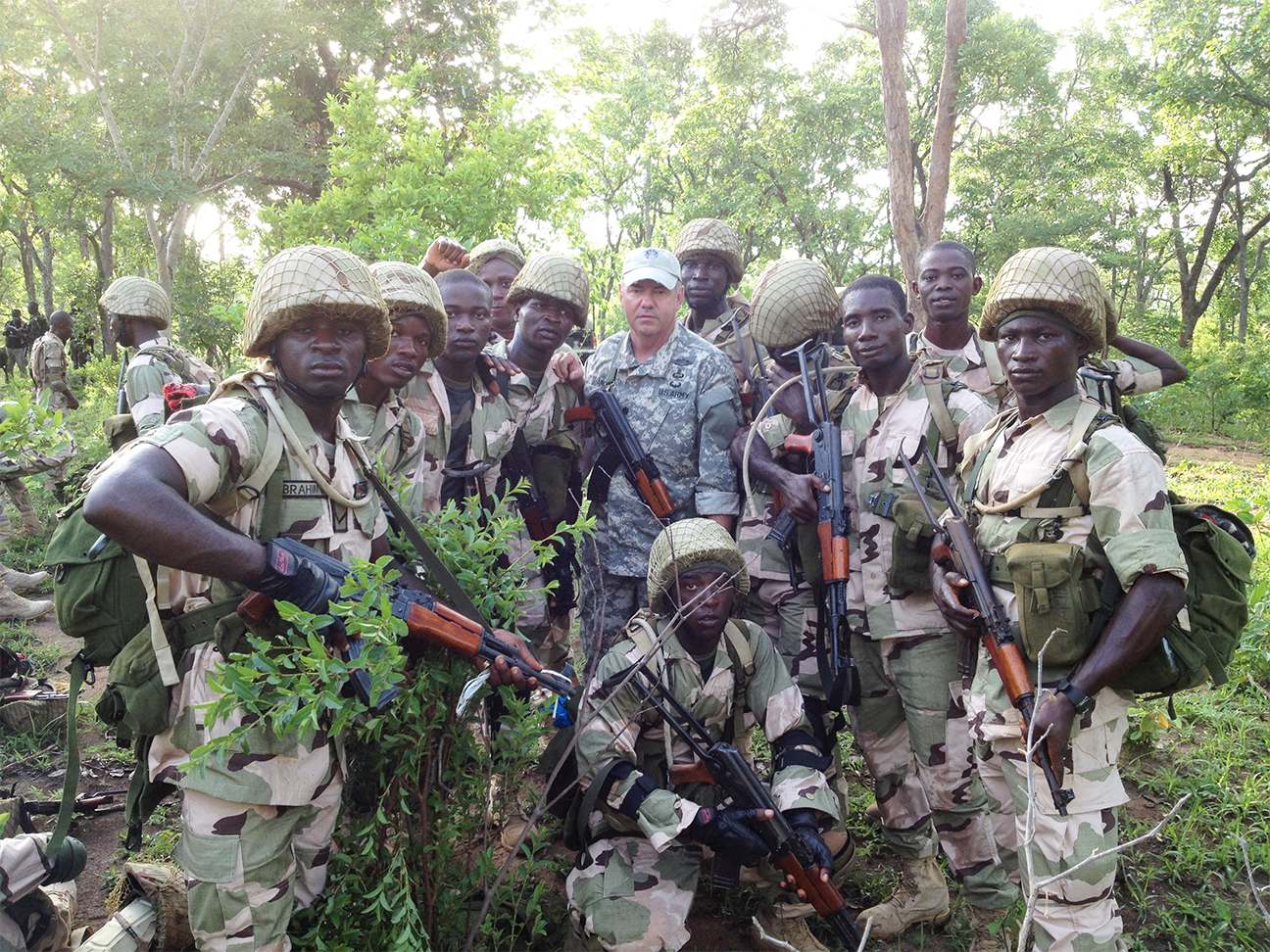
The military imbalance between the two countries is stark. Nigeria fields one of Africa’s most formidable armed forces, with a tri-service structure that includes a large, well-equipped air force, a dominant regional navy, and a sizable army capable of sustained operations. The Nigerian Air Force operates fighter jets such as the JF-17 and F-7Ni, as well as A-29 Super Tucanos for counterinsurgency operations, heavy transport aircraft like the C-130, and an extensive helicopter fleet. This force is designed not only for internal security but for regional power projection and multinational operations.
Burkina Faso’s military, by contrast, is compact and narrowly focused. Its air arm relies on a limited number of light attack aircraft, including Super Tucanos, and a small helicopter fleet primarily dedicated to internal counterinsurgency. There is no navy, no strategic airlift capacity comparable to Nigeria’s, and limited logistical depth. The Burkinabè military is stretched thin, fighting multiple insurgent groups while also managing the political consequences of repeated military takeovers.
This imbalance shapes behavior. Nigeria’s military posture is institutional, outward-looking, and anchored in regional frameworks such as ECOWAS. Burkina Faso’s posture is defensive, reactive, and inward-facing. Where Nigeria seeks stability through deterrence and cooperation, Burkina Faso seeks survival amid constant internal pressure. That difference explains why a technical landing could be perceived as a “serious security breach” rather than a routine aviation incident.
The incident also illuminates why Burkina Faso continues to struggle to regain political balance. Repeated coups have eroded civilian institutions, fractured command structures, and blurred the line between governance and militarization. The armed forces are not just security actors; they are political stakeholders. This creates a cycle where insecurity justifies military rule, and military rule deepens insecurity by weakening democratic legitimacy and regional trust.
Nigeria, despite its own security challenges, has managed to avoid this spiral. Civilian control of the military remains intact, democratic transitions—however imperfect—continue, and its armed forces operate within a clearer constitutional framework. This stability enhances Nigeria’s regional credibility and amplifies its military superiority beyond hardware alone.
The C-130 episode did not escalate into confrontation precisely because of this asymmetry. Burkina Faso could assert sovereignty, but not sustain defiance. Nigeria could have asserted its capability, but chose restraint. In the end, professionalism prevailed.
Still, the rift lingers. It is not about one aircraft or one landing, but about two countries moving in different strategic directions. Nigeria stands as a regional anchor with superior military power and institutional depth. Burkina Faso remains a state searching for equilibrium—politically fragile, militarily constrained, and acutely sensitive to every perceived threat from the skies above.



People’s Club Sugar Land Is Growing — Grand Patron Mbachu Explains Why

Professor Josephine Onyido Earns Prestigious Nigerian Academy of Education Induction

PCNI Elevates Chief Dr. Emmanuel Opara to Patron in Historic Ihiagwa Investiture

Emotional Conflict: Is She Toying with Me?

Corruption at the Nigerian Consulate Atlanta – A Victim’s Nightmarish Experience

Gowon’s Book and the Dangerous Politics of Selective Memory

Video: Omambala Cultural Association in Houston Celebrates Motherhood with Joyous Igbo-Inspired Mother’s Day Event

VIDEO: Chris Hollins Opens Cartoon Art Showcase at TSU’s CommWeek

Commissioner Dexter L. McCoy speaks about the African-American Memorial Event
-

 Houston4 weeks ago
Membership Interest Soars After Sugar Land People’s Club’s Successful Induction
-
 Houston1 week ago
PCNI Elevates Chief Dr. Emmanuel Opara to Patron in Historic Ihiagwa Investiture
-

 Houston2 weeks ago
Membership Surge Continues as Dr. Nkem Ugwu Joins People’s Club
-
 Community1 week ago
People’s Club Sugar Land Is Growing — Grand Patron Mbachu Explains Why
-
 Education1 week ago
Professor Josephine Onyido Earns Prestigious Nigerian Academy of Education Induction