

Africa
US VP, Kamala Harris finds new connections in Africa with a historic visit

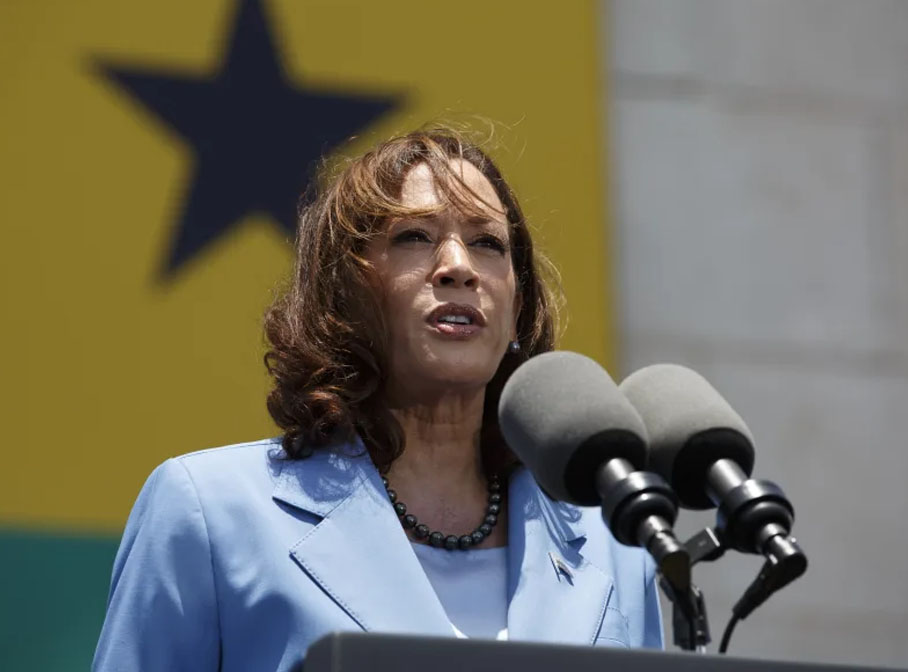
LUSAKA, Zambia (AP) — Vice President Kamala Harris may have traveled halfway around the world to reach this corner of Africa, but she was welcomed as a “daughter of our own country” when she sat down with Zambia’s leader.
The visit, President Hakainde Hichilema said, was “like a homecoming.”
It was a reference to a childhood trip to Zambia when Harris’ grandfather worked here, but she heard similar refrains throughout her weeklong trip to Africa that ended Saturday.
In Ghana, President Nana Akufo-Addo told Harris “you’re welcome home.” In Tanzania, a sign in Swahili told Harris to “feel at home.”
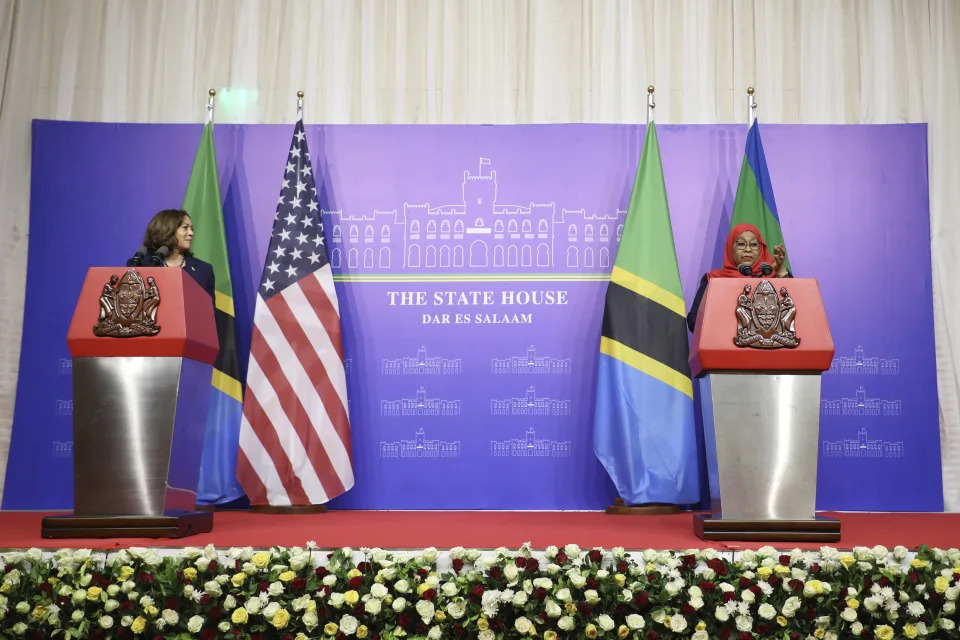
Vice President Kamala Harris, left, and Tanzanian President Samia Suluhu Hassan speak during a news conference following their meeting in Dar es Salaam, Tanzania, Thursday, March 30, 2023. (Ericky Boniphace/Pool Photo via AP, File)
The greetings were a reflection of the enduring connections between the African diaspora in the United States and Africans themselves, something that America’s first Black vice president fostered during her trip. Although her historic status has led to extreme scrutiny and extraordinary expectations in Washington, it was a source of excitement over the past week.
“She is the ambassador we need at the moment,” said Tracy Sharpley-Whiting, who chairs African American and Diaspora Studies at Vanderbilt University. “That’s a joyous thing.”
Harris’ background did not spare her from difficult conversations about U.S. foreign policy and she was pressed in Africa about visas, private investment and funding to deal with climate change. There’s also skepticism over whether the United States will follow through with its commitments and over its attempts to rival China’s own influence in Africa.
But at every stop, Harris was warmly embraced.
“Kamala Harris! Kamala Harris!” young girls shouted on the tarmac when she landed in Lusaka on Friday. She approached them with her hand on her chest in gratitude. “The VP is here! The VP is here!”

Vice President Kamala Harris, left, is greeted by Zambian President Hakainde Hichilema in Lusaka, Zambia, Friday, March 31, 2023. (AP Photo/Salim Dawood, File)
The last week produced none of the unfortunate viral moments that dogged Harris on previous foreign trips, such as when she laughed off a question about visiting the U.S. border with Mexico or when she said the U.S. had an “alliance with the Republic of North Korea.”
Instead, the trip to Africa was largely overshadowed by a cascade of U.S. news, including a school shooting in Nashville, Tennessee, and the indictment of former President Donald Trump.
But anyone tuning in would have seen Harris hanging out with actor Idris Elba and actor-singer Sheryl Lee Ralph at a recording studio in Accra, Ghana’s capital, or collecting business cards from young entrepreneurs in Dar es Salaam, Tanzania, or walking through rows of peppers at a farm outside of Lusaka. Sometimes she felt comfortable enough to discard her prepared remarks, a rarity for a politician who sticks closely to the script in Washington.
Although Africa remains a poor continent with almost half the population lacking access to electricity, Harris’ itinerary was aimed at portraying it as young, dynamic, innovative — and primed for American business opportunities, particularly with leaders from the diaspora.
The most glamorous event was a state banquet at the Ghanaian presidential palace known as the Jubilee House, where Black American celebrities, business people and civil rights activists gathered.
In her toast, Harris paid tribute to attendees who “represent the glorious beauty of the African diaspora” and she spoke about “our shared destiny.”
Akufo-Addo, the president, honored Harris with a local touch.
“Since you were born on a Tuesday, I’m sure you would not mind the Ghanaian name Abena, the Akan name for all Tuesday born females, to your name,” he said.
Raising his glass, Akufo-Addo toasted “the honorable Kamala Devi Abena Harris.”
Marc Morial, president of the National Urban League, said there was a “festive and family” atmosphere to be there with the first Black vice president in U.S. history.
“It’s a moment of pride,” he said. “And it’s a moment of opportunity.”

Vice President Kamala Harris and First Gentleman Douglas Emhoff listen to a guide as they tour Cape Coast Castle in Ghana, Tuesday, March 28, 2023. This castle in was one of around 40 “slave castles” that served as prisons and embarkation points for slaves en route to the Americas. (Misper Apawu/Pool Photo via AP, File)
The trip could be Harris’ last foray overseas before the 2024 campaign begins in earnest. President Joe Biden is expected to announce his reelection run, and Harris will be a prime target for Republican attacks.
Some of that is the result of Biden’s age — he would be 82 when starting a second term in 2025 — and Harris’ status a heartbeat away from the presidency.
But like President Barack Obama before her, Harris has faced racism and questions when it comes to her heritage.
Her father was born in Jamaica, where most Black citizens trace their heritage to Africa through the slave trade, making it likely that Harris’ own ancestors were enslaved.
Her mother was born in India, and the vice president was raised in California, contributing to a multicultural background that defies easy characterization. (It was her mother’s Indian father who worked in Zambia decades ago, helping to settle refugees in the newly independent African country.)
But Harris wrote in her book, “The Truths We Hold,” that her mother was clear-eyed about what it meant to raise two daughters in the United States. “She knew that her adopted homeland would see Maya and me as black girls, and she was determined to make sure we would grow into confident, proud black women,” Harris wrote.
Harris wrote that when she arrived at Howard University in Washington, a predominantly Black institution that has educated generations of Black political and cultural leaders, she thought, “This is heaven.”
“There were hundreds of people, and everyone looked like me,” Harris wrote. “The campus was a place where you didn’t have to be confined to the box of another person’s choosing.”
Harris was San Francisco’s district attorney while Obama was running for president, and she defended him when his racial identity was questioned. He’s the son of a white American mother and a Kenyan father, and he spent part of his youth in Indonesia.
She told the San Francisco Chronicle that Obama “is opening up what has been a limited perspective of who is an African American.”
“We are diverse and multifaceted,” Harris said. “People are bombarded with stereotypical images and so they are limited in their ability to imagine our capacity.”
Harris faced the same strain of commentary during her own presidential campaign in 2020.

Vice President Kamala Harris meets with traditional leaders at Cape Coast Castle in Ghana, Tuesday, March 28, 2023. This castle in was one of around 40 “slave castles” that served as prisons and embarkation points for slaves en route to the Americas. (AP Photo/Misper Apawu, File)
“I think they don’t understand who Black people are. I’m not going to spend my time trying to educate people about who Black people are,” she said in a radio interview at the time.
The relationship between the African diaspora and Africans on the continent has been complicated by the history of slavery. African Americans often aren’t sure of their roots because their ancestors were kidnapped and traded. According to the vice president’s office, Harris hasn’t traced her heritage back here, either.
Nevertheless, Sharpley-Whiting said the bond to Africa remains strong for many Black Americans.
“They recognize it as the place where their ancestors started, and they recognize the resilience of those ancestors,” she said.
Harris confronted that history when she visited Cape Coast Castle in Ghana, one of dozens of forts in West Africa where enslaved Africans were imprisoned and then loaded onto ships bound for the Americas. The Caribbean — including Jamaica — was one of the destinations.
“I’m still processing a lot of it,” she told reporters the following day. She lingered on the experiences of pregnant women who were imprisoned there — their babies were taken from them and the women were sent off across the ocean.
“The brutality, the inhumane treatment of human beings is profound,” she said. “And the lasting trauma of that cannot be denied.”
But she soon turned to another topic when asked what she wanted Black Americans to take away from her trip to Africa.
The message, she said, wasn’t just about “how the diaspora came to be.”
It’s about “the resilience, the strength, fortitude, the brilliance, the excellence.”




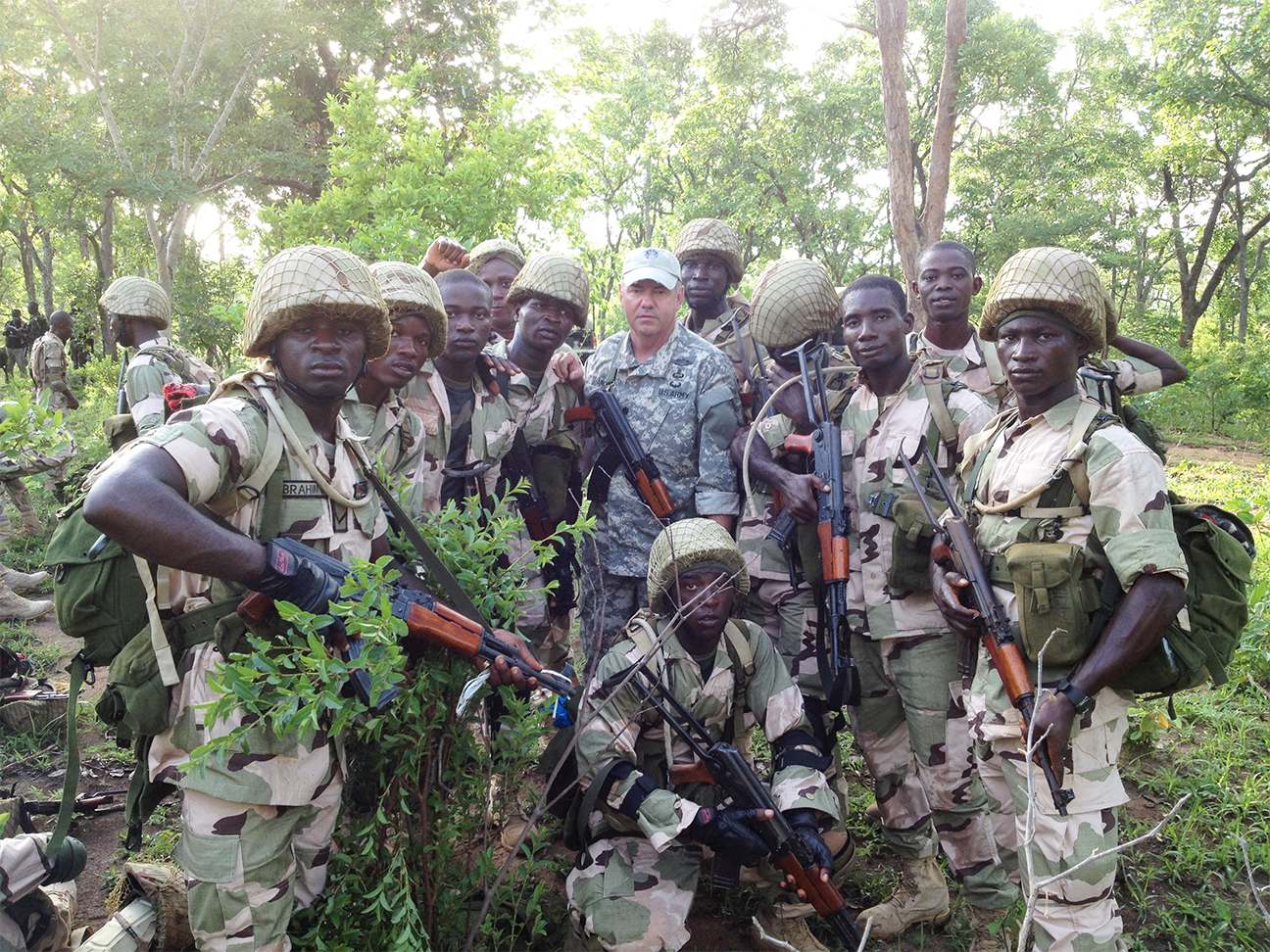
The brief detention of a Nigerian Air Force C-130 Hercules aircraft and its crew in Burkina Faso may have ended quietly, but it exposed a deeper rift shaped by mistrust, insecurity, and uneven military power in West Africa. What was officially a technical emergency landing quickly became a diplomatic and security flashpoint, reflecting not hostility between equals, but anxiety between unequally matched states navigating very different political realities.
On December 8, 2025, the Nigerian Air Force transport aircraft made an unscheduled landing in Bobo-Dioulasso while en route to Portugal. Nigerian authorities described the stop as a precautionary response to a technical fault—standard procedure under international aviation and military safety protocols. Burkina Faso acknowledged the emergency landing but emphasized that the aircraft had violated its airspace, prompting the temporary detention of 11 Nigerian personnel while investigations and repairs were conducted. Within days, the crew and aircraft were released, underscoring a professional, if tense, resolution.

Yet the symbolism mattered. In a Sahel region gripped by coups, insurgencies, and fragile legitimacy, airspace is not merely technical—it is political. Burkina Faso’s reaction reflected a state on edge, hyper-vigilant about sovereignty amid persistent internal threats. Nigeria’s response, measured and restrained, reflected confidence rooted in capacity.
The military imbalance between the two countries is stark. Nigeria fields one of Africa’s most formidable armed forces, with a tri-service structure that includes a large, well-equipped air force, a dominant regional navy, and a sizable army capable of sustained operations. The Nigerian Air Force operates fighter jets such as the JF-17 and F-7Ni, as well as A-29 Super Tucanos for counterinsurgency operations, heavy transport aircraft like the C-130, and an extensive helicopter fleet. This force is designed not only for internal security but for regional power projection and multinational operations.
Burkina Faso’s military, by contrast, is compact and narrowly focused. Its air arm relies on a limited number of light attack aircraft, including Super Tucanos, and a small helicopter fleet primarily dedicated to internal counterinsurgency. There is no navy, no strategic airlift capacity comparable to Nigeria’s, and limited logistical depth. The Burkinabè military is stretched thin, fighting multiple insurgent groups while also managing the political consequences of repeated military takeovers.
This imbalance shapes behavior. Nigeria’s military posture is institutional, outward-looking, and anchored in regional frameworks such as ECOWAS. Burkina Faso’s posture is defensive, reactive, and inward-facing. Where Nigeria seeks stability through deterrence and cooperation, Burkina Faso seeks survival amid constant internal pressure. That difference explains why a technical landing could be perceived as a “serious security breach” rather than a routine aviation incident.
The incident also illuminates why Burkina Faso continues to struggle to regain political balance. Repeated coups have eroded civilian institutions, fractured command structures, and blurred the line between governance and militarization. The armed forces are not just security actors; they are political stakeholders. This creates a cycle where insecurity justifies military rule, and military rule deepens insecurity by weakening democratic legitimacy and regional trust.
Nigeria, despite its own security challenges, has managed to avoid this spiral. Civilian control of the military remains intact, democratic transitions—however imperfect—continue, and its armed forces operate within a clearer constitutional framework. This stability enhances Nigeria’s regional credibility and amplifies its military superiority beyond hardware alone.
The C-130 episode did not escalate into confrontation precisely because of this asymmetry. Burkina Faso could assert sovereignty, but not sustain defiance. Nigeria could have asserted its capability, but chose restraint. In the end, professionalism prevailed.
Still, the rift lingers. It is not about one aircraft or one landing, but about two countries moving in different strategic directions. Nigeria stands as a regional anchor with superior military power and institutional depth. Burkina Faso remains a state searching for equilibrium—politically fragile, militarily constrained, and acutely sensitive to every perceived threat from the skies above.



People’s Club Sugar Land Is Growing — Grand Patron Mbachu Explains Why

Professor Josephine Onyido Earns Prestigious Nigerian Academy of Education Induction

PCNI Elevates Chief Dr. Emmanuel Opara to Patron in Historic Ihiagwa Investiture

Emotional Conflict: Is She Toying with Me?

Corruption at the Nigerian Consulate Atlanta – A Victim’s Nightmarish Experience

Gowon’s Book and the Dangerous Politics of Selective Memory

Video: Omambala Cultural Association in Houston Celebrates Motherhood with Joyous Igbo-Inspired Mother’s Day Event

VIDEO: Chris Hollins Opens Cartoon Art Showcase at TSU’s CommWeek

Commissioner Dexter L. McCoy speaks about the African-American Memorial Event
-

 Houston4 weeks ago
Membership Interest Soars After Sugar Land People’s Club’s Successful Induction
-
 Houston1 week ago
PCNI Elevates Chief Dr. Emmanuel Opara to Patron in Historic Ihiagwa Investiture
-

 Houston2 weeks ago
Membership Surge Continues as Dr. Nkem Ugwu Joins People’s Club
-
 Community1 week ago
People’s Club Sugar Land Is Growing — Grand Patron Mbachu Explains Why
-
 Education1 week ago
Professor Josephine Onyido Earns Prestigious Nigerian Academy of Education Induction