

Anthony Obi Ogbo
The Devil is on Ballot – Why Donald Trump is Bad for America

“The last time the Devil visited America was in 2020 in the form of COVID. He wrecked all activities and took away millions of lives. Almost four years later, the Devil is back as a candidate for the November Ballot. This time as Trump” —Anthony Ogbo
The most dangerous bee is that which perches on your scrotum. Punch it and smash your manhood; leave it and you are stung to death. To democracy, Donald Trump (R), the former President, is that killer bee on the genital pouch, wheezing for a destructive sting. America is in trouble, and it’s not COVID. Democracy is under siege because Trump is on the ballot running against Kamala Harris (D), the current vice president.

Both candidates bring distinct perspectives and experiences to the forefront, making this election one of the most anticipated in recent history. Harris is recognized for her unwavering advocacy for social justice and equality, whereas Trump would tout an obsequious base of supporters excited about his tough rhetoric on immigration and trade policies. Thus, the decision between these two candidates ultimately rests on the priorities and values of the voters.
Without a doubt, the challenges facing America and the world over November’s ballot transcend significant matters of public policy. It is no longer just about routine communal interests or ideological virtues. It has become a critical mission to safeguard the very foundation of our republic. The stakes are higher than ever before because a self-acclaimed dictator desperately sits on the ballot as the system faces unprecedented threats from misinformation, foreign interference, and attempts to undermine the integrity of our electoral process.
America must stop the current facade surrounding the true significance of the upcoming November ballot. The future of our country hangs in the balance, and it is crucial that we as citizens fully understand the gravity of this election—that a candidate named Trump is vying for power, poised to complete his mission of undermining America’s democracy and selling off its sovereignty to foreign interests. Worst of all, he has converted a once-Grand Old Party into a cult that promotes only himself. Not content to simply control the GOP, he ruthlessly dominates it. He deposed its former chair as insufficiently loyal to him and installed his daughter-in-law as vice chair.
While it was once acceptable for Republican officials to duck questions about his outrageous conduct, silence is no longer tolerated. He demands absolute loyalty and requires elected officials to demean themselves in public to earn his grace. When he was on trial, Republican members of Congress had to attend and wear color-coordinated clothing. After he was convicted, they were forced to insist he was innocent. Similarly, his Republican supporters and election candidates are strictly prohibited from acknowledging that President Joe Biden won the 2020 election.
The Supreme Court immunity ruling in July, ultimately gave Trump a ‘Blank’ Check’—granting absolute immunity to his use of the Justice Department for fraudulent purposes. Yet his encounter with the court system remains a reckless endeavor. For instance, he was found guilty of violating New York State law by hiding reimbursements to his former lawyer. He pleaded not guilty to 40 criminal counts for mishandling classified documents, including refusing to return the documents and obstructing government efforts to retrieve them. He also participated in a scheme to interfere with the transfer of power after losing the 2020 election, spreading lies about election fraud that led to the Jan. 6 Capitol attack. Trump and 18 others are accused of coordinating efforts to thwart certification of the election. This investigation stemmed from a recorded call to Georgia’s Secretary of State in which Trump urged him to find votes. Trump denies the allegations against him.
Trump is not good for office. He is a risky, numb scull whose mindset and intelligence are fundamentally at odds with American values. He operates with a singular focus on maintaining power and control, often at the expense of individual freedoms and rights. His decision-making is driven by self-interest and a desire to consolidate authority, rather than by the will of the people or the principles of equality and justice that underpin democracy.
Democracy values inclusivity, transparency, and accountability, requiring leaders to prioritize the needs and voices of all citizens. Trump’s MAGA (Make America Great Again) attitude inherently seeks to suppress dissent, manipulate information, and silence opposition to maintain unchecked authority. Ultimately, the mission may be formidable in terms of strategic manipulation and control tactics, but it lacks the moral compass and ethical framework necessary for upholding democratic principles.
The last time the Devil visited America was in 2020 in the form of COVID. He wrecked all activities and took away millions of lives. Almost four years later, the Devil is back as a candidate for the November ballot. Trump is not good for office. Just like the devil, he dislikes everything around him. His divisive rhetoric and lack of empathy for others make him unfit to lead a diverse and inclusive nation. His constant attacks on the media, political opponents, and even members of his own party demonstrate a deep-seated disdain for anyone who challenges or disagrees with him. This kind of behavior is not only unprofessional but also dangerous in a position of power where diplomacy and cooperation are essential. Worse, his inability to see the value in differing opinions and perspectives is a major flaw that undermines his ability to effectively govern and represent the American people.
America does not need a divisive leader who thrives on chaos and controversy. It is time for a change, for a leader who will prioritize the well-being of all Americans and work towards creating a more inclusive and equitable society. America deserves better than Trump. Not this time, not ever.
♦Publisher of the Guardian News, Professor Anthony Obi Ogbo, PhD, is on the Editorial Board of the West African Pilot News. He is the author of the Influence of Leadership (2015) and the Maxims of Political Leadership (2019). Contact: anthony@guardiannews.us



“Nigeria does not merely need a voters’ revolt. It needs an electoral revolution.” —Dr. Anthony Obi Ogbo
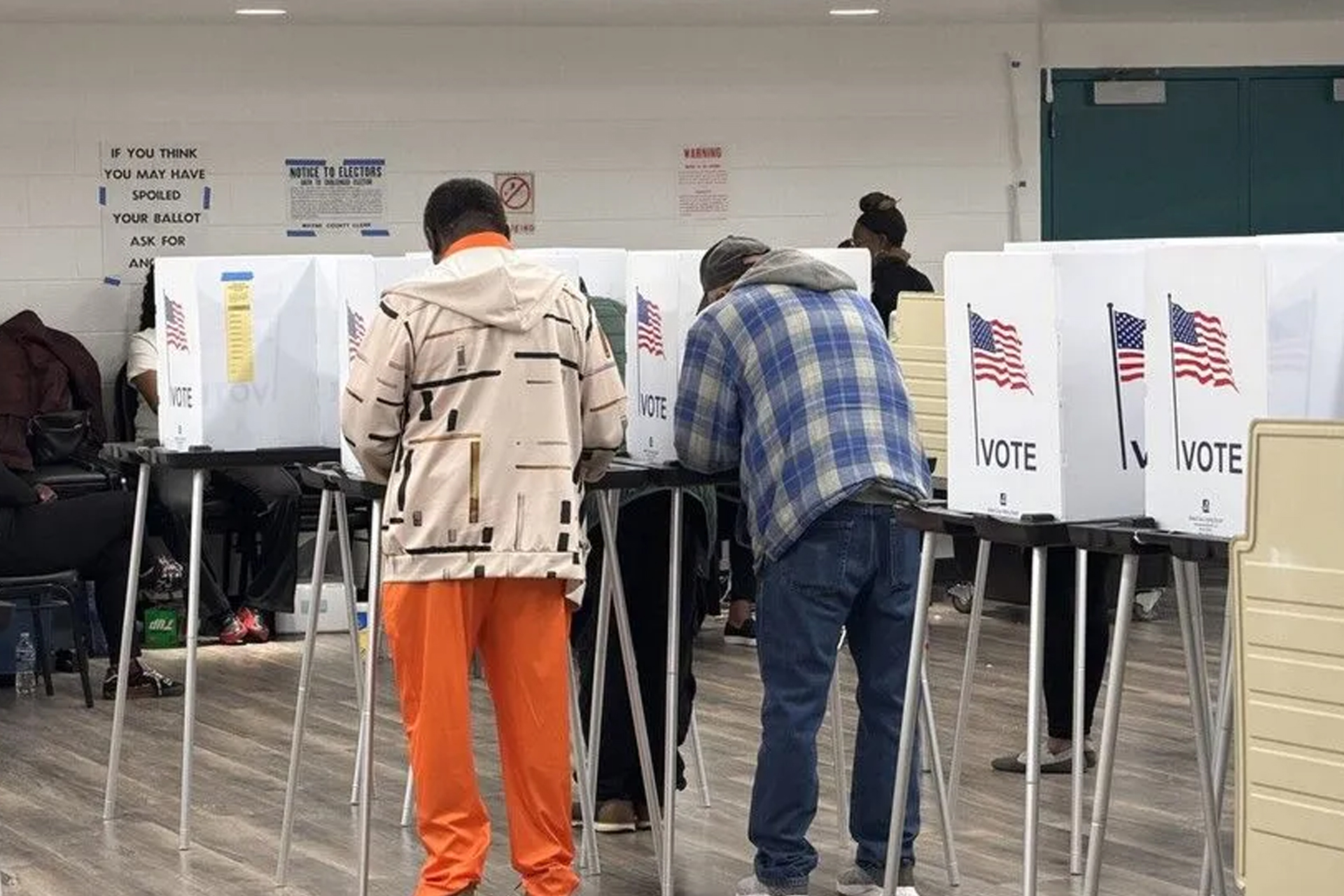
Over the past few days, I have been reflecting on America’s historic midterm elections and reading various analyses of the remarkable voter revolt against the political establishment. American voters demonstrated their willingness to punish political failure at the ballot box. But can Nigerians similarly defeat entrenched power when the very institutions entrusted with protecting their votes remain vulnerable to political interference?

America’s November 3 midterm elections delivered a devastating political verdict. Voters, frustrated by rising living costs, the Iran war, and growing dissatisfaction with President Donald Trump’s leadership, handed Democrats control of both chambers of Congress. Republican strongholds fell, political loyalties shifted, and voters demonstrated that incumbency is no insurance against public anger.
The message was unmistakable: when governance fails, the electorate can withdraw its mandate. But across Nigeria, the American revolt has inspired a provocative question: Can Nigerians replicate this electoral uprising in the 2027 presidential election?
The comparison is compelling, but the institutional realities are profoundly different.
Nigeria has no shortage of reasons for electoral rebellion. Economic hardship, persistent inflation, unemployment, deteriorating purchasing power, insecurity, and widespread distrust of government have created a deeply frustrated population. From kidnapping and rural banditry to failing infrastructure and declining public confidence, the country’s governance challenges demand serious political accountability.
Yet frustration alone does not remove a government. Elections do. And therein lies Nigeria’s democratic predicament.
In the United States, elections are administered through decentralized state and local institutions operating under federal and state laws. Election officials, courts, observers, and established legal procedures provide multiple layers of accountability. The system is imperfect, frequently litigated, and vulnerable to partisan disputes. Nevertheless, its decentralized structure makes nationwide electoral manipulation by a single executive authority considerably more difficult.
Nigeria operates differently. The Independent National Electoral Commission (INEC) is constitutionally established as an independent institution. However, its chairman and national commissioners are appointed by the president, subject to Senate confirmation. This arrangement creates legitimate concerns about institutional autonomy, particularly when the appointing authority belongs to a political party contesting the elections.
Nigeria’s electoral history reinforces these concerns. The controversial 2007 presidential election exposed serious weaknesses in electoral administration. In 2015, however, Nigerians demonstrated that incumbency could be defeated when Goodluck Jonathan lost to Muhammadu Buhari. That historic transition remains powerful evidence that peaceful electoral change is possible.
But the 2023 presidential election again exposed institutional distrust. Disputes over electronic result transmission, transparency, and electoral procedures eventually reached the Supreme Court, which upheld President Bola Tinubu’s victory.
Courts are constitutionally empowered to resolve election disputes. The problem is not judicial involvement itself, but the perception that electoral outcomes increasingly depend on litigation rather than the unquestioned credibility of votes cast.
When citizens begin to believe that ballots are merely preliminary documents awaiting judicial interpretation, democracy suffers a dangerous credibility crisis.
Equally troubling is the protection of votes. INEC administers federal elections, while the Nigeria Police Force and other security agencies provide electoral security. These institutions operate within a centralized federal framework, raising concerns about executive influence over personnel, deployment, and operational independence.
How, then, can Nigerians stage an American-style electoral revolt when the institutions protecting their votes are themselves subjects of public suspicion? The answer requires more than opposition slogans, social media outrage, or massive political rallies.
First, Nigeria must constitutionally reform INEC’s appointment process. An independent, multipartisan selection mechanism, transparent public hearings, protected tenure, and guaranteed funding would reduce executive influence and strengthen electoral credibility.
Second, judicial independence must become nonnegotiable. Transparent appointments, financial autonomy, enforceable ethical standards, and expedited election petitions are essential. Courts must remain impartial arbiters, not become perceived substitutes for the electorate.
Third, electronic transmission and public verification of polling-unit results must become legally enforceable safeguards, supported by independent audits and meaningful penalties for manipulation.
Fourth, election security must be operationally insulated from partisan directives. Electoral offenses, including intimidation, ballot destruction, and result falsification, must attract swift and credible prosecution.
Voters must organize beyond ethnic loyalty
Finally, voters must organize beyond ethnic loyalty, religious sentiment, and online activism. They must register, mobilize, monitor polling units, document irregularities, and protect their electoral mandate through lawful civic participation. The ultimate tragedy of Nigerian democracy is not that citizens lack the courage to reject failed leadership. It is that they cannot consistently trust the machinery entrusted with translating their rejection into political change.
America’s midterms demonstrated the power of electoral accountability. Nigeria’s 2027 elections must confront a more fundamental question: whether the ballot remains stronger than the political establishment.
A democracy becomes a dangerous deception when citizens are permitted to vote but cannot confidently determine who wins. Nigeria does not merely need a voters’ revolt. It needs an electoral revolution in which institutions become stronger than incumbents, ballots become stronger than political influence, and the people’s verdict becomes stronger than the machinery of power.
♦ Publisher of the Guardian News, Professor Anthony Obi Ogbo, Ph.D., is on the Editorial Board of the West African Pilot News. He is the author of the Influence of Leadership (2015) and the Maxims of Political Leadership (2019). Contact: anthony@guardiannews.us
“Jonathan’s calculated and weaponized ambiguity breeds deception and weakens emerging political alliances.” —Dr. Anthony Obi Ogbo
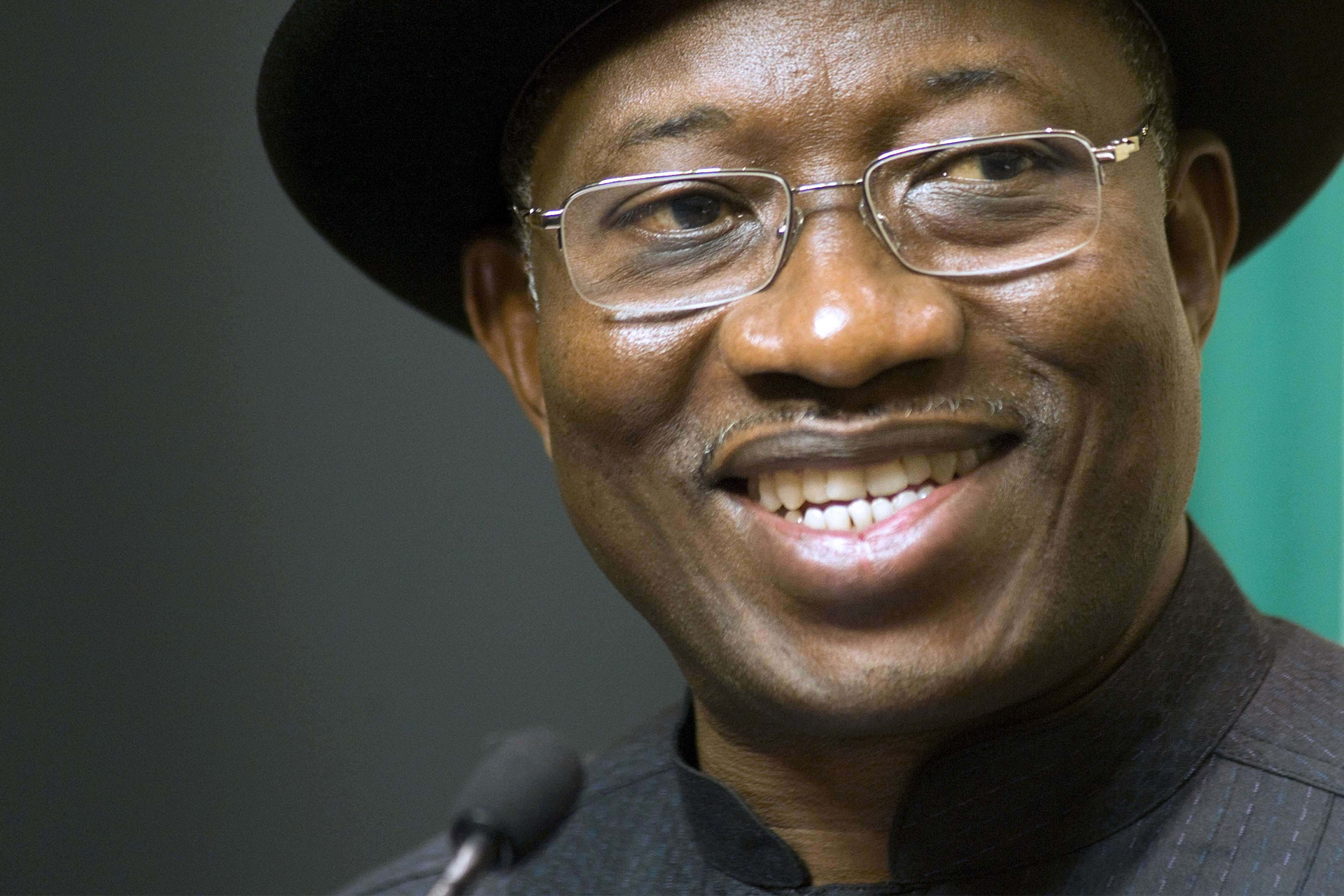
Former Nigerian President Goodluck Jonathan has once again found himself at the center of presidential speculation, floating silently above the country’s political waters while supporters aggressively market him as a possible candidate ahead of another critical election cycle. And once again, Jonathan is doing what he has mastered throughout his political career: saying nothing clearly while allowing political confusion to grow around him.

This pattern is not new. It is the same indecisive political behavior that defined some of the most consequential moments of his rise and fall. Jonathan became president in 2010 following the death of President Umaru Musa Yar’Adua. At the time, many northern political stakeholders within the then-ruling PDP believed there was an informal understanding that Jonathan would complete Yar’Adua’s term but not seek another full term in 2011, thereby preserving the party’s zoning arrangement between North and South. Instead of taking a clear and immediate position, Jonathan spent months dribbling the nation politically. He neither fully denied nor openly confirmed his intentions until the political tension had already escalated nationwide.
By the time he eventually declared his candidacy, the damage had been done. Many northern allies who initially supported him felt betrayed, politically cornered, or deceived. The PDP fractured internally, regional distrust deepened, and Jonathan’s relationship with major northern power blocs deteriorated permanently. Though he won the 2011 election, the cracks created by that indecision followed him into 2015, contributing significantly to the coalition that eventually removed him from power.
Yet Jonathan learned little from that experience. Since losing reelection in 2015, his name has repeatedly surfaced during every major electoral cycle as a potential presidential contender. Each time, his supporters strategically floated his candidacy across media platforms and political circles. Each time, Jonathan refused to decisively shut the door. Silence became his political instrument, whereas ambiguity became his strategy.
Now the country is witnessing the same playbook again. As coalition politics intensify and opposition forces attempt to consolidate around alternative political movements, Jonathan’s name has resurfaced aggressively. Reports and speculations about his presidential ambition continue to dominate political discussions, especially within camps seeking to disrupt the growing momentum surrounding Peter Obi and emerging opposition realignments.
The troubling part is not merely that Jonathan’s supporters are campaigning. The troubling part is that Jonathan fully understands the implications of his silence. He knows that his political stature carries enough weight to destabilize fragile coalition negotiations. He knows his name alone can divide campaign structures, weaken consensus-building, and inject uncertainty into opposition calculations. Yet he refuses to publicly and definitively state where he stands.
That is not statesmanship. That is calculated political ambiguity. Jonathan’s political history is filled with similarly contradictory choices. After losing power in 2015, he received widespread praise for conceding defeat peacefully. He initially framed that decision as a sacrifice made to preserve Nigerian lives and prevent violence. Later, however, different narratives emerged suggesting international pressure, particularly from the United States under President Obama. The shifting explanations weakened what could have remained one of his strongest democratic legacies.
Then came another contradiction. Despite emerging politically from the PDP, Jonathan gradually aligned himself closely with the administration of former President Muhammadu Buhari, serving in diplomatic and goodwill capacities that many PDP loyalists considered politically inappropriate. This unusual closeness fueled longstanding allegations that elements within the APC establishment viewed Jonathan as a useful political instrument capable of destabilizing opposition coalitions from within. Whether those allegations are true or not, Jonathan’s conduct has consistently created room for suspicion.
His political base remains uncertain. His campaign structure is invisible.
Today, his undeclared ambition is already generating confusion among supporters, coalition organizers, and opposition strategists. His political base remains uncertain. His campaign structure is invisible. His intentions are unclear. Yet his loyalists continue mobilizing aggressively in his name while he watches silently from the shadows.
Nigeria is too politically fragile for this kind of elite gamesmanship. At critical national moments, leadership demands clarity, courage, and accountability. Jonathan cannot continue operating as a permanent “maybe” in Nigeria’s political future, thoughtlessly hovering around every election season like an unanswered question designed to manipulate negotiations and weaken emerging alliances.
At this time, Jonathan should sit in or sit out! If he wants to run, he should declare openly, defend his record, and face the democratic process directly. If he does not intend to run, he should immediately and publicly withdraw his name from the political marketplace. Anything short of that increasingly looks less like political strategy and more like calculated deception. Nigeria deserves leaders who make difficult choices openly—not politicians who weaponize silence while others gamble with national uncertainty in their name.
♦ Publisher of the Guardian News, Professor Anthony Obi Ogbo, Ph.D., is on the Editorial Board of the West African Pilot News. He is the author of the Influence of Leadership (2015) and the Maxims of Political Leadership (2019). Contact: anthony@guardiannews.us

Nigeria’s Forgotten Sacrifice and the Tragedy of Xenophobia in South Africa
As George Santayana famously warned, “Those who cannot remember the past are condemned to repeat it.” The unfolding xenophobic tensions in South Africa reflect more than economic strain; they reveal a deeper crisis of memory and meaning. When history fades, gratitude dissolves, and fear replaces solidarity. The violence directed at fellow Africans is not merely social unrest; it is a philosophical failure to reconcile past sacrifice with present identity, reminding us that nations, like individuals, must remember to remain whole.
.
I recall that when I was in college in Nigeria, all Southern African students, present in substantial numbers, were on full federal government scholarships and received an additional income called a bursary. They lived better than many Nigerians; some even drove cars. Many adopted Nigerian names, assimilated seamlessly, and secured opportunities with ease, while Nigerian graduates faced rising unemployment. It was a quiet but powerful demonstration of solidarity, Nigeria investing in the future of a region still shackled by apartheid.
Today, that history feels almost erased.
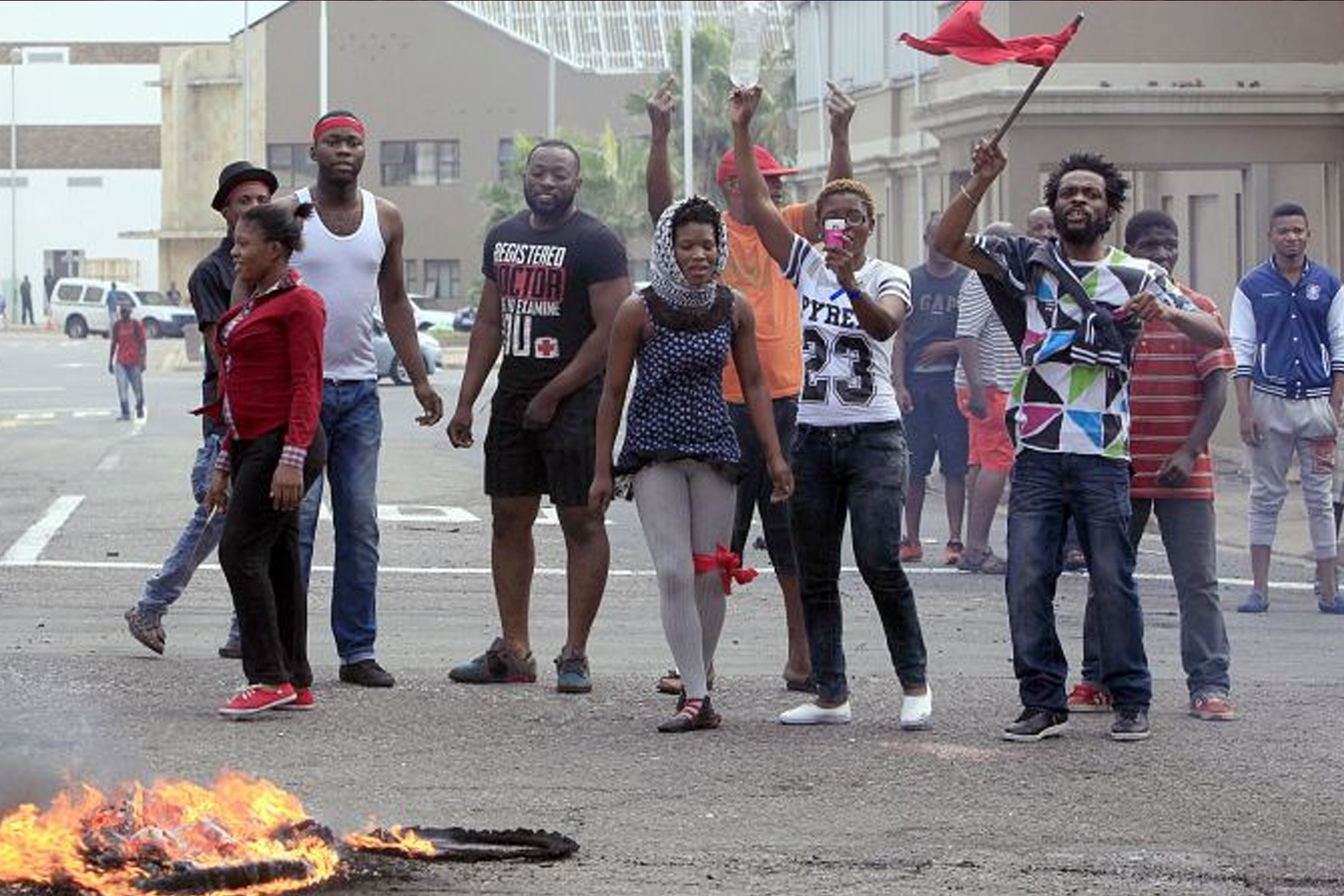
For years now, waves of xenophobic attacks in South Africa, often targeting Nigerians, and more recently Ghanaians and other African nationals, have revealed a troubling pattern: violence fueled by economic frustration, misinformation, and historical amnesia. Shops are looted, homes burned, and lives disrupted under the recurring claim that “foreigners are taking jobs.” Yet this narrative collapses under even the most basic scrutiny of history.
Nigeria was not a bystander in South Africa’s liberation; it was a central force.
Under the military leadership of Olusegun Obasanjo, Nigeria became the first country in history to boycott the Commonwealth Games in protest against apartheid. That decision was not symbolic; it was costly, bold, and globally consequential. Obasanjo went further, advocating a continental defense posture and proposing what he termed a “Black bomb,” a radical idea reflecting the urgency of protecting African sovereignty against external aggression.
Nigeria’s commitment extended beyond rhetoric. During the Ibrahim Babangida regime, South Africa sought to exert strategic influence in Equatorial Guinea, offering infrastructure support before the discovery of oil. Nigeria recognized the geopolitical implications and decisively intervened, severing ties and offering its own support. The situation escalated to the point where Equatorial Guinea petitioned Nigeria at the United Nations for intervention. Nigeria did not retreat. This was not interference; it was protection. It was foresight. It was leadership.
Nigeria funded liberation movements, provided education, opened its economy, and bore economic sacrifices, including the nationalization of British Petroleum assets, to pressure the apartheid regime. These were not acts of charity; they were acts of conviction rooted in a vision of a free and united Africa.
And yet, decades later, Nigerians are hunted in the very land their country helped liberate.
The tragedy of xenophobia in South Africa is not merely about violence—it is about the collapse of historical consciousness. A generation disconnected from its past becomes vulnerable to manipulation, scapegoating, and misplaced anger. Economic hardship is real, but it does not justify the erasure of truth or the targeting of fellow Africans.
If history were remembered accurately, perhaps the conversation would be different. Perhaps the anger would be redirected toward structural inequalities rather than neighboring nationals. Perhaps the bonds of Pan-African solidarity would still hold.
But memory has faded, and in its absence, resentment has grown. Africa cannot afford selective memory. Nations that forget who stood with them in their darkest hours risk losing their moral compass in moments of crisis. Nigeria’s role in the liberation of South Africa is not a footnote—it is a foundation. To ignore it is to misunderstand both the past and the present.
Equally troubling is the persistent failure of successive South African governments to decisively confront and eradicate xenophobic violence. Such inaction, whether intentional or not, signals a dangerous tolerance, if not tacit endorsement, of these attacks, allowing them to recur with impunity. If brotherhood is to mean anything, it must be anchored in truth and reinforced by responsible leadership. And if Africa is to move forward, it must first remember and act.
♦ Publisher of the Guardian News, Professor Anthony Obi Ogbo, Ph.D., is on the Editorial Board of the West African Pilot News. He is the author of the Influence of Leadership (2015) and the Maxims of Political Leadership (2019). Contact: anthony@guardiannews.us
-

 Books2 weeks ago
‘My Life of Duty and Allegiance’ —An Elder Statesman’s Version of the Truth
-

 Anthony Obi Ogbo2 weeks ago
Can Nigerian Voters Replicate America’s Midterm Electoral Revolt?
-

 Houston1 month ago
Fifty and Fabulous: Chief Oby Marcel Celebrates a Golden Milestone in Houston
-

 Houston5 hours ago
Dr. Maria Elioku Joins People’s Club Sugar Land, Bringing a Legacy of Leadership and Community Service