

Anthony Obi Ogbo
Obism—The test of translating a movement into electoral victory votes

“The duo of Obi and Datti Baba-Ahmed remains the most qualified team that could steer this country in a different direction. However, a possible victory hangs on how this movement could strategically circumvent a dysfunctional balloting process and navigate past the finish line of electoral victory.” ―Anthony Obi Ogbo
________________________
During a strategic group meeting of the People’s Democratic Party (PDP) held shortly before the 2015 election at a castle on Puerta Vista Lane in Houston, TX, Hon. Dan Ulasi, a strategist with the party at the time, shocked his party enthusiasts when he hinted that their flagbearer and incumbent, Dr. Goodluck Jonathan, might not make it to the next tenure. According to Ulasi, with time running out, the campaign was not organized on the ground, did not weigh the electoral map options, and had no strategies to counter a possible ballot mishandling. A few months after this prediction, the Jonathan regime crumbled like a soggy, oil-drenched Ijebu fried plantain.

Thus, one of the major reasons Goodluck Jonathan fell in the 2015 presidential race was his campaign’s inability to explore on-the-ground winning strategies. Overconfident and blind to ideas, his team relied on three major factors: a rousing social media blare, the power of incumbency, and public hatred for his archrival, Muhammadu Buhari.
Currently, Nigeria is faced with yet another chance to turn over a new regime leaf. At the forefront of Nigeria’s politics is the Peter Obi movement tagged Obism. The subject, Peter Gregory Obi, a businessman and politician who served as the Governor of Anambra State two separate times, is the Labour Party nominee for President of Nigeria in the 2023 presidential election. Obi’s campaign supporters gradually metamorphosed into an inspiring political movement, spreading across the nation like wildfire. Most passionate about this cause is the younger population. They took their excitement to the internet and infiltrated social media with campaign literature, including videos, catchphrases, and memes.
While all core supporters of Obi might be classified as “Obidients,” it must also be noted that in reality, there are just two categories: the Obi campaign strategists and the Obidients. The campaign strategists within the Peter Obi Support Network (POSN) are result-driven individuals focused on creating working avenues to get Obi elected. Armed with good funds and the right message, they remain the foremost support network that is crowdfunding for Peter Obi’s presidential campaigns.
In contrast, the Obidients are desperate do-or-die fanatics blind to the complexities of prevailing political terrain but driven by emotions and unquestioning enthusiasm borne out of frustration over the country’s decades of economic, social, and political meltdown. They are good, too, but often embarrass their candidate with messages incompatible with his electioneering ideology.
They are uncontrollable and flood social media platforms with video clips and poster messages conflicting with or perhaps contradicting what their candidate stands for. For example, the campaign understands the “Igbo fear factor” in Nigerian politics and has been working hard to portray its candidate as an ethnically blind figure who would unite the country. In sheer contrast, some Obidient fanatics are busy spewing messages about the inevitability of electing Obi as bait to win the Igbos into the national fold—an approach that might attract mistrust and fear among voters of northern swing states. Similarly, they have played into the hands of the opposition by unintelligibly engaging in social media tribal wars that further portray their candidate as a tribal leader.
Organizers must not be confused between an ideological movement and running a political campaign
Obism or “Obidience” is a movement, yet organizers must not be confused between an ideological movement and running a political campaign in Nigeria—a nation with a terrible electioneering record. The success of any mobilization structure for political advancement must entail strategic planning, organizing, fundraising, and mobilization of individuals.
Without a doubt, Obism is trending. Yet there are concerns about carrying the momentum beyond the current emotional excitement, social media buzz, and sometimes, annoying bombastic optimism. Do not get me wrong. Those lines are still influential in building and sustaining a campaign. However, strategies are yet to be seen for taking advantage of this movement and pushing momentum through the finishing lines of electoral victory. Just yesterday, at a mega rally in Houston, Texas, a supposed spokesman for the Obidient repeatedly announced that voters should ignore parties and vote for individuals—an indication that those fanatics are clueless about where the campaign is headed.
The Obidient fanatics have also bastardized his “shishi” ideology. “We no dey give shishi” is an anti-bribery maxim highlighting the candidate’s ethical decency in a country where corruption is an anthem. Unfortunately, the Obidient fanatics have pushed this mantra beyond the lines, discouraging prospective campaign workers, performing artists, and media platforms with a fictitious belief that the campaign is structured only to employ volunteers who would use their own money and resources.
There has to be alignment to sustain a winning approach. The campaign strategists could bring the fanatics into the fold and curtail their excesses by facilitating their campaign messages and other strategic advances to align with their electioneering mission. Actors, actresses, and performing artists must not be dissuaded by the “We no dey give shishi” mantra; rather, they must be engaged with attractive cash rewards to lead the grassroots voter mobilization drive. Polling booths are located neither on Instagram nor TikTok.
Polling booths are located neither on Instagram nor TikTok.
Just yesterday, one day before the closing of the Continuous Voter Registration (CVR) exercise, some hoodlums stormed the facility of St. Brigid Catholic Church Ijesha Lagos, where thousands of late registrants gathered and made away with all the equipment and materials. There was also similar news in several parts of the country, especially in the Southeast. The campaign must mobilize groups to monitor and coordinate polling locations before the election, to deter opposition vandals from election day ballot-snatching surprises. It worked in Edo’s previous gubernatorial race.
The candidate, Obi, has virtually traveled through the entire nation. Yet, it is worrisome that two other major rivals, Atiku Abubakar (Peoples Democratic Party) and Bola Tinubu (the All-Progressives Congress), are not vigorously campaigning. Both candidates, who are richer than Nigeria, have a history of buying their ways through any process and have successfully demonstrated this on many occasions.
The duo of Obi and Datti Baba-Ahmed remains the most qualified team that could steer this country in a different direction. However, a possible victory hangs on how this movement could strategically circumvent a dysfunctional balloting process and navigate past the finish line of electoral victory.
Let us be clear about Nigerian politics. Knowing Nigeria is one thing. Understanding its intricate politics requires unique competencies unavailable on Google. Nigeria’s political setting transcends the electoral process and often entails inconceivably crooked ballot handling. The three most crucial winning structures are facilitating and sustaining an on-the-ground poll army, strategic coordination of electoral maps, and the ability to counter ballot mishandling and falsification of ballot figures.
In the electioneering trade, a movement represents an ideology, a campaign is a project. Team Obi could use this movement to build a winning campaign. It may sound unprofessional, but to tear through the walls of Nigeria’s electoral challenges, the Obi campaign must, at some point, play dirty. The capacity of this approach will not be discussed in this article, but as the African Ancestors would caution, to pound food on the mortar or to pound on a bare floor is a choice.
♦Publisher of the Guardian News, Journalism and RTF Professor, Anthony Obi Ogbo, Ph.D. is on the Editorial Board of the West African Pilot News. He is the author of the Influence of Leadership (2015) and the Maxims of Political Leadership (2019). Contact: anthony@guardiannews.us



“Nigeria does not merely need a voters’ revolt. It needs an electoral revolution.” —Dr. Anthony Obi Ogbo
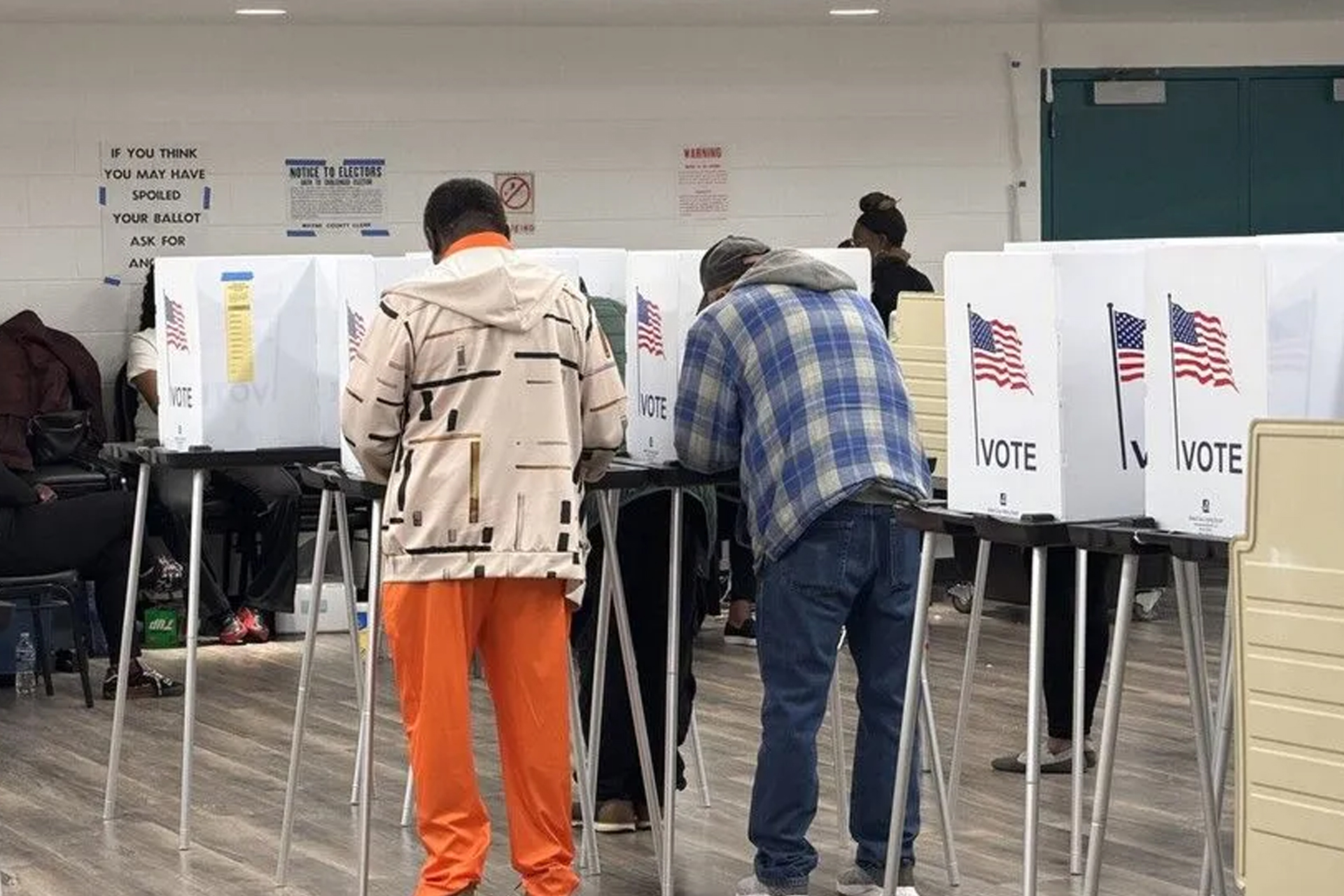
Over the past few days, I have been reflecting on America’s historic midterm elections and reading various analyses of the remarkable voter revolt against the political establishment. American voters demonstrated their willingness to punish political failure at the ballot box. But can Nigerians similarly defeat entrenched power when the very institutions entrusted with protecting their votes remain vulnerable to political interference?

America’s November 3 midterm elections delivered a devastating political verdict. Voters, frustrated by rising living costs, the Iran war, and growing dissatisfaction with President Donald Trump’s leadership, handed Democrats control of both chambers of Congress. Republican strongholds fell, political loyalties shifted, and voters demonstrated that incumbency is no insurance against public anger.
The message was unmistakable: when governance fails, the electorate can withdraw its mandate. But across Nigeria, the American revolt has inspired a provocative question: Can Nigerians replicate this electoral uprising in the 2027 presidential election?
The comparison is compelling, but the institutional realities are profoundly different.
Nigeria has no shortage of reasons for electoral rebellion. Economic hardship, persistent inflation, unemployment, deteriorating purchasing power, insecurity, and widespread distrust of government have created a deeply frustrated population. From kidnapping and rural banditry to failing infrastructure and declining public confidence, the country’s governance challenges demand serious political accountability.
Yet frustration alone does not remove a government. Elections do. And therein lies Nigeria’s democratic predicament.
In the United States, elections are administered through decentralized state and local institutions operating under federal and state laws. Election officials, courts, observers, and established legal procedures provide multiple layers of accountability. The system is imperfect, frequently litigated, and vulnerable to partisan disputes. Nevertheless, its decentralized structure makes nationwide electoral manipulation by a single executive authority considerably more difficult.
Nigeria operates differently. The Independent National Electoral Commission (INEC) is constitutionally established as an independent institution. However, its chairman and national commissioners are appointed by the president, subject to Senate confirmation. This arrangement creates legitimate concerns about institutional autonomy, particularly when the appointing authority belongs to a political party contesting the elections.
Nigeria’s electoral history reinforces these concerns. The controversial 2007 presidential election exposed serious weaknesses in electoral administration. In 2015, however, Nigerians demonstrated that incumbency could be defeated when Goodluck Jonathan lost to Muhammadu Buhari. That historic transition remains powerful evidence that peaceful electoral change is possible.
But the 2023 presidential election again exposed institutional distrust. Disputes over electronic result transmission, transparency, and electoral procedures eventually reached the Supreme Court, which upheld President Bola Tinubu’s victory.
Courts are constitutionally empowered to resolve election disputes. The problem is not judicial involvement itself, but the perception that electoral outcomes increasingly depend on litigation rather than the unquestioned credibility of votes cast.
When citizens begin to believe that ballots are merely preliminary documents awaiting judicial interpretation, democracy suffers a dangerous credibility crisis.
Equally troubling is the protection of votes. INEC administers federal elections, while the Nigeria Police Force and other security agencies provide electoral security. These institutions operate within a centralized federal framework, raising concerns about executive influence over personnel, deployment, and operational independence.
How, then, can Nigerians stage an American-style electoral revolt when the institutions protecting their votes are themselves subjects of public suspicion? The answer requires more than opposition slogans, social media outrage, or massive political rallies.
First, Nigeria must constitutionally reform INEC’s appointment process. An independent, multipartisan selection mechanism, transparent public hearings, protected tenure, and guaranteed funding would reduce executive influence and strengthen electoral credibility.
Second, judicial independence must become nonnegotiable. Transparent appointments, financial autonomy, enforceable ethical standards, and expedited election petitions are essential. Courts must remain impartial arbiters, not become perceived substitutes for the electorate.
Third, electronic transmission and public verification of polling-unit results must become legally enforceable safeguards, supported by independent audits and meaningful penalties for manipulation.
Fourth, election security must be operationally insulated from partisan directives. Electoral offenses, including intimidation, ballot destruction, and result falsification, must attract swift and credible prosecution.
Voters must organize beyond ethnic loyalty
Finally, voters must organize beyond ethnic loyalty, religious sentiment, and online activism. They must register, mobilize, monitor polling units, document irregularities, and protect their electoral mandate through lawful civic participation. The ultimate tragedy of Nigerian democracy is not that citizens lack the courage to reject failed leadership. It is that they cannot consistently trust the machinery entrusted with translating their rejection into political change.
America’s midterms demonstrated the power of electoral accountability. Nigeria’s 2027 elections must confront a more fundamental question: whether the ballot remains stronger than the political establishment.
A democracy becomes a dangerous deception when citizens are permitted to vote but cannot confidently determine who wins. Nigeria does not merely need a voters’ revolt. It needs an electoral revolution in which institutions become stronger than incumbents, ballots become stronger than political influence, and the people’s verdict becomes stronger than the machinery of power.
♦ Publisher of the Guardian News, Professor Anthony Obi Ogbo, Ph.D., is on the Editorial Board of the West African Pilot News. He is the author of the Influence of Leadership (2015) and the Maxims of Political Leadership (2019). Contact: anthony@guardiannews.us
“Jonathan’s calculated and weaponized ambiguity breeds deception and weakens emerging political alliances.” —Dr. Anthony Obi Ogbo
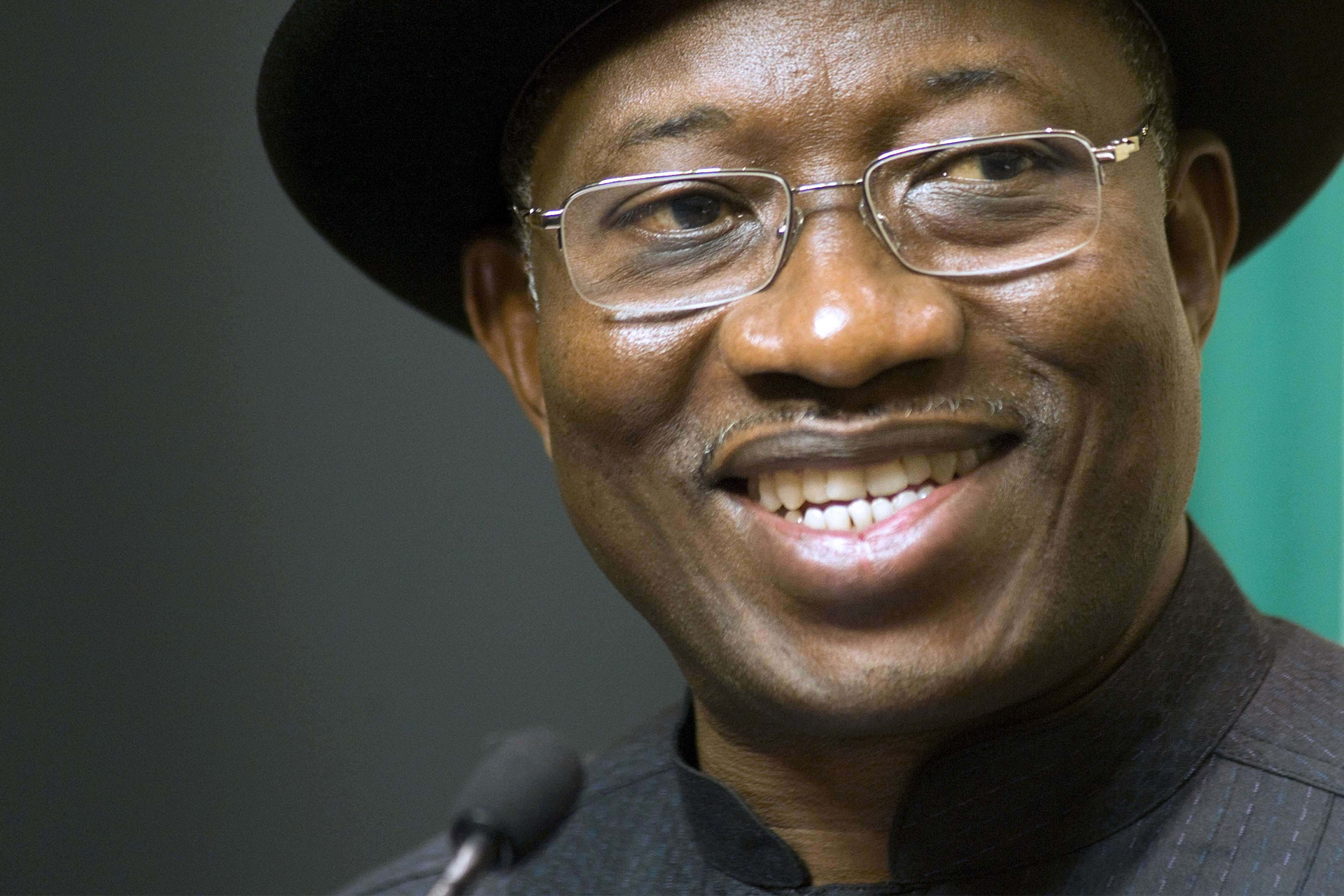
Former Nigerian President Goodluck Jonathan has once again found himself at the center of presidential speculation, floating silently above the country’s political waters while supporters aggressively market him as a possible candidate ahead of another critical election cycle. And once again, Jonathan is doing what he has mastered throughout his political career: saying nothing clearly while allowing political confusion to grow around him.

This pattern is not new. It is the same indecisive political behavior that defined some of the most consequential moments of his rise and fall. Jonathan became president in 2010 following the death of President Umaru Musa Yar’Adua. At the time, many northern political stakeholders within the then-ruling PDP believed there was an informal understanding that Jonathan would complete Yar’Adua’s term but not seek another full term in 2011, thereby preserving the party’s zoning arrangement between North and South. Instead of taking a clear and immediate position, Jonathan spent months dribbling the nation politically. He neither fully denied nor openly confirmed his intentions until the political tension had already escalated nationwide.
By the time he eventually declared his candidacy, the damage had been done. Many northern allies who initially supported him felt betrayed, politically cornered, or deceived. The PDP fractured internally, regional distrust deepened, and Jonathan’s relationship with major northern power blocs deteriorated permanently. Though he won the 2011 election, the cracks created by that indecision followed him into 2015, contributing significantly to the coalition that eventually removed him from power.
Yet Jonathan learned little from that experience. Since losing reelection in 2015, his name has repeatedly surfaced during every major electoral cycle as a potential presidential contender. Each time, his supporters strategically floated his candidacy across media platforms and political circles. Each time, Jonathan refused to decisively shut the door. Silence became his political instrument, whereas ambiguity became his strategy.
Now the country is witnessing the same playbook again. As coalition politics intensify and opposition forces attempt to consolidate around alternative political movements, Jonathan’s name has resurfaced aggressively. Reports and speculations about his presidential ambition continue to dominate political discussions, especially within camps seeking to disrupt the growing momentum surrounding Peter Obi and emerging opposition realignments.
The troubling part is not merely that Jonathan’s supporters are campaigning. The troubling part is that Jonathan fully understands the implications of his silence. He knows that his political stature carries enough weight to destabilize fragile coalition negotiations. He knows his name alone can divide campaign structures, weaken consensus-building, and inject uncertainty into opposition calculations. Yet he refuses to publicly and definitively state where he stands.
That is not statesmanship. That is calculated political ambiguity. Jonathan’s political history is filled with similarly contradictory choices. After losing power in 2015, he received widespread praise for conceding defeat peacefully. He initially framed that decision as a sacrifice made to preserve Nigerian lives and prevent violence. Later, however, different narratives emerged suggesting international pressure, particularly from the United States under President Obama. The shifting explanations weakened what could have remained one of his strongest democratic legacies.
Then came another contradiction. Despite emerging politically from the PDP, Jonathan gradually aligned himself closely with the administration of former President Muhammadu Buhari, serving in diplomatic and goodwill capacities that many PDP loyalists considered politically inappropriate. This unusual closeness fueled longstanding allegations that elements within the APC establishment viewed Jonathan as a useful political instrument capable of destabilizing opposition coalitions from within. Whether those allegations are true or not, Jonathan’s conduct has consistently created room for suspicion.
His political base remains uncertain. His campaign structure is invisible.
Today, his undeclared ambition is already generating confusion among supporters, coalition organizers, and opposition strategists. His political base remains uncertain. His campaign structure is invisible. His intentions are unclear. Yet his loyalists continue mobilizing aggressively in his name while he watches silently from the shadows.
Nigeria is too politically fragile for this kind of elite gamesmanship. At critical national moments, leadership demands clarity, courage, and accountability. Jonathan cannot continue operating as a permanent “maybe” in Nigeria’s political future, thoughtlessly hovering around every election season like an unanswered question designed to manipulate negotiations and weaken emerging alliances.
At this time, Jonathan should sit in or sit out! If he wants to run, he should declare openly, defend his record, and face the democratic process directly. If he does not intend to run, he should immediately and publicly withdraw his name from the political marketplace. Anything short of that increasingly looks less like political strategy and more like calculated deception. Nigeria deserves leaders who make difficult choices openly—not politicians who weaponize silence while others gamble with national uncertainty in their name.
♦ Publisher of the Guardian News, Professor Anthony Obi Ogbo, Ph.D., is on the Editorial Board of the West African Pilot News. He is the author of the Influence of Leadership (2015) and the Maxims of Political Leadership (2019). Contact: anthony@guardiannews.us

Nigeria’s Forgotten Sacrifice and the Tragedy of Xenophobia in South Africa
As George Santayana famously warned, “Those who cannot remember the past are condemned to repeat it.” The unfolding xenophobic tensions in South Africa reflect more than economic strain; they reveal a deeper crisis of memory and meaning. When history fades, gratitude dissolves, and fear replaces solidarity. The violence directed at fellow Africans is not merely social unrest; it is a philosophical failure to reconcile past sacrifice with present identity, reminding us that nations, like individuals, must remember to remain whole.
.
I recall that when I was in college in Nigeria, all Southern African students, present in substantial numbers, were on full federal government scholarships and received an additional income called a bursary. They lived better than many Nigerians; some even drove cars. Many adopted Nigerian names, assimilated seamlessly, and secured opportunities with ease, while Nigerian graduates faced rising unemployment. It was a quiet but powerful demonstration of solidarity, Nigeria investing in the future of a region still shackled by apartheid.
Today, that history feels almost erased.
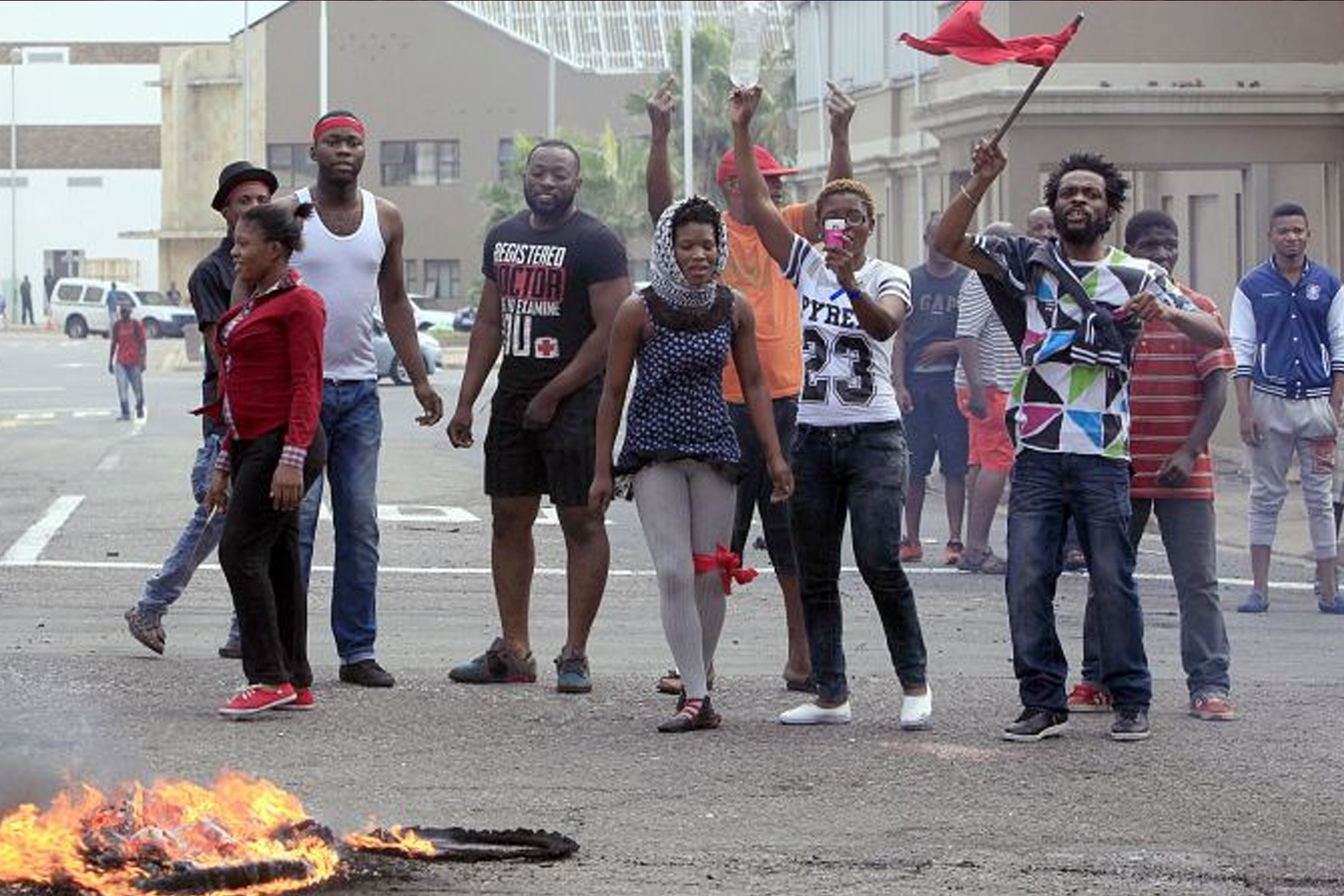
For years now, waves of xenophobic attacks in South Africa, often targeting Nigerians, and more recently Ghanaians and other African nationals, have revealed a troubling pattern: violence fueled by economic frustration, misinformation, and historical amnesia. Shops are looted, homes burned, and lives disrupted under the recurring claim that “foreigners are taking jobs.” Yet this narrative collapses under even the most basic scrutiny of history.
Nigeria was not a bystander in South Africa’s liberation; it was a central force.
Under the military leadership of Olusegun Obasanjo, Nigeria became the first country in history to boycott the Commonwealth Games in protest against apartheid. That decision was not symbolic; it was costly, bold, and globally consequential. Obasanjo went further, advocating a continental defense posture and proposing what he termed a “Black bomb,” a radical idea reflecting the urgency of protecting African sovereignty against external aggression.
Nigeria’s commitment extended beyond rhetoric. During the Ibrahim Babangida regime, South Africa sought to exert strategic influence in Equatorial Guinea, offering infrastructure support before the discovery of oil. Nigeria recognized the geopolitical implications and decisively intervened, severing ties and offering its own support. The situation escalated to the point where Equatorial Guinea petitioned Nigeria at the United Nations for intervention. Nigeria did not retreat. This was not interference; it was protection. It was foresight. It was leadership.
Nigeria funded liberation movements, provided education, opened its economy, and bore economic sacrifices, including the nationalization of British Petroleum assets, to pressure the apartheid regime. These were not acts of charity; they were acts of conviction rooted in a vision of a free and united Africa.
And yet, decades later, Nigerians are hunted in the very land their country helped liberate.
The tragedy of xenophobia in South Africa is not merely about violence—it is about the collapse of historical consciousness. A generation disconnected from its past becomes vulnerable to manipulation, scapegoating, and misplaced anger. Economic hardship is real, but it does not justify the erasure of truth or the targeting of fellow Africans.
If history were remembered accurately, perhaps the conversation would be different. Perhaps the anger would be redirected toward structural inequalities rather than neighboring nationals. Perhaps the bonds of Pan-African solidarity would still hold.
But memory has faded, and in its absence, resentment has grown. Africa cannot afford selective memory. Nations that forget who stood with them in their darkest hours risk losing their moral compass in moments of crisis. Nigeria’s role in the liberation of South Africa is not a footnote—it is a foundation. To ignore it is to misunderstand both the past and the present.
Equally troubling is the persistent failure of successive South African governments to decisively confront and eradicate xenophobic violence. Such inaction, whether intentional or not, signals a dangerous tolerance, if not tacit endorsement, of these attacks, allowing them to recur with impunity. If brotherhood is to mean anything, it must be anchored in truth and reinforced by responsible leadership. And if Africa is to move forward, it must first remember and act.
♦ Publisher of the Guardian News, Professor Anthony Obi Ogbo, Ph.D., is on the Editorial Board of the West African Pilot News. He is the author of the Influence of Leadership (2015) and the Maxims of Political Leadership (2019). Contact: anthony@guardiannews.us