

Nigeria
Appeal Court Makes U-Turn On APGA Leadership Crisis


The Court of Appeal sitting in Abuja has dismissed the appeal filed by one of the factional chairmen of All Progressives Grand Alliance (APGA), Chief Victor Ike Oye, for lacking in merit.
Consequently, the appellate court has ordered the Federal High Court to grant an accelerated hearing to the suit pending before it wherein Chief Edozie Njoku/Jude Okeke group had in 2019 applied for an order of mandamus compelling the Independent National Electoral Commission (INEC) to recognise them as the validly elected chairman of APGA.

This is following the withdrawal of a suit filed against him by Chief Victor Oye and wherein the judge vacated the order restraining APGA from recognizing Chief Edozie Njoku/Jude Okeke group as APGA leadership.
Upon the application for the order of ,andamus, Chief Oye applied to the court to strike out the name of APGA from the application for the order.
Justice A. R. Mohammed in his ruling had held that he would take the ruling of the application to strike out the name of APGA together with the judgment of the substantive application but Chief Oye rushed to the Court of Appeal seeking an order of the Appeal Court to direct Justice A. R. Mohammed to deliver his ruling immediately.
However, while dismissing the appeal the three-man panel in a unanimous judgment read by Justice Jauro affirmed the ruling of Justice A. R. Mohammed in reserving ruling on an interlocutory application before him until judgment as delivering the ruling at the interlocutory stage would touch on the substantive suit.
The Appeal Court, therefore, ordered the Federal High Court to grant an accelerated hearing to the Suit.
It would be noted that during the pendency of this appeal, Chief Edozie Njoku was removed from office by the NEC of the party, and Chief Jude Okeke was appointed as the Ag. National Chairman of the Party in line with the Constitution of the party. The implication of this is that the beneficiary of this Suit will be Chief Jude Okeke who has taken over from Chief Edozie Njoku until his removal is reversed by a Court of Appeal.
Reacting to the judgment, Comrade Ikechukwu Chukwunyere , APGA National Publicity Secretary, Chief Okeke hailed the Appeal Court decision as a reaffirmation of his long-standing belief that Oye days as parading as APGA factional chairman will soon end.
Culled from the Leadership News Nigeria




Following a successful induction ceremony, the First International Branch continues to attract new members drawn to its tradition of friendship, service, culture, and community
SUGAR LAND, TEXAS — The Sugar Land People’s Club of Nigeria International (SLPCNI) is continuing its membership expansion following its recently concluded induction ceremony, with Dr. Nkem Ugwu becoming one of the latest community members to join the organization.
Ugwu, a Sugar Land resident originally from Nsukka, Enugu State, Nigeria, is an entrepreneur and mother of three sons, a mother-in-law, and a grandmother. She describes service to others, family, and community engagement as important parts of her personal and professional life.

Grand Patron Ide Obinna Nnanyelugo Mbachu addressing the September Conference of the Sugar Land PCNI
Her membership comes on the heels of the branch’s successful bi-annual induction ceremony, during which 16 new members were formally sworn in by PCNI National President Atty. Fidelis Onyebueke. The celebration attracted national leaders, patrons, and members representing branches from across the People’s Club network.

Photo from left: Hon. Chief Sir Michael Okeke; Hon. Anaeto Okakpu “Oranwezuluaku”; Grand Patron Ide Obinna Nnanyelugo Mbachu; Hon. Dr. Nkem Ugwu ; Hon. Prof. Chris Ulasi, Group Chairman; Hon. Chief, Sir Basil Mbuba; Hon. Chief Sir Dr. Uche Egbuchuam “Akudo World Wide.”
Ugwu said joining the organization provides an opportunity to develop meaningful relationships while contributing to its mission.
“I am truly excited and honored to join the prestigious People’s Club of Nigeria International, Sugar Land Branch. I look forward to getting to know fellow members, building lasting friendships, and becoming actively involved in this vibrant and welcoming community. I am especially drawn to the Club’s tradition of fellowship, service, and mutual support, and I hope to contribute my experience, energy, and passion for serving others to its continued growth.”
Grand Patron Ide Obinna Nnanyelugo Mbachu welcomed Ugwu, describing continued interest in membership as encouraging for the historic First International Branch.

Membership Chairperson Hon. Chief Udoji Achebe and Hon. Ndidi Chidume
“When people of accomplishment and community spirit continue to identify with our organization, it tells us that the values upon which People’s Club was built remain relevant. We welcome Dr. Ugwu and look forward to the experience and fellowship she brings to our family.”
Hon. Prof. Chris Ulasi, Group Chairman, said the branch’s recent induction helped showcase an organization that continues to combine Nigerian cultural heritage with community engagement in Houston.
“Our successful induction created tremendous enthusiasm, but our focus goes beyond ceremonies. We are building a stronger organization rooted in friendship, responsibility and service. Dr. Ugwu’s decision to join reflects that continuing momentum.”

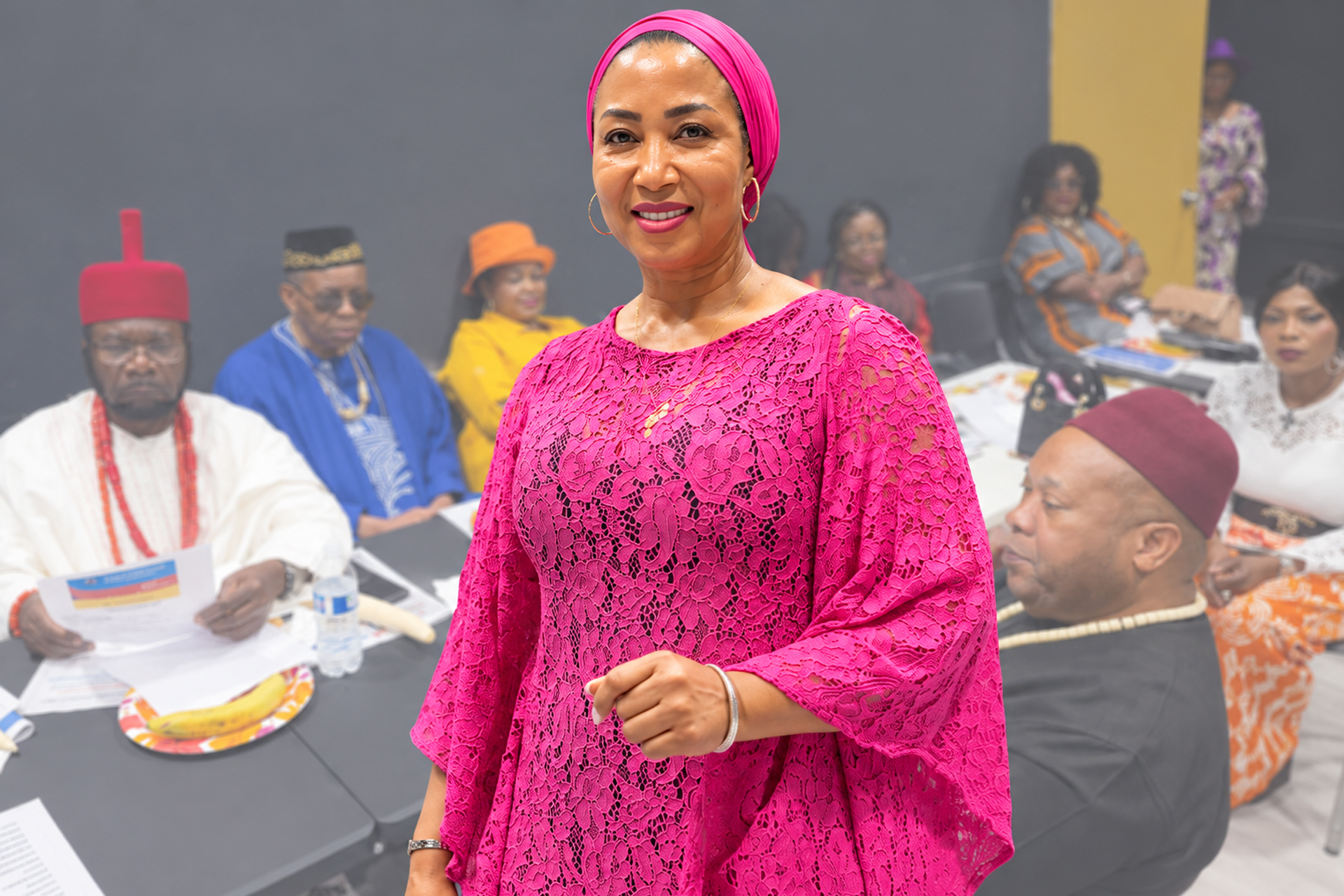
One of the meeting hosts, Hon. Professor Keih George, introduces the co-meeting hosts.
Membership Chairperson Hon. Chief Udoji Achebe said the branch remains interested in individuals prepared to participate actively in its programs and fellowship.
“Membership is about belonging, but it is equally about participation and contribution. We are delighted to welcome Dr. Ugwu and other prospective members who share the principles and aspirations of People’s Club.”
For SLPCNI, the growing interest following its induction represents another chapter in the evolution of a branch with a special place in the organization’s history.
And for Ugwu, it marks the beginning of a new journey—one centered on friendship, community, and service.


People’s Club Sugar Land Is Growing — Grand Patron Mbachu Explains Why

Professor Josephine Onyido Earns Prestigious Nigerian Academy of Education Induction

PCNI Elevates Chief Dr. Emmanuel Opara to Patron in Historic Ihiagwa Investiture

Emotional Conflict: Is She Toying with Me?

Corruption at the Nigerian Consulate Atlanta – A Victim’s Nightmarish Experience

Gowon’s Book and the Dangerous Politics of Selective Memory

Video: Omambala Cultural Association in Houston Celebrates Motherhood with Joyous Igbo-Inspired Mother’s Day Event

VIDEO: Chris Hollins Opens Cartoon Art Showcase at TSU’s CommWeek

Commissioner Dexter L. McCoy speaks about the African-American Memorial Event
-

 Houston3 weeks ago
Membership Interest Soars After Sugar Land People’s Club’s Successful Induction
-

 Houston1 month ago
People’s Club Sugar Land Celebrates Landmark Induction of 16 New Members
-
 Houston5 days ago
PCNI Elevates Chief Dr. Emmanuel Opara to Patron in Historic Ihiagwa Investiture
-

 Houston2 weeks ago
Membership Surge Continues as Dr. Nkem Ugwu Joins People’s Club
-
 Education5 days ago
Professor Josephine Onyido Earns Prestigious Nigerian Academy of Education Induction
-
 Community2 days ago
People’s Club Sugar Land Is Growing — Grand Patron Mbachu Explains Why