

Lifestyle
Wife Snatching Scandal: Pastor’s Church In Business As Usual




Branch considers annual induction as August celebration of prestige, culture and comradeship inspires growing community interest
HOUSTON, TEXAS — Membership requests to the Sugar Land Branch of People’s Club of Nigeria International (PCNI) have risen significantly following its successful August induction ceremony, prompting the organization to consider making the event an annual affair.
Group Chairman, Hon. Prof. Chris Ulasi, confirmed the surge in interest, saying the branch has received numerous inquiries from prospective members since the ceremony that formally admitted 16 new members to the organization.
“The response since the induction has been remarkable. We have seen a significant increase in people asking about membership and how they can become part of the People’s Club family,” Ulasi said. “Many of them attended the event or heard about it afterward and were impressed by the fellowship, dignity, cultural pride, and genuine comradeship they witnessed.”
Ulasi said the development, including a possible change from the current bi-annual induction arrangement to an annual ceremony, would be discussed at the branch’s September general meeting.
The renewed interest in membership comes on the heels of an elaborate induction that attracted national officers, patrons, branch chairmen, members, and guests from across the People’s Club family.
National President, Atty. Fidelis Onyebueke, who presided over the swearing-in of the 16 inductees, described the event as a total success and commended the Sugar Land Branch, PCNI’s First International Branch, for what he called an exceptional celebration of fellowship, culture, service, and unity.
During the formal ceremony, each inductee was invited to the podium to take the membership oath and receive a certificate from the national president, who was assisted by PCNI Attorney Chukwuka John Ukadike.
Beyond the admission of new members, however, the event offered guests a public display of the traditions that have historically defined the People’s Club: prestige, love, service, and comradeship. Those characteristics were reflected throughout the ceremony, from the reception of national officers and interaction among members to the formal induction, cultural presentation, and extended social celebration that followed.
Grand Patron, Ide Obinna Nnanyelugo Mbachu, said the growing interest in membership was an indication that the organization’s values resonated with guests who experienced the event.
“What people witnessed was the character of People’s Club—the love among members, respect for one another, willingness to serve, and the comradeship that brings us together,” Mbachu said. “Prestige is not simply about appearance; it is about how we conduct ourselves and how we treat people. When the community sees those values demonstrated, it is understandable that others would want to become part of the organization.”
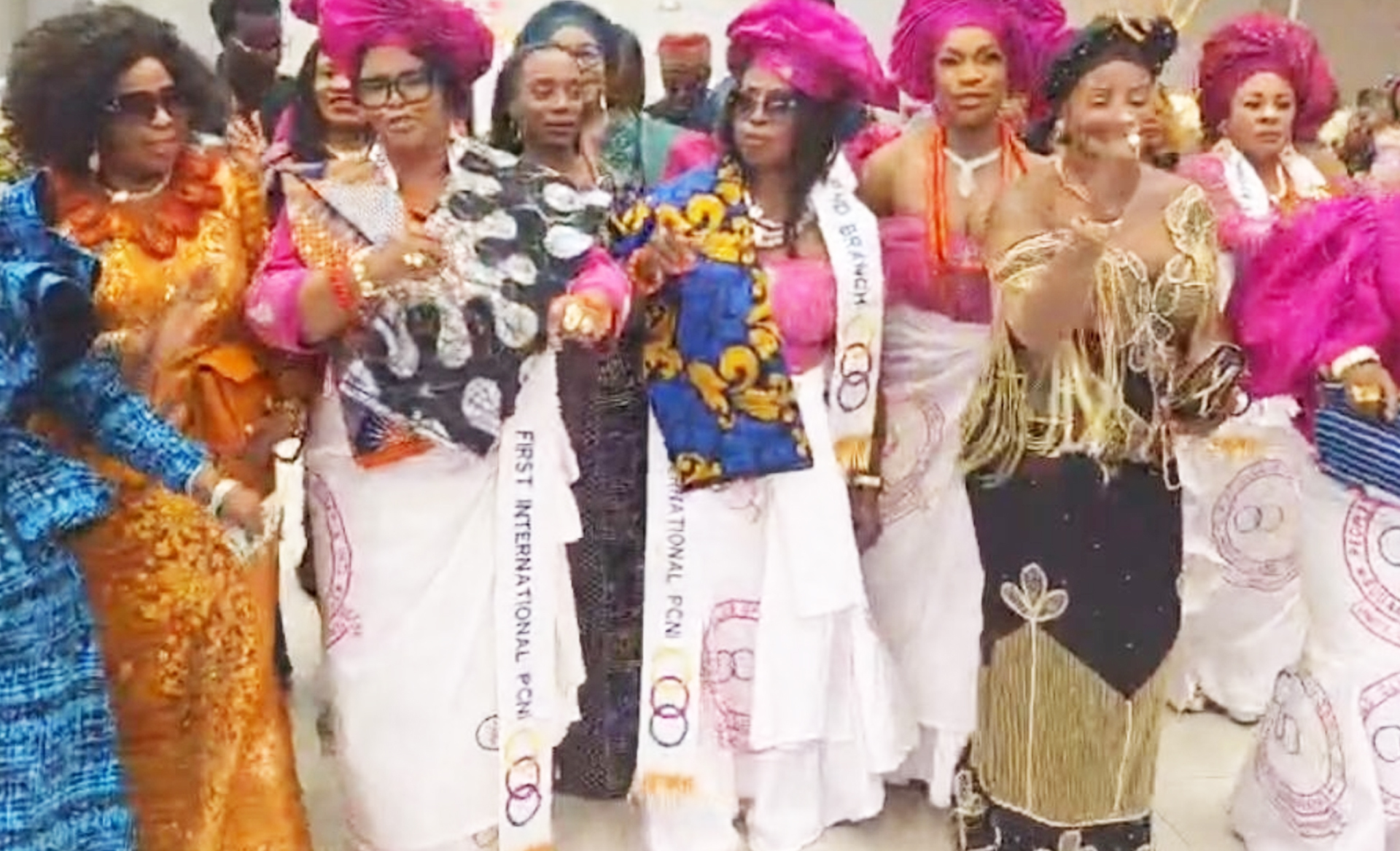
The cultural presentation was among the most visible features of the evening. Women members and associates appeared in coordinated traditional attire featuring red-pinkish blouses with matching head ties and white wrappers bearing the PCNI logo. The men wore all-white outfits complemented by customized PCNI cap pins and distinctive PCNI sashes worn as neckpieces.

The coordinated appearance created a colorful expression of Nigerian cultural identity while reinforcing the sense of unity that characterized the gathering.
As the formal program concluded, the ceremony transitioned into an extended social celebration. Members, inductees, and guests shared food and drinks before taking to the dance floor, with music and festivities continuing into the early hours of Sunday.
The presence of members and officials from different branches also gave the ceremony broader significance for Sugar Land, whose status as the First International Branch places it prominently in PCNI’s history outside Nigeria.
For Ulasi, however, the strongest indication of the event’s impact came afterward, as inquiries from prospective members continued to reach the branch.
He said that while the organization welcomes the increased interest, prospective members would be expected to understand the responsibilities and traditions associated with belonging to the People’s Club. “Membership is about much more than attending social events,” Ulasi said. “It is about service, friendship, responsibility, and commitment to one another. Those are the values we intend to preserve as the branch continues to grow.”
The September meeting is expected to consider how the branch will respond to increased membership interest and whether the success of the August ceremony provides sufficient grounds to move to an annual induction schedule. For the Sugar Land Branch, the aftermath of the August induction may prove as significant as the ceremony itself: 16 members entered the People’s Club that evening, but the celebration appears to have inspired many more to seek a place within its ranks.
National President Atty. Fidelis Onyebueke hails First International Branch for a spectacular celebration of culture, fellowship and service
HOUSTON, TEXAS — The Sugar Land People’s Club of Nigeria International (PCNI), the organization’s First International Branch, has been declared a total success following a spectacular bi-annual induction ceremony that brought together national leaders, branch chairmen, patrons, members, and guests from across the People’s Club family.
National President Atty. Fidelis Onyebueke, who presided over the swearing-in ceremony, commended the Houston branch for delivering an outstanding event that reflected the organization’s enduring traditions of friendship, fellowship, service, and community.

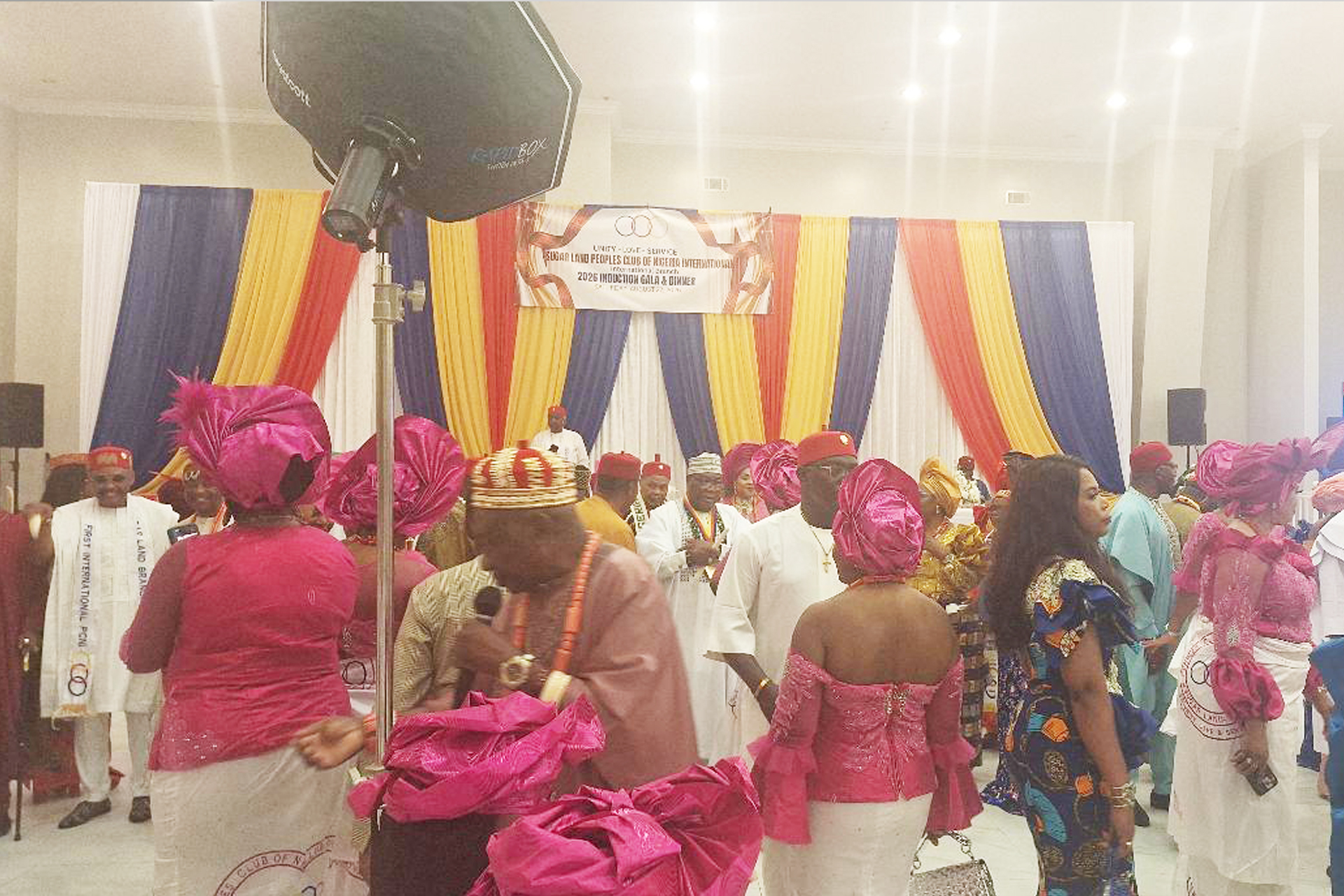
Hon. Prof. Chris Ulasi, SLPCNI Chairman, leads the grand entrance of the national leadership during the induction ceremony, followed by National President Atty. Fidelis Onyebueke and his wife.
“The Houston branch has once again demonstrated what People’s Club represents at its very best. This was a beautifully organized and highly successful event, rich in culture, fellowship, dignity, and unity. I commend the leadership, members, and entire Houston family for an exceptional celebration worthy of the First International Branch.”
The ceremony witnessed the formal swearing-in of 16 new members, each of whom was individually invited forward to receive a certificate of membership from the national president. Onyebueke was assisted in administering the oath by PCNI Attorney Chukwuka John Ukadike.

Group Photo: Women Members and Associates of SLPCNI
The inductees joined an impressive gathering that reflected the diversity and strength of the People’s Club community. Members and guests traveled from various branches across the United States and beyond, transforming the Houston ceremony into a truly international gathering.
The cultural elegance of the occasion was equally striking. Women appeared in colorful, coordinated traditional attire, featuring red-pinkish blouses and matching head ties paired with white wrappers prominently designed with the PCNI logo. The ensemble created a distinctive and dignified traditional look. Men complemented the occasion with elegant all-white outfits, customized PCNI cap pins, and special PCNI sashes worn as neckpieces.
Among those in attendance were Grand Patron Ide Obinna Nnanyelugo Mbachu; Hon. Prof. Chris Ulasi, Group Chairman; patrons and chairmen from various branches, and People’s Club members representing chapters across the globe.
The formal proceedings eventually gave way to an extended celebration of friendship and camaraderie. Food, drinks, music, and dancing carried the festivities well beyond the scheduled program, continuing for hours into the early morning of Sunday.
For the Houston branch, the celebration represented more than the admission of new members. It reaffirmed the historic importance of the First International Branch and demonstrated the continuing strength of People’s Club as a transnational fellowship rooted in Nigerian identity, friendship, service, and mutual support.
The successful ceremony also underscored the organization’s ability to bring generations and branches together while preserving the cultural traditions that have sustained its membership across continents.
By the end of the celebration, Houston had delivered more than an induction. It had delivered a memorable demonstration of unity, culture, friendship, and organizational excellence—an event that fully embodied the People’s Club spirit.
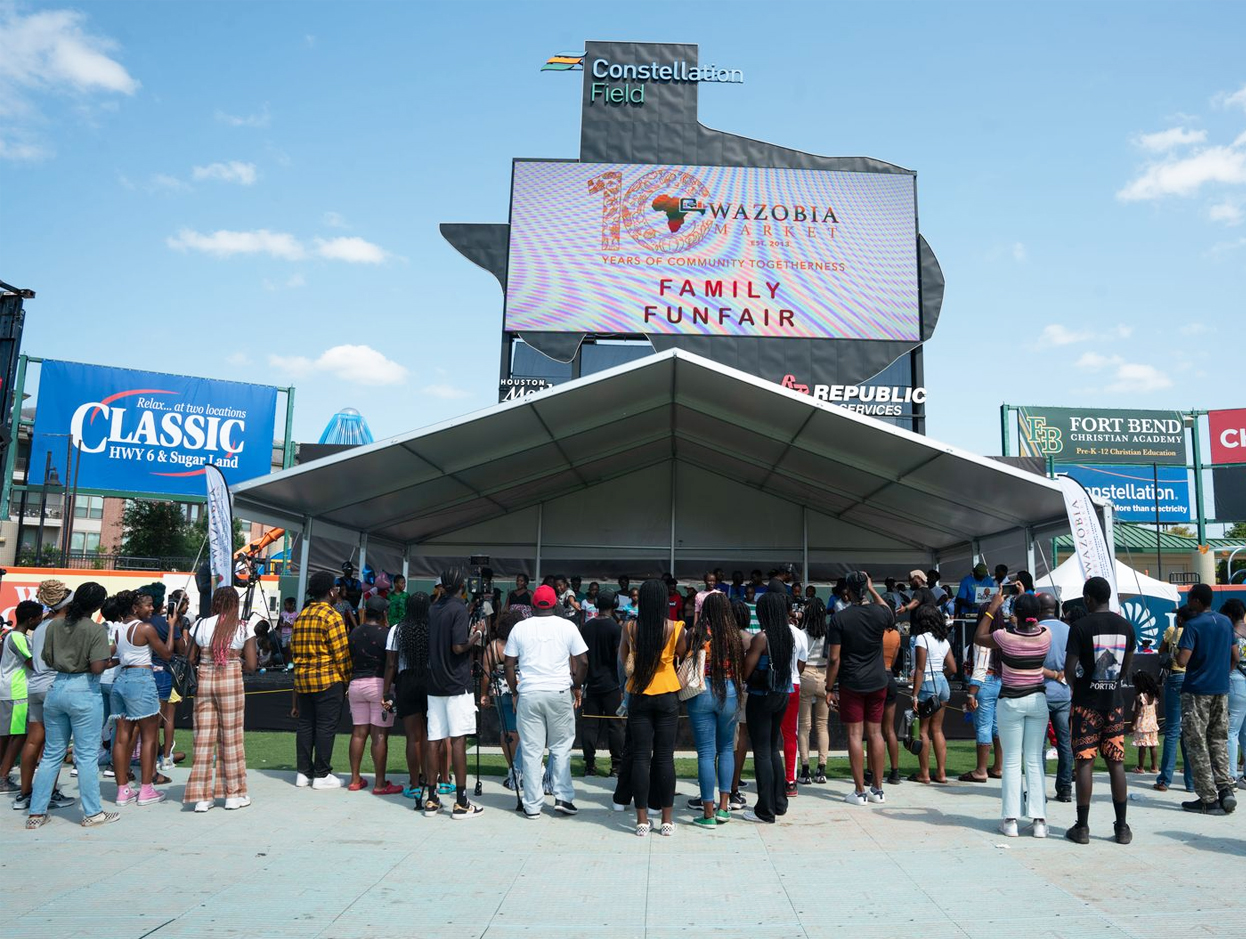
On July 25, 2026, families from across Houston will gather at the West Oaks Mall on 1000 West Oaks, Houston, to celebrate a milestone that extends far beyond food, music, and entertainment. The 10th Anniversary of the Wazobia Family Funfair represents a decade-long journey of community building, cultural preservation, entrepreneurship, and family-centered engagement.
What began as a customer appreciation initiative has evolved into one of the most recognizable African community events in Texas. For ten years, the Funfair has provided a space where families reconnect with culture, children experience heritage, entrepreneurs build relationships, and communities strengthen the bonds that define them.
The story of the anniversary begins with the story of Wazobia itself. Founded in 2013 by entrepreneur Tunde Fashina, Wazobia was created with a vision that stretched beyond commerce. According to Fashina, the goal was never simply to sell products.

FASHINA, OHAZURIKE: For Fashina, leadership carries responsibility. “The feeling is fantastic because you’ve achieved something,” he explained. “But it is also frightening because every decision affects many people.” He added: “The higher you are in an organization, the more people are affected by your decisions.” Those values influence the company’s culture and community engagement efforts.
“The emphasis was not more on getting the products,” he explained. “The emphasis was on creating a feeling of belonging to the customer, so that they feel at home any time they come to our place.”
That philosophy became the foundation of the business. Fashina spent nearly two years developing the business plan. The challenge was enormous. He had limited financial resources and relied heavily on relationships, determination, and faith.
“The business plan had to involve getting this business up with absolutely no money, because I didn’t have any,” he recalled.
The early years tested every aspect of his resolve. He performed multiple roles simultaneously.
“I was a cleaner. I was a restocker. I was a cashier. I did all the work,” he said. “I slept in the shop throughout for almost 18 months because I was working around the clock.”
Despite the challenges, growth came quickly.
“God showed up in ways that I could not describe,” Fashina said. “People started coming in little by little, and the growth rate exceeded everything in the business plan.”
Yet even as the company expanded, community remained central to the mission. “We created a sub-plan,” he explained. “How do we give back to those who built us? How do we let our customers know that we appreciate them?”
The answer became what is now known as the Wazobia Family Funfair.


Over the years, the event evolved from a modest appreciation day into a major annual celebration featuring cultural performances, African music, dance, games, food vendors, business showcases, and family activities.
For Paula Ohazurike, Project Manager at Wazobia, the event represents much more than an annual gathering. Her experience since she joined Wazobia reflects a recurring theme in conversations with employees and customers: Wazobia is viewed not merely as a business but as a community institution.
That philosophy is visible in the Family Funfair. The event creates a rare space where generations come together. Children born in America are introduced to African traditions through music, dance, language, fashion, and food. Parents and grandparents reconnect with memories of home while sharing those experiences with younger family members.
In a city as diverse as Houston, such gatherings carry significant cultural value. Houston is home to one of the largest African immigrant populations in the United States. Yet many families often struggle to maintain cultural connections while navigating modern American life. Events like the Wazobia Family Funfair help bridge that gap.
The significance of the Funfair extends beyond cultural preservation. It serves as a platform for economic empowerment. Small businesses, vendors, artists, and service providers use the event to connect with potential customers. Community organizations engage residents. Entrepreneurs build networks. Relationships formed during the event often extend throughout the year.
According to Ohazurike, the event has become one of the most effective community-engagement platforms within Houston’s African diaspora. The atmosphere itself reflects the spirit of family. Children enjoy games, bounce houses, and face painting. Families participate in contests and group activities. Music fills the air. Food vendors showcase culinary traditions from across Africa.
The result is an experience that feels both festive and deeply personal. Fashina believes that sense of belonging remains the event’s greatest achievement. “There is no reason for us not to provide an environment that people can be proud of,” he said. “A place where they can bring their friends and enjoy themselves.”


That vision continues to guide the organization. Today, Wazobia has expanded significantly, operating multiple locations and employing approximately 250 people. “It is something we are immensely proud of,” Fashina noted. “But this is only the beginning.” Growth, however, is measured by more than financial success.
For Fashina, leadership carries responsibility. “The feeling is fantastic because you’ve achieved something,” he explained. “But it is also frightening because every decision affects many people.” He added: “The higher you are in an organization, the more people are affected by your decisions.” Those values influence the company’s culture and community engagement efforts.
The Family Funfair embodies that philosophy by bringing people together in ways that strengthen relationships and encourage collective progress. Perhaps that is why the event has endured for ten years. Many community events emerge with enthusiasm but struggle to survive. Sustaining a large-scale annual celebration requires trust, consistency, and a genuine commitment to service. The Wazobia Family Funfair has achieved that longevity because it has remained focused on people.
Over the past decade, families have returned year after year. Children who attended the first Funfair now return as young adults. New immigrants have found friendships and support systems. Businesses have launched partnerships. Countless memories have been created.

The anniversary therefore represents more than a milestone date on a calendar; it represents ten years of shared experiences; ten years of preserving culture; ten years of supporting businesses; ten years of strengthening families; and ten years of building community.
As Houston prepares for the 2026 celebration, organizers are looking toward the future while honoring the past. For Ohazurike, the mission remains simple. “We want people to feel welcome,” she said. “We want families to come together and create memories.”
For Fashina, the broader vision remains rooted in possibility. “We can do it,” he said. “We just have to have a goal in mind and take it one step at a time.”
Those words capture the spirit of the Wazobia Family Funfair. At its heart, the event is not simply a festival. It is a living expression of community resilience, cultural pride, and family unity. It demonstrates how a business can become a community anchor. It illustrates how relationships can create opportunities. It reminds us that culture thrives when it is shared. Ten years after its inception, the Wazobia Family Funfair continues to embody the meaning of its name—an invitation for everyone to come together.
In a world increasingly defined by division and isolation, that invitation may be more important than ever. And as families gather once again this July, they will celebrate more than an anniversary. They will celebrate a decade of belonging.


People’s Club Sugar Land Is Growing — Grand Patron Mbachu Explains Why

Professor Josephine Onyido Earns Prestigious Nigerian Academy of Education Induction

PCNI Elevates Chief Dr. Emmanuel Opara to Patron in Historic Ihiagwa Investiture

Emotional Conflict: Is She Toying with Me?

Corruption at the Nigerian Consulate Atlanta – A Victim’s Nightmarish Experience

Gowon’s Book and the Dangerous Politics of Selective Memory

Video: Omambala Cultural Association in Houston Celebrates Motherhood with Joyous Igbo-Inspired Mother’s Day Event

VIDEO: Chris Hollins Opens Cartoon Art Showcase at TSU’s CommWeek

Commissioner Dexter L. McCoy speaks about the African-American Memorial Event
-
 Houston2 weeks ago
PCNI Elevates Chief Dr. Emmanuel Opara to Patron in Historic Ihiagwa Investiture
-

 Houston1 month ago
Membership Interest Soars After Sugar Land People’s Club’s Successful Induction
-

 Houston3 weeks ago
Membership Surge Continues as Dr. Nkem Ugwu Joins People’s Club
-
 Community2 weeks ago
People’s Club Sugar Land Is Growing — Grand Patron Mbachu Explains Why
-
 Education2 weeks ago
Professor Josephine Onyido Earns Prestigious Nigerian Academy of Education Induction