Connect with us

Africa

Nigerian Government Must Explain How Nnamdi Kanu Was Arrested From Kenya – UK Parliament

Published

on

The UK Minister of State for the Commonwealth, Lord Tariq Ahmad, demanded that the Nigerian government should explain to the British government how it repatriated the IPOB leader.

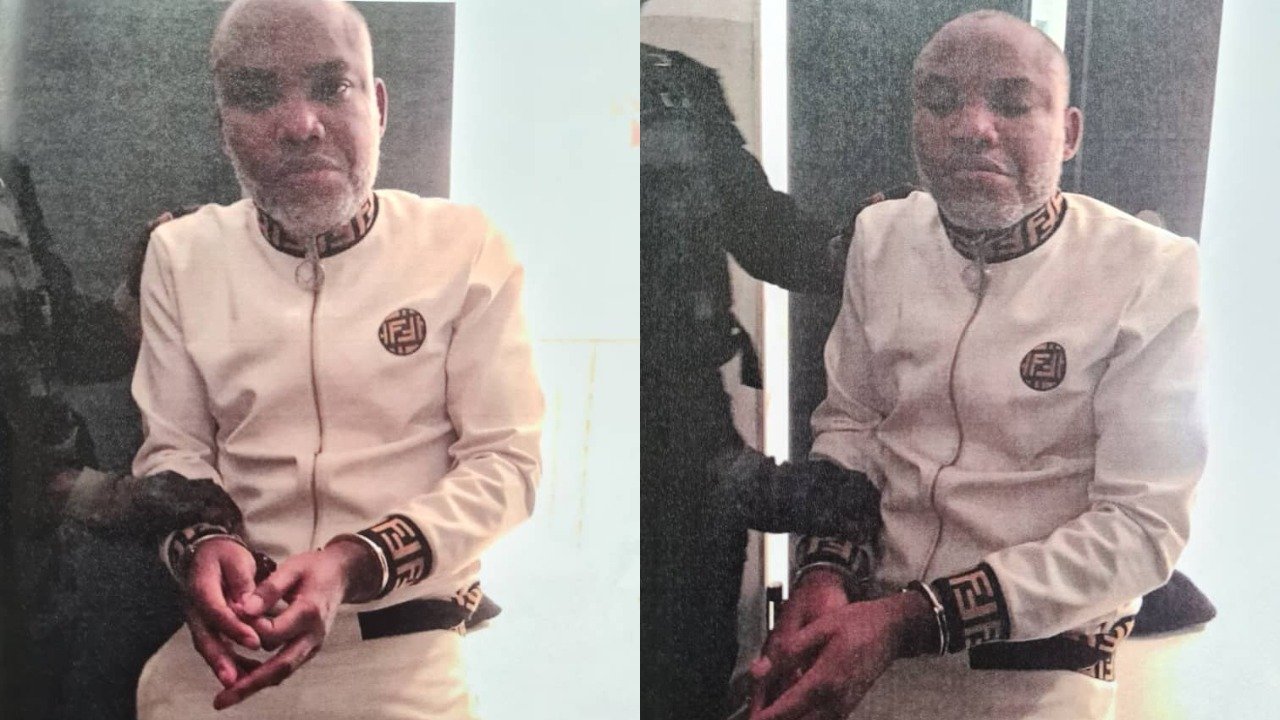
The United Kingdom Parliament has stated that the Nigerian government has to explain the roles it played and the manner of the arrest of the leader of the Indigenous People of Biafra, Nnamdi Kanu, from Kenya.

The UK Minister of State for the Commonwealth, Lord Tariq Ahmad, demanded that the Nigerian government should explain to the British government how it repatriated the IPOB leader.

This followed a debate by the UK Parliament on July 7, during which British lawmakers discussed the UK government’s assessment of Kenya’s role in Kanu’s arrest.

Lord Alton of Liverpool raised the issue at the House of Lords, seeking to address the controversies surrounding the transfer of Kanu from Kenya to Nigeria against his will.

He also sought to know if there was any assistance provided to the embattled IPOB leader by the High Commission in Abuja.

A parliamentary schedule stated, “Lord Alton of Liverpool to ask Her Majesty’s Government what assessment they have made of (1) the alleged role of the government of Kenya in the detention and alleged mistreatment of Nigerian activist Nnamdi Kanu, (2) the circumstances surrounding the transfer of Kanu to Nigeria against his will, and (3) of any assistance being provided to him by the High Commission in Abuja. HL1665.”

In response to the parliament’s debate, Ahmad said, “We are seeking clarification from the Nigerian Government about the circumstances of the arrest and detention of Nnamdi Kanu.”

Ahmad also confirmed claims by the British High Commission in Abuja that the UK government was providing consular assistance for the IPOB leader.

“The UK has requested consular access to Kanu from the Nigerian government, and we stand ready to provide consular assistance,” he maintained.

While the Buhari regime has refused to disclose how it repatriated the IPOB leader from Kenya, the UK government had clarified that Kanu travelling with a British passport was not arrested within its shores.

IPOB had also accused Kenya’s special police force of arresting, detaining, and torturing Kanu before the authorities handed him over to the Nigerian government.

But Kenya, through its high commissioner to Nigeria, Wilfred Machage, refuted the claim, stating that the East African Country was not involved in the whole process.

But findings by The Guardian, a UK newspaper, indicated that he was arrested in Kenya, as Kanu’s UK passport remains in Kenya.

He was said to have entered Kenya this year with his British passport on a visa expiring in June, the newspaper reported.

Also, Kingsley Kanu, a brother to the British-Nigerian citizen, insisted that the Kenyan government was involved in the arrest.

Culled from the Sahara Reporters

Texas Guardian News
Continue Reading
Click to comment

Leave a Reply

Africa

Nigeria–Burkina Faso Rift: Military Power, Mistrust, and a Region Out of Balance

Published

on

The brief detention of a Nigerian Air Force C-130 Hercules aircraft and its crew in Burkina Faso may have ended quietly, but it exposed a deeper rift shaped by mistrust, insecurity, and uneven military power in West Africa. What was officially a technical emergency landing quickly became a diplomatic and security flashpoint, reflecting not hostility between equals, but anxiety between unequally matched states navigating very different political realities.

On December 8, 2025, the Nigerian Air Force transport aircraft made an unscheduled landing in Bobo-Dioulasso while en route to Portugal. Nigerian authorities described the stop as a precautionary response to a technical fault—standard procedure under international aviation and military safety protocols. Burkina Faso acknowledged the emergency landing but emphasized that the aircraft had violated its airspace, prompting the temporary detention of 11 Nigerian personnel while investigations and repairs were conducted. Within days, the crew and aircraft were released, underscoring a professional, if tense, resolution.

Yet the symbolism mattered. In a Sahel region gripped by coups, insurgencies, and fragile legitimacy, airspace is not merely technical—it is political. Burkina Faso’s reaction reflected a state on edge, hyper-vigilant about sovereignty amid persistent internal threats. Nigeria’s response, measured and restrained, reflected confidence rooted in capacity.

The military imbalance between the two countries is stark. Nigeria fields one of Africa’s most formidable armed forces, with a tri-service structure that includes a large, well-equipped air force, a dominant regional navy, and a sizable army capable of sustained operations. The Nigerian Air Force operates fighter jets such as the JF-17 and F-7Ni, as well as A-29 Super Tucanos for counterinsurgency operations, heavy transport aircraft like the C-130, and an extensive helicopter fleet. This force is designed not only for internal security but for regional power projection and multinational operations.

Burkina Faso’s military, by contrast, is compact and narrowly focused. Its air arm relies on a limited number of light attack aircraft, including Super Tucanos, and a small helicopter fleet primarily dedicated to internal counterinsurgency. There is no navy, no strategic airlift capacity comparable to Nigeria’s, and limited logistical depth. The Burkinabè military is stretched thin, fighting multiple insurgent groups while also managing the political consequences of repeated military takeovers.

This imbalance shapes behavior. Nigeria’s military posture is institutional, outward-looking, and anchored in regional frameworks such as ECOWAS. Burkina Faso’s posture is defensive, reactive, and inward-facing. Where Nigeria seeks stability through deterrence and cooperation, Burkina Faso seeks survival amid constant internal pressure. That difference explains why a technical landing could be perceived as a “serious security breach” rather than a routine aviation incident.

The incident also illuminates why Burkina Faso continues to struggle to regain political balance. Repeated coups have eroded civilian institutions, fractured command structures, and blurred the line between governance and militarization. The armed forces are not just security actors; they are political stakeholders. This creates a cycle where insecurity justifies military rule, and military rule deepens insecurity by weakening democratic legitimacy and regional trust.

Nigeria, despite its own security challenges, has managed to avoid this spiral. Civilian control of the military remains intact, democratic transitions—however imperfect—continue, and its armed forces operate within a clearer constitutional framework. This stability enhances Nigeria’s regional credibility and amplifies its military superiority beyond hardware alone.

The C-130 episode did not escalate into confrontation precisely because of this asymmetry. Burkina Faso could assert sovereignty, but not sustain defiance. Nigeria could have asserted its capability, but chose restraint. In the end, professionalism prevailed.

Still, the rift lingers. It is not about one aircraft or one landing, but about two countries moving in different strategic directions. Nigeria stands as a regional anchor with superior military power and institutional depth. Burkina Faso remains a state searching for equilibrium—politically fragile, militarily constrained, and acutely sensitive to every perceived threat from the skies above.


Texas Guardian News
Continue Reading

Africa

NBA pick Khaman Maluach Hoping to ‘Change the Narrative’ About Africa

Published

on

Immediately after getting drafted, Maluach was asked: “So many people, when they think about Africa, think about strife, think about war, think about not so great things about the continent, let alone South Sudan. How much of a responsibility do you think you have in changing perceptions of what people think Africa is in terms of thinking more about the resources, thinking about the people of Africa and South Sudan, specifically?”

Maluach’s native country, South Sudan, is undergoing a humanitarian crisis. His family fled the country to a suburb of Kampala, Uganda, in search of safety and opportunity during the South Sudan crisis. He now hopes to change the narrative about the region by highlighting its good parts on the world stage.

“I think about showing them the good parts of Africa,” Maluach said at the press conference after he was drafted. “I’m thinking about showing them the great places in Africa, like Kigali, whether it’s Senegal, whether it’s the safaris in Africa, and showing them the cultures we have and the people we have, which is different from the stuff they see on TV. I just want to change the narrative, the narrative of our people and how they see my continent.”

Maluach was born in Rumbek, once an important city in South Sudan that was ravaged by the country’s civil war. The 7’2″ center’s road to success was far from easy. The nearest basketball court to his house was nearly an hour’s walk away and usually packed. Moreover, he played his first game in Crocs, not basketball shoes. But his dedication was enough to catch the eye of local coaches Wal Deng and Aketch Garang.

Through the effort that he put in, Maluach made it to the NBA Academy Africa in Saly, Senegal, then to the Duke Blue Devils, and now the Suns. He hopes the moment inspires kids on the continent.

“Living in Africa, I had the whole continent on my back. Giving hope to young kids,” he said after the Suns selected him No. 10 overall.

Maluach considers basketball a gift God gave him, and hopes to finish off his NBA career as a Hall of Famer.

Texas Guardian News
Continue Reading

Africa

Nigeria’s first female fighter pilot Kafayat Sanni excels in Ghana

Published

on

After making history as Nigeria’s first female fighter pilot, Flt. Lt. Kafayat Sanni has emerged as the Best Allied Student and won the Best Assistant Commandant Paper award at the Ghana Armed Forces Command and Staff College, Accra, according to the News Agency of Nigeria (NAN).

In a statement released on Saturday and cited by NAN, the Director of Public Relations and Information of the Nigerian Air Force, Air Commodore Ehimen Ejodame, said the awards were presented on Friday during the College graduation ceremony which had in attendance top military personnel and dignitaries from across Africa.

Ejodame recalled how Sanni first made the news in 2019 after being decorated as the Nigerian Air Force’s first female fighter pilot following her pilot training in the U.S.

“Since then, she has flown the Alpha Jet as well as undertaken training sorties on the Super Mushshak as a prolific instructor pilot, producing and mentoring younger pilots for the NAF,” Ejodame said.

“Her outstanding performance at GAFCSC not only symbolises personal excellence and resilience but also underscores Nigeria’s growing leadership in regional defence and commitment to gender inclusion in the armed forces.

“This remarkable achievement further reflects the Nigerian Air Force’s strategic investment in human capital development under the visionary leadership of the Chief of the Air Staff, Air Marshal Hasan Abubakar,” he said.

In 2017, Sanni emerged as the overall best pilot at the Nigerian Air Force’s 401 training school before she moved to the United States to train at the U.S. Aviation Leadership program.

Upon completion, Sanni returned to Nigeria, where she, alongside 12 new fighter pilots, was decorated.

As Sanni became the first female fighter pilot in the 55-year history of the Nigerian Air Force, her colleague, Tolulope Arotile, also became the Force’s first female combat helicopter pilot.

“It is a privilege for me to be winged as the first female fighter pilot in the Nigerian Air Force,” Sanni said after being decorated.

Sanni said at the time she had always wanted to be a fighter pilot, and “I was just lucky to be chosen.”

“It was also my choice. It was what I wanted to do. And I felt that everyone is not supposed to fold their arms and watch what is happening in our country.

“Everyone could always play their part. So, I did not think there was any reason for me to think that it is not possible for me to actually fly the jet because there was no female that ever flew the jet. I believe I could achieve it and I did,” she said.

She then went on to advise younger girls to “never say no to opportunities.”

“They should always strive to be the best and put in their efforts. They should never look at anything that seems to want to overpower or overshadow them. For me, you can always attempt things and if they do not work out well; fine. But at every point in time, you just need to put in your best.”

Texas Guardian News
Continue Reading

Trending