

Houston
Survival in Obscurity —Tribulations of African Americans in the Pandemic


Finally, it took the pandemic to float ashore the system-induced tribulations of a population subjugated by a bigoted justice system
By Anthony Obi Ogbo, Ph.D.
A professor in a historically black college in Houston looked at the screen during one of his remote classes and noticed something quite unusual. Besides low classroom participation, a student could be seen in a Walmart breakroom, and another was in a car with a baby sleeping comfortably behind in an infant car seat carrier. In another situation, a student narrated how she was ejected from her home and had no regular access to the internet because she had to move in with a relative who was equally struggling financially.
These testimonies are consistent with various studies and news publications revealing the struggle of African Americans and other minorities within an unbalanced socio-political system. According to a study by the Pew Research Center, the COVID-19 economic downturn made it harder for some Americans, particularly people of color, to pay their monthly bills. Furthermore, Voice of America (VOA) reported that a devastating wave of U.S. coronavirus cases forced many school districts to close their classrooms and return to online instruction, creating educational hurdles that were especially severe for millions of poor and minority students.
But why would it take the pandemic to finally accept or acknowledge an overwhelming dichotomy in the social and economic structure?
But why would it take the pandemic to finally accept or acknowledge an overwhelming dichotomy in the social and economic structure? Using Greater Houston as a yardstick, this documentary renders a phenomenological revelation of the tribulations of the African American population in Greater Houston. News reports, studies, heartfelt testimonies, and eyewitness accounts validated the horrible plights of African Americans during this period. Focusing on education, this report unravels how unequal economic standards and social challenges exacerbated limited access to the necessary technology needed to sustain African American businesses and academic ventures during this historic disaster, leaving this population struggling helplessly in sheer system ambiguity.
Facts and Figures
Most studies conducted during the pandemic directly or indirectly confirmed the unfavorable situation for African Americans. For instance, at the early stage of the pandemic, most low-income parents raised an alarm about their unpreparedness for a lockdown that would necessitate school closures and distance learning. According to a Pew Research Center survey, roughly 64% of parents or guardians expressed concerns about their children falling behind in school, with 28% saying they are very concerned. In a new study, lower-income parents (who are predominantly African Americans) expressed more concern than those in higher-income groups about their children potentially falling behind.
The pandemic also made a peculiar revelation regarding disparities in access to digital technology. Even with the explosion of technology access and adoption among Americans with lower incomes, people with different incomes remain markedly different, according to a Pew Research Center survey of U.S. adults conducted Jan. 25–Feb. 8, 2021. Americans with higher household incomes are more likely to have multiple devices that enable them to go online. Roughly 63% of adults living in households earning $100,000 or more a year have access to a home broadband service, a smartphone, a desktop or laptop computer, and a tablet compared with 23% of those living in lower-income households, the study reveals.

Furthermore, the same study showed that computer ownership varies by ethnicity. Black and Hispanic adults in the United States remain less likely than White adults to say they own a traditional computer or have high-speed internet at home. Eighty percent of White adults report owning a desktop or laptop computer, compared with 69% of Black adults and 67% of Hispanic adults. Eighty percent of White adults also report having a broadband connection at home, while 71% of Black and 65% of Hispanic adults say the same. These gaps have been present across several Pew Research Center surveys. (There were not enough Asian respondents in the sample to be analyzed separately.
Like an earthquake exposes the fault lines in the earth; the COVID-19 pandemic exposed the fault lines in America’s social and economic institutions —Marc H. Morial
Other studies corroborated the wide gap that separated African Americans and other minorities from their White counterparts regarding access to public resources before and during the pandemic. For example, the National Urban League’s 2020 State of Black America report titled “Unmasked” attributed a schismatic gap in allotment of resources during the coronavirus pandemic to racism in America—particularly within the economy, health care institutions, and the justice system. According to the National Urban League President and CEO, Marc H. Morial, “Like an earthquake exposes the fault lines in the earth; the COVID-19 pandemic exposed the fault lines in America’s social and economic institutions.” Among the findings in the National Urban League’s 2020 State of Black America report: African Americans and Latinos are more than three times as likely to contract the coronavirus as whites, and African Americans are nearly twice as likely to die.
Generated from a virtual forum on the pandemic, a Harvard Gazette report titled “COVID’s triple whammy for Black students” narrated how college students of color not only face a disproportionate risk of contracting COVID-19 but also show they are particularly vulnerable to psychological damage from the fear of catching the virus —especially when the longtime struggle against inequality and the current financial crisis is factored in.
As of December 2020, in Houston, when the spring school season was being anticipated, the area school districts signaled the troubling failure rates associated with virtual learning. For example, the Houston Independent School District (HISD) announced that 42% of enrolled students failed at least one course during the first six weeks of the school year compared to 26% of students who failed at least one course during the same period in 2019. Cypress-Fairbanks Independent School District released data confirming that 44% of high school students and 38% of middle school students enrolled in virtual learning failed at least one course during the first grading period. Aldine Independent School District reported a 45% failure rate for students enrolled in virtual learning compared to 18% during the same period in 2019. Fort Bend Independent School District reported that 21% failed at least one course during the first grading period compared to 13% during the same period in 2019.
The COVID Tribulation
As the coronavirus surged across the nation, digital and distance learning became a necessity. Online classes became inevitable to limit individual contact and prevent the spread of the virus. This remote lifestyle and learning system left predominantly African American students with various challenges regarding access to the internet and familiarity with the various system applications associated with online learning platforms.
The major challenge students, parents, and school administrators faced was the availability and access to the technology and internet necessary for participation in remote learning. At the start of the pandemic, the Center for American Progress noted an estimated 16.9 million children nationwide did not have access to high-speed home internet, and 7.3 million children did not have access to a home computer. This included 33% of Black, Latino, and American Indian/Alaska Native households.
In Houston, HISD faced a gloomy return to school with a system crash. More than 200,000 students who logged into the platform to resume virtual classes were met with a surprise. A few hours into the classes, the website for the state’s largest school district crashed. Even when the site was eventually restored, Interim Superintendent Grenita Lathan admitted in a press conference that about 12,200 students still did not have digital access. There were complaints that children, primarily in the elementary grades, needed system devices, although HISD claimed it had distributed over 100,000 iPads. Again, this system shortfalls puts an undue burden on children, primarily African Americans who come from low-income homes.
Affluent residents escaped to nearby hotels and other cities, while the underprivileged were left in sheer discomfort.
As the pandemic persevered with unprecedented death rates and hospitalizations, African Americans and minorities were further hit with a merciless winter storm that ravaged Texas. Neighborhoods across the state were suddenly cold and dark for days, and residents were left shaking in their homes. Affluent residents escaped to nearby hotels and other cities, while the underprivileged were left in sheer discomfort.

Associated Press photo published in Texas Monthly shows People wait in line to fill propane tanks, in Houston during the historic winter storm. (Image/David J. Phillip).
Chris Harris, a southwest resident, narrated how he broke old furniture into pieces in his garage to set up fireplaces for warmth. “I had gone round and round the neighborhood and could not find firewood. They all sold out.”
To alleviate this situation, the city of Houston announced several shelters and warming stations that opened to help those in need. This facility had the resources to shelter 200 people but ended up with almost 800. Without a doubt, this weather calamity subjected the academic year to another distraction, leaving parents, teachers, and students already struggling with the pandemic in sheer desolation. Students already behind in virtual classes were further dispirited by the lack of power or water. In HISD, for instance, more than 130 buildings lost power and water. Interim Superintendent Lathan told Bianna Golodryga on CNN how the nutrition-service building that houses food for students was badly affected.

Chris Hubbard (Image ©2021, Texas International Guardian News)

Tonya Rodriguez (Image ©2021, Texas International Guardian News)

Back to normality: Students in a face-to-face classroom at the Trend Barber College. Studies show that Americans with higher household incomes are more likely to have multiple devices that enable them to go online. (Image ©2021, Texas International Guardian News)
The field reality of the tribulations of African Americans during the pandemic radiates more concerns. Students faced severe economic difficulties, which in turn hindered their academic performance. Chris Hubbard, a student at Trend Barber College, a workforce Houston-based community college, said he had to take time off school to deal with economic issues associated with his rent and food. “Right now, I need help with my bills bad. I am like six months behind in some of my bills, and I am back to school trying to get myself together.” Tonya Rodriguez, an instructor from Trend, said the school had to deal with students who undeniably were affected by the wrath of the moment. “I could see these students and feel them, that they might have gone through one thing or the other. Also, not all the students came back initially because there was this fear of contracting the virus, but overall, things have returned to normal.” Trend Barber College has two campuses in Houston and is comprised of about 90% African American students.

Gayle Bennett (Image ©2021, Texas International Guardian News)
Gayle Bennett, a teacher with the Alief Independent School District (Alief ISD), cited low-class participation. Bennett teaches special needs children, mainly African Americans and Hispanics. Some classes recorded low participation or late attendance because most parents were not available to assist kids with the online learning platform. Alief ISD, which covers southwest Houston, saw a drop in student enrollment due to COVID-19. Fall enrollment was down 8%, leaving the districts with the challenge of re-engaging with students and parents.
The plights of minorities, especially African Americans, existed even before the pandemic. For example, at the early stage of the pandemic, when Donald Trump’s regime touted a 2.5 million job explosion, figures showed unemployment growing during the same period for African Americans finally rising to a decade-high number. Throughout the pandemic, African American businesses unreasonably faced both the negative impact of the coronavirus and the prevailing economic consequences. They struggled in vain to access most federal aid programs created to alleviate the devastations of the pandemic.
The US Small Business Administration (SBA) provided a list of grant and loan programs to help small, locally owned businesses survive the challenges of the pandemic. Yet minority-owned and other very small companies were marginalized by overburdened bureaucracies and unattainable conditions or demands. Paula Falaja, a Houston-based healthcare business owner, did not receive any aid. “By the time I heard that businesses were getting help, it was over. I didn’t even apply because I didn’t know it existed,” she said.
Falaja was not alone. Most minority businesses struggled helplessly to access relief from SBA’s COVID-19 relief options. The CBS News reported how thousands of minority-owned small businesses were at the end of the line in the government’s coronavirus relief program and struggled more than White owners to find banks that would accept their applications.
According to the reports, data from the Paycheck Protection Program (PPP) released on December 1 and analyzed by the Associated Press show that many minority business owners desperate for a relief loan didn’t receive one until the PPP’s last few weeks. However, many white business owners were able to get loans earlier in the program.
The Texas Tribune also reported how thousands of small businesses, especially those owned by people of color, were left behind by the stipulations of the PPP. According to the reports, the SBA acknowledged that established businesses “knew how to work the system” to get the loans, but mom-and-pop merchants were always at a disadvantage because they lacked the resources to quickly tap into that capital.
The design and implementation of the PPP were a total disaster.
The design and implementation of the PPP were a total disaster. Most Houston small business owners had issues ranging from the complicated application process to a lack of adequate assistance to help them navigate the complexities. Majorie (the name she provided), who owned a beauty salon at the time, said she was shuttled from agent to agent trying to get a loan. “At a time, I didn’t know who was legit – some folks I don’t know were demanding a 40% fee if they help me to secure any assistance.” Another African American, “Jay,” who said he was a student and owned an entertainment business, narrated a heartbreaking story of how he was denied by various lenders after a complicated but rigorous application process. There are hundreds of such stories, and most people chose to remain anonymous for fear of reprisal. “I don’t want to get into trouble; just call me Jay, and please don’t take a picture,” he pleaded.
The New York Times featured a story revealing how minority entrepreneurs struggled to get small-business relief loans that corroborates these negative experiences. According to the story, a year after the PPP started, studies showed how the process design scorned Black and other minority-owned businesses. Whereas this program helped nearly seven million businesses retain workers, it was also beleaguered by complicated processes and fluctuating rules completely antagonistic to small and minority businesses.
For many predominantly African American business owners, who had never sought a bank loan before or others who had never filed taxes, the process designed for most government assistance programs remained a square peg in a round hole. It was spiritually devastating to keep hearing about millions of aid dollars while not seeing a dime of it. A study by UNIDOS US, published by Houston’s local news station, KHOU 11, surveyed Black and Latino small-business owners and found that only 38% received some aid, and at least 41% were denied any federal help.
A Way Out
But why would it take the pandemic and the economic and socio-political policy catastrophe to finally reveal the tribulations of a population subjugated by a bigoted system? Does that mean that nobody was paying attention to significant matters of African Americans and other minorities? According to Carroll Robinson, State Chairman of the Texas Coalition of Black Democrats and a former At-Large Member of the Houston City Council, “There were people who paid attention, but folks in leadership didn’t want to hear it. That is why this fight for voting rights is very important if we go back and understand the history of America—the right to vote was under guided by this assumption that if the Black people got the right to vote, they would vote for people who would have their interests at heart and who would make decisions in the best interest of the Black Americans or the Black community.”
ARVE error: Invalid URL in url
ARVE error: detect_provider_and_id_from_url method needs url.
©2021 Texas International Guardian News
With low enrollment, schools across the nation are gearing up to resume a chaotic fall season. However, the current delta variant poses another threat to education with a growing number of cases and hospitalizations. Administrators are currently exploring and advancing several strategies to bring school kids back to normality, yet dealing with Blacks and minority students who were the hardest hit in the pandemic might require more effort. According to Robinson, “getting students back to school should be treated as a political campaign. If you notice, no schools in Texas are running ads aimed at young people. Also, you cannot run ads on the television to get the young people; we need to reach out to them through social media, and also, we have to make it easier for them to come to college. We shouldn’t have them spending hours to fill out basic college applications.”
We should be having a conversation in the Federal Government and Austin, not just about building roads and bridges but also about improving access to the internet —Carroll Robinson
There are also some colleges still unsettled between the digital and face-to-face learning options. Robinson said that pandemic or not, the government and schools must not abandon the online system. “Besides the online education, we should be in the business of hybrid education. So that the students who want to be on campus should have the ability to come to campus with all the proper protection and protocols, and students who want to learn online should be allowed to be online because we now have the infrastructure. We should be having a conversation in the Federal Government and Austin, not just about building roads and bridges but also about improving access to the internet,” Robinson stated.
To address the devastating economic condition which would ultimately affect the ability of many African American and minority students to enroll in the fall session, Robinson suggested a tuition break. “I would wave tuition for this coming academic year. So that students could use those savings to help take some of the stress off of them and can perform academically. This is the highest thing higher education could do to not just help the students but also to help themselves and help the American economy.”
ARVE error: Invalid URL in url
ARVE error: detect_provider_and_id_from_url method needs url.
©2021 Texas International Guardian News
Another major input in addressing a way out of the struggle of African Americans within a divisive justice system came from Professor Chris Ulasi, Chair of the Department of Radio, Television, and Film at Texas Southern University (TSU)―one of the largest and most comprehensive historically black universities in the nation. Predominantly African American and minority students at the TSU were not exempted from the devastations of the COVID-19 era.
According to Professor Ulasi, the pandemic took everybody by surprise, leaving school administrators with the challenges of adjusting to a new learning culture. “We had to adapt because the routing face-of-face process seized, and everything has to transit to remote.”
Professor Ulasi said the university went the extra length to provide hotspots in greater Houston for students who had issues with the network. “Another thing the school did was to make sure that the teachers had good working technology resources at home. Laptops were made available to departmental heads and instructors.” For safety,” We have had a COVID-19 Task Force since the onset of the pandemic comprising of experts corroborating and providing guidelines for safe campus experience,” Professor Ulasi said.
It has come down to a collective responsibility to mitigate the economic burden to get the students back to school.
The current drop in enrollment is across the board, especially among the minority population. To Professor Ulasi, it has come down to a collective responsibility to mitigate the economic burden to get the students back to school. In our situation at the TSU, we now have a new president, Dr. Lesia Crumpton-Young, who has been collaborating with the school administrators to handle these challenges. “For instance, the school is looking at seeking funds to offer debt relief for students with big loans; if not, students with severe financial difficulty would not be able to enroll.”

Nnanyelugo Obinna Mbachu, President of Trend Barber College. (Image ©2021, Texas International Guardian News)
President of Trend Barber College, Nnanyelugo Obinna Mbachu said his major focus is making sure that students are not just physically or financially ready for classes but are also mentally prepared. “Based on the hardship imposed by the pandemic, I believe that government could support with the necessary funding to help students alleviate their economic burdens. Grants can be provided to community and career colleges to reinforce their capacity to adequately rehabilitate students and provide them with necessary resources to persevere this period.”

MacKenzie Scott, the ex-wife of Amazon founder Jeff Bezos, announced charitable gifts of about $4.2 billion to 384 organizations, including more than 30 colleges.
Protests and disputations last year over the marginalization of the African American population during the pandemic may have yielded at least one major positive outcome. They created a renewed attention to historically Black colleges and universities, which led to a surge in private donations, at least for some. For instance, late last year, MacKenzie Scott, the ex-wife of Amazon founder Jeff Bezos, announced charitable gifts of about $4.2 billion to 384 organizations, including more than 30 colleges. These donations, made over four months, went to historically Black colleges or universities, tribal colleges, or community colleges. CEO of Netflix Inc., Reed Hastings, and his wife, Patty Quillin, announced a donation of $120 million to historically black colleges and universities, with the funds being split among Morehouse and Spelman Colleges and the United Negro College Fund. It was a gift they tagged “an investment in America’s future.” The bottom line is that these donations are necessary to compensate for generations of inequity.

CEO of Netflix Inc., Reed Hastings, and his wife, Patty Quillin, announced a donation of $120 million to historically black colleges and universities

Former New York City Mayor and one-time presidential candidate Michael Bloomberg pledged $100 million through Bloomberg Philanthropies to the nation’s four historically Black medical schools.
Similarly, former New York City Mayor and one-time presidential candidate Michael Bloomberg pledged $100 million through Bloomberg Philanthropies to the nation’s four historically Black medical schools. A breakdown indicates that about 800 students attending Atlanta’s Morehouse School of Medicine, Los Angeles’ Charles R. Drew University of Medicine, Washington’s Howard University College of Medicine, and Nashville’s Meharry Medical College will be awarded about $100,000 per student over the next four years.
In addition, in September last year in Houston, Amazon and HISD announced that Amazon would be funding computer science education and teacher professional development for 60 elementary schools in the district. This will affect more than 32,000 students from underserved communities and groups currently underrepresented in technology as part of its Amazon Future Engineer program.
The Center for American Progress an independent, nonpartisan policy institute that has been tracking key trends during remote learning and school reopening efforts across the United States, in a feature analysis, suggested that schools and districts must not give up on embracing the increasingly digital world. “Schools, districts, and state departments of education should seek out opportunities for innovation to ensure that their students are receiving all the wraparound supports they need to flourish in school,” the report stated.
♦Guardian Publisher Professor Anthony Obi Ogbo is also on the Editorial Board of the West African Pilot News. Article is also published in the West African Pilot News
_____
This documentary was funded through the “Black Press Grant Program” of the National Association of Black Journalists (NABJ) and the Chan Zuckerberg Initiative (CZI). The content is solely the responsibility of the author and does not necessarily represent the official views of the National Association of Black Journalists or the Chan Zuckerberg Initiative.



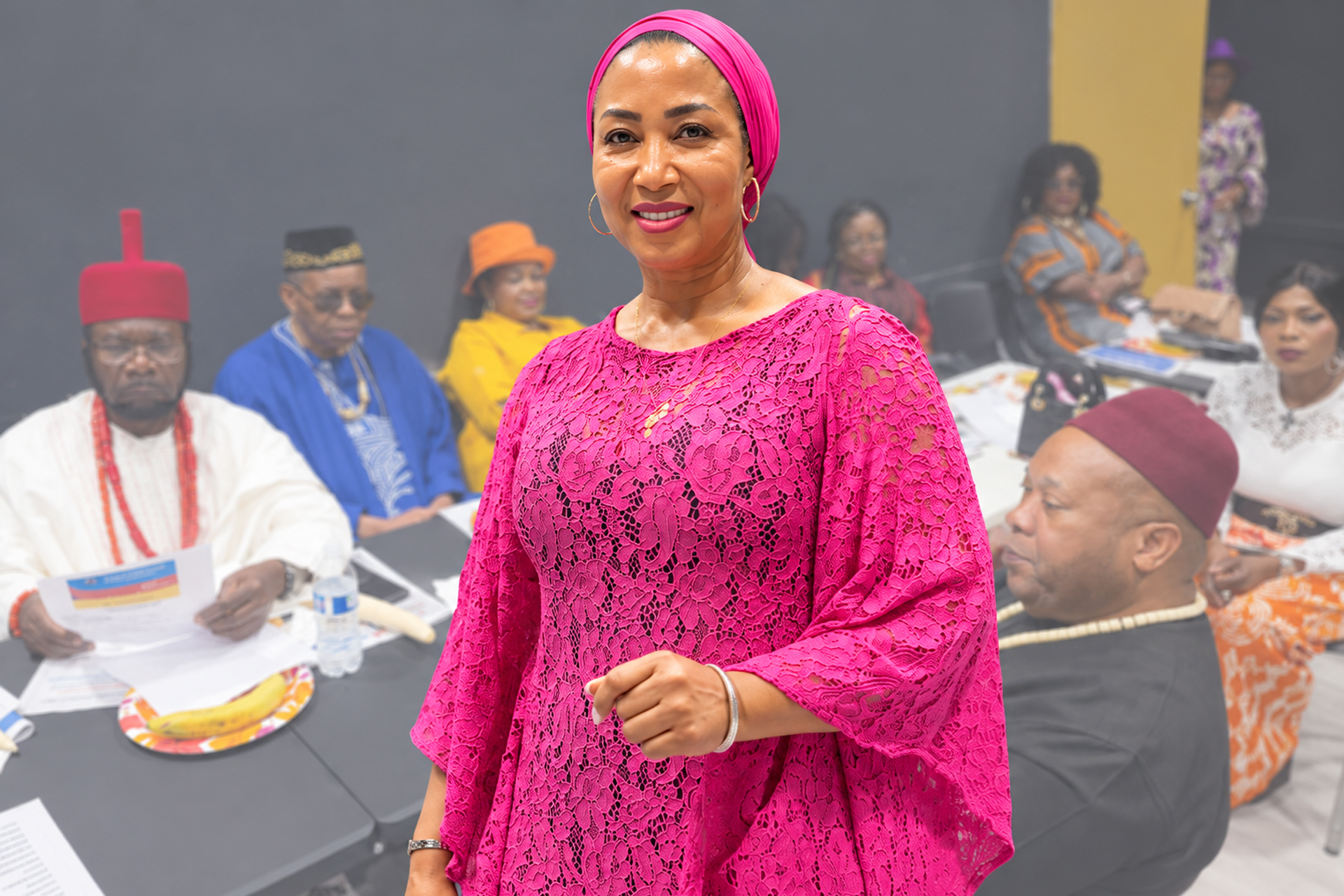
Following a successful induction ceremony, the First International Branch continues to attract new members drawn to its tradition of friendship, service, culture, and community
SUGAR LAND, TEXAS — The Sugar Land People’s Club of Nigeria International (SLPCNI) is continuing its membership expansion following its recently concluded induction ceremony, with Dr. Nkem Ugwu becoming one of the latest community members to join the organization.
Ugwu, a Sugar Land resident originally from Nsukka, Enugu State, Nigeria, is an entrepreneur and mother of three sons, a mother-in-law, and a grandmother. She describes service to others, family, and community engagement as important parts of her personal and professional life.

Grand Patron Ide Obinna Nnanyelugo Mbachu addressing the September Conference of the Sugar Land PCNI
Her membership comes on the heels of the branch’s successful bi-annual induction ceremony, during which 16 new members were formally sworn in by PCNI National President Atty. Fidelis Onyebueke. The celebration attracted national leaders, patrons, and members representing branches from across the People’s Club network.

Photo from left: Hon. Chief Sir Michael Okeke; Hon. Anaeto Okakpu “Oranwezuluaku”; Grand Patron Ide Obinna Nnanyelugo Mbachu; Hon. Dr. Nkem Ugwu ; Hon. Prof. Chris Ulasi, Group Chairman; Hon. Chief, Sir Basil Mbuba; Hon. Chief Sir Dr. Uche Egbuchuam “Akudo World Wide.”
Ugwu said joining the organization provides an opportunity to develop meaningful relationships while contributing to its mission.
“I am truly excited and honored to join the prestigious People’s Club of Nigeria International, Sugar Land Branch. I look forward to getting to know fellow members, building lasting friendships, and becoming actively involved in this vibrant and welcoming community. I am especially drawn to the Club’s tradition of fellowship, service, and mutual support, and I hope to contribute my experience, energy, and passion for serving others to its continued growth.”
Grand Patron Ide Obinna Nnanyelugo Mbachu welcomed Ugwu, describing continued interest in membership as encouraging for the historic First International Branch.

Membership Chairperson Hon. Chief Udoji Achebe and Hon. Ndidi Chidume
“When people of accomplishment and community spirit continue to identify with our organization, it tells us that the values upon which People’s Club was built remain relevant. We welcome Dr. Ugwu and look forward to the experience and fellowship she brings to our family.”
Hon. Prof. Chris Ulasi, Group Chairman, said the branch’s recent induction helped showcase an organization that continues to combine Nigerian cultural heritage with community engagement in Houston.
“Our successful induction created tremendous enthusiasm, but our focus goes beyond ceremonies. We are building a stronger organization rooted in friendship, responsibility and service. Dr. Ugwu’s decision to join reflects that continuing momentum.”

One of the meeting hosts, Hon. Professor Keih George, introduces the co-meeting hosts.
Membership Chairperson Hon. Chief Udoji Achebe said the branch remains interested in individuals prepared to participate actively in its programs and fellowship.
“Membership is about belonging, but it is equally about participation and contribution. We are delighted to welcome Dr. Ugwu and other prospective members who share the principles and aspirations of People’s Club.”
For SLPCNI, the growing interest following its induction represents another chapter in the evolution of a branch with a special place in the organization’s history.
And for Ugwu, it marks the beginning of a new journey—one centered on friendship, community, and service.

Branch considers annual induction as August celebration of prestige, culture and comradeship inspires growing community interest
HOUSTON, TEXAS — Membership requests to the Sugar Land Branch of People’s Club of Nigeria International (PCNI) have risen significantly following its successful August induction ceremony, prompting the organization to consider making the event an annual affair.
Group Chairman, Hon. Prof. Chris Ulasi, confirmed the surge in interest, saying the branch has received numerous inquiries from prospective members since the ceremony that formally admitted 16 new members to the organization.
“The response since the induction has been remarkable. We have seen a significant increase in people asking about membership and how they can become part of the People’s Club family,” Ulasi said. “Many of them attended the event or heard about it afterward and were impressed by the fellowship, dignity, cultural pride, and genuine comradeship they witnessed.”
Ulasi said the development, including a possible change from the current bi-annual induction arrangement to an annual ceremony, would be discussed at the branch’s September general meeting.
The renewed interest in membership comes on the heels of an elaborate induction that attracted national officers, patrons, branch chairmen, members, and guests from across the People’s Club family.
National President, Atty. Fidelis Onyebueke, who presided over the swearing-in of the 16 inductees, described the event as a total success and commended the Sugar Land Branch, PCNI’s First International Branch, for what he called an exceptional celebration of fellowship, culture, service, and unity.
During the formal ceremony, each inductee was invited to the podium to take the membership oath and receive a certificate from the national president, who was assisted by PCNI Attorney Chukwuka John Ukadike.
Beyond the admission of new members, however, the event offered guests a public display of the traditions that have historically defined the People’s Club: prestige, love, service, and comradeship. Those characteristics were reflected throughout the ceremony, from the reception of national officers and interaction among members to the formal induction, cultural presentation, and extended social celebration that followed.
Grand Patron, Ide Obinna Nnanyelugo Mbachu, said the growing interest in membership was an indication that the organization’s values resonated with guests who experienced the event.
“What people witnessed was the character of People’s Club—the love among members, respect for one another, willingness to serve, and the comradeship that brings us together,” Mbachu said. “Prestige is not simply about appearance; it is about how we conduct ourselves and how we treat people. When the community sees those values demonstrated, it is understandable that others would want to become part of the organization.”
The cultural presentation was among the most visible features of the evening. Women members and associates appeared in coordinated traditional attire featuring red-pinkish blouses with matching head ties and white wrappers bearing the PCNI logo. The men wore all-white outfits complemented by customized PCNI cap pins and distinctive PCNI sashes worn as neckpieces.

The coordinated appearance created a colorful expression of Nigerian cultural identity while reinforcing the sense of unity that characterized the gathering.
As the formal program concluded, the ceremony transitioned into an extended social celebration. Members, inductees, and guests shared food and drinks before taking to the dance floor, with music and festivities continuing into the early hours of Sunday.
The presence of members and officials from different branches also gave the ceremony broader significance for Sugar Land, whose status as the First International Branch places it prominently in PCNI’s history outside Nigeria.
For Ulasi, however, the strongest indication of the event’s impact came afterward, as inquiries from prospective members continued to reach the branch.
He said that while the organization welcomes the increased interest, prospective members would be expected to understand the responsibilities and traditions associated with belonging to the People’s Club. “Membership is about much more than attending social events,” Ulasi said. “It is about service, friendship, responsibility, and commitment to one another. Those are the values we intend to preserve as the branch continues to grow.”
The September meeting is expected to consider how the branch will respond to increased membership interest and whether the success of the August ceremony provides sufficient grounds to move to an annual induction schedule. For the Sugar Land Branch, the aftermath of the August induction may prove as significant as the ceremony itself: 16 members entered the People’s Club that evening, but the celebration appears to have inspired many more to seek a place within its ranks.

National President Atty. Fidelis Onyebueke hails First International Branch for a spectacular celebration of culture, fellowship and service
HOUSTON, TEXAS — The Sugar Land People’s Club of Nigeria International (PCNI), the organization’s First International Branch, has been declared a total success following a spectacular bi-annual induction ceremony that brought together national leaders, branch chairmen, patrons, members, and guests from across the People’s Club family.
National President Atty. Fidelis Onyebueke, who presided over the swearing-in ceremony, commended the Houston branch for delivering an outstanding event that reflected the organization’s enduring traditions of friendship, fellowship, service, and community.

Hon. Prof. Chris Ulasi, SLPCNI Chairman, leads the grand entrance of the national leadership during the induction ceremony, followed by National President Atty. Fidelis Onyebueke and his wife.
“The Houston branch has once again demonstrated what People’s Club represents at its very best. This was a beautifully organized and highly successful event, rich in culture, fellowship, dignity, and unity. I commend the leadership, members, and entire Houston family for an exceptional celebration worthy of the First International Branch.”
The ceremony witnessed the formal swearing-in of 16 new members, each of whom was individually invited forward to receive a certificate of membership from the national president. Onyebueke was assisted in administering the oath by PCNI Attorney Chukwuka John Ukadike.

Group Photo: Women Members and Associates of SLPCNI
The inductees joined an impressive gathering that reflected the diversity and strength of the People’s Club community. Members and guests traveled from various branches across the United States and beyond, transforming the Houston ceremony into a truly international gathering.
The cultural elegance of the occasion was equally striking. Women appeared in colorful, coordinated traditional attire, featuring red-pinkish blouses and matching head ties paired with white wrappers prominently designed with the PCNI logo. The ensemble created a distinctive and dignified traditional look. Men complemented the occasion with elegant all-white outfits, customized PCNI cap pins, and special PCNI sashes worn as neckpieces.
Among those in attendance were Grand Patron Ide Obinna Nnanyelugo Mbachu; Hon. Prof. Chris Ulasi, Group Chairman; patrons and chairmen from various branches, and People’s Club members representing chapters across the globe.
The formal proceedings eventually gave way to an extended celebration of friendship and camaraderie. Food, drinks, music, and dancing carried the festivities well beyond the scheduled program, continuing for hours into the early morning of Sunday.
For the Houston branch, the celebration represented more than the admission of new members. It reaffirmed the historic importance of the First International Branch and demonstrated the continuing strength of People’s Club as a transnational fellowship rooted in Nigerian identity, friendship, service, and mutual support.
The successful ceremony also underscored the organization’s ability to bring generations and branches together while preserving the cultural traditions that have sustained its membership across continents.
By the end of the celebration, Houston had delivered more than an induction. It had delivered a memorable demonstration of unity, culture, friendship, and organizational excellence—an event that fully embodied the People’s Club spirit.
-

 Houston1 month ago
Houston Ready as People’s Club National President Arrives for Historic Sugar Land Branch Induction
-

 Houston4 weeks ago
People’s Club Sugar Land Celebrates Landmark Induction of 16 New Members
-

 Houston2 weeks ago
Membership Interest Soars After Sugar Land People’s Club’s Successful Induction
-

 Houston3 minutes ago
Membership Surge Continues as Dr. Nkem Ugwu Joins People’s Club