

Anthony Obi Ogbo
Decree of Dictatorship—Governor Abbott’s Intoxication for Power

In a democracy, resistance against tyranny is a civic duty.
Over the last few years, America, and indeed the world, witnessed how Donald Trump came into the highest and most respected leadership compartment, saw power, and squandered it without regret. America is a living witness to how Donald Trump’s leadership disgrace exposed the porousness of the democratic process—a typical example that America, as a nation, is not immune from the levels of dictatorship found in countries like North Korea, Afghanistan, Sudan, and Somalia.

However, the destructive influences of Trump’s vicious assault on the rule of law are not going away any time soon. This explains why Texans should be worried about their leader, Governor Greg Abbott, who is currently on a rampage with unrestrained and tyrannous policy-making excess. Abbott and his cohorts have thrown the entire state of Texas into a near-constitutional crisis.
By current standards, democracy in Texas is in a state of uncertainty, orchestrated by a reckless Republican-controlled political base and endorsed by an irrational demigod called Abbott. He has proven to be insecure about his career designation and completely uncomfortable with the rule and process of law.
This governor has completely lost it. Gradually, he has led a gang of stubborn extremists to turn the Lone Star State into a lawless zoo. Currently, Texans wake up each day with grave concerns about their democracy. They feel the scratchy, filthy air of dictatorship under a delusional governor who wakes up each day with a new punitive decree. It is getting worse. For instance, Texans are still shocked about Abbott’s inexplicable threat to defund the state legislature, after Democratic lawmakers derailed an 11th-hour attempt to pass his priority bill that would have made it even harder for the public to cast a ballot in elections.
With fabricated claims of widespread voter fraud, Republicans in Texas and across the United States have tried to suppress access to the polls after a shameful 2020 election performance. Among its numerous, unusual clauses, Texas’s Senate Bill 7 would have imposed felonies on public officials for certain activities related to boosting mail-in voting, banned 24-hour and drive-thru voting, emboldened partisan poll-watchers, and made it easier to overturn election results.
Following this defeat of legislation, Abbott, who views with distaste voting privileges of Blacks and other minorities, threatened to eliminate funding for the Texas Legislature. In typical Trump fashion, he tweeted his retaliatory vows: “I will veto Article 10 of the budget passed by the legislature. Article 10 funds the legislative branch. No pay for those who abandon their responsibilities. Stay tuned.”
He vowed that the troubled bill—which would restrict voting hours; make it harder to vote by mail; give more power to partisan poll watchers; increase punishments for mistakes made by election officials; and prohibit voting on Sundays before 1 p.m., an act viewed as an attack on voting campaigns by Black churches—will be added to a special session to pass it.
But that is not all; over the past months, Texans have been going through Abbott’s policy-making surprises. It may be recalled that earlier this year, Abbott shocked the entire world when he announced the revocation of orders regulating the spread of the coronavirus pandemic. This included the lifting of the statewide mask mandate and the opening of all businesses at one hundred percent capacity. To aggravate this madness, he invoked the usual anti-mask conspiracy phrase: that people and businesses do not need the state telling them how to operate.
In a democracy, an abuse of the process, or exploitation of the majority privileges, is akin to autocracy.
It may be right to conclude that Abbott’s burden of dictatorship is gradually descending on the rule of law. In a democracy, an abuse of the process, or exploitation of the majority privileges, is akin to autocracy. Just this month, Abbott signed a new education law forbidding lessons on systemic racism. This bill, also operated by a handful of states, regulates how teachers discuss current affairs, prohibiting students from getting credit or extra credit for participating in civic activities that include political activism or lobbying elected officials on a particular issue.
Abbott, it appears, is running amok with the latest abuse of his mandate, and Texans are concerned as they watch their chief executive metamorphose into a sharp-horned, evil soul. Imagine Texans carrying handguns without a license; or hotels not being able to stop their guests from taking guns into their rooms; or a situation where the government cannot shut down gun shops during a declared disaster. These are not fairy tales but the realities of Texas under the tyranny of Abbott.
Governor Abbott signed a slate of gun-related laws last week, ranging from technical changes, such as allowing Texans to carry a gun in any type of holster, to more broad political statements, such as declaring Texas a Second Amendment “sanctuary state”. Abbott officially signed House Bill 1927, the “constitutional carry” legislation, that allows Texans aged 21 and over to carry a handgun in public—either concealed or openly—without a permit or training, starting September 1. By Abbott’s new laws, the state’s $40 fee to obtain a handgun license will no longer be required, whilst mandatory training requirements are also no longer necessary.
The values of constitutional process are not ingrained in stone. They are written laws susceptible to interpretative ambiguities.
Most party-hardliners may not publicly admit this, but the decree of dictatorship transcends party lines. It’s simply an affront to the ideals of democracy. The values of constitutional process are not ingrained in stone. They are written laws susceptible to interpretative ambiguities. Therefore, entrusting power to leaders with ethical laxity can gravely jeopardize the ideals of the constitutional process. Thus, rejecting Abbott and his Republican cohort becomes a commitment to protecting the standards of socio-political fairness. There have to be ways to stop Abbott’s repressive rule. Perhaps a massive electioneering presence of Blacks and minorities would make the difference.
State Chairman of the Texas Coalition of Black Democrats, Hon. Carroll G. Robinson, Esq., suggested strategies for Black voter turnout. According to Hon. Robinson, “If we’ve learned nothing else from Stacy Abrams, we should have learned that to maximize Black voter turnout to win, the work and investments must begin early. Elections are won with investments and hard-work done well in advance of an election year. It’s not enough to curse the dark and complain about the incompetence of Abbott, Cruz and other Texas Republican leaders— including Patrick and Paxton—we have to invest in Black voter turnout to defeat them.”
Fighting off tyranny will require all hands on deck. For instance, a group of Democratic Texas state lawmakers just traveled to Washington, D.C. to confer with congressional Democrats and Vice President Harris and lobby for far-reaching voting rights and election reform legislation. Consequently, Attorney General Merrick Garland has announced his readiness to fight voter-suppression. According to Garland, the aim is to ensure that, “all eligible voters can cast a vote, that all lawful votes are counted, and that every voter has access to accurate information.” The Department of Justice is already suing Georgia, alleging that a recently passed election law violates the Voting Rights Act’s protections for minority voters.
Governor Abbott’s intoxication for power signifies a degree of dictatorship incompatible to the process of democracy. He is a governor who has demonstrated a revulsion for justice and fairness. He has uncovered his authoritarian demeanor, and, worse, his animosity and disrespect for people of color are unparalleled. In a democracy, resistance against tyranny is a civic duty. At this time, the people of Texas must stop this hare-brained dictator or forever hold their peace.
♦ Professor Anthony Obi Ogbo, Ph.D. is on the Editorial Board of the West African Pilot News. Article is also published in the West African Pilot News



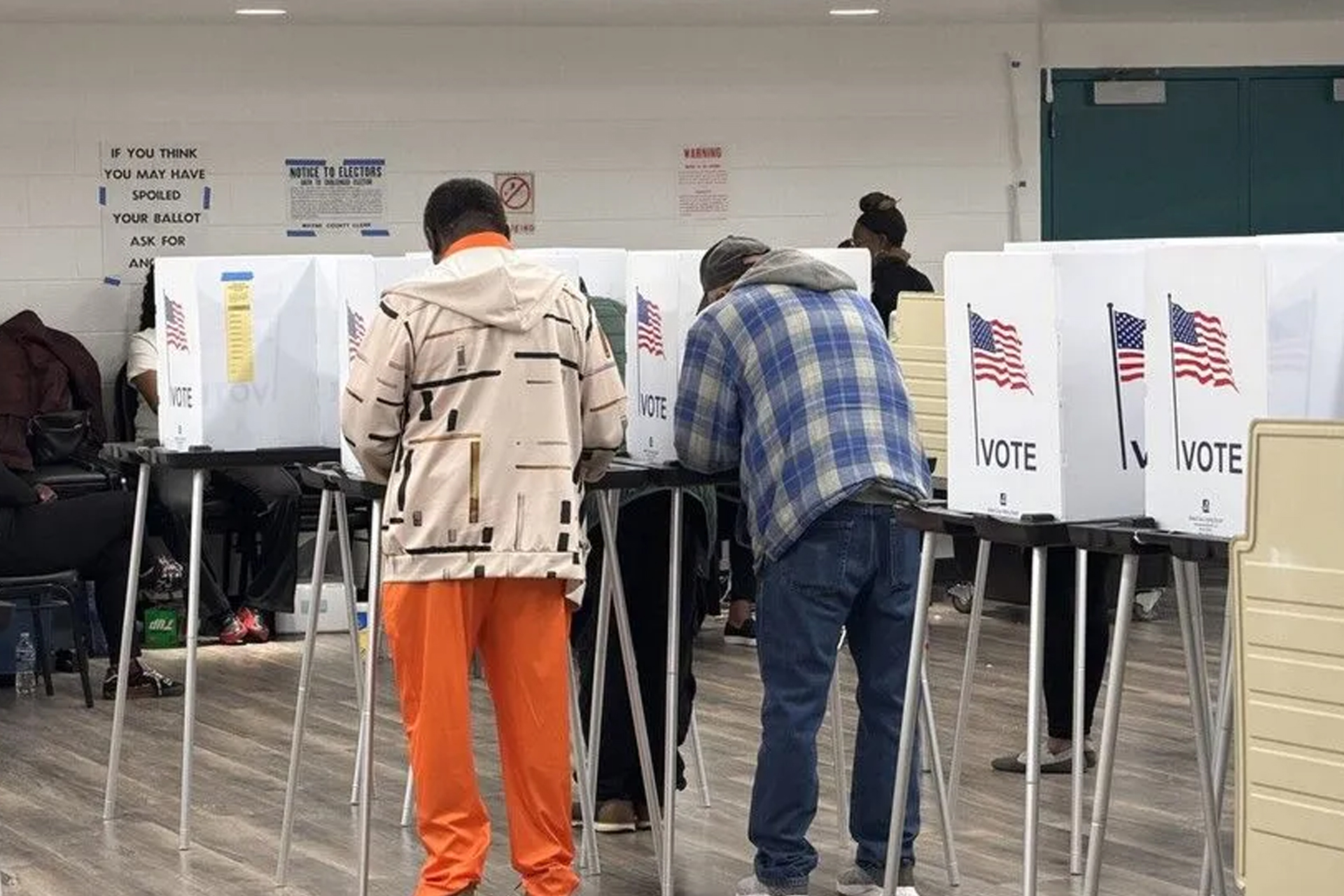
“Nigeria does not merely need a voters’ revolt. It needs an electoral revolution.” —Dr. Anthony Obi Ogbo
Over the past few days, I have been reflecting on America’s historic midterm elections and reading various analyses of the remarkable voter revolt against the political establishment. American voters demonstrated their willingness to punish political failure at the ballot box. But can Nigerians similarly defeat entrenched power when the very institutions entrusted with protecting their votes remain vulnerable to political interference?

America’s November 3 midterm elections delivered a devastating political verdict. Voters, frustrated by rising living costs, the Iran war, and growing dissatisfaction with President Donald Trump’s leadership, handed Democrats control of both chambers of Congress. Republican strongholds fell, political loyalties shifted, and voters demonstrated that incumbency is no insurance against public anger.
The message was unmistakable: when governance fails, the electorate can withdraw its mandate. But across Nigeria, the American revolt has inspired a provocative question: Can Nigerians replicate this electoral uprising in the 2027 presidential election?
The comparison is compelling, but the institutional realities are profoundly different.
Nigeria has no shortage of reasons for electoral rebellion. Economic hardship, persistent inflation, unemployment, deteriorating purchasing power, insecurity, and widespread distrust of government have created a deeply frustrated population. From kidnapping and rural banditry to failing infrastructure and declining public confidence, the country’s governance challenges demand serious political accountability.
Yet frustration alone does not remove a government. Elections do. And therein lies Nigeria’s democratic predicament.
In the United States, elections are administered through decentralized state and local institutions operating under federal and state laws. Election officials, courts, observers, and established legal procedures provide multiple layers of accountability. The system is imperfect, frequently litigated, and vulnerable to partisan disputes. Nevertheless, its decentralized structure makes nationwide electoral manipulation by a single executive authority considerably more difficult.
Nigeria operates differently. The Independent National Electoral Commission (INEC) is constitutionally established as an independent institution. However, its chairman and national commissioners are appointed by the president, subject to Senate confirmation. This arrangement creates legitimate concerns about institutional autonomy, particularly when the appointing authority belongs to a political party contesting the elections.
Nigeria’s electoral history reinforces these concerns. The controversial 2007 presidential election exposed serious weaknesses in electoral administration. In 2015, however, Nigerians demonstrated that incumbency could be defeated when Goodluck Jonathan lost to Muhammadu Buhari. That historic transition remains powerful evidence that peaceful electoral change is possible.
But the 2023 presidential election again exposed institutional distrust. Disputes over electronic result transmission, transparency, and electoral procedures eventually reached the Supreme Court, which upheld President Bola Tinubu’s victory.
Courts are constitutionally empowered to resolve election disputes. The problem is not judicial involvement itself, but the perception that electoral outcomes increasingly depend on litigation rather than the unquestioned credibility of votes cast.
When citizens begin to believe that ballots are merely preliminary documents awaiting judicial interpretation, democracy suffers a dangerous credibility crisis.
Equally troubling is the protection of votes. INEC administers federal elections, while the Nigeria Police Force and other security agencies provide electoral security. These institutions operate within a centralized federal framework, raising concerns about executive influence over personnel, deployment, and operational independence.
How, then, can Nigerians stage an American-style electoral revolt when the institutions protecting their votes are themselves subjects of public suspicion? The answer requires more than opposition slogans, social media outrage, or massive political rallies.
First, Nigeria must constitutionally reform INEC’s appointment process. An independent, multipartisan selection mechanism, transparent public hearings, protected tenure, and guaranteed funding would reduce executive influence and strengthen electoral credibility.
Second, judicial independence must become nonnegotiable. Transparent appointments, financial autonomy, enforceable ethical standards, and expedited election petitions are essential. Courts must remain impartial arbiters, not become perceived substitutes for the electorate.
Third, electronic transmission and public verification of polling-unit results must become legally enforceable safeguards, supported by independent audits and meaningful penalties for manipulation.
Fourth, election security must be operationally insulated from partisan directives. Electoral offenses, including intimidation, ballot destruction, and result falsification, must attract swift and credible prosecution.
Voters must organize beyond ethnic loyalty
Finally, voters must organize beyond ethnic loyalty, religious sentiment, and online activism. They must register, mobilize, monitor polling units, document irregularities, and protect their electoral mandate through lawful civic participation. The ultimate tragedy of Nigerian democracy is not that citizens lack the courage to reject failed leadership. It is that they cannot consistently trust the machinery entrusted with translating their rejection into political change.
America’s midterms demonstrated the power of electoral accountability. Nigeria’s 2027 elections must confront a more fundamental question: whether the ballot remains stronger than the political establishment.
A democracy becomes a dangerous deception when citizens are permitted to vote but cannot confidently determine who wins. Nigeria does not merely need a voters’ revolt. It needs an electoral revolution in which institutions become stronger than incumbents, ballots become stronger than political influence, and the people’s verdict becomes stronger than the machinery of power.
♦ Publisher of the Guardian News, Professor Anthony Obi Ogbo, Ph.D., is on the Editorial Board of the West African Pilot News. He is the author of the Influence of Leadership (2015) and the Maxims of Political Leadership (2019). Contact: anthony@guardiannews.us
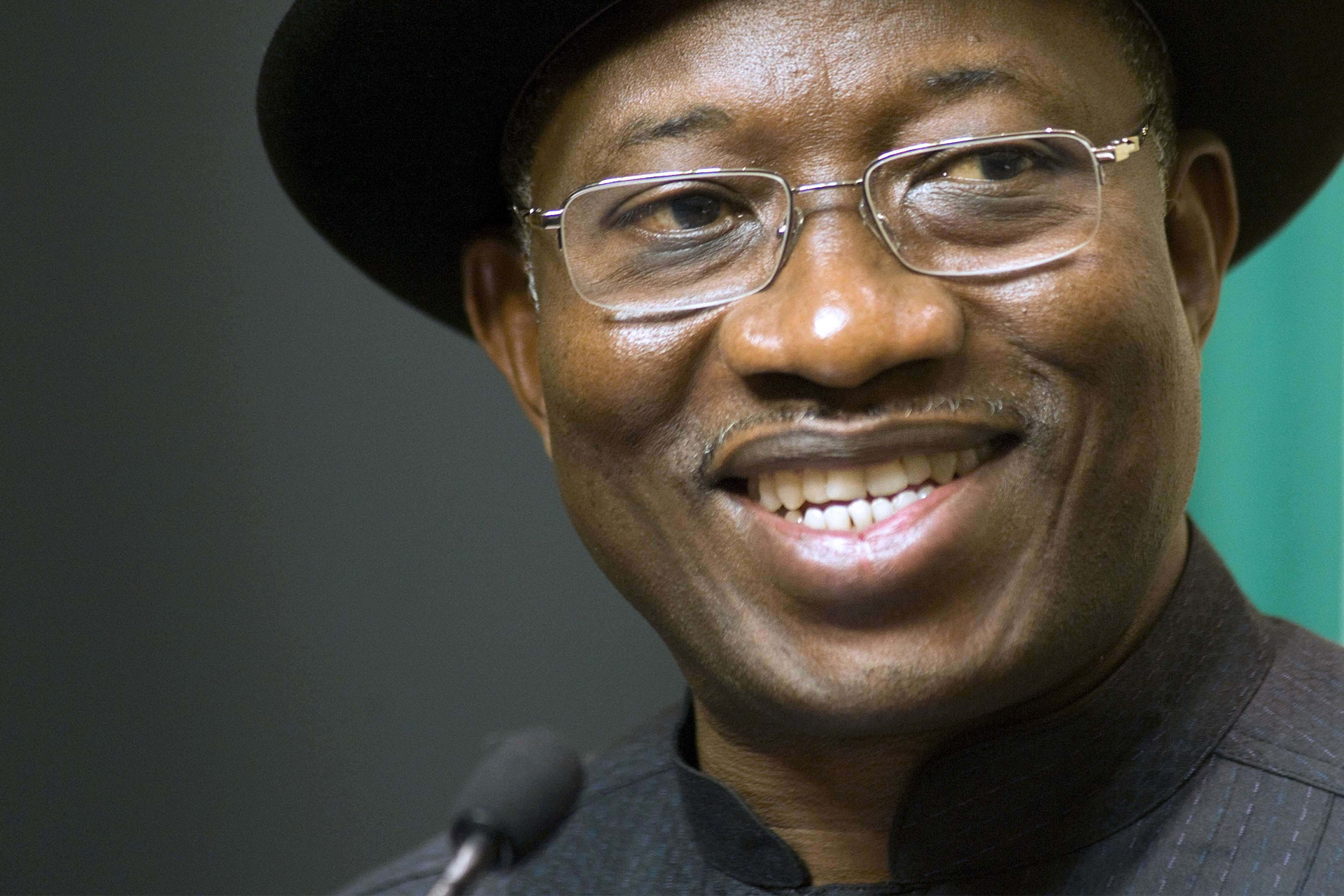
“Jonathan’s calculated and weaponized ambiguity breeds deception and weakens emerging political alliances.” —Dr. Anthony Obi Ogbo
Former Nigerian President Goodluck Jonathan has once again found himself at the center of presidential speculation, floating silently above the country’s political waters while supporters aggressively market him as a possible candidate ahead of another critical election cycle. And once again, Jonathan is doing what he has mastered throughout his political career: saying nothing clearly while allowing political confusion to grow around him.

This pattern is not new. It is the same indecisive political behavior that defined some of the most consequential moments of his rise and fall. Jonathan became president in 2010 following the death of President Umaru Musa Yar’Adua. At the time, many northern political stakeholders within the then-ruling PDP believed there was an informal understanding that Jonathan would complete Yar’Adua’s term but not seek another full term in 2011, thereby preserving the party’s zoning arrangement between North and South. Instead of taking a clear and immediate position, Jonathan spent months dribbling the nation politically. He neither fully denied nor openly confirmed his intentions until the political tension had already escalated nationwide.
By the time he eventually declared his candidacy, the damage had been done. Many northern allies who initially supported him felt betrayed, politically cornered, or deceived. The PDP fractured internally, regional distrust deepened, and Jonathan’s relationship with major northern power blocs deteriorated permanently. Though he won the 2011 election, the cracks created by that indecision followed him into 2015, contributing significantly to the coalition that eventually removed him from power.
Yet Jonathan learned little from that experience. Since losing reelection in 2015, his name has repeatedly surfaced during every major electoral cycle as a potential presidential contender. Each time, his supporters strategically floated his candidacy across media platforms and political circles. Each time, Jonathan refused to decisively shut the door. Silence became his political instrument, whereas ambiguity became his strategy.
Now the country is witnessing the same playbook again. As coalition politics intensify and opposition forces attempt to consolidate around alternative political movements, Jonathan’s name has resurfaced aggressively. Reports and speculations about his presidential ambition continue to dominate political discussions, especially within camps seeking to disrupt the growing momentum surrounding Peter Obi and emerging opposition realignments.
The troubling part is not merely that Jonathan’s supporters are campaigning. The troubling part is that Jonathan fully understands the implications of his silence. He knows that his political stature carries enough weight to destabilize fragile coalition negotiations. He knows his name alone can divide campaign structures, weaken consensus-building, and inject uncertainty into opposition calculations. Yet he refuses to publicly and definitively state where he stands.
That is not statesmanship. That is calculated political ambiguity. Jonathan’s political history is filled with similarly contradictory choices. After losing power in 2015, he received widespread praise for conceding defeat peacefully. He initially framed that decision as a sacrifice made to preserve Nigerian lives and prevent violence. Later, however, different narratives emerged suggesting international pressure, particularly from the United States under President Obama. The shifting explanations weakened what could have remained one of his strongest democratic legacies.
Then came another contradiction. Despite emerging politically from the PDP, Jonathan gradually aligned himself closely with the administration of former President Muhammadu Buhari, serving in diplomatic and goodwill capacities that many PDP loyalists considered politically inappropriate. This unusual closeness fueled longstanding allegations that elements within the APC establishment viewed Jonathan as a useful political instrument capable of destabilizing opposition coalitions from within. Whether those allegations are true or not, Jonathan’s conduct has consistently created room for suspicion.
His political base remains uncertain. His campaign structure is invisible.
Today, his undeclared ambition is already generating confusion among supporters, coalition organizers, and opposition strategists. His political base remains uncertain. His campaign structure is invisible. His intentions are unclear. Yet his loyalists continue mobilizing aggressively in his name while he watches silently from the shadows.
Nigeria is too politically fragile for this kind of elite gamesmanship. At critical national moments, leadership demands clarity, courage, and accountability. Jonathan cannot continue operating as a permanent “maybe” in Nigeria’s political future, thoughtlessly hovering around every election season like an unanswered question designed to manipulate negotiations and weaken emerging alliances.
At this time, Jonathan should sit in or sit out! If he wants to run, he should declare openly, defend his record, and face the democratic process directly. If he does not intend to run, he should immediately and publicly withdraw his name from the political marketplace. Anything short of that increasingly looks less like political strategy and more like calculated deception. Nigeria deserves leaders who make difficult choices openly—not politicians who weaponize silence while others gamble with national uncertainty in their name.
♦ Publisher of the Guardian News, Professor Anthony Obi Ogbo, Ph.D., is on the Editorial Board of the West African Pilot News. He is the author of the Influence of Leadership (2015) and the Maxims of Political Leadership (2019). Contact: anthony@guardiannews.us

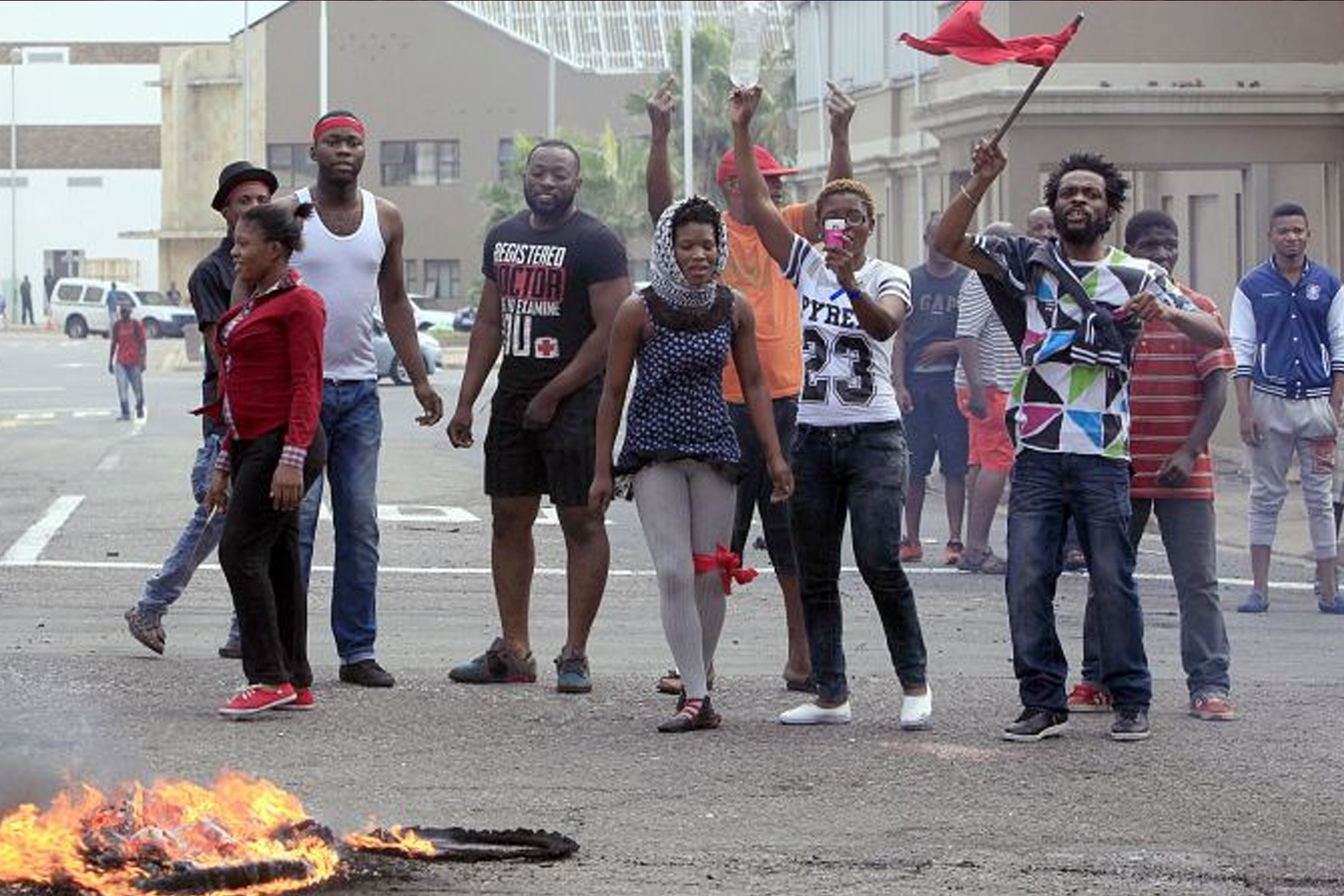
Nigeria’s Forgotten Sacrifice and the Tragedy of Xenophobia in South Africa
As George Santayana famously warned, “Those who cannot remember the past are condemned to repeat it.” The unfolding xenophobic tensions in South Africa reflect more than economic strain; they reveal a deeper crisis of memory and meaning. When history fades, gratitude dissolves, and fear replaces solidarity. The violence directed at fellow Africans is not merely social unrest; it is a philosophical failure to reconcile past sacrifice with present identity, reminding us that nations, like individuals, must remember to remain whole.
.
I recall that when I was in college in Nigeria, all Southern African students, present in substantial numbers, were on full federal government scholarships and received an additional income called a bursary. They lived better than many Nigerians; some even drove cars. Many adopted Nigerian names, assimilated seamlessly, and secured opportunities with ease, while Nigerian graduates faced rising unemployment. It was a quiet but powerful demonstration of solidarity, Nigeria investing in the future of a region still shackled by apartheid.
Today, that history feels almost erased.
For years now, waves of xenophobic attacks in South Africa, often targeting Nigerians, and more recently Ghanaians and other African nationals, have revealed a troubling pattern: violence fueled by economic frustration, misinformation, and historical amnesia. Shops are looted, homes burned, and lives disrupted under the recurring claim that “foreigners are taking jobs.” Yet this narrative collapses under even the most basic scrutiny of history.
Nigeria was not a bystander in South Africa’s liberation; it was a central force.
Under the military leadership of Olusegun Obasanjo, Nigeria became the first country in history to boycott the Commonwealth Games in protest against apartheid. That decision was not symbolic; it was costly, bold, and globally consequential. Obasanjo went further, advocating a continental defense posture and proposing what he termed a “Black bomb,” a radical idea reflecting the urgency of protecting African sovereignty against external aggression.
Nigeria’s commitment extended beyond rhetoric. During the Ibrahim Babangida regime, South Africa sought to exert strategic influence in Equatorial Guinea, offering infrastructure support before the discovery of oil. Nigeria recognized the geopolitical implications and decisively intervened, severing ties and offering its own support. The situation escalated to the point where Equatorial Guinea petitioned Nigeria at the United Nations for intervention. Nigeria did not retreat. This was not interference; it was protection. It was foresight. It was leadership.
Nigeria funded liberation movements, provided education, opened its economy, and bore economic sacrifices, including the nationalization of British Petroleum assets, to pressure the apartheid regime. These were not acts of charity; they were acts of conviction rooted in a vision of a free and united Africa.
And yet, decades later, Nigerians are hunted in the very land their country helped liberate.
The tragedy of xenophobia in South Africa is not merely about violence—it is about the collapse of historical consciousness. A generation disconnected from its past becomes vulnerable to manipulation, scapegoating, and misplaced anger. Economic hardship is real, but it does not justify the erasure of truth or the targeting of fellow Africans.
If history were remembered accurately, perhaps the conversation would be different. Perhaps the anger would be redirected toward structural inequalities rather than neighboring nationals. Perhaps the bonds of Pan-African solidarity would still hold.
But memory has faded, and in its absence, resentment has grown. Africa cannot afford selective memory. Nations that forget who stood with them in their darkest hours risk losing their moral compass in moments of crisis. Nigeria’s role in the liberation of South Africa is not a footnote—it is a foundation. To ignore it is to misunderstand both the past and the present.
Equally troubling is the persistent failure of successive South African governments to decisively confront and eradicate xenophobic violence. Such inaction, whether intentional or not, signals a dangerous tolerance, if not tacit endorsement, of these attacks, allowing them to recur with impunity. If brotherhood is to mean anything, it must be anchored in truth and reinforced by responsible leadership. And if Africa is to move forward, it must first remember and act.
♦ Publisher of the Guardian News, Professor Anthony Obi Ogbo, Ph.D., is on the Editorial Board of the West African Pilot News. He is the author of the Influence of Leadership (2015) and the Maxims of Political Leadership (2019). Contact: anthony@guardiannews.us
-

 Books2 weeks ago
‘My Life of Duty and Allegiance’ —An Elder Statesman’s Version of the Truth
-

 Anthony Obi Ogbo2 weeks ago
Can Nigerian Voters Replicate America’s Midterm Electoral Revolt?
-

 Houston1 day ago
Dr. Maria Elioku Joins People’s Club Sugar Land, Bringing a Legacy of Leadership and Community Service